Early Life and Education
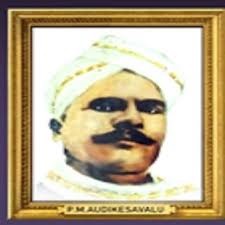
P. M. Audikesavalu Naicker was a distinguished freedom fighter and political leader from the Madras Presidency who dedicated his life to India’s struggle for independence and public service. He was born in the late nineteenth century in present-day Tamil Nadu into a family that valued patriotism, education, and social responsibility.
From an early age, he witnessed the growing dissatisfaction against British colonial rule. These circumstances nurtured in him a strong sense of nationalism and a desire to contribute to the welfare of society.
Although detailed records concerning his formal education are limited, he received a sound education that enabled him to engage effectively in political and social activities.
Education & Skills
P. M. Audikesavalu Naicker possessed several qualities that helped establish him as an influential public figure:
- Leadership and organizational skills
- Public speaking and persuasive communication abilities
- Knowledge of nationalist principles and constitutional developments
- Commitment to social service and community welfare
- Administrative competence developed through public life
- Ability to mobilize people for collective action
These skills allowed him to participate actively in the freedom movement and later contribute to public affairs in independent India.
Contribution to Tamil Literature
There is no substantial evidence indicating that P. M. Audikesavalu Naicker was directly involved in Tamil literary activities as an author, poet, or scholar. His principal contributions were in the fields of politics and social service.
However, through his support for education and public awareness initiatives, he indirectly contributed to the intellectual and cultural advancement of Tamil society. His efforts encouraged civic participation and national consciousness among the people.
Therefore, his legacy is primarily that of a freedom fighter and public servant rather than a literary personality.
Role in India’s Freedom Movement
P. M. Audikesavalu Naicker actively participated in the Indian freedom struggle, aligning himself with the objectives of the Indian National Congress.
His contributions included:
- Supporting nationalist campaigns aimed at ending British rule.
- Participating in political meetings and public awareness programs.
- Encouraging ordinary citizens to join the movement for self-rule.
- Promoting the ideals of non-violence and national unity advocated by Mahatma Gandhi.
- Working alongside regional leaders in the Madras Presidency to strengthen the freedom movement.
Like many leaders from Tamil Nadu, he believed that political freedom should be accompanied by social progress and educational development. His activities reflected a deep commitment to the principles of democracy and justice.
Although he may not have achieved widespread national recognition, his regional contributions formed an essential part of the collective struggle that eventually led to India’s independence in 1947.
Public Service and Political Career
Following India’s independence, P. M. Audikesavalu Naicker continued his involvement in public life. He remained dedicated to addressing social issues and promoting community welfare.
His post-independence activities demonstrated his belief that the responsibilities of nation-building extended beyond the achievement of political freedom. He encouraged civic responsibility and sought to improve the quality of life of ordinary citizens through constructive public engagement.
Personal Life
P. M. Audikesavalu Naicker led a life guided by discipline, integrity, and service. Despite the challenges associated with political activism during the colonial period, he remained committed to his ideals and responsibilities.
He was respected by his contemporaries for his sincerity and dedication to the national cause. His personal values reflected the spirit of sacrifice that characterized many freedom fighters of his generation.
Death
Specific details regarding the exact date and circumstances of P. M. Audikesavalu Naicker’s death are not widely available in standard historical references. Nevertheless, his contributions to the nationalist movement continue to be acknowledged in regional accounts documenting Tamil Nadu’s role in India’s freedom struggle.
His life remains an example of quiet dedication to the ideals of freedom and public service.
Conclusion
P. M. Audikesavalu Naicker was among the many committed leaders from Tamil Nadu who contributed to India’s journey toward independence. Through his participation in nationalist activities, advocacy of Gandhian values, and dedication to community welfare, he played a meaningful role in shaping public consciousness during a transformative period in Indian history.
While historical documentation about his life is limited, his efforts highlight the importance of regional freedom fighters whose sacrifices and leadership strengthened the broader national movement. Remembering personalities such as P. M. Audikesavalu Naicker enriches our understanding of the diverse individuals who helped secure India’s freedom.
About the Author