

1. Introduction
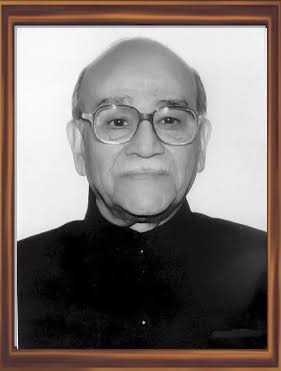
Dr. Murugappa Channaveerappa Modi, popularly known as Dr. M. C. Modi, was an Indian ophthalmologist and eye surgeon renowned for taking eye care to poor and rural communities.
Born on 4 October 1916 in Bilagi, in present-day Bagalkot district of Karnataka, Modi devoted much of his life to treating people suffering from preventable blindness. Instead of limiting his practice to an urban clinic, he travelled extensively across India and organised mass eye camps, providing eye examinations, cataract operations and spectacles to people who could otherwise not afford treatment.
His extraordinary medical and humanitarian service earned him the Padma Shri in 1956 and the Padma Bhushan in 1968, both in the field of Medicine. The Government of India’s official Padma Awards database confirms these honours.
He became particularly famous for the scale of his cataract surgery work. Historical accounts credit him with performing hundreds of thousands of eye operations and examining millions of patients during his career.
2. Quick Facts
| Particular | Information |
|---|---|
| Full Name | Dr. Murugappa Channaveerappa Modi |
| Also Known As | Dr. M. C. Modi |
| Date of Birth | 4 October 1916 |
| Place of Birth | Bilagi, present-day Bagalkot district, Karnataka |
| Nationality | Indian |
| Profession | Ophthalmologist and eye surgeon |
| Field of Achievement | Medicine, ophthalmology and humanitarian eye care |
| Date of Death | 11 November 2005 |
| Place of Death | Bengaluru, Karnataka |
| Major Awards | Padma Shri (1956), Padma Bhushan (1968) |
| Padma Bhushan Field | Medicine |
| Known For | Mass eye camps and cataract surgery for poor and rural communities |
| Political/Public Role | Nominated member of the Karnataka Legislative Council, 1990–1996 |
The Government’s Padma database lists him as “Dr. Murugappa Channaveerappa Modi” and records his Padma Shri in 1956 and Padma Bhushan in 1968, both under Medicine.
3. Award Information
Dr. M. C. Modi’s career is particularly notable because he received two Padma awards.
Padma Shri — 1956
| Award Detail | Information |
|---|---|
| Award | Padma Shri |
| Year | 1956 |
| Category/Field | Medicine |
| Recipient | Dr. Murugappa Channaveerappa Modi |
| State | Karnataka |
The Government of India’s Padma Awards database officially lists Dr. Modi as a 1956 Padma Shri recipient in Medicine.
Padma Bhushan — 1968
| Award Detail | Information |
|---|---|
| Award | Padma Bhushan |
| Year | 1968 |
| Category/Field | Medicine |
| Recipient | Dr. Murugappa Channaveerappa Modi |
| State | Karnataka |
Again, the official Padma Awards database confirms Padma Bhushan, 1968 — Medicine — Karnataka.
Presented By
For your blog, I recommend not publishing a specific ceremony date or presenter unless you have the original 1968 Padma award ceremony record. I could verify the award and field from the Government’s official database, but I did not find sufficiently reliable evidence for the exact presentation date to state it confidently.
Citation / Official Reason
The official Padma database identifies his field as Medicine. Contemporary and biographical sources associate his recognition with his extraordinary service as an eye surgeon, particularly his mass eye camps and treatment of poor and rural patients.
Previous and Next Recipients
Because the Padma awards have multiple recipients each year, it is not technically correct to describe one person as his single “previous” or “next” recipient.
For context, other 1968 Padma Bhushan recipients included K. Shivaram Karanth, Bismillah Khan, Sam Manekshaw, C. R. Rao and Gujarmal Modi, among others.
4. Why Did Dr. M. C. Modi Receive the Award?
Dr. Modi’s national recognition came from his extraordinary contribution to medicine and public eye care.
His work was remarkable because he took medical treatment directly to people who lacked access to hospitals.
His contribution included:
- Organising large-scale eye camps.
- Performing cataract operations for poor patients.
- Travelling to remote villages and towns.
- Providing spectacles to patients.
- Mobilising voluntary organisations and donors.
- Making eye treatment accessible to people who could not afford private medical care.
- Developing a model of mass eye surgery that could reach very large numbers of patients.
His work therefore combined medical expertise with social service.
5. Early Life
Dr. M. C. Modi was born on 4 October 1916 in Bilagi, in the area that is now Bagalkot district of Karnataka.
He came from a relatively humble background. His early education took place at P. B. High School in Jamakhandi.
His experiences of seeing poor people suffering from blindness profoundly influenced his later career.
One account says that his life changed after he attended Mahatma Gandhi’s prayer meeting in Bombay on 8 August 1942, around the time of the Quit India movement. After this experience, he decided to move away from a lucrative private practice and dedicate his professional life to helping people suffering from blindness.
This became the central philosophy of his career.
6. Education
Dr. Modi’s educational background was somewhat different from that of many modern ophthalmologists.
He completed his early schooling at P. B. High School, Jamakhandi. He subsequently studied at the Kankanwadi Ayurvedic College in Belagavi, where he obtained his D.A.M. qualification according to biographical sources.
He subsequently developed expertise in eye surgery and became renowned for his surgical skill and diagnostic ability.
Some secondary biographical sources list additional university qualifications and honorary doctorates, but these accounts are inconsistent. For a professional blog, it is safer to rely on the documented Kankanwadi education rather than presenting disputed qualifications as fact.
7. Career Journey
Beginning of medical career
Dr. Modi initially had a successful private medical practice.
However, his experiences during the early 1940s changed the direction of his career. He became increasingly concerned about people who were losing their eyesight simply because they could not afford medical treatment.
First eye camp
His first major eye camp is generally dated to 1943, at Pattan in Gujarat. From there, the eye-camp movement expanded considerably.
Taking eye care to villages
Rather than waiting for poor patients to travel to cities, Modi travelled to them.
His mobile eye camps were organised in:
- Villages
- Small towns
- Rural communities
- Areas with limited access to medical facilities
He worked with local voluntary organisations and donors to arrange the necessary resources.
Mass eye surgery
Modi developed a highly organised approach to cataract surgery that allowed him to treat very large numbers of patients.
His speed and surgical skill became legendary. One account records that he performed 833 eye operations in a single day in Tirupati in 1968, over approximately 14 hours.
Establishment of the M. C. Modi Eye Hospital
In 1980, he established the M. C. Modi Charitable Eye Hospital in Mahalakshmipuram, Bengaluru. It initially grew from his camp-based eye-care work and later developed into a specialised eye hospital.
8. Major Achievements
1. Pioneer of mass eye surgery
M. C. Modi became one of India’s best-known pioneers of mass eye surgery, particularly cataract surgery.
2. Hundreds of thousands of operations
Different historical sources give different totals depending on the year of measurement. Some accounts record more than 500,000 operations, while later accounts place his lifetime total considerably higher.
For your blog, I recommend writing:
“Over the course of his career, Dr. M. C. Modi performed hundreds of thousands of eye operations and examined millions of patients.”
This avoids presenting conflicting historical totals as an exact figure.
3. Free eye camps
He became famous for providing eye treatment to poor people through free or heavily subsidised camps.
4. Spectacles for patients
People treated at his camps were also provided spectacles where necessary, helping them regain functional vision after treatment.
5. Guinness World Records recognition
Historical accounts state that Modi was recorded in the Guinness Book of World Records for performing 833 eye operations in a single day.
6. Padma Shri
He received the Padma Shri in 1956 for Medicine.
7. Padma Bhushan
He received the Padma Bhushan in 1968 for Medicine.
9. Contribution to the Nation
Dr. M. C. Modi’s contribution to India was not limited to medical treatment.
Fighting preventable blindness
At a time when access to specialised eye care was limited, he focused on bringing treatment to people in rural areas.
Rural healthcare
His mobile eye camps demonstrated that specialised healthcare could be delivered outside major cities.
Service to economically disadvantaged people
Many of the people he treated could not afford conventional hospital treatment. His charitable approach helped make eye surgery available to them.
Public awareness
His eye camps also helped increase awareness of treatable eye conditions and the importance of seeking medical attention.
Inspiring medical professionals
His work became an example of combining professional skill with humanitarian service.
Institutional contribution
The M. C. Modi Charitable Eye Hospital continued the eye-care mission associated with his name.
10. Other Awards and Honours
Apart from the Padma awards, secondary biographical sources associate Dr. Modi with several other honours.
Padma Shri — 1956
Field: Medicine.
Padma Bhushan — 1968
Field: Medicine.
Karnataka Rajyotsava Award — 1966
Secondary sources list this honour among his awards.
Knight of the Blind Award
Biographical accounts also list the Knight of the Blind award among his honours.
Honorary doctorates
Some biographical sources state that he received honorary doctorates associated with Mysore University, Karnataka University and Pune University.
Watumull Award — 1972
Some secondary sources list the Watumull Award in 1972.
Editorial recommendation: Because several of these non-Padma honours are poorly documented online, label them as reported honours unless you can obtain certificates or institutional records.
11. Legacy and Influence
Dr. M. C. Modi’s greatest legacy is his demonstration that medical service could be taken directly to people rather than waiting for patients to reach hospitals.
His work influenced the development of large-scale eye camps and charitable ophthalmic services in India.
The M. C. Modi Charitable Eye Hospital in Bengaluru remains an important institution associated with his name. Government health records continue to list the Padmabhushan Dr. M. C. Modi Eye Hospital in Bengaluru.
His legacy can be summarised in three words:
Medicine. Accessibility. Service.
He showed that medical excellence and humanitarian service could exist together.
12. Interesting Facts
1. He was known as M. C. Modi
Although his full name was Murugappa Channaveerappa Modi, he became widely known simply as Dr. M. C. Modi.
2. He travelled extensively for patients
Instead of establishing his career exclusively in an urban hospital, he travelled to villages and towns to conduct eye camps.
3. He performed 833 operations in one day
Historical sources report that he performed 833 eye operations at Tirupati in 1968, an extraordinary feat that contributed to his international recognition.
4. His patients received spectacles
His service did not end with surgery; patients could also receive spectacles after treatment.
5. He was popularly remembered in Karnataka
He was reportedly affectionately called “Kannukotta Anna”, roughly meaning the brother who gave people eyesight.
6. He received two Padma awards
He received the Padma Shri in 1956 and the Padma Bhushan in 1968, both in Medicine.
7. He entered public life
He served as a nominated member of the Karnataka Legislative Council from 1990 to 1996 according to biographical records.
13. Quotes
There are several quotations attributed to Dr. M. C. Modi in secondary sources. Because some online versions are reproduced without clear original publication details, it is best to distinguish documented recollections from verified archival quotations.
One frequently attributed statement is:
“My only desire is that I should be useful till my last breath.”
This captures the philosophy associated with his lifelong medical service, although I recommend identifying it as a reported statement rather than presenting it as an independently verified archival quotation.
Another reported statement reflects the motivation behind his work: he recalled being deeply affected by seeing blind people begging because they could not afford medical treatment.
For a blog, a safer editorial approach is to use a legacy quote rather than an uncertain direct quotation:
“Dr. M. C. Modi turned eye care into a mission of service, taking the operating theatre to people who could not reach it.”
This is an editorial description, not a quote by Modi.
14. Timeline
| Year | Event |
|---|---|
| 1916 | Born on 4 October at Bilagi, Karnataka |
| Early years | Studied at P. B. High School, Jamakhandi |
| 1930s | Pursued medical/ayurvedic education at Kankanwadi Ayurvedic College |
| 1942 | His encounter with Gandhi’s Quit India-era message influenced his decision to dedicate himself to social medical service |
| 1943 | Conducted his first major eye camp at Pattan, Gujarat |
| 1954 | Helen Keller is reported to have attended one of his eye camps |
| 1956 | Received the Padma Shri in Medicine |
| 1966 | Received the Karnataka Rajyotsava Award, according to secondary sources |
| 1968 | Received the Padma Bhushan in Medicine |
| 1968 | Reportedly performed 833 eye operations in one day at Tirupati |
| 1980 | Established the M. C. Modi Charitable Eye Hospital in Bengaluru |
| 1986 | His record of 833 operations in a day was reported in Guinness-related accounts |
| 1990–1996 | Served as a nominated member of the Karnataka Legislative Council |
| 2005 | Died on 11 November in Bengaluru |
The early-life, eye-camp and career dates above are drawn from available biographical accounts; the two Padma award dates and fields are confirmed by the Government of India’s Padma Awards database.
15. References
For your blog, I recommend giving priority to the Government of India source for awards and using established newspapers/institutional sources for the biography.
1. Government of India — Padma Awards Dashboard
The official Padma database confirms:
- Padma Shri — 1956 — Medicine
- Padma Bhushan — 1968 — Medicine
Government of India — Padma Awards Dashboard
2. The Hindu
Historical reporting on Dr. Modi’s eye-care work and legacy is referenced in biographical material.
3. Rediff
A contemporary report on his death identifies him as an eminent eye surgeon and Padma Bhushan awardee.
Rediff — Eye surgeon Modi is dead
4. Indian Express
Historical biographical material on Dr. Modi’s work is cited by secondary sources.
5. Karnataka Legislative Council
His association with the Karnataka Legislative Council is documented in biographical records.
16. Related Personalities
You can include these personalities in a “Related Personalities” section:
Mahatma Gandhi
Gandhi’s ideas about service reportedly had a significant influence on Modi’s decision to dedicate his life to poor and blind people.
Helen Keller
Helen Keller is reported to have attended one of Modi’s eye camps in 1954 and is associated with one of the memorable stories surrounding his humanitarian work.
Dr. Rajendra Prasad
As India’s first President, Rajendra Prasad was associated with the early years of the Padma awards, including the period when Modi was first recognised.
Dr. K. S. Krishnaswamy
You can also connect Modi’s story with other pioneering Indian ophthalmologists when creating a broader article about the history of eye care in India.
Other 1968 Padma Bhushan recipients
For comparison, your article can mention Bismillah Khan, Sam Manekshaw, K. Shivaram Karanth, C. R. Rao and Gujarmal Modi, who were also among the 1968 Padma Bhushan recipients.
17. Frequently Asked Questions (FAQ)
Who was Murugappa Channaveerappa Modi?
Dr. Murugappa Channaveerappa Modi, popularly known as M. C. Modi, was an Indian ophthalmologist and eye surgeon known for providing eye care to poor and rural communities through mass eye camps.
When was M. C. Modi born?
He was born on 4 October 1916.
Where was M. C. Modi born?
He was born in Bilagi, in present-day Bagalkot district of Karnataka.
What was M. C. Modi famous for?
He was famous for conducting large-scale eye camps and performing hundreds of thousands of eye operations, particularly cataract surgeries, for people who lacked access to affordable eye care.
When did M. C. Modi receive the Padma Shri?
He received the Padma Shri in 1956 in Medicine.
When did M. C. Modi receive the Padma Bhushan?
He received the Padma Bhushan in 1968 in Medicine.
Why did M. C. Modi receive the Padma Bhushan?
He was recognised for his outstanding contribution to Medicine, particularly his extensive service in ophthalmology and his efforts to make eye treatment accessible to poor and rural Indians.
How many eye operations did M. C. Modi perform?
Historical accounts give different totals depending on the period covered. They credit him with hundreds of thousands of eye operations, with some later accounts reporting totals above 700,000.
Did M. C. Modi perform 833 operations in one day?
Yes. Historical accounts report that he performed 833 eye operations in one day at Tirupati in 1968, over approximately 14 hours.
Where did M. C. Modi conduct his eye camps?
He travelled extensively across India, conducting camps in villages and towns, particularly for communities that lacked access to specialised eye care.
When did M. C. Modi die?
He died on 11 November 2005 in Bengaluru.
Did M. C. Modi establish an eye hospital?
Yes. In 1980, he established the M. C. Modi Charitable Eye Hospital in Mahalakshmipuram, Bengaluru.
Was M. C. Modi a member of the Karnataka Legislative Council?
Yes. He served as a nominated member of the Karnataka Legislative Council from 1990 to 1996, according to biographical records.
What is the biggest legacy of M. C. Modi?
His biggest legacy is his pioneering use of mass eye camps to provide affordable or free eye care to poor and rural populations, making him an important figure in the history of community eye care in India.
About the Author