
1. Introduction
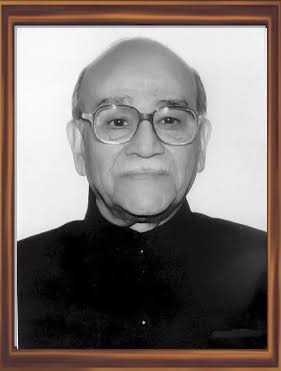
Acharya Vishva Bandhu was one of the important Sanskrit and Vedic scholars of 20th-century India. His life’s work was devoted to the study, preservation, editing and systematic documentation of India’s ancient Vedic literature.
His most important contribution was his long association with the Vishveshvaranand Vedic Research Institute, where he continued the work begun by Swami Vishveshvaranand and Swami Nityanand. Under his leadership, the institute developed into an important centre for Sanskrit and Indological research.
He also served as principal of Dayanand Brahma Mahavidyalaya and played an important role in developing Sanskrit and Indological education.
His scholarship culminated in major publications, particularly the 16-part Vedic Word Concordance, a massive reference work covering the vocabulary of Vedic literature.
2. Quick Facts
| Particular | Information |
|---|---|
| Full Name | Vishva Bandhu Shastri |
| Popular Name | Acharya Vishva Bandhu |
| Alternative Names | Vishvabandhu Shastri, Vishva-Bandhu |
| Date of Birth | 1897 |
| Place of Birth | India; exact birthplace is not clearly documented in the reliable sources consulted |
| Date of Death | 1 August 1973 |
| Nationality | Indian |
| Profession | Vedic scholar, Sanskrit scholar, educationist, writer and Indologist |
| Field of Achievement | Literature and Education; Vedic studies; Sanskrit and Indology |
| Years Active | Approximately 1919–1973 |
| Major Institution | Vishveshvaranand Vedic Research Institute |
| Major Work | A Vedic Word Concordance |
| Major Award | Padma Bhushan |
| Award Year | 1968 |
| Award Field | Literature and Education |
Library catalogues identify him as Viśvabandhu Śāstrī (1897–1973) and also record variants such as Vishva Bandhu Shastri and Vishva-Bandhu.
Note for your blog: The exact day and month of his birth are not reliably established in the sources I found. It is safer to publish “Born in 1897” rather than inventing a precise date.
3. Award Information
Padma Bhushan – 1968
Award Name
Padma Bhushan
Award Category
Literature and Education
Award Year
1968
Presented By
Government of India
Award Announcement
26 January 1968
The official Gazette of India notification dated 26 January 1968 lists Acharya Vishva Bandhu, Sanskrit Scholar, Punjab, among the Padma Bhushan awardees.
The Government of India’s current Padma Awards database classifies the award as:
Padma Bhushan (1968) – Acharya Vishva Bandhu – Literature and Education – Uttar Pradesh.
There is a difference between the historical Gazette’s location description (Punjab) and the current database’s field/location entry (Uttar Pradesh). For a blog, it is best to reproduce the official award information and avoid trying to reconcile the historical administrative/location records without additional archival evidence.
Date of Ceremony
A specific ceremony date for Acharya Vishva Bandhu is not established in the sources consulted. Therefore, it is better to write:
“The award was announced on 26 January 1968; a specific presentation-ceremony date has not been verified.”
Citation / Official Reason
The 1968 Gazette identifies him as a Sanskrit Scholar. The official Padma database places him under Literature and Education.
His recognition was connected with his major contributions to Sanskrit scholarship, Vedic studies, education and Indological research.
Previous Recipients
There was no single previous recipient because Padma Bhushan was awarded to multiple people each year.
Among notable 1967 Padma Bhushan recipients in Literature and Education were Khwaja Ghulam Saiyidain, Ashok Kumar Sarkar, D. C. Pavate, Datto Vaman Potdar and B. Shiva Rao.
Next Recipients
Among notable 1969 Padma Bhushan recipients in Literature and Education were Raja Rao, Raman Madhavan Nair, Samad Yar Khan Saghar Nizami, Vithalbhai Jhaveri and Yeshwant Dinkar Pendharkar.
4. Why Did Acharya Vishva Bandhu Receive the Award?
Acharya Vishva Bandhu was honoured for his outstanding contribution to Sanskrit, Vedic scholarship, education and Indological research.
His significance rested particularly on:
- Systematic study of Vedic Sanskrit
- Preservation and editing of ancient texts
- Vedic lexicography
- Development of Sanskrit research institutions
- Training and encouraging scholars
- Compilation of A Vedic Word Concordance
- Promotion of Sanskrit education
- Development of research facilities and libraries
His work transformed the Vishveshvaranand research institution into an important centre for the academic study of Sanskrit and ancient Indian culture.
5. Early Life
Acharya Vishva Bandhu was born in 1897 in India.
Detailed information about his childhood and family background is relatively scarce in readily available archival sources. However, his later academic career demonstrates that he developed a very strong foundation in Sanskrit and traditional Indian learning.
He belonged to a generation of Indian scholars who worked to combine traditional Sanskrit scholarship with modern academic research methods.
His intellectual interests eventually became centred on the Vedas, Sanskrit language, textual criticism, lexicography and Indology.
6. Education
Vishva Bandhu received advanced education in Sanskrit.
A biographical account preserved in a modern felicitation volume states that he passed his M.A. examination in Sanskrit from the University of Punjab, Lahore, in 1919, securing First Division and First Position and establishing a record.
His education gave him the foundation for a career combining:
- Traditional Sanskrit learning
- University education
- Vedic textual scholarship
- Linguistic research
- Historical and comparative study
- Academic administration
His achievement in the M.A. examination was an indication of the exceptional scholarly ability that later became a hallmark of his career.
7. Career Journey
Early Academic Career
Vishva Bandhu began his professional career in education and Sanskrit scholarship.
By 1923, he was working as principal of Dayanand Brahma Mahavidyalaya in Lahore. It was there that he came into contact with Swami Vishveshvaranand, who entrusted him with continuing the important Vedic research project that had been started earlier.
1924 – Vishveshvaranand Vedic Research Institute
In 1924, Acharya Vishva Bandhu established the Vishveshvaranand Vedic Research Institute at Lahore in memory of Swami Vishveshvaranand.
The principal aims of the institute included:
- Vedic lexicography
- Textual editing
- Sanskrit research
- Publication of rare Indological works
- Promotion of research into ancient Indian culture
He served as its Founder-Director until his death in 1973.
1934 – Lal Chand Library and Research Department
In 1934, the D.A.V. College Management Committee placed its Lal Chand Library and Research Department under his charge. This further expanded his influence over Sanskrit and Indological research.
Post-Independence Period
After the Partition of India, the institute moved from Lahore to Sadhu Ashram, Hoshiarpur, Punjab.
A substantial collection of Sanskrit manuscripts was moved to the new location, and Vishva Bandhu continued his research activities there.
1965 – Association with Panjab University
In 1965, the academic departments of the institute were taken over by Panjab University.
The institution became the Vishveshvaranand Institute of Sanskrit and Indological Studies, with Acharya Vishva Bandhu serving as its first Honorary Director.
After his death in 1973, the institute was renamed the Vishveshvaranand Vishva-Bandhu Institute of Sanskrit and Indological Studies in recognition of his contribution.
8. Major Achievements
1. A Vedic Word Concordance
His greatest scholarly achievement was his leadership in producing the monumental A Vedic Word Concordance.
The work was developed over several decades and ultimately comprised 16 parts, covering a huge body of Vedic literature.
The project provided researchers with:
- Vedic vocabulary
- Textual references
- Phonological information
- Accent information
- Etymological material
- Morphological information
- Grammar
- Metre
- Textual criticism
The completed work ran to approximately 11,000 pages and dealt with around 125,000 vocables.
2. Rigveda Research
Vishva Bandhu also worked on critical editions of the Rigveda, incorporating textual and manuscript evidence. His editions were published by the Vishveshvaranand Vedic Research Institute.
3. Development of Vedic Lexicography
His work helped establish Vedic lexicography as a systematic research field in India.
4. Institutional Development
He transformed the Vishveshvaranand research project into a major institution for Sanskrit and Indological studies.
5. Sanskrit Education
He supported the development of formal Sanskrit education and helped create teaching and research programmes associated with the institute and university system.
6. Preservation of Manuscripts
His institution played an important role in preserving Sanskrit manuscripts and making ancient texts accessible to researchers.
9. Contribution to the Nation
Acharya Vishva Bandhu’s contribution to India was primarily educational, cultural and scholarly.
Preservation of Ancient Knowledge
He worked to preserve India’s Vedic and Sanskrit heritage through systematic editing and publication.
Promotion of Sanskrit
He helped establish Sanskrit as a subject for serious modern academic research.
Vedic Research
His work provided scholars with important tools for studying the vocabulary and textual history of Vedic literature.
Creation of Research Institutions
The research institution he developed became an important centre for Indology.
Support for Future Scholars
He trained, encouraged and worked with numerous scholars and researchers.
Preservation of Manuscripts
The institute under his leadership preserved valuable Sanskrit manuscripts and research materials.
Connecting Tradition with Modern Scholarship
Perhaps his most important contribution was combining traditional Indian scholarship with modern philological and academic methods.
10. Other Awards and Honours
The Padma Bhushan (1968) is the major national civilian honour reliably documented for Acharya Vishva Bandhu.
He also received considerable scholarly recognition during his lifetime and was invited to participate in important academic initiatives.
For example, he served as a member of the Sanskrit Commission, where he was identified as Prof. Vishva Bandhu Shastri, Director, Vishveshvaranand Vedic Research Institute, Hoshiarpur.
Important Honours and Positions
- Padma Bhushan – 1968
- Director, Vishveshvaranand Vedic Research Institute
- Founder-Director of the research institute established in 1924
- Honorary Director, Vishveshvaranand Institute of Sanskrit and Indological Studies
- Member of the Sanskrit Commission
- Principal, Dayanand Brahma Mahavidyalaya
11. Legacy and Influence
Acharya Vishva Bandhu’s greatest legacy is the institution and scholarship he left behind.
Following his death on 1 August 1973, Panjab University renamed the institute in his honour as the:
Vishveshvaranand Vishva-Bandhu Institute of Sanskrit and Indological Studies (VVBIS&IS).
The institution continues to preserve and promote Sanskrit and Indological studies.
His A Vedic Word Concordance remains an important reference work for researchers studying Vedic Sanskrit. Library and scholarly catalogues continue to list his publications and editions.
His legacy therefore extends beyond his own writings: it includes an institutional tradition of research, manuscript preservation, Sanskrit education and Vedic scholarship.
12. Interesting Facts
- Acharya Vishva Bandhu was born in 1897.
- His scholarly name is also recorded as Vishvabandhu Shastri.
- He obtained an M.A. in Sanskrit in 1919, securing First Division and First Position.
- He worked in Lahore before Partition.
- He became principal of Dayanand Brahma Mahavidyalaya.
- He took charge of the Vedic research project associated with Swami Vishveshvaranand.
- He established the Vishveshvaranand Vedic Research Institute in 1924.
- He served as its director for nearly five decades.
- He worked on the monumental A Vedic Word Concordance.
- The concordance eventually covered approximately 11,000 pages.
- The project took several decades to complete.
- He also worked on editions of the Rigveda.
- His research extended beyond lexicography into textual criticism, grammar, phonology and Indology.
- He was involved with the Sanskrit Commission of India.
- He received the Padma Bhushan in 1968.
- The institute he led was eventually incorporated into Panjab University.
- After his death, the institute was renamed after him.
- His work continues to be cited in modern scholarship on Vedic Sanskrit.
13. Quotes
There are relatively few reliably documented, widely circulated quotations directly attributed to Acharya Vishva Bandhu. For a factual blog, it is better not to use unattributed “famous quotes” circulating online.
However, his own scholarly writing provides useful material.
In the preface to his 1965 edition of the Rigveda, he described his work as following in the footsteps of earlier scholars and expressed the hope that later scholars would evaluate and improve upon the edition.
A short quotation suitable for a scholarly article is:
“…those whose hands it will reach will adjudge it, sympathetically, and, wherever need be, will not hesitate from improving upon it…”
— Vishva Bandhu, Preface to the 1965 Rigveda edition
This quotation is particularly appropriate because it reflects his scholarly humility and commitment to continuous research.
14. Timeline
| Year | Event |
|---|---|
| 1897 | Born in India |
| 1919 | Obtained M.A. in Sanskrit from the University of Punjab, Lahore; secured First Division and First Position |
| 1923 | Working as Principal of Dayanand Brahma Mahavidyalaya in Lahore |
| 1924 | Established Vishveshvaranand Vedic Research Institute at Lahore |
| 1934 | Took charge of the Lal Chand Library and Research Department of D.A.V. College |
| 1935 onward | Major parts of A Vedic Word Concordance began appearing |
| 1947 | After Partition, the institute moved from Lahore to Hoshiarpur |
| 1950s | Continued major Vedic, Sanskrit and Indological research |
| 1957 | Associated with the Sanskrit Commission |
| 1964–65 | Final parts of the monumental Vedic Word Concordance were completed |
| 1 July 1965 | Academic departments of the institute were taken over by Panjab University |
| 1965 | Became first Honorary Director of the Vishveshvaranand Institute of Sanskrit and Indological Studies |
| 1968 | Received the Padma Bhushan |
| 1 August 1973 | Passed away |
| After 1973 | Institute renamed the Vishveshvaranand Vishva-Bandhu Institute of Sanskrit and Indological Studies |
The institutional timeline is documented by Panjab University’s Vishveshvaranand Vishva-Bandhu Institute.
15. References
Government of India – Padma Awards
The official Padma database records:
Padma Bhushan (1968) – Acharya Vishva Bandhu – Literature and Education.
Government of India Padma Awards Database
Gazette of India – 1968 Padma Awards
The official Gazette notification dated 26 January 1968 identifies him as “Acharya Vishva Bandhu, Sanskrit Scholar, Punjab.”
Official 1968 Padma Awards Gazette
Panjab University – VVBIS&IS
The official institute history provides important information about his career, the establishment of the institute, the Vedic Word Concordance and the institute’s incorporation into Panjab University.
Vishveshvaranand Vishva-Bandhu Institute of Sanskrit and Indological Studies
University and Library Catalogues
Library records identify his scholarly name as Vishvabandhu Shastri (1897–1973) and catalogue his Vedic publications.
LIBRIS catalogue record for Vishva Bandhu Shastri
16. Related Personalities
Swami Vishveshvaranand
One of the founders of the Vedic research project that Acharya Vishva Bandhu later continued and developed.
Swami Nityanand
An early collaborator in the preparation of Vedic word indices.
Bhim Dev
A scholar who collaborated with Vishva Bandhu on the Vedic Word Concordance.
Amar Nath Shastri
One of the scholars associated with the preparation of the Vedic concordance.
Pandit Bhagavaddatta
A scholar who worked with the institute during Vishva Bandhu’s leadership.
Hans Raj
Associated with the scholarly and educational activities surrounding the D.A.V. institutions.
R. N. Dandekar
A prominent Sanskrit scholar who served as Member-Secretary of the Sanskrit Commission alongside Vishva Bandhu.
17. Frequently Asked Questions (FAQ)
Who was Acharya Vishva Bandhu?
Acharya Vishva Bandhu was an Indian Vedic scholar, Sanskritist, educationist, writer and Indologist, best known for his work in Vedic lexicography and textual studies.
What was Acharya Vishva Bandhu’s real name?
He is recorded in library catalogues as Vishvabandhu Shastri / Vishva Bandhu Shastri.
When was Acharya Vishva Bandhu born?
He was born in 1897.
When did Acharya Vishva Bandhu die?
He died on 1 August 1973.
What was Acharya Vishva Bandhu famous for?
He was famous for his research on the Vedas, Sanskrit, Vedic lexicography and Indology, especially the monumental A Vedic Word Concordance.
Which award did Acharya Vishva Bandhu receive?
He received the Padma Bhushan in 1968.
In which field did he receive the Padma Bhushan?
The Government of India’s Padma database classifies his award under Literature and Education.
When was his Padma Bhushan announced?
The official Gazette notification was issued on 26 January 1968.
What was Acharya Vishva Bandhu’s major book?
His best-known scholarly project was A Vedic Word Concordance, a massive reference work on Vedic Sanskrit vocabulary.
What is A Vedic Word Concordance?
It is a large-scale reference work registering vocabulary from Vedic literature along with textual references and linguistic information. The completed project comprised 16 parts and approximately 11,000 pages.
Which institution did Acharya Vishva Bandhu establish?
He established the Vishveshvaranand Vedic Research Institute in Lahore in 1924.
Where did the institute move after Partition?
It was moved from Lahore to Sadhu Ashram, Hoshiarpur, Punjab.
What happened to the institute after his death?
It was renamed the Vishveshvaranand Vishva-Bandhu Institute of Sanskrit and Indological Studies in his honour.
Did Acharya Vishva Bandhu work on the Rigveda?
Yes. He edited and published scholarly editions of the Rigveda, incorporating textual and manuscript evidence.
What was his contribution to Indian education?
He promoted Sanskrit education, established research infrastructure and helped develop institutions dedicated to Sanskrit and Indological studies.
Why is Acharya Vishva Bandhu important today?
He is remembered for creating lasting scholarly resources for the study of Vedic Sanskrit and India’s ancient textual heritage and for establishing an institutional tradition that continues through Panjab University’s Vedic and Indological research centre.
Conclusion
Acharya Vishva Bandhu was one of the important architects of modern Vedic scholarship in India. His career combined traditional Sanskrit learning with systematic academic research, producing valuable resources for generations of scholars.
His most enduring achievement was A Vedic Word Concordance, a monumental project that documented Vedic vocabulary and textual information on an extraordinary scale. His leadership also transformed the Vishveshvaranand Vedic Research Institute into an important centre of Sanskrit and Indological studies.
The Padma Bhushan in 1968, awarded in Literature and Education, was national recognition of the importance of his scholarly and educational contributions.
His legacy continues through the Vishveshvaranand Vishva-Bandhu Institute of Sanskrit and Indological Studies, his publications, his students and the continuing use of his Vedic research by scholars around the world.
About the Author