

1. Introduction
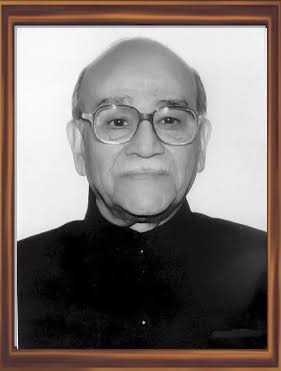
Datto Vaman Potdar, born Dattatray Vaman Potdar, was one of the prominent historians and intellectuals of twentieth-century Maharashtra.
Born on 5 August 1890 at Birwadi in the then Colaba district of the Bombay Presidency, he developed an early interest in education, language and history. He studied at the Nutan Marathi Vidyalaya in Pune and later graduated from Fergusson College in 1910.
Potdar was particularly interested in the history of the Maratha Empire, old Marathi literature and historical manuscripts. His work involved collecting, preserving, interpreting and publishing historical material.
He was also an influential teacher and administrator. Among his important positions was Vice-Chancellor of the University of Poona, where he served during the university’s formative years. University records describe him as one of the distinguished personalities who helped establish the institution as a major centre of higher education.
2. Quick Facts
| Particular | Information |
|---|---|
| Full Name | Dattatray Vaman Potdar |
| Popular Name | Datto Vaman Potdar |
| Honorific | Mahamahopadhyaya |
| Native Name | दत्तो वामन पोतदार |
| Date of Birth | 5 August 1890 |
| Place of Birth | Birwadi, then Colaba District, Bombay Presidency |
| Present Location | Raigad district, Maharashtra |
| Date of Death | 6 October 1979 |
| Place of Death | Pune, Maharashtra |
| Nationality | Indian |
| Profession | Historian, Sanskrit scholar, writer, teacher, educationist and orator |
| Main Fields | History, Marathi literature, Sanskrit, education and cultural studies |
| Major Area of Research | Maratha history and Marathi literature |
| Alma Mater | Fergusson College, Pune |
| Major Academic Position | Vice-Chancellor, University of Poona |
| Vice-Chancellor | 1961–1964 |
| Major Award | Padma Bhushan |
| Award Year | 1967 |
| Padma Category | Literature and Education |
| State | Maharashtra |
The Marathi Vishwakosh confirms his birth and death dates, birthplace, education and major academic and cultural activities. The Government of India’s Padma database confirms his 1967 Padma Bhushan in Literature and Education.
Years Active
Potdar’s public and scholarly career extended for roughly six decades, from the early twentieth century until the 1970s. The Marathi Vishwakosh records his work with the Bharat Itihas Sanshodhak Mandal from 1918, continuing in leadership there until 1973.
3. Award Information
Padma Bhushan – 1967
Award Name
Padma Bhushan
Award Category
Literature and Education
The Government of India’s official Padma Awards database lists Shri Datto Vaman Potdar — Padma Bhushan — Literature and Education — Maharashtra — 1967.
Award Year
1967
Presented By
The award was conferred by the President of India on behalf of the Government of India.
Date of Award Announcement
The Gazette of India notification is dated 26 January 1967. It states that the President was pleased to make the Padma awards and lists “Shri Datto Vaman Potdar, Sanskrit Scholar, Maharashtra” among the Padma Bhushan recipients.
For your blog, I recommend writing “Padma Bhushan, 1967” rather than claiming that 26 January was necessarily the investiture/ceremony date.
Citation / Official Reason
The original Gazette identifies Potdar as a Sanskrit Scholar.
The modern Padma Awards database classifies his award under Literature and Education.
His wider body of work included:
- Sanskrit scholarship
- Marathi literature
- Historical research
- Preservation of historical documents
- Teaching
- University administration
- Cultural activities
- Promotion of historical research
Previous Recipients
There was no single previous recipient because the Padma Bhushan was awarded to multiple people each year.
Other 1967 Padma Bhushan Recipients
Potdar was among several distinguished 1967 Padma Bhushan recipients, including:
- D. C. Pavate – Literature and Education
- B. Shiva Rao – Literature and Education
- Mulk Raj Anand – Literature and Education
- Krishna Kanta Handique – Literature and Education
- Ali Akbar Khan – Arts
- Ravi Shankar – Arts
- Ramanathan Krishnan – Sports
- Vasantrao Bandoji Patil – Trade and Industry
4. Why Did Datto Vaman Potdar Receive the Padma Bhushan?
Datto Vaman Potdar was honoured for his exceptional contribution to scholarship, literature, education and Sanskrit studies.
The official 1967 Gazette calls him a Sanskrit Scholar, while the current Padma database places him in Literature and Education.
His importance went beyond Sanskrit alone. He spent decades studying:
- Maratha history
- Marathi literature
- Historical documents
- Manuscripts
- Language and linguistic issues
- Indian cultural history
- Educational development
He also helped create institutions and scholarly networks that encouraged systematic historical research.
His contribution can therefore be summarised as:
Preserving India’s historical and literary heritage through scholarship, research, teaching and institution-building.
5. Early Life
Datto Vaman Potdar was born on 5 August 1890 at Birwadi, then in the Colaba district of the Bombay Presidency. Today, Birwadi is associated with Raigad district in Maharashtra.
His family had an interesting historical connection with the surname Potdar. According to the Marathi Vishwakosh, the family’s original surname was Orpe. One of their ancestors was appointed a potdar, meaning an official associated with the treasury, during the Adil Shahi period. The occupational designation eventually became the family surname.
Potdar grew up during a period when interest in Indian history and cultural identity was increasing. This environment contributed to his lifelong interest in Maharashtra’s history and literature.
6. Education
Potdar received his primary and secondary education at the Nutan Marathi Vidyalaya in Pune.
Matriculation
He completed his matriculation in 1906.
Fergusson College
He subsequently studied at Fergusson College, Pune, graduating with a B.A. in 1910.
His education gave him a foundation in the humanities and languages that later became central to his historical research.
Potdar also developed an impressive command of Sanskrit, Marathi, Hindi and English. His knowledge of languages helped him work with historical sources and communicate his ideas to audiences across India.
7. Career Journey
Early Teaching Career
Potdar began his teaching career at the Nutan Marathi Vidyalaya, his former school.
He later became associated with New Poona College, which was subsequently renamed Sir Parashurambhau College (S. P. College). There he taught history and Marathi.
His career therefore began in education before expanding into historical research and cultural administration.
Bharat Itihas Sanshodhak Mandal
One of the most important institutions in Potdar’s career was the Bharat Itihas Sanshodhak Mandal in Pune.
He served as its secretary from 1918 to 1947 and subsequently continued as its working president until 1973, according to the Marathi Vishwakosh.
The institution became an important centre for the study and preservation of historical records.
Potdar was particularly interested in documents related to:
- Shivaji Maharaj
- The Maratha Empire
- Peshwa history
- Marathi literature
- Medieval Maharashtra
- Historical administration
Historical Research
Potdar travelled extensively in India collecting historical material.
He studied documents, manuscripts and literary sources and encouraged others to undertake systematic historical research.
His scholarship helped popularise the idea that history should be studied through primary sources and documentary evidence, rather than only through traditional narratives.
Maharashtra Literary Movement
Potdar played an important role in Maharashtra’s literary institutions.
He served as president of the Akhil Bharatiya Marathi Sahitya Sammelan at Ahmednagar in 1939.
He was also associated with the Maharashtra Sahitya Parishad and other literary organisations.
Editor and Writer
Between 1933 and 1936, Potdar served as editor of the Maharashtra Sahitya Patrika.
He wrote and edited works dealing with:
- Marathi literary history
- Maharashtra’s history
- Historical methodology
- Language
- Culture
- Education
- Important personalities
Tilak Maharashtra Vidyapeeth
In 1948, Potdar became Vice-Chancellor of Tilak Maharashtra Vidyapeeth in Pune.
His involvement reflected his wider interest in education and the development of institutions devoted to Indian languages, culture and scholarship.
Vice-Chancellor of University of Poona
Potdar became Vice-Chancellor of the University of Poona in 1961.
He served until 1964. University records identify him as one of the prominent Vice-Chancellors who helped establish the university during its formative years.
His term was important because the University of Poona was still developing its academic identity.
Role in the Samyukta Maharashtra Movement
Potdar also participated in the intellectual and cultural side of the Samyukta Maharashtra movement, which sought the creation of a Marathi-speaking state.
The Marathi Vishwakosh records that he served as Vice-President of the Samyukta Maharashtra Parishad between 1946 and 1950 and contributed intellectual guidance to the movement.
8. Major Achievements
1. Major historian of Maharashtra
Potdar devoted decades to the study of Maharashtra’s past and became particularly well known for research into Maratha history.
2. Sanskrit scholarship
The Government of India’s 1967 Gazette specifically identified him as a Sanskrit Scholar.
3. Promotion of historical research
His long association with the Bharat Itihas Sanshodhak Mandal helped strengthen organised historical research in Maharashtra.
4. University leadership
He served as Vice-Chancellor of both Tilak Maharashtra Vidyapeeth and the University of Poona.
5. Literary leadership
He presided over the 1939 Akhil Bharatiya Marathi Sahitya Sammelan at Ahmednagar.
6. Author and editor
He produced numerous books, essays and edited historical and literary works.
7. Padma Bhushan
The Government of India awarded him the Padma Bhushan in 1967 under Literature and Education.
9. Contribution to the Nation
Potdar’s contribution to India was primarily intellectual and educational.
Preservation of Historical Sources
At a time when many historical documents were scattered in private collections and archives, Potdar worked to locate, study and preserve historical material.
Study of Maratha History
His research helped develop a more systematic understanding of Maharashtra’s political, social and cultural past.
Promotion of Marathi
He worked extensively for Marathi literature and language and participated in major Marathi literary institutions.
Sanskrit Scholarship
His expertise in Sanskrit allowed him to work with classical Indian sources and contributed to the wider study of India’s intellectual heritage.
Education
As a teacher and university administrator, he helped develop higher education institutions in Maharashtra.
Institution Building
His work with historical and literary organisations helped establish networks through which future researchers could study Maharashtra’s history.
Public Intellectual
Potdar was also an accomplished public speaker. The Marathi Vishwakosh notes that he could speak effectively in Marathi, English, Hindi and Sanskrit.
10. Other Awards and Honours
Apart from the Padma Bhushan, Potdar received several important honours.
Mahamahopadhyaya
The Government of India honoured him with the title Mahamahopadhyaya. The Marathi Vishwakosh gives 1948, while some secondary biographical sources give 1946.
For your blog, I recommend writing:
“He was honoured by the Government of India with the title Mahamahopadhyaya in the 1940s.”
This avoids reproducing the discrepancy as a definite date.
Sahitya Vachaspati
He was awarded the title Sahitya Vachaspati by the Hindi Sahitya Sammelan.
Doctor of Literature
He received D.Litt. degrees from Varanaseya/Varanaseya University and the University of Poona according to the Marathi Vishwakosh.
Sanskrut Prachyavidya Pandit
He was honoured with the title “Sanskrut Prachyavidya Pandit” by the Government of India in 1962, according to biographical records.
Vidya Vachaspati
He was honoured as Vidya Vachaspati at the All India Hindi Meet at Prayag in 1965.
Padma Bhushan
1967 — Literature and Education.
11. Legacy and Influence
Datto Vaman Potdar’s legacy extends across history, Marathi literature, Sanskrit scholarship and education.
Historical Scholarship
He helped establish historical research as a serious scholarly activity in Maharashtra.
His association with the Bharat Itihas Sanshodhak Mandal remains one of the most important parts of his legacy.
University Education
His service as Vice-Chancellor helped shape the early development of the University of Poona. A university report describes him among the distinguished early Vice-Chancellors who helped establish the institution.
Marathi Cultural Life
Potdar was deeply involved in Marathi literary organisations and helped strengthen the intellectual infrastructure supporting Marathi scholarship.
Influence on Researchers
His students and younger scholars included several important figures in Marathi intellectual life. He encouraged researchers to work directly with historical documents rather than relying solely on secondary narratives.
A “Walking Encyclopedia”
Potdar became popularly associated with an extraordinary breadth of knowledge. Some secondary sources describe him as a “walking encyclopedia” because of his wide-ranging knowledge of history, literature, languages and culture.
For a blog, it is best to present this as a popular description, rather than an official title.
12. Interesting Facts
1. His original family surname was Orpe
The Marathi Vishwakosh says that the family’s original surname was Orpe, but the designation “Potdar” eventually became the family surname after an ancestor held a treasury-related position under the Adil Shahi regime.
2. He became a teacher soon after graduating
After completing his B.A. in 1910, he entered education and taught history and Marathi.
3. He was multilingual
He was capable of delivering speeches in Marathi, English, Hindi and Sanskrit.
4. He was a lifelong bachelor
Biographical sources record that Potdar never married.
5. He survived the Panshet floods
His residence in Pune’s Narayan Peth area was reportedly damaged/destroyed during the 1961 Panshet flood.
6. He was involved in the creation of the Indian History Congress
Potdar helped establish what was initially called the Modern Indian History Congress in 1935; it was subsequently known as the Indian History Congress.
7. He was entrusted with writing a biography of Shivaji Maharaj
The Maharashtra government assigned him the task of writing a biography of Chhatrapati Shivaji Maharaj in 1965. He died before completing the project.
8. He wrote hundreds of historical articles
His scholarship was not limited to books. He produced a large body of articles and shorter writings in Marathi and English.
13. Quotes
There are many statements and anecdotes attributed to Datto Vaman Potdar in Marathi writings, but reliably sourced verbatim quotations are difficult to verify online.
For a factual blog, I recommend not presenting an unattributed sentence as a direct Potdar quotation.
You can instead use an editorial summary:
“Datto Vaman Potdar devoted his life to preserving Maharashtra’s historical and literary heritage through research, teaching and institution-building.”
Note: This is a summary of his contribution, not a direct quotation by Potdar.
14. Timeline
| Year | Event |
|---|---|
| 1890 | Born on 5 August at Birwadi |
| 1906 | Completed matriculation |
| 1910 | Graduated from Fergusson College with a B.A. |
| 1910s | Began teaching history and Marathi |
| 1913 | Edited the work Devadasakrit Santamalika |
| 1915 | Became a life member of the Shikshan Prasarak Mandali |
| 1918 | Began long-term association with Bharat Itihas Sanshodhak Mandal |
| 1922 | Published Marathi Gadyacha Ingraji Avtar |
| 1933–1936 | Editor of Maharashtra Sahitya Patrika |
| 1935 | Helped establish the Modern Indian History Congress |
| 1939 | Presided over the Akhil Bharatiya Marathi Sahitya Sammelan at Ahmednagar |
| 1943 | Published Maharashtra Sahitya Parishadecha Itihas |
| 1948 | Became Vice-Chancellor of Tilak Maharashtra Vidyapeeth |
| 1940s | Received the title Mahamahopadhyaya |
| 1950s | Continued major roles in literary, educational and historical institutions |
| 1961 | Became Vice-Chancellor of the University of Poona |
| 1961 | His Pune residence was affected by the Panshet floods |
| 1962 | Received the honour/title of Sanskrit and ancient-learning scholarship |
| 1964 | Completed his term as University of Poona Vice-Chancellor |
| 1965 | Received the Vidya Vachaspati honour |
| 1965 | Maharashtra government entrusted him with a biography of Shivaji Maharaj |
| 1967 | Received the Padma Bhushan |
| 1973 | Ended his long tenure as working president of Bharat Itihas Sanshodhak Mandal |
| 1979 | Died on 6 October in Pune |
The chronology is based primarily on the Marathi Vishwakosh and supplementary biographical sources.
15. References
For your blog, these are the strongest sources to cite.
1. Government of India – Padma Awards Database
The official Padma Awards database confirms that Datto Vaman Potdar received the Padma Bhushan in 1967 in Literature and Education from Maharashtra.
Government of India – Padma Awards Database
2. Gazette of India – 1967 Padma Awards
The original Government of India Gazette dated 26 January 1967 lists Shri Datto Vaman Potdar, Sanskrit Scholar, Maharashtra, among the Padma Bhushan awardees.
1967 Padma Awards Gazette – Government of India
3. Marathi Vishwakosh
The Marathi Vishwakosh provides detailed information about Potdar’s education, historical research, literary activities, university positions, publications and cultural work.
Marathi Vishwakosh – Datto Vaman Potdar
4. Savitribai Phule Pune University
University-related records place Potdar among the important early Vice-Chancellors who helped establish the University of Poona.
16. Related Personalities
Vishwanath Kashinath Rajwade
A pioneering historian and archival researcher of Maharashtra. Rajwade’s work had a major influence on Potdar and the historical research tradition in Pune.
Govind Sakharam Sardesai
A prominent historian of the Maratha period whose work is closely connected with the study of Maratha history.
Vasudev Sitaram Bendre
An important historian and researcher of Maratha history who belonged to the scholarly tradition associated with Potdar.
Setu Madhavrao Pagdi
Historian, writer and scholar who continued the tradition of research into Maharashtra’s history and culture.
Ramchandra Chintaman Dhere
A major Marathi scholar and researcher of religious and cultural history.
D. C. Pavate
A contemporary Padma Bhushan recipient who, like Potdar, made significant contributions to education and scholarship. The two were both honoured with the Padma Bhushan in 1967 under Literature and Education.
Mulk Raj Anand
The renowned Indian novelist and writer who was another 1967 Padma Bhushan recipient in Literature and Education.
17. Frequently Asked Questions (FAQ)
Who was Datto Vaman Potdar?
Datto Vaman Potdar was an Indian historian, Sanskrit scholar, Marathi writer, educator and orator, best known for his research into Maratha history and Marathi literature.
What was Datto Vaman Potdar’s full name?
His birth name is generally given as Dattatray Vaman Potdar. He became widely known as Datto Vaman Potdar.
When was Datto Vaman Potdar born?
He was born on 5 August 1890.
Where was Datto Vaman Potdar born?
He was born at Birwadi, then in Colaba district of the Bombay Presidency, now associated with Raigad district, Maharashtra.
When did Datto Vaman Potdar die?
He died on 6 October 1979 in Pune, Maharashtra.
Which award did Datto Vaman Potdar receive?
He received the Padma Bhushan in 1967.
What was the Padma Bhushan category?
The official Government of India database classifies his award under Literature and Education.
What did the original award notification call him?
The 1967 Gazette identifies him as a “Sanskrit Scholar.”
Why did Datto Vaman Potdar receive the Padma Bhushan?
He was recognised for his distinguished contribution to scholarship, literature and education, particularly his work as a Sanskrit scholar, historian, writer and educator.
What did Datto Vaman Potdar study?
He studied at Nutan Marathi Vidyalaya in Pune and graduated from Fergusson College in 1910.
Was Datto Vaman Potdar a historian?
Yes. He was one of the prominent historians and historical researchers of Maharashtra.
What type of history did Potdar study?
He was particularly interested in Maratha history, Maharashtra’s history and Marathi literary history.
Who influenced Datto Vaman Potdar?
He belonged to the historical research tradition associated with Vishwanath Kashinath Rajwade and the Bharat Itihas Sanshodhak Mandal.
Was Datto Vaman Potdar a Vice-Chancellor?
Yes. He served as Vice-Chancellor of Tilak Maharashtra Vidyapeeth and later as Vice-Chancellor of the University of Poona.
When was he Vice-Chancellor of the University of Poona?
He served from 1961 to 1964.
What was the Bharat Itihas Sanshodhak Mandal?
It is a historical research institution in Pune dedicated to collecting, preserving and studying historical documents. Potdar had a long association with it and served in leadership roles for decades.
Did Potdar write about Marathi literature?
Yes. His writings included studies of Marathi literary history and language, including Marathi Gadyacha Ingraji Avtar and Maharashtra Sahitya Parishadecha Itihas.
Did he write a biography of Shivaji Maharaj?
The Maharashtra government entrusted him with writing a biography of Chhatrapati Shivaji Maharaj in 1965, but he died before completing the assignment.
Was Datto Vaman Potdar a Sanskrit scholar?
Yes. The original 1967 Padma Bhushan Gazette specifically described him as a Sanskrit Scholar.
What is Datto Vaman Potdar’s greatest legacy?
His greatest legacy is his contribution to historical research, preservation of Maharashtra’s documentary heritage, Marathi scholarship and higher education.
Conclusion
Datto Vaman Potdar was one of Maharashtra’s most influential twentieth-century scholars. His life brought together history, Sanskrit, Marathi literature, education and public intellectual life.
From his early education in Pune and graduation from Fergusson College, he went on to become a teacher, historian, literary leader and university administrator. His decades-long association with the Bharat Itihas Sanshodhak Mandal helped strengthen the culture of documentary historical research in Maharashtra.
His leadership extended into higher education, including his tenure as Vice-Chancellor of the University of Poona from 1961 to 1964.
The Government of India honoured him with the Padma Bhushan in 1967. The official award database places the honour in Literature and Education, while the original Gazette identifies him as a Sanskrit Scholar.
About the Author