

. Introduction
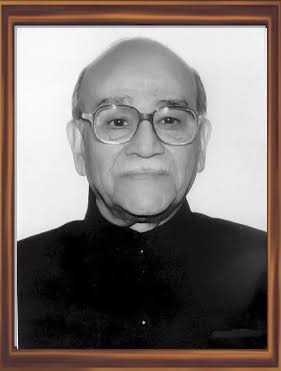
Vasantdada Patil, formally Vasantrao Banduji Patil, was an Indian freedom fighter, politician, farmer-leader and an important architect of Maharashtra’s cooperative movement. Born on 13 November 1917 at Padmale near Sangli, he rose from a modest farming background to become a major political leader of Maharashtra.
He served as Chief Minister of Maharashtra twice and later as Governor of Rajasthan. He is particularly remembered for promoting cooperative institutions, especially in agriculture and the sugar industry.
His contribution to the cooperative sector was recognised by the Government of India with the Padma Bhushan in 1967, under Trade and Industry.
Vasantdada Patil died on 1 March 1989 in Bombay (now Mumbai), Maharashtra, at the age of 71.
2. Quick Facts
| Particular | Information |
|---|---|
| Full Name | Vasantrao Banduji Patil |
| Popular Name | Vasantdada Patil |
| Native Name | वसंतराव बंडूजी पाटील / वसंतदादा पाटील |
| Date of Birth | 13 November 1917 |
| Place of Birth | Padmale, near Sangli, Maharashtra |
| Date of Death | 1 March 1989 |
| Place of Death | Bombay (Mumbai), Maharashtra |
| Nationality | Indian |
| Profession | Politician, farmer-leader, freedom fighter |
| Political Party | Indian National Congress |
| Field of Achievement | Public affairs, cooperative development, agriculture and trade/industry |
| Years Active | 1930s–1980s |
| Major Political Position | Chief Minister of Maharashtra |
| Other Major Position | Governor of Rajasthan |
| Padma Award | Padma Bhushan |
| Award Year | 1967 |
| Padma Field | Trade and Industry |
| Constituency | Sangli |
The Government of India’s official Padma database gives his award name as “Shri Vasantrao Bandoji Patil” and records the field as Trade and Industry.
3. Award Information
Padma Bhushan
Award Name
Padma Bhushan
Award Category
Trade and Industry
Award Year
1967
The official Government of India Padma Awards database lists:
Shri Vasantrao Bandoji Patil — Padma Bhushan (1967) — Trade and Industry — Maharashtra.
Presented By
The Padma Bhushan is a civilian honour of the Government of India, formally conferred by the President of India.
Date of Ceremony
For a blog, it is safest to state the award year as 1967. I could not verify a reliable official source giving the exact investiture date for Vasantdada Patil’s ceremony, so an exact date should not be published without further archival confirmation.
Citation / Official Reason
The official Padma database classifies his contribution under Trade and Industry.
His recognition is closely associated with his pioneering work in cooperative development, agriculture, sugar production and rural economic organisation.
Previous Recipients
There is no single “previous recipient” for a Padma award because the award is given to multiple people every year.
Next Recipients
Likewise, the following year’s recipients were a separate group of awardees.
4. Why Did Vasantdada Patil Receive the Award?
Vasantdada Patil received the Padma Bhushan in 1967 for his contribution in the field of Trade and Industry.
His importance was particularly connected with the development of the cooperative movement in Maharashtra.
He believed that farmers could improve their economic position by organising themselves into cooperatives rather than depending entirely on private intermediaries.
His work contributed to:
- Cooperative sugar factories
- Agricultural marketing
- Farmer organisations
- Rural industries
- Cooperative spinning and oil mills
- Development of the sugar sector
- Economic opportunities for rural communities
The Maharashtra government’s cooperative department describes the cooperative sugar sector as an important part of the state’s economic development, while historical accounts identify Patil as a major leader in this transformation.
5. Early Life
Vasantdada Patil was born on 13 November 1917 at Padmale in the Sangli region of Maharashtra. He came from a farming family. His father was Bandoji Patil and his mother was Rukminibai.
His early life was shaped by rural Maharashtra and the difficulties faced by farmers.
He became involved in the Indian freedom movement while still young. The Ministry of Culture’s Digital District Repository records his participation in the freedom struggle from the 1930s and his activities against British rule during the 1942 movement.
His involvement eventually resulted in imprisonment by the British authorities.
6. Education
Vasantdada Patil did not receive extensive formal higher education.
The Marathi Vishwakosh records that his education continued only up to approximately the seventh standard.
His limited formal education did not prevent him from becoming an influential administrator and political leader.
Much of his practical knowledge came from:
- Farming
- Participation in the freedom movement
- Working with rural communities
- Cooperative organisation
- Public life
- Political experience
His career is therefore often presented as an example of leadership developed through practical experience and grassroots involvement rather than formal academic qualifications.
7. Career Journey
Freedom Movement
Vasantdada entered the freedom movement during his youth.
According to the Ministry of Culture’s Digital District Repository, he became actively involved in the struggle against British rule, particularly during the 1942 movement in the Sangli-Satara region.
He was imprisoned by the British and continued his political activities after his release.
Entry into Electoral Politics
After independence, Patil entered formal politics.
He was elected to the Maharashtra Legislative Assembly in 1952 from Sangli and continued as an MLA until 1967.
His political career was strongly connected with farmers, cooperatives and rural development.
Cooperative Movement
One of his most important contributions was the development of cooperative institutions.
In the post-independence period, he worked with other leaders to promote cooperative organisations in agriculture and industry.
The Marathi Vishwakosh records that a cooperative sugar factory was established at Sangli in 1948, followed by efforts involving cooperative spinning and oil mills.
His work helped make cooperative sugar production an important part of Maharashtra’s rural economy.
Leadership in the Sugar Sector
Patil became an important leader in Maharashtra’s cooperative sugar industry.
He served as:
- President of the Maharashtra State Cooperative Sugar Factories Federation
- Director and later President of the National Federation of Cooperative Sugar Factories
- Chairman of the Sugar Export Board
The Marathi Vishwakosh records his presidency of the Maharashtra State Cooperative Sugar Factories Federation in 1965 and his leadership roles at the national level in the early 1970s.
Chief Minister of Maharashtra
Vasantdada Patil became Chief Minister of Maharashtra in May 1977.
His first term lasted from 17 May 1977 to 18 July 1978.
He returned as Chief Minister in February 1983, serving until 1985.
His political career was closely associated with the Congress party and the interests of rural Maharashtra.
Governor of Rajasthan
After his political career in Maharashtra, Patil was appointed Governor of Rajasthan.
He served from 20 November 1985 to 15 October 1987.
This was his final major constitutional position.
8. Major Achievements
Vasantdada Patil’s major achievements include:
1. Participation in India’s freedom struggle
He participated in the independence movement and faced imprisonment under British rule.
2. Development of cooperative institutions
He became one of the prominent leaders of Maharashtra’s cooperative movement.
3. Promotion of cooperative sugar factories
He played an important role in developing cooperative sugar production and giving farmers a greater role in the sugar industry.
4. Agricultural marketing
He supported institutions designed to help farmers receive better returns for agricultural products.
5. Rural industrialisation
His cooperative philosophy extended beyond sugar into activities such as spinning and oil processing.
6. Chief Minister of Maharashtra
He served as Maharashtra’s Chief Minister during two periods.
7. Governor of Rajasthan
He later served as Governor of Rajasthan from 1985 to 1987.
8. Padma Bhushan
He received the Padma Bhushan in 1967 for Trade and Industry.
9. Contribution to the Nation
Contribution to Farmers
Patil’s politics was strongly connected with farmers.
He believed that farmers could become economically stronger by owning and managing cooperative institutions.
This philosophy helped strengthen rural participation in industries such as sugar production.
Contribution to Cooperative Movement
His most enduring contribution was his role in Maharashtra’s cooperative movement.
Cooperative institutions allowed farmers to collectively participate in processing and marketing agricultural products.
The cooperative sugar sector subsequently became one of the defining features of Maharashtra’s rural economy.
Contribution to Rural Development
Patil supported the creation of industries and institutions outside India’s major urban centres.
His model attempted to connect:
Farmers → Cooperatives → Processing → Industry → Rural Employment
This helped make agriculture an important foundation for rural industrial development.
Contribution to Public Life
His career also demonstrated how a grassroots freedom fighter could transition into democratic politics and constitutional office.
He served as:
- MLA
- Chief Minister
- Member of Parliament
- Governor
10. Other Awards and Honours
The most prominent national honour associated with Vasantdada Patil is:
Padma Bhushan – 1967
Field: Trade and Industry
State: Maharashtra
Vasantdada Sugar Institute
A major institution associated with Maharashtra’s sugar industry was renamed the Vasantdada Sugar Institute (VSI) in 1989 in his honour.
The institute traces its origins to the Deccan Sugar Institute, established in 1975 by leaders of Maharashtra’s cooperative sugar industry.
The Maharashtra Department of Cooperation describes VSI as an organisation serving the scientific, technical and educational needs of the sugar industry.
Vasantdada Patil Pratishthan
Educational institutions have also been named after him, reflecting his continuing legacy in Maharashtra.
11. Legacy and Influence
Vasantdada Patil’s legacy is closely linked with cooperative Maharashtra.
He helped popularise the idea that farmers could collectively own and manage industries connected with their agricultural production.
The cooperative sugar model became particularly influential in western Maharashtra.
His legacy can be seen in:
- Cooperative sugar factories
- Farmer organisations
- Agricultural marketing institutions
- Rural industries
- Sugar-sector research
- Educational institutions named after him
The Vasantdada Sugar Institute is an especially important example. Its work encompasses academics, research and extension related to sugarcane and the sugar industry.
He is therefore remembered not simply as a former Chief Minister but as a leader who connected agriculture, cooperatives and rural industrialisation.
12. Interesting Facts
1. He had limited formal education
He studied only up to approximately the seventh standard but became a major political and cooperative leader.
2. He came from a farming family
His early experiences in rural Maharashtra influenced his later focus on farmers and cooperatives.
3. He was a freedom fighter
He participated in the independence movement and was imprisoned by the British.
4. His Padma Bhushan came before his Chief Ministership
He received the Padma Bhushan in 1967, several years before becoming Chief Minister of Maharashtra.
5. The official Padma database classifies his award under Trade and Industry
Although he is best remembered today as a politician, his 1967 Padma Bhushan was officially recorded under Trade and Industry.
6. He served as Governor of another state
After serving as Maharashtra’s Chief Minister, he became Governor of Rajasthan.
7. He became a symbol of cooperative development
His name remains strongly associated with Maharashtra’s cooperative sugar sector.
13. Quotes
There are many statements attributed to Vasantdada Patil in Marathi political literature, but reliable primary sources for verbatim quotations are limited.
For a fact-based blog, it is better not to use an unattributed quotation under his name.
Instead, you can use a clearly labelled editorial description:
“Vasantdada Patil believed in empowering farmers through cooperation, collective enterprise and rural development.”
Note: This is a summary of his public philosophy, not a verified direct quotation by Patil. Do not put quotation marks around it if publishing it as his actual words.
14. Timeline
| Year | Event |
|---|---|
| 1917 | Born on 13 November at Padmale near Sangli |
| 1930s | Became involved in the freedom movement |
| 1940s | Participated actively in the anti-British struggle |
| 1943 | British authorities intensified efforts to capture him; he was imprisoned |
| 1946 | Released from prison |
| 1948 | Associated with the development of cooperative sugar production around Sangli |
| 1951 | Continued work connected with agricultural marketing and rural development |
| 1952 | Elected to the Maharashtra Legislative Assembly |
| 1965 | Became President of the Maharashtra State Cooperative Sugar Factories Federation |
| 1967 | Received the Padma Bhushan in Trade and Industry |
| 1970–72 | Held important leadership roles in the national cooperative sugar sector |
| 1977 | Became Chief Minister of Maharashtra for the first time |
| 1978 | First Chief Ministerial term ended |
| 1980 | Elected to the Lok Sabha from Sangli |
| 1983 | Returned as Chief Minister of Maharashtra |
| 1985 | Left the Chief Minister’s office and was appointed Governor of Rajasthan |
| 1985–87 | Served as Governor of Rajasthan |
| 1989 | Died on 1 March in Bombay/Mumbai |
| 1989 | Deccan Sugar Institute was renamed the Vasantdada Sugar Institute |
The dates of his major political offices are corroborated by biographical and historical records, while the Padma award year and category are confirmed by the Government of India’s official database.
15. References
1. Government of India – Padma Awards Database
The official database confirms that Shri Vasantrao Bandoji Patil received the Padma Bhushan in 1967 under Trade and Industry, Maharashtra.
2. Ministry of Culture – Digital District Repository
The Ministry of Culture’s repository provides information about Patil’s birthplace, family background, participation in the freedom movement and imprisonment.
3. Marathi Vishwakosh
The Marathi Vishwakosh provides information about his early life, education, political career and role in Maharashtra’s cooperative sugar industry.
4. Maharashtra Department of Cooperation
The Maharashtra government’s Department of Cooperation provides information about the cooperative sugar sector and Vasantdada Sugar Institute.
5. Vasantdada Sugar Institute
The institute’s official history explains its origins and its relationship with leaders of Maharashtra’s cooperative sugar industry.
16. Related Personalities
Yashwantrao Chavan
The first Chief Minister of Maharashtra and one of the major architects of the state’s political and economic development.
Vithalrao Vikhe Patil
A pioneer of cooperative sugar production in Maharashtra. His work provides important context for understanding the development of the state’s cooperative sugar movement.
Shankarrao Chavan
A prominent Maharashtra politician who served as Chief Minister and preceded Vasantdada Patil in the Chief Minister’s office.
Sharad Pawar
A major Maharashtra political leader who became Chief Minister after Vasantdada Patil’s first term ended in 1978.
Vasantdada Patil
His own career is closely connected with other leaders of Maharashtra’s cooperative movement, including figures involved in the development of sugar cooperatives.
Shankarrao Mohite-Patil
An important leader associated with Maharashtra’s cooperative sugar sector and one of the figures involved in the establishment of the Deccan Sugar Institute.
17. Frequently Asked Questions (FAQ)
Who was Vasantdada Patil?
Vasantdada Patil, whose full name was Vasantrao Banduji Patil, was an Indian freedom fighter, politician and cooperative-sector leader from Maharashtra.
When was Vasantdada Patil born?
He was born on 13 November 1917 at Padmale near Sangli, Maharashtra.
When did Vasantdada Patil die?
He died on 1 March 1989 in Bombay (now Mumbai), Maharashtra.
What was Vasantdada Patil famous for?
He was particularly famous for his role in Maharashtra’s cooperative movement, especially cooperative sugar production, as well as for serving as Chief Minister of Maharashtra.
When did Vasantdada Patil become Chief Minister?
He first became Chief Minister on 17 May 1977. He later returned to the office in February 1983.
How many times was Vasantdada Patil Chief Minister of Maharashtra?
He served as Chief Minister during two periods, although his ministries are sometimes counted separately because of changes in government and political circumstances.
Which award did Vasantdada Patil receive?
He received the Padma Bhushan in 1967.
What was the field of his Padma Bhushan?
The Government of India’s official database records the field as Trade and Industry.
Why did Vasantdada Patil receive the Padma Bhushan?
His recognition was connected with his contribution to Trade and Industry, particularly his important work in cooperative development and the agricultural and sugar sectors.
Was Vasantdada Patil a freedom fighter?
Yes. He participated in India’s freedom movement and was imprisoned by the British authorities.
What was Vasantdada Patil’s educational qualification?
He had limited formal education and studied to approximately the seventh standard.
What was Vasantdada Patil’s contribution to farmers?
He promoted cooperative organisations through which farmers could collectively participate in agricultural processing, marketing and industries such as sugar production.
What is Vasantdada Sugar Institute?
The Vasantdada Sugar Institute (VSI) is a major research, education and technical organisation serving India’s sugar and sugarcane industry. It originated as the Deccan Sugar Institute in 1975 and was renamed in 1989.
When did Vasantdada Patil become Governor of Rajasthan?
He became Governor of Rajasthan on 20 November 1985 and served until 15 October 1987.
What political party did Vasantdada Patil belong to?
He was associated with the Indian National Congress.
Where was Vasantdada Patil born?
He was born at Padmale near Sangli in Maharashtra.
About the Author