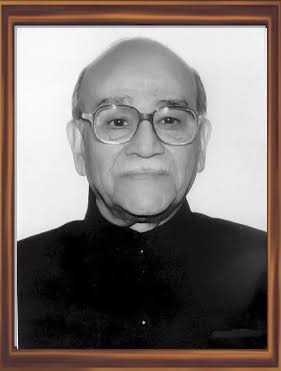

Haribhau Upadhyaya (1892–1972) was an Indian freedom fighter, Hindi writer, journalist, social worker and political leader. Popularly associated with the name “Da Sahab,” he was strongly influenced by Mahatma Gandhi and became an important figure in the freedom movement in the Ajmer region. He later served as the first Chief Minister of Ajmer State and as a minister in the Rajasthan government.
He was also a prolific Hindi writer and editor. In recognition of his contribution to Literature and Education, the Government of India awarded him the Padma Bhushan in 1966. The official Padma Awards database records him as a 1966 Padma Bhushan recipient in the Literature and Education category.
1. Introduction
Haribhau Upadhyaya was a remarkable personality who combined literary work, journalism, Gandhian social service and public life.
Born in 1892 in Bhaurasa/Bhonrasa village in the Ujjain region of present-day Madhya Pradesh, he developed an interest in literature at a young age. He entered Hindi journalism through the magazine Audumbar and later worked with eminent Hindi writer-editor Mahavir Prasad Dwivedi on Saraswati.
His association with Mahatma Gandhi transformed his life. He participated in the freedom struggle, worked for khadi, established a Gandhi Ashram at Hatundi near Ajmer in 1927, and was imprisoned during the Civil Disobedience and Quit India movements.
After independence, he entered democratic politics and became Chief Minister of Ajmer State from 1952 to 1956. He subsequently served as Finance Minister and later Education Minister of Rajasthan.
2. Quick Facts
| Particular | Information |
|---|---|
| Full Name | Haribhau Upadhyaya |
| Popular Name | Da Sahab |
| Date of Birth | 24 March 1892* |
| Place of Birth | Bhaurasa/Bhonrasa village, Ujjain region, Madhya Pradesh |
| Nationality | Indian |
| Profession | Freedom fighter, writer, journalist, editor, social worker and politician |
| Field of Achievement | Literature and Education; freedom movement; public service |
| Political Party | Indian National Congress |
| Major Political Position | First Chief Minister of Ajmer State |
| Years as Chief Minister | 1952–1956 |
| Major State Cabinet Positions | Finance; Education; Industries; Civil Supplies; Devasthan |
| Major Award | Padma Bhushan |
| Award Year | 1966 |
| Award Category | Literature and Education |
| Date of Death | 25 August 1972 |
| Place of Death | Hatundi, Ajmer, Rajasthan |
*Some authoritative government material gives only 1892 for his birth year, while several biographical sources give 24 March 1892. For a blog, you can mention the full date while noting that official government material confirms the year 1892.
3. Award Information
Padma Bhushan – 1966
| Award Detail | Information |
|---|---|
| Award Name | Padma Bhushan |
| Award Category | Literature and Education |
| Award Year | 1966 |
| Awardee | Shri Haribhau Upadhyaya |
| Presented By | Government of India / President of India |
| Official Gazette Description | Writer and Social Worker |
| Official State Listed | Rajasthan in the Gazette; Padma database currently lists Uttar Pradesh |
| Date of Award Notification | 26 January 1966 |
The official Gazette of India issued by the President’s Secretariat on 26 January 1966 lists “Shri Haribhau Upadhyaya, Writer and Social Worker” among the Padma Bhushan awardees.
The current Government of India’s Padma Awards database classifies him as:
Padma Bhushan (1966) – Literature and Education – Uttar Pradesh.
Important note for your blog
There is a discrepancy in the historical location shown in sources: the 1966 Gazette says “Rajasthan,” whereas the present Padma database displays “Uttar Pradesh.” The Gazette is the contemporary official award notification, so I recommend using Rajasthan when describing the 1966 award record and adding a note about the database discrepancy if necessary.
Citation / Official Reason
The contemporary Gazette describes him as a “Writer and Social Worker.” The Padma database categorises the award under Literature and Education.
His recognition was therefore closely connected with his work in:
- Hindi literature
- Journalism and editing
- Social service
- Gandhian constructive work
- Education
- Public life and nation-building
Ceremony Date
The official notification announcing the award is dated 26 January 1966. I could not verify a separate individual investiture date from the official sources consulted, so it is safer for your blog to use 26 January 1966 as the award notification date, rather than claiming it was the ceremony date.
Previous Recipients
The Padma Bhushan had already been awarded to numerous distinguished Indians before 1966. The Government’s Padma database provides the historical list.
Next Recipients
Among the notable 1967 Padma Bhushan recipients were Mulk Raj Anand, Ravi Shankar, Ramanathan Krishnan, Pupul Jayakar and Tara Cherian.
4. Why Did Haribhau Upadhyaya Receive the Award?
Haribhau Upadhyaya received the Padma Bhushan in 1966 in the field of Literature and Education.
The award recognised the breadth of his public contribution as a writer, social worker, journalist and national movement worker. The official Gazette specifically identifies him as a Writer and Social Worker.
His contribution included:
- Promoting Hindi literature.
- Editing Hindi journals and newspapers.
- Translating important works into Hindi.
- Supporting Gandhian constructive programmes.
- Working for khadi and village development.
- Establishing the Gandhi Ashram at Hatundi.
- Participating in India’s freedom struggle.
- Facing imprisonment for nationalist activities.
- Serving as Chief Minister of Ajmer State.
- Contributing to education and administration in Rajasthan.
5. Early Life
Haribhau Upadhyaya was born in 1892 at Bhaurasa/Bhonrasa village in the Ujjain area of present-day Madhya Pradesh. The Ministry of Culture’s Azadi Ka Amrit Mahotsav repository identifies him as a prominent leader of the freedom struggle in Rajasthan.
From his student years, he developed an interest in literature. His reading of Sanskrit works and English novels encouraged his literary interests.
He eventually moved into journalism and public service, making literature an important part of his lifelong work.
6. Education
Detailed records of Haribhau Upadhyaya’s formal school and college education are less consistently documented in easily accessible official sources than his later public career.
What is clear is that he was largely self-driven in his literary and intellectual development and developed knowledge of several languages, including Hindi, Sanskrit, English, Marathi and Gujarati. His literary career developed alongside his studies and journalism.
His intellectual formation was also strongly influenced by his association with Mahavir Prasad Dwivedi, one of the major figures in modern Hindi literature. Upadhyaya worked with Dwivedi on Saraswati.
A useful blog-friendly point
Rather than giving an unverified college degree or institution, it is better to describe his education as literary and self-directed, followed by practical training through journalism, editorial work and association with leading Hindi intellectuals.
7. Career Journey
Entry into Journalism
Haribhau Upadhyaya began his public career through Hindi journalism.
In 1911, he became associated with and edited the Hindi monthly Audumbar.
Association with Mahavir Prasad Dwivedi
In 1915, he came into contact with Mahavir Prasad Dwivedi and subsequently worked with him on Saraswati. This association helped strengthen his literary and editorial career.
Work with Hindi Newspapers
He later contributed to publications including:
- Pratap
- Hindi Navajivan
- Prabha
He was also associated with attempts to develop other Hindi periodicals.
Association with Mahatma Gandhi
Gandhi had a major influence on Upadhyaya’s life. Gandhi’s correspondence with him demonstrates their working relationship, including discussions about Navajivan, khadi work and activities in Rajasthan.
Gandhi Ashram at Hatundi
In 1927, Upadhyaya established the Gandhi Ashram at Hatundi near Ajmer.
The institution became an important centre for Gandhian constructive activity and the freedom movement in the region.
Bijolia Peasant Movement
Upadhyaya also became involved with the Bijolia peasant movement, an important non-violent agrarian struggle in Rajasthan.
In 1929, Jamnalal Bajaj entrusted him with advising the Uparmal Panchayat Board, which was involved in the movement. He also worked to build the Congress organisation in the region.
Civil Disobedience Movement
He participated in the Civil Disobedience Movement and was arrested in 1930 for his political activities.
Quit India Movement
During the Quit India Movement of 1942, he was again imprisoned by the authorities.
Chief Minister of Ajmer
After independence, he entered electoral politics.
He was elected to the Ajmer Legislative Assembly in 1952 from the Shrinagar constituency and became the first Chief Minister of Ajmer State.
His term lasted from:
24 March 1952 – 31 October 1956.
Rajasthan Government
After the integration of Ajmer with Rajasthan, he was elected to the Rajasthan Legislative Assembly from Kekri in 1957.
He served as:
- Finance Minister: 1957–1962
- Education Minister: 1962–1967
- Also held portfolios including Industries, Civil Supplies and Devasthan.
8. Major Achievements
1. Freedom Fighter
He played a significant role in the Indian independence movement, especially in Rajasthan.
2. First Chief Minister of Ajmer State
He became the first Chief Minister of Ajmer State in 1952.
3. Gandhian Constructive Work
He established the Gandhi Ashram at Hatundi in 1927, which became an important centre for Gandhian activities.
4. Role in the Bijolia Movement
His involvement with the Bijolia peasant movement connected his nationalist work with agrarian and social concerns.
5. Hindi Journalism
He edited and contributed to several important Hindi publications and helped strengthen Hindi journalism.
6. Hindi Literature
He wrote numerous original works and translated important books into Hindi.
Among the works associated with him are Swatantrata Ki Aur, Durvadal, Yug Dharm, Bapu Ke Ashram Mein and Sadhana Ke Path Par.
7. Padma Bhushan
He received the Padma Bhushan in 1966 for Literature and Education.
9. Contribution to the Nation
Haribhau Upadhyaya’s contribution extended beyond politics.
Contribution to Freedom
He participated in the national movement and was imprisoned during both the Civil Disobedience Movement and Quit India Movement.
Contribution to Rural Society
His work with the Bijolia peasant movement showed his concern for agrarian issues and the rights of rural communities.
Contribution to Hindi
As a writer, translator, editor and journalist, he helped popularise Hindi literature and nationalist ideas through accessible prose.
Contribution to Gandhian Ideals
His Gandhi Ashram at Hatundi became a centre for constructive work and nationalist activity.
Contribution to Rajasthan
As Chief Minister of Ajmer and later a Rajasthan minister, he contributed to the administration and development of the region during India’s early post-independence years.
10. Other Awards and Honours
The Padma Bhushan (1966) is his best-known national honour.
He was also associated with important literary and educational organisations. Some biographical sources state that he served for years as president of the Rajasthan Sahitya Akademi and established institutions including Mahila Shiksha Sadan at Hatundi and the Sasta Sahitya Mandal.
For a blog, these institutional contributions can be presented as part of his broader legacy rather than as formal government awards.
11. Legacy and Influence
Haribhau Upadhyaya left a legacy in three major fields: freedom struggle, Hindi literature and public service.
Literary Legacy
His writings dealt with nationalism, Gandhian thought, social reform and ethical living. His language was generally accessible and connected literary writing with public concerns.
Gandhian Legacy
His association with Gandhi and his work at Hatundi made him an important representative of Gandhian constructive programmes in Rajasthan.
Political Legacy
As the first Chief Minister of Ajmer State, he became part of the early phase of democratic governance in independent India.
Educational Legacy
His emphasis on education and social development also contributed to the growth of institutions in the Ajmer region.
The continued existence of the Haribhau Upadhyaya Teachers College for Women at Hatundi reflects the lasting institutional memory of his work in the area.
12. Interesting Facts
- Haribhau Upadhyaya was popularly known as Da Sahab.
- He was born in 1892 in the Ujjain region of present-day Madhya Pradesh.
- He became interested in literature while still young.
- He entered journalism through the Hindi periodical Audumbar.
- He became its editor in 1911.
- He worked with the famous Hindi editor Mahavir Prasad Dwivedi.
- He was associated with Saraswati.
- He also worked with publications including Pratap and Hindi Navajivan.
- Mahatma Gandhi strongly influenced his political and social thinking.
- He established the Gandhi Ashram at Hatundi in 1927.
- He participated in the Bijolia peasant movement.
- He was arrested during the Civil Disobedience Movement in 1930.
- He was imprisoned during the Quit India Movement in 1942.
- He became the first Chief Minister of Ajmer State.
- His Chief Ministerial term began on 24 March 1952.
- He later became Finance Minister of Rajasthan.
- He subsequently served as Education Minister.
- He wrote several books on Gandhi, nationalism and social ideals.
- He translated important works into Hindi, including Jawaharlal Nehru’s Meri Kahani and Pattabhi Sitaramayya’s Congress Ka Itihas.
- He received the Padma Bhushan in 1966.
- The official Padma Gazette described him as a Writer and Social Worker.
- He died on 25 August 1972.
13. Quotes
For this section, avoid using invented motivational quotes attributed to Haribhau Upadhyaya. Reliable English-language sources do not provide a large collection of authenticated quotations from him.
One documented autobiographical statement about his literary journey is quoted in a Hindi biographical source:
“Audumbar’s services brought me to the service of Acharya Dwivedi.”
This refers to his transition from Audumbar to working with Mahavir Prasad Dwivedi.
Another useful primary-source connection is the correspondence between Mahatma Gandhi and Haribhau Upadhyaya, preserved in Gandhi’s collected works. In a 1925 letter, Gandhi addressed him as “Bhai Haribhau” and discussed the possibility of his undertaking khadi work in Rajasthan.
14. Timeline
| Year | Event |
|---|---|
| 1892 | Born at Bhaurasa/Bhonrasa in the Ujjain region |
| 1911 | Became associated with/editing Audumbar |
| 1915 | Came into contact with Mahavir Prasad Dwivedi |
| 1910s | Worked with Saraswati and other Hindi publications |
| 1921 | Associated with Hindi Navajivan |
| 1927 | Established Gandhi Ashram at Hatundi |
| 1929 | Became involved with the Bijolia peasant movement |
| 1930 | Arrested during the Civil Disobedience Movement |
| 1942 | Imprisoned during the Quit India Movement |
| 1952 | Elected to Ajmer Assembly and became first Chief Minister of Ajmer State |
| 1956 | Ajmer State ceased to exist as a separate state following reorganisation |
| 1957 | Elected to Rajasthan Legislative Assembly from Kekri |
| 1957–1962 | Finance Minister of Rajasthan |
| 1962–1967 | Education Minister of Rajasthan; also held other portfolios |
| 1966 | Awarded Padma Bhushan for Literature and Education |
| 1972 | Died on 25 August |
The political dates are supported by biographical and historical records, while the freedom movement milestones are documented by the Ministry of Culture’s Azadi Ka Amrit Mahotsav repository.
15. References
For your blog, I recommend prioritising these sources:
- Government of India – Padma Awards Database
Official record of his 1966 Padma Bhushan and Literature and Education category. - The Gazette of India – 1966 Padma Awards Notification
Contemporary official notification describing him as “Writer and Social Worker.” - Ministry of Culture – Azadi Ka Amrit Mahotsav
Information about his birth, Gandhi Ashram, Bijolia movement, Civil Disobedience Movement and Quit India Movement. - Nehru Archive – Haribhau Upadhyaya
Useful for his public and political career and historical correspondence. - Gandhi’s Collected Works
Useful primary material documenting Gandhi’s correspondence with Haribhau Upadhyaya.
16. Related Personalities
For a blog about Indian freedom fighters, Hindi literature and Padma awardees, these personalities are closely related to Haribhau Upadhyaya:
- Mahatma Gandhi – His major political and philosophical influence.
- Jamnalal Bajaj – Gandhian leader who entrusted Upadhyaya with work connected with the Bijolia movement.
- Mahavir Prasad Dwivedi – Major Hindi literary figure who influenced Upadhyaya’s literary career.
- Jawaharlal Nehru – Upadhyaya translated Nehru’s Meri Kahani into Hindi.
- Pattabhi Sitaramayya – Author of Congress Ka Itihas, which Upadhyaya translated into Hindi.
- Manikya Lal Verma – Important figure associated with Rajasthan’s freedom and peasant movements.
- Vijay Singh Pathik – Prominent leader associated with the Bijolia peasant movement.
- Jamnalal Bajaj – Important Gandhian constructive worker and nationalist.
- Kaka Kalelkar – Gandhian thinker, educationist and social worker.
17. Frequently Asked Questions (FAQ)
Who was Haribhau Upadhyaya?
Haribhau Upadhyaya was an Indian freedom fighter, Hindi writer, journalist, social worker and politician who later became the first Chief Minister of Ajmer State.
When was Haribhau Upadhyaya born?
He was born in 1892. Several biographical sources give his date of birth as 24 March 1892.
Where was Haribhau Upadhyaya born?
He was born at Bhaurasa/Bhonrasa village in the Ujjain region of present-day Madhya Pradesh.
What was Haribhau Upadhyaya famous for?
He was known for his role in the Indian freedom struggle, Hindi literature, journalism, Gandhian social work and politics.
Was Haribhau Upadhyaya a freedom fighter?
Yes. He participated in the freedom struggle and was imprisoned during the Civil Disobedience Movement and Quit India Movement.
What was the Gandhi Ashram associated with Haribhau Upadhyaya?
He established the Gandhi Ashram at Hatundi near Ajmer in 1927, which became an important centre for Gandhian constructive work.
Who was Haribhau Upadhyaya’s political mentor?
Mahatma Gandhi was a major influence on his political and social outlook. Gandhi’s correspondence with Upadhyaya documents their working relationship.
Was Haribhau Upadhyaya the first Chief Minister of Ajmer State?
Yes. He became the first Chief Minister of Ajmer State in 1952, serving from 24 March 1952 to 31 October 1956.
When did Haribhau Upadhyaya become a minister in Rajasthan?
He became Finance Minister in 1957 and later Education Minister in 1962.
Which award did Haribhau Upadhyaya receive?
He received the Padma Bhushan in 1966.
In which category did he receive the Padma Bhushan?
He received the award in Literature and Education.
What did the official Padma Gazette say about him?
The 1966 Gazette described Haribhau Upadhyaya as a “Writer and Social Worker.”
What books did Haribhau Upadhyaya write?
His works include:
- Swatantrata Ki Aur
- Durvadal
- Yug Dharm
- Bapu Ke Ashram Mein
- Sadhana Ke Path Par
- Sarvodaya Ki Buniyad
- Hamara Kartavya Aur Yug Dharm
Did Haribhau Upadhyaya work as a journalist?
Yes. He edited Audumbar and later worked with publications including Saraswati, Pratap and Hindi Navajivan.
When did Haribhau Upadhyaya die?
He died on 25 August 1972.
Why is Haribhau Upadhyaya remembered today?
He is remembered for bringing together literature, journalism, Gandhian social work, the freedom struggle and public administration. His Padma Bhushan recognised his contribution to Literature and Education.
About the Author