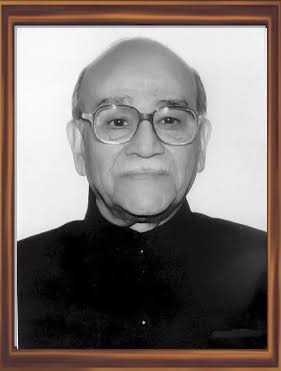

Bhai Jodh Singh (1882–1981) was a prominent Sikh theologian, scholar, educationist, writer and public figure. He played an important role in the development of modern Sikh scholarship and education in Punjab. He was associated for much of his career with Khalsa College, Amritsar, where he served as lecturer, professor and eventually principal. He later became the first Vice-Chancellor of Punjabi University, Patiala.
The Government of India honoured him with the Padma Bhushan in 1966 in the field of Literature and Education.
1. Introduction
Bhai Jodh Singh was one of the most respected Sikh scholars and educationists of the 20th century. His work combined Sikh theology, philosophy, education, literature and public service.
He emerged during the period of the Singh Sabha movement, a major movement for Sikh religious and educational reform. As a young man, he developed a deep interest in Sikh scripture and began delivering sermons while still a student.
His later career was closely connected with Khalsa College, Amritsar. He eventually became its principal and played an important role in Sikh education. After independence, he also served in public life and became the first Vice-Chancellor of Punjabi University, Patiala, in 1962.
As a writer and theologian, he authored important works on Sikh thought, including Gurmat Nirnay, Japji, Life of Sri Guru Amar Das Ji, Gospel of Guru Nanak in His Own Words and Kabir.
2. Quick Facts
| Particular | Information |
|---|---|
| Full Name | Bhai Jodh Singh |
| Birth Name | Ranbir Singh; later Sant Singh |
| Native/Religious Name | Jodh Singh |
| Date of Birth | 31 May 1882 |
| Place of Birth | Ghungrila, Rawalpindi district, Punjab, British India; now in Pakistan |
| Nationality | Indian |
| Religion/Tradition | Sikh |
| Profession | Sikh theologian, scholar, educationist, writer and public figure |
| Field of Achievement | Literature, Education, Sikh theology and scholarship |
| Years Active | Early 1900s–1981 |
| Major Institution | Khalsa College, Amritsar |
| Major Academic Position | First Vice-Chancellor, Punjabi University, Patiala |
| Padma Award | Padma Bhushan |
| Padma Bhushan Year | 1966 |
| Padma Bhushan Category | Literature and Education |
| Date of Death | 4 December 1981 |
| Place of Death | Ludhiana, Punjab |
His birthplace, birth date, education and career are recorded by the Encyclopaedia of Sikhism maintained by Punjabi University-related resources.
3. Award Information
Padma Bhushan – 1966
| Award Detail | Information |
|---|---|
| Award Name | Padma Bhushan |
| Award Category | Literature and Education |
| Award Year | 1966 |
| Awardee | Dr. Bhai Jodh Singh |
| State | Punjab |
| Presented By | President of India |
| Official Gazette Description | Formerly Vice-Chancellor, Punjabi University, Patiala |
The official 1966 Gazette of India lists:
“Dr. Bhai Jodh Singh, Formerly Vice-Chancellor, Punjabi University, Patiala.”
The Government’s Padma Awards database classifies his Padma Bhushan under Literature and Education, Punjab.
Award Ceremony
The award was announced in the Padma Awards notification dated 26 January 1966. The notification was issued by the President’s Secretariat.
A separate individual investiture date is not specified in the Gazette document, so for a blog it is better not to invent an exact ceremony date.
Citation / Official Reason
The official record identifies his field as Literature and Education and describes him as the former Vice-Chancellor of Punjabi University, Patiala.
His recognition can be understood in the context of his decades-long contribution to:
- Sikh scholarship
- Literature
- Religious education
- Higher education
- Punjabi intellectual life
- Educational institution building
Previous Recipients
The Padma Bhushan was awarded to numerous distinguished Indians before 1966. The official Padma database contains the complete historical list.
Next Recipients
The 1967 Padma Bhushan recipients included personalities such as Mulk Raj Anand, Ravi Shankar, Ramanathan Krishnan, Pupul Jayakar, Tara Cherian and others.
4. Why Did Bhai Jodh Singh Receive the Award?
Bhai Jodh Singh received the Padma Bhushan in 1966 in Literature and Education in recognition of his distinguished contribution to scholarship and education.
His contribution was particularly significant because he worked at the intersection of religious scholarship and modern education.
He:
- Promoted Sikh education.
- Produced important works on Sikh theology.
- Helped develop Khalsa College as an important educational institution.
- Served as its principal.
- Participated in educational policy in Punjab.
- Served on the Punjab Legislative Council.
- Became the first Vice-Chancellor of Punjabi University.
- Helped establish and promote Punjabi literary institutions.
5. Early Life
Bhai Jodh Singh was born on 31 May 1882 in Ghungrila village in the Rawalpindi district, which is now in Pakistan. His parents were Ram Singh and Gulab Devi.
His original name was Ranbir Singh, and he was later known as Sant Singh. After receiving the Sikh initiation ceremony, he was given the name Jodh Singh.
His father died when Jodh Singh was only about two years old, and he was subsequently raised by his family.
From an early age, he showed exceptional academic ability. At the village primary school, he reportedly stood first in his district.
6. Education
Jodh Singh’s education played a major role in shaping his later career as a scholar.
Early Education
He first studied at his village school and subsequently attended school in Rawalpindi.
During his schooling, he encountered the ideas of the Singh Sabha movement, which stimulated his interest in Sikh scripture and religious thought.
Higher Education
After matriculation, he studied at Mission College, Rawalpindi, before continuing his education in Amritsar.
He completed his Bachelor’s degree at Khalsa College, Amritsar, in 1904, standing first in the Panjab University examination.
He subsequently completed an M.A. in Mathematics from Forman Christian College, Lahore, in 1906, again achieving the top position.
Education Summary
- Primary education – Ghungrila
- School education – Rawalpindi
- Mission College – Rawalpindi
- B.A. – Khalsa College, Amritsar, 1904
- M.A. Mathematics – Forman Christian College, Lahore, 1906
His academic training in mathematics was unusual for a person who became one of the leading scholars of Sikh theology.
7. Career Journey
Early Career at Khalsa College
Jodh Singh began his professional career at Khalsa College, Amritsar.
He initially worked as a lecturer and later became a professor of divinity. His connection with Khalsa College became one of the defining features of his professional life.
According to the Nehru Archive, his positions included:
- Lecturer of Mathematics: 1906–1913
- Professor of Divinity: 1924–1936
- Principal: 1936–1952
Role in Sikh Education
He was deeply involved in the development of Sikh educational institutions and participated in the wider Singh Sabha reform environment.
He also presided over the Sikh Educational Conference on three occasions.
Punjab Legislative Council
After independence, Jodh Singh served as a member of the Punjab Legislative Council.
He was particularly involved in the passage of the Sikh Gurdwaras Act of 1925, an important development in Sikh religious institutional administration.
Punjabi Sahit Akademi
He was associated with the establishment of the Punjabi Sahit Akademi, Ludhiana, and served as its founding president. The Nehru Archive dates the founding to 1954.
First Vice-Chancellor of Punjabi University
One of the most important milestones in his career came in 1962, when he became the first Vice-Chancellor of Punjabi University, Patiala.
He served in that position until 1966.
His appointment was significant because Punjabi University was envisioned as an important centre for Punjabi language, literature, culture and higher education.
8. Major Achievements
1. Leading Sikh Scholar
Jodh Singh became one of the most influential Sikh theologians and interpreters of Sikh scripture of his generation. The Encyclopaedia of Sikhism describes him as an authoritative interpreter of Sikh faith and tradition.
2. Principal of Khalsa College
He served as Principal of Khalsa College, Amritsar, from 1936 to 1952.
3. First Vice-Chancellor of Punjabi University
He became the university’s first Vice-Chancellor in 1962, helping establish its early academic direction.
4. Sikh Theological Writing
His book Gurmat Nirnay, published in 1932, became an influential work in modern Sikh thought. Academic research describes it as an important attempt to systematise Sikh theological concepts.
5. Punjabi Literature
He contributed to Punjabi literary and intellectual culture through books, essays and institutional work.
6. Sikh Educational Conference
He presided over the Sikh Educational Conference three times, demonstrating his influence in Sikh educational circles.
7. Public Service
He served in the Punjab Legislative Council and participated in educational and public-policy discussions.
9. Contribution to the Nation
Bhai Jodh Singh’s contribution to India was primarily in education, literature, religious scholarship and institution building.
Educational Contribution
He spent decades working in higher education and helped develop Khalsa College as an important centre of learning.
Contribution to Punjabi Language and Literature
Through his scholarship and his association with the Punjabi Sahit Akademi, he contributed to the development of Punjabi intellectual culture.
Contribution to Sikh Studies
His books helped bring Sikh theology into dialogue with modern academic and philosophical approaches.
Institution Building
His role as the first Vice-Chancellor of Punjabi University was particularly important because the institution became a major centre for Punjabi language, literature, history and Sikh studies.
Public Life
His work in the Punjab Legislative Council also placed him within the political and institutional development of Punjab during the transition from colonial rule to independent India.
10. Other Awards and Honours
Padma Bhushan – 1966
His most prominent national honour was the Padma Bhushan, awarded in 1966 in Literature and Education.
Honorary Doctor of Literature
He received honorary Doctor of Literature (D.Litt.) degrees from:
- Panjab University, Chandigarh – 1961
- Punjabi University, Patiala – 1979
His academic honours reflected his stature in Sikh scholarship and education.
11. Legacy and Influence
Bhai Jodh Singh’s legacy is particularly strong in Sikh studies and Punjabi education.
He belonged to a generation of scholars who attempted to interpret Sikh thought in the intellectual environment of the modern age.
His influence can be seen in three major areas:
Sikh Theology
His interpretations of Sikh scripture became important reference points for later scholars.
Education
His leadership at Khalsa College and Punjabi University influenced generations of students and educators.
Punjabi Intellectual Life
His involvement in Punjabi literary institutions helped strengthen Punjabi as an important language of scholarship and public culture.
The Encyclopaedia of Sikhism notes that his commentaries were recognised for their broad knowledge of Eastern and Western intellectual traditions and clarity of expression.
12. Interesting Facts
- Bhai Jodh Singh was born on 31 May 1882.
- His birthplace, Ghungrila, is now in Pakistan.
- His birth name was Ranbir Singh.
- He was later known as Sant Singh before receiving the name Jodh Singh.
- He received Sikh initiation in December 1897.
- He began delivering Sikh sermons while still a student.
- He studied mathematics at university.
- He stood first in the Panjab University examinations for both his B.A. and M.A. studies.
- He was a lecturer in mathematics before becoming a professor of divinity.
- He became Principal of Khalsa College in 1936.
- He served as principal until 1952.
- He was associated with the Punjabi Sahit Akademi.
- He became the first Vice-Chancellor of Punjabi University in 1962.
- He was awarded the Padma Bhushan in 1966.
- He wrote both in Punjabi and English.
- His Gurmat Nirnay was published in 1932.
- He wrote a work titled Gospel of Guru Nanak in His Own Words.
- He also wrote works on Guru Amar Das and Kabir.
- He died on 4 December 1981 in Ludhiana.
- He lived for almost a century and remained an influential figure in Sikh intellectual life.
13. Quotes
One documented statement associated with Bhai Jodh Singh concerns the relationship between religion and politics. In a statement reported in connection with Sikh affairs, he argued that:
“Politics, he emphasized, must be insulated from religion.”
This quotation should be used carefully in a blog because it represents a particular argument attributed to him in a later discussion rather than a general-purpose motivational quote.
His broader intellectual approach was characterised by an effort to interpret Sikh thought with reason, scholarship and engagement with modern intellectual traditions. His work Gurmat Nirnay is an important example of this approach.
14. Timeline
| Year | Event |
|---|---|
| 1882 | Born on 31 May at Ghungrila, Rawalpindi district |
| 1897 | Received Sikh initiation and adopted the name Jodh Singh |
| Early 1900s | Studied at Mission College and later Khalsa College |
| 1904 | Completed B.A. from Khalsa College, standing first in Panjab University |
| 1906 | Completed M.A. in Mathematics from Forman Christian College, Lahore |
| 1906–1913 | Lecturer of Mathematics at Khalsa College |
| 1924 | Returned to Khalsa College as Professor of Divinity |
| 1925 | Played a role in Punjab legislative affairs surrounding the Sikh Gurdwaras Act |
| 1932 | Published Gurmat Nirnay |
| 1936 | Became Principal of Khalsa College |
| 1936–1952 | Served as Principal |
| 1952 | Retired from Khalsa College principalship |
| 1954 | Associated with founding of Punjabi Sahit Akademi |
| 1961 | Received honorary D.Litt. from Panjab University |
| 1962 | Became first Vice-Chancellor of Punjabi University, Patiala |
| 1966 | Received Padma Bhushan in Literature and Education |
| 1966 | Completed his tenure as Vice-Chancellor |
| 1979 | Received honorary D.Litt. from Punjabi University |
| 1981 | Died on 4 December in Ludhiana |
The career dates above are supported particularly by the Nehru Archive and Encyclopaedia of Sikhism.
15. References
For a blog, these are useful sources to cite:
- Government of India – Padma Awards Database
The official database records Bhai Jodh Singh’s 1966 Padma Bhushan in Literature and Education. - The Gazette of India – Padma Awards 1966
The official notification identifies him as the former Vice-Chancellor of Punjabi University, Patiala. - Encyclopaedia of Sikhism – Punjabi University
A detailed source for his birth, education, career, scholarship and writings. - Nehru Archive – Bhai Jodh Singh
Useful for his positions at Khalsa College, Punjabi Sahit Akademi and Punjabi University. - The Sikh Encyclopedia
Provides additional biographical information and details about his books and honours. - Academic research on Khalsa College and Sikh education
Useful for understanding his intellectual development and Gurmat Nirnay.
16. Related Personalities
Bhai Vir Singh
A pioneering Punjabi poet, writer and scholar who was also associated with the Singh Sabha intellectual environment.
Bhai Kahan Singh Nabha
A major Sikh scholar and author of Mahan Kosh, whose work was highly influential in modern Sikh scholarship.
Teja Singh
An important Sikh scholar and educator who contributed to modern interpretations and translations of Sikh scripture.
Master Tara Singh
A major Sikh political leader associated with Sikh educational and political institutions in Punjab.
Sunder Singh Majithia
An important Sikh educationist and public figure associated with the development of Khalsa College.
Ganda Singh
A prominent historian and scholar of Sikh and Punjab history.
Kapur Singh
A noted Sikh intellectual, historian and civil servant whose writings engaged with Sikh political and philosophical questions.
17. Frequently Asked Questions (FAQ)
Who was Bhai Jodh Singh?
Bhai Jodh Singh was a prominent Sikh theologian, scholar, educationist, writer and public figure of the 20th century.
When was Bhai Jodh Singh born?
He was born on 31 May 1882.
Where was Bhai Jodh Singh born?
He was born at Ghungrila in the Rawalpindi district, now in Pakistan.
What was Bhai Jodh Singh’s birth name?
His birth name was Ranbir Singh. He was later known as Sant Singh before receiving the name Jodh Singh.
What did Bhai Jodh Singh study?
He studied at Khalsa College and completed his M.A. in Mathematics from Forman Christian College, Lahore, in 1906.
What was Bhai Jodh Singh’s profession?
He was a Sikh theologian, educationist, scholar, author and public figure.
Which award did Bhai Jodh Singh receive?
He received the Padma Bhushan in 1966.
In which category did he receive the Padma Bhushan?
He received it in Literature and Education.
Was Bhai Jodh Singh the first Vice-Chancellor of Punjabi University?
Yes. He became the first Vice-Chancellor of Punjabi University, Patiala, in 1962.
When was Bhai Jodh Singh Principal of Khalsa College?
He served as Principal from 1936 to 1952.
What is Gurmat Nirnay?
Gurmat Nirnay is one of Bhai Jodh Singh’s major works on Sikh thought. It was published in 1932 and became an influential work in modern Sikh philosophical and theological writing.
What books did Bhai Jodh Singh write?
His works include:
- Gurmat Nirnay
- Japji
- Life of Sri Guru Amar Das Ji
- Gospel of Guru Nanak in His Own Words
- Kabir
- 33 Savaiyas
- Some Studies in Sikhism
When did Bhai Jodh Singh die?
He died on 4 December 1981 in Ludhiana.
Why is Bhai Jodh Singh important?
He is remembered for combining Sikh scholarship, modern education, Punjabi literature and institution building. His work influenced Sikh studies and generations of students and scholars.
About the Author