
1. Introduction
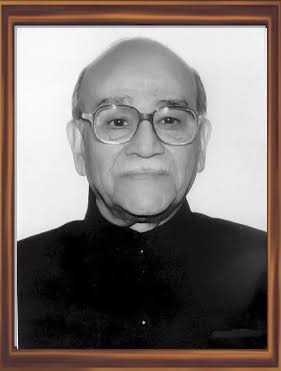
Nawab Mir Akbar Ali Khan (20 November 1899–1994) was an Indian politician, lawyer, parliamentarian and public figure from Hyderabad. He played an important role in the political and constitutional development of Hyderabad before and after Indian independence.
A prominent public figure from Hyderabad, Akbar Ali Khan was associated with the United Progressive Committee and participated in efforts aimed at reducing communal divisions and promoting political reform. He also served in municipal affairs and was involved with educational and cultural institutions.
After independence, he entered national politics and became a Member of the Rajya Sabha, serving from 1954 to 1972. He also served as Deputy Chairman of the Rajya Sabha for a substantial period. Later, he became Governor of Uttar Pradesh from 1972 to 1974 and Governor of Odisha from 25 October 1974 to 17 April 1976. The official Uttar Pradesh Vidhan Parishad and Odisha Legislative Assembly records confirm these gubernatorial tenures.
In recognition of his contribution to public affairs, the Government of India awarded him the Padma Bhushan in 1965. The official Padma Awards database classifies the award under Public Affairs and lists his place as Andhra Pradesh in the historical database.
2. Quick Facts
| Particular | Information |
|---|---|
| Full Name | Nawab Mir Akbar Ali Khan |
| Common Name | Akbar Ali Khan |
| Born | 20 November 1899 |
| Birthplace | Hyderabad, Hyderabad State, British India |
| Died | 1994 |
| Nationality | Indian |
| Profession | Lawyer, politician and public servant |
| Political Party | Indian National Congress |
| Field of Achievement | Public Affairs |
| Alma Mater | Osmania University; University of London |
| Profession before politics | Advocate/Barrister |
| Rajya Sabha | 1954–1972 |
| Governor of Uttar Pradesh | 1972–1974 |
| Governor of Odisha | 25 October 1974–17 April 1976 |
| Major Award | Padma Bhushan |
| Award Year | 1965 |
| Award Field | Public Affairs |
The biographical information is supported particularly well by the Orissa Reference Annual, an official Odisha government publication, while the gubernatorial dates are independently confirmed by state-government records.
3. Award Information
Padma Bhushan
| Award Detail | Information |
|---|---|
| Award Name | Padma Bhushan |
| Award Category | Public Affairs |
| Award Year | 1965 |
| Awardee Name in Official Database | Mir Akbar Ali Khan |
| Place recorded by Padma database | Andhra Pradesh |
| Presented By | President of India |
| Citation/Official Reason | Distinguished service in public affairs |
| Exact individual citation | Not available in the online Padma database |
| Previous Recipients | Various Padma Bhushan awardees from 1954 onward |
| Next-year recipients | 1966 Padma Bhushan awardees |
The official Padma Awards database lists Mir Akbar Ali Khan among the 1965 Padma Bhushan recipients and categorises him under Public Affairs.
Why the Padma Bhushan was important
The Padma Bhushan is one of India’s major civilian honours and recognises distinguished service of a high order. In Khan’s case, the official field is specifically Public Affairs, reflecting his long career in political and public service.
Ceremony date
For a fact-checked blog, it is better not to state an exact individual investiture date unless supported by a primary record. The official database establishes the 1965 award year, but does not provide Khan’s individual ceremony date.
4. Why Did Akbar Ali Khan Receive the Award?
Akbar Ali Khan received the Padma Bhushan in 1965 for Public Affairs.
His recognition came after decades of involvement in public life, including:
- Political and constitutional work in Hyderabad
- Leadership of the United Progressive Committee
- Participation in municipal affairs
- Work in education and social development
- Representation of India in international forums
- Long service as a Member of the Rajya Sabha
- Service as Deputy Chairman of the Rajya Sabha
- Leadership within national political institutions
The official Padma database gives his field as Public Affairs, rather than providing a detailed personal citation. Therefore, your blog should avoid inventing a more specific “official citation.”
5. Early Life
Akbar Ali Khan was born on 20 November 1899 in Hyderabad.
He was the son of Mir Mehboob Ali Khan, a jagirdar in Bidar and a commander associated with the forces of the Nizam of Hyderabad. He grew up during the period when Hyderabad was one of the largest princely states in British India.
His early life coincided with major political changes in India and Hyderabad. These experiences later influenced his interest in constitutional reform, public affairs and political cooperation.
6. Education
Akbar Ali Khan received his early education at Mufid-ul-Anam High School in Hyderabad.
He later went to Aligarh for higher education but discontinued his studies after becoming influenced by Mahatma Gandhi’s Non-Cooperation Movement. He subsequently completed his B.A. from Osmania University in 1923.
He then travelled to England and studied law. He obtained an LL.B. (Honours) from the University of London and completed his Bar-at-Law at Middle Temple.
After returning to India in 1927, he began practising as an advocate.
7. Career Journey
Beginning as a lawyer
After completing his legal education in England, Khan returned to Hyderabad in 1927 and began practising as an advocate.
His legal background later proved useful in his involvement with constitutional and political questions in Hyderabad.
Political and constitutional activities in Hyderabad
Khan became involved in political reform and was associated with the Dasturi Islahat Commission in Hyderabad.
He was also an important figure in the United Progressive Committee, serving as its chairman for many years. According to the Odisha government’s biographical account, he worked on proposals intended to reduce Hindu-Muslim differences and strengthen unity in Hyderabad.
He was also associated with municipal affairs and served as Vice-Chairman of the Hyderabad Municipal Council.
Relationship with the Hyderabad political movement
Khan represented a relatively moderate and constitutional approach to politics in Hyderabad.
He was reportedly offered important political positions, including the Prime Ministership of Hyderabad, but did not accept the offer.
Post-independence politics
After independence, Khan became increasingly involved in national public life.
He joined the Indian National Congress and entered Parliament as a Rajya Sabha member in 1954.
He remained a member of the Rajya Sabha until 1972, giving him approximately 18 years of parliamentary service.
Deputy Chairman of Rajya Sabha
One of the most significant positions of his parliamentary career was that of Deputy Chairman of the Rajya Sabha.
His long experience in parliamentary affairs established him as a senior political figure in India’s upper house.
Governor of Uttar Pradesh
In 1972, Akbar Ali Khan was appointed Governor of Uttar Pradesh.
The official Uttar Pradesh Vidhan Parishad record lists his tenure as:
4 November 1972 – 24 October 1974.
Governor of Odisha
After leaving Uttar Pradesh, he became Governor of Odisha.
The official Odisha Legislative Assembly records list his tenure as:
25 October 1974 – 17 April 1976.
His appointment made him one of the few political leaders of his generation to serve as governor of two major Indian states.
8. Major Achievements
1. Long parliamentary career
Akbar Ali Khan served in the Rajya Sabha for 18 years, from 1954 to 1972.
2. Deputy Chairman of Rajya Sabha
He held the important parliamentary office of Deputy Chairman, contributing to the functioning of India’s upper house.
3. Padma Bhushan
The Government of India honoured him with the Padma Bhushan in 1965 for Public Affairs.
4. Governor of two states
He served as Governor of:
- Uttar Pradesh
- Odisha
The dates are confirmed by the respective state-government records.
5. Educational contribution
Khan was strongly associated with educational institutions. The Odisha government’s biographical record notes that he helped establish a polytechnic in Hyderabad, including by donating land and money.
6. International representation
He represented India at international forums and participated in delegations and missions involving countries in Asia, Europe and elsewhere.
9. Contribution to the Nation
Akbar Ali Khan’s contribution extended beyond electoral politics.
His public career covered constitutional reform, parliamentary democracy, education, social welfare and national integration.
In Hyderabad, he worked toward political reform and communal harmony. His activities through the United Progressive Committee reflected his interest in finding constitutional solutions to political differences.
After independence, he became part of India’s parliamentary system and spent nearly two decades in the Rajya Sabha. His later appointments as Governor of Uttar Pradesh and Odisha further demonstrated the confidence placed in his experience in public administration.
His educational initiatives were another important part of his legacy. He supported institutions and educational activities in Hyderabad and maintained connections with major universities.
10. Other Awards and Honours
The Padma Bhushan is the major nationally documented civilian honour associated with Akbar Ali Khan.
Padma Bhushan – 1965
- Award: Padma Bhushan
- Field: Public Affairs
- Year: 1965
- Official name: Mir Akbar Ali Khan
- Recorded place: Andhra Pradesh
I would avoid listing additional awards unless you have a reliable primary source confirming them.
11. Legacy and Influence
Akbar Ali Khan’s legacy is closely associated with Hyderabad’s political history and India’s early parliamentary era.
He belonged to a generation that experienced the transition from princely-state politics to the democratic institutions of independent India.
His career is particularly interesting because it covered several different phases:
Hyderabad political reform → constitutional politics → Indian independence → Rajya Sabha → national political leadership → governorship
His long parliamentary service and later gubernatorial appointments made him an important public figure of post-independence India.
His work in education and social welfare also added a community-oriented dimension to his public life.
12. Interesting Facts
- Akbar Ali Khan was born in Hyderabad in 1899.
- He studied at Osmania University, where he completed his B.A. in 1923.
- He studied law in England and completed his Bar-at-Law at Middle Temple.
- He returned to Hyderabad in 1927 and began practising as an advocate.
- He was associated with the Dasturi Islahat Commission, dealing with constitutional reform in Hyderabad.
- He chaired the United Progressive Committee for many years.
- He served as Vice-Chairman of Hyderabad Municipal Council.
- He reportedly declined an offer to become Prime Minister of Hyderabad.
- He served in the Rajya Sabha for approximately 18 years.
- He became Governor of Uttar Pradesh in 1972.
- He subsequently became Governor of Odisha in 1974.
- He received the Padma Bhushan in 1965 for Public Affairs.
- He was associated with educational institutions including Osmania University, Aligarh Muslim University and other universities.
- He supported the establishment of a polytechnic in Hyderabad, contributing land and money toward the institution.
13. Quotes
There are some references to speeches and parliamentary interventions by Akbar Ali Khan, but there is no widely established collection of verified personal quotations comparable to that of major national leaders.
For a factual biography, it is better not to create or paraphrase a quotation and put it in quotation marks.
A suitable editorial line for your article would be:
Akbar Ali Khan’s public life reflected the transition of Hyderabad from princely-state politics to the parliamentary democracy of independent India.
Important: This is editorial wording, not a direct quotation by Akbar Ali Khan.
14. Timeline
| Year | Event |
|---|---|
| 1899 | Born on 20 November in Hyderabad |
| Early 1900s | Received schooling in Hyderabad |
| 1923 | Completed B.A. from Osmania University |
| 1920s | Studied law in London |
| 1927 | Returned to Hyderabad and began legal practice |
| 1930s–1940s | Became involved in political and constitutional reform |
| 1939 | Worked on proposals concerning Hindu-Muslim unity |
| 1940s | Became prominent in Hyderabad’s political life |
| 1948 | Associated with political activities following Hyderabad’s integration into India |
| 1954 | Entered the Rajya Sabha |
| 1965 | Received Padma Bhushan for Public Affairs |
| 1950s–1972 | Continued parliamentary career |
| 1972 | Became Governor of Uttar Pradesh |
| 1974 | Became Governor of Odisha |
| 1976 | Completed tenure as Governor of Odisha |
| 1994 | Died |
15. References
For your blog, these are the strongest sources to cite:
1. Government of India – Padma Awards Database
The official database confirms his 1965 Padma Bhushan and Public Affairs category.
Government of India – Padma Awards Database
2. Odisha Government – Governor’s Biography
The Orissa Reference Annual provides detailed biographical information about his education, legal career, Hyderabad political activities and public service.
Odisha Government – Akbar Ali Khan biography
3. Odisha Legislative Assembly
The official state legislature’s governor list confirms that Akbar Ali Khan served as Governor of Odisha from 25 October 1974 to 17 April 1976.
Odisha Legislative Assembly – Governors
4. Uttar Pradesh Vidhan Parishad
The official Uttar Pradesh record lists Akbar Ali Khan as Governor from 4 November 1972 to 24 October 1974.
Uttar Pradesh Vidhan Parishad – Governors
16. Related Personalities
For an article about Akbar Ali Khan, you can link to biographies of:
- Mahatma Gandhi – whose Non-Cooperation Movement influenced Khan during his student years.
- Jawaharlal Nehru – India’s first Prime Minister and a major figure in the integration of princely states.
- Mir Osman Ali Khan – the last Nizam of Hyderabad.
- Swami Ramanand Tirtha – an important leader of the Hyderabad State Congress.
- Sarojini Naidu – Hyderabad-born national leader and former Governor of Uttar Pradesh.
- Dr. Zakir Husain – educationist and former President of India with strong connections to Aligarh and Hyderabad’s intellectual circles.
- Mehdi Nawaz Jung – another Hyderabad public figure who received the Padma Vibhushan in 1965.
- P. V. Narasimha Rao – a major political figure from Hyderabad/Andhra Pradesh and former Prime Minister of India.
17. Frequently Asked Questions (FAQ)
Who was Akbar Ali Khan?
Akbar Ali Khan, formally known as Nawab Mir Akbar Ali Khan, was an Indian lawyer, politician, parliamentarian and public servant from Hyderabad. He later served as Governor of Uttar Pradesh and Odisha.
When was Akbar Ali Khan born?
He was born on 20 November 1899 in Hyderabad.
When did Akbar Ali Khan die?
He died in 1994.
Which award did Akbar Ali Khan receive?
He received the Padma Bhushan in 1965.
Why did Akbar Ali Khan receive the Padma Bhushan?
The official Padma Awards database records his award under the field Public Affairs. The online official record does not provide a detailed individual citation, so his honour should be described in the context of his long public and political service.
When did he become a Rajya Sabha member?
He became a Member of the Rajya Sabha in 1954 and served until 1972.
How long did Akbar Ali Khan serve in the Rajya Sabha?
He served for approximately 18 years.
Was Akbar Ali Khan a Governor?
Yes. He served as Governor of Uttar Pradesh from 1972 to 1974 and Governor of Odisha from 1974 to 1976.
What was Akbar Ali Khan’s profession?
He was a lawyer and barrister before becoming a prominent politician and public servant.
Where did Akbar Ali Khan study?
He studied at Osmania University and later at the University of London, completing his legal education at the Middle Temple.
What was Akbar Ali Khan’s contribution to Hyderabad?
He participated in constitutional and political reform, municipal affairs, educational initiatives and efforts aimed at promoting communal unity in Hyderabad.
About the Author