
1. Introduction
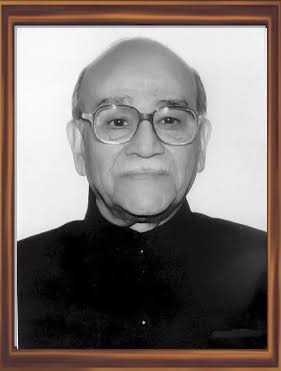
Tribhuvandas Kishibhai Patel (22 October 1903 – 3 June 1994) was an Indian freedom fighter, lawyer, social worker, cooperative leader and politician who played a foundational role in India’s dairy cooperative movement.
Born in Anand, Gujarat, Patel became one of the principal architects of the cooperative model that later made Amul a symbol of farmer-owned enterprise. In 1946, he led the establishment of the Kaira District Co-operative Milk Producers’ Union, bringing milk producers together to overcome exploitative marketing practices. He later worked closely with Dr. Verghese Kurien, whose technical and managerial leadership helped expand the Anand cooperative model.
Patel’s philosophy was rooted in cooperation, farmer ownership, equality and rural development. His work was recognised internationally with the 1963 Ramon Magsaysay Award for Community Leadership and nationally with the Padma Bhushan in 1964 for Social Work.
He is widely remembered as one of the founding figures of India’s cooperative movement and as the person who laid the organisational foundation on which the Amul dairy movement grew.
2. Quick Facts
| Detail | Information |
|---|---|
| Full Name | Tribhuvandas Kishibhai Patel |
| Native Name | ત્રિભુવનદાસ કીશીભાઈ પટેલ |
| Born | 22 October 1903 |
| Place of Birth | Anand, Kheda District, Gujarat, British India; now Gujarat, India |
| Died | 3 June 1994 |
| Nationality | Indian |
| Profession | Lawyer, social worker, cooperative leader, freedom fighter and politician |
| Field of Achievement | Cooperative movement, dairy development, rural development, social service |
| Political Association | Indian National Congress |
| Major Organisation | Kaira District Co-operative Milk Producers’ Union / Amul |
| Years Active | From the freedom movement in the 1920s–30s until his later years |
| Major International Award | Ramon Magsaysay Award for Community Leadership, 1963 |
| Major National Award | Padma Bhushan, 1964 |
| Rajya Sabha | Member during 1967–68 and 1968–74 |
His birth, schooling, Gujarat Vidyapith education and early involvement in the freedom movement are documented by Amul Dairy and Tribhuvan Sahkari University.
3. Award Information
A. Ramon Magsaysay Award
Award Name
Ramon Magsaysay Award
Award Category
Community Leadership
Award Year
1963
Presented By
The Ramon Magsaysay Award Foundation, Philippines. The award was established in memory of Philippine President Ramon Magsaysay.
Date of Ceremony
The 1963 Ramon Magsaysay Awards were presented in Manila on 31 August 1963, following the established annual presentation tradition.
Co-recipients
Tribhuvandas Patel received the award jointly with:
- Dara N. Khurody
- Dr. Verghese Kurien
The official Ramon Magsaysay Award Foundation identifies all three as the 1963 Community Leadership awardees.
Official Citation / Reason
The award recognised their creative coordination of government and private enterprise to improve the supply of essential food and sanitation and to raise the living standards of village producers.
The foundation specifically highlighted Patel and Kurien’s development of the Kaira District Cooperative Milk Producers’ Union. By 1962, the union had grown to 219 farmer societies with 46,400 members, illustrating the scale of the cooperative model.
Previous Recipients
The Ramon Magsaysay Award began in 1958. Among its early Community Leadership recipients was Acharya Vinoba Bhave, whom Patel himself mentioned in his award response.
Next Recipient
The 1964 Ramon Magsaysay Award for Community Leadership went to Pablo Torres Tapia of the Philippines.
B. Padma Bhushan
Award Name
Padma Bhushan
Award Category
Social Work
Award Year
1964
Presented By
Government of India
Citation / Recognition
The official Padma Awards database lists Shri Tribhovandas Kishibhai Patel — Padma Bhushan (1964) — Social Work — Gujarat.
This award recognised his extensive contribution to social service and the cooperative movement.
Important Correction
Some websites incorrectly state that Patel received the Padma Bhushan in 1963. The official Government of India database confirms that the award year was 1964.
4. Why Did Tribhuvandas Patel Receive the Awards?
Tribhuvandas Patel received international and national recognition because he demonstrated how cooperation could improve the economic and social conditions of ordinary rural people.
His most important achievement was organising small milk producers into village-level cooperatives and connecting them to a district-level union. Instead of allowing middlemen to control milk procurement and prices, the cooperative model gave farmers collective ownership and a greater role in decision-making.
He promoted the principle that cooperatives should be open to milk producers irrespective of caste, creed or community, with the principle of “one man, one vote.”
The Ramon Magsaysay Award Foundation particularly recognised the improvement of dairy production, farmer incomes and rural living standards associated with the Kaira cooperative model.
5. Early Life
Tribhuvandas Kishibhai Patel was born on 22 October 1903 in Anand, then part of Kheda District in the Bombay Presidency. His father, Kishibhai Patel, was a farmer, and his mother was Lakhibha.
He grew up in an environment closely connected with rural life and agriculture. This background later helped him understand the economic difficulties faced by farmers.
He was strongly influenced by the ideas of Mahatma Gandhi and Sardar Vallabhbhai Patel. His early involvement in the national movement shaped his commitment to rural service, social equality and self-reliance.
During the freedom struggle, he participated in Gandhian movements including the Civil Disobedience Movement and Salt Satyagraha. He was imprisoned during the freedom struggle, including an imprisonment in Nashik in 1930.
6. Education
Patel received his early education in Anand.
His schooling included:
- Nanaadhni Dharmasala
- Anand Primary School
- New English School, now associated with the D. N. High School of the Charotar Education Society in Anand
He subsequently joined Gujarat Vidyapith in Ahmedabad for higher education.
Gujarat Vidyapith had strong connections with the Gandhian educational movement. During this period, Patel became increasingly involved in the freedom movement and was influenced by Gandhian ideas.
7. Career Journey
Early Social and Political Work
Patel began his public life during India’s independence struggle. His political and social activities were strongly influenced by Gandhian principles.
He worked on issues including:
- Rural development
- Civil disobedience
- Untouchability
- Social service
- Village upliftment
He later served as president of the Harijan Sevak Samiti for many years.
Turning Toward Cooperative Dairy Development
The major turning point came when dairy farmers in Kheda faced unfair practices in the milk trade.
At the time, private traders and the Polson dairy system had considerable influence over milk procurement. Farmers sought a system through which they could collectively market their milk.
Under the guidance of Sardar Vallabhbhai Patel and with the organisational leadership of Tribhuvandas Patel, the farmers established their own cooperative.
Foundation of Kaira Cooperative
On 14 December 1946, the Kaira District Co-operative Milk Producers’ Union Limited was established. It later became internationally associated with Amul.
Partnership with Verghese Kurien
Patel recognised the importance of professional management and brought Dr. Verghese Kurien into the cooperative’s development.
Their partnership became one of the most important collaborations in India’s dairy history:
Tribhuvandas Patel → farmer organisation and cooperative leadership
Verghese Kurien → professional management, technology and expansion
The Ramon Magsaysay Foundation later recognised the two men together for their work in the Kaira cooperative.
Later Political Career
Patel also entered electoral politics and served as a Member of the Rajya Sabha, including terms beginning in 1967 and continuing through 1974.
8. Major Achievements
1. Foundation of the Kaira Dairy Cooperative
His greatest achievement was organising dairy farmers into a cooperative structure that became the foundation of Amul.
2. Farmer Empowerment
The cooperative model allowed farmers to become owners rather than merely suppliers.
3. Promotion of “One Man, One Vote”
Patel emphasised democratic participation within village cooperatives, regardless of members’ economic or social status.
4. Partnership with Verghese Kurien
He recognised Kurien’s abilities and supported his professional leadership, helping create the conditions for Amul’s expansion.
5. Development of the Anand Cooperative Model
The cooperative approach developed in Anand became a model for dairy development elsewhere.
6. Rural Social Service
His activities extended beyond dairy to social welfare, rural development and community health.
7. Tribhuvandas Foundation
After retiring from the chairmanship of Amul, he used funds received from the cooperative community and his Ramon Magsaysay award-related resources to support rural health initiatives through the Tribhuvandas Foundation.
9. Contribution to the Nation
Tribhuvandas Patel’s contribution went far beyond creating a successful dairy cooperative.
Economic Empowerment
The cooperative model gave small milk producers a collective mechanism to participate in procurement, processing and marketing.
Rural Development
By linking village producers to a larger cooperative institution, the Anand model demonstrated how rural communities could build economically sustainable institutions.
Democratic Cooperation
His insistence on equal voting rights promoted democratic participation within cooperatives.
Dairy Development
The Kaira cooperative became an important part of the dairy development movement that ultimately contributed to India’s transformation from a milk-deficit country into a major milk-producing nation.
Social Development
Through the Tribhuvandas Foundation, his cooperative philosophy was extended to rural health, particularly maternal and child health.
10. Other Awards and Honours
The two major awards associated with Tribhuvandas Patel are:
- Ramon Magsaysay Award for Community Leadership – 1963
- Padma Bhushan – 1964, Social Work
The official Padma Awards database confirms the 1964 Padma Bhushan.
Tribhuvan Sahkari University
A major posthumous honour came decades later when India’s cooperative university in Anand was named Tribhuvan Sahkari University after him. The institution is intended to promote education, training and research in the cooperative sector.
This is significant because it connects Patel’s legacy with the training of future generations of cooperative professionals.
11. Legacy and Influence
Tribhuvandas Patel’s greatest legacy is the idea that farmers can become owners of the institutions that serve them.
The Amul story is often associated primarily with Verghese Kurien, particularly because of Kurien’s role in professionalising and expanding the organisation. However, the organisational foundation came from the cooperative movement led by Tribhuvandas Patel.
The Ramon Magsaysay Foundation’s historical account describes Patel as the organising genius behind the Kaira cooperative effort.
His legacy can be seen in:
- Amul and the Kaira cooperative
- India’s dairy cooperative movement
- Farmer-owned institutions
- The Anand cooperative model
- Rural development initiatives
- The Tribhuvandas Foundation
- Cooperative education through Tribhuvan Sahkari University
In 2025, the International Cooperative Alliance’s first global Cooperative Cultural Heritage map recognised the Amul dairy complex and Verghese Kurien Museum in Anand among foundational cooperative heritage sites, highlighting Anand’s importance in the global history of cooperation.
12. Interesting Facts
Fact 1: He was born in Anand
Anand later became internationally famous as the home of the Amul cooperative movement.
Fact 2: He was a freedom fighter
Before becoming associated with dairy cooperatives, Patel was active in India’s independence movement and was imprisoned during the struggle.
Fact 3: He helped bring Verghese Kurien into the cooperative movement
This partnership became critical to Amul’s development.
Fact 4: He believed in democratic cooperatives
He supported the principle of equal voting rights, rather than giving greater voting power to wealthier members.
Fact 5: He did not treat Amul merely as a business
For Patel, the cooperative was fundamentally an instrument for farmer empowerment and rural development.
Fact 6: He used his later resources for social welfare
The Tribhuvandas Foundation was created to address rural health needs, particularly those of women and children.
Fact 7: Verghese Kurien regarded him as a mentor
Kurien later described Patel as his “Guru”, reflecting the importance of their relationship.
13. Quotes
For a blog, it is best to use verified quotations rather than popular quotes falsely attributed to Patel.
Tribhuvandas Patel on receiving the Ramon Magsaysay Award
“It gives me great pleasure, of a personal and lasting nature, to be able to be present here to receive the Ramon Magsaysay Award.”
He immediately placed the recognition in a broader national context, saying that he felt his country was being honoured even more than himself.
On the ideals behind the award
In his 1963 response, Patel connected the ideals of Ramon Magsaysay with those of Mahatma Gandhi, particularly humility, service and concern for ordinary people.
Verghese Kurien about Patel
Kurien later referred to Tribhuvandas Patel as his “Guru.” This is useful as a quotation about Patel’s influence, although it is not a quote by Patel himself.
Blog tip: Avoid presenting the popular phrase “Without cooperation, there is no salvation” / “Vina Sahakar, Nahi Uddhar” as a direct quotation from Patel unless you have a reliable primary source establishing that attribution.
14. Timeline
| Year | Event |
|---|---|
| 1903 | Born on 22 October in Anand, Gujarat |
| Early 20th century | Received schooling in Anand |
| 1920s | Studied at Gujarat Vidyapith and became influenced by Gandhian thought |
| 1930 | Participated in the Salt Satyagraha and was imprisoned |
| 1930s–40s | Continued involvement in the freedom movement and social work |
| 1946 | Established the Kaira District Co-operative Milk Producers’ Union |
| 1948 | Kaira cooperative expanded its milk-processing activities |
| 1950 | Verghese Kurien became closely involved with the cooperative |
| 1962 | Kaira Union had grown to 219 farmer societies and 46,400 members |
| 1963 | Received Ramon Magsaysay Award for Community Leadership |
| 1964 | Received Padma Bhushan for Social Work |
| 1967 | Became a Member of Rajya Sabha |
| 1968–74 | Continued as Rajya Sabha member |
| Early 1970s | Voluntarily retired from Amul chairmanship |
| 1970s | Supported creation of the Tribhuvandas Foundation |
| 1994 | Died on 3 June |
| 2025 | Tribhuvan Sahkari University was established/named in his honour, extending his cooperative legacy into education |
The 1962 Kaira Union figures come from the official Ramon Magsaysay citation. The education, cooperative and political milestones are supported by Amul and Tribhuvan Sahkari University sources.
15. References
For a high-quality blog, I recommend prioritising these sources:
- Ramon Magsaysay Award Foundation — official biography, citation and award response of Tribhuvandas Patel.
Ramon Magsaysay Award Foundation – Tribhuvandas Patel - Government of India – Padma Awards — official record confirming his 1964 Padma Bhushan in Social Work.
Government of India Padma Awards Dashboard - Amul Dairy — biographical information on Patel, his education and role as founder chairman of the Kaira District Cooperative Milk Producers’ Union.
Amul Dairy – Tribhuvandas K. Patel - Tribhuvan Sahkari University — biography and information about his cooperative and social-service work.
Tribhuvan Sahkari University – About Tribhuvandas Patel - Tribhuvandas Foundation — history of the foundation and its rural healthcare mission.
Tribhuvandas Foundation – History - Gujarat Vidyapith — historical information related to the institution with which Patel was associated.
Gujarat Vidyapith
16. Related Personalities
Sardar Vallabhbhai Patel
Sardar Patel played an important role in encouraging farmers to organise themselves cooperatively. Tribhuvandas Patel worked within the wider Gandhian and Patel tradition of rural organisation.
Dr. Verghese Kurien
Kurien was Tribhuvandas Patel’s most important professional collaborator. Patel provided the cooperative leadership and farmer organisation, while Kurien played a major role in technical, managerial and marketing development. The two were jointly recognised by the Ramon Magsaysay Award.
H. M. Dalaya
Dalaya was an important dairy technologist associated with the development of dairy-processing technology at Anand.
Dara N. Khurody
Khurody was another 1963 Ramon Magsaysay Community Leadership awardee and a major figure in Bombay’s dairy development.
Lal Bahadur Shastri
Shastri’s visit to Anand in 1964 helped convince him of the potential of the Anand cooperative model and contributed to the subsequent development of national dairy policy.
Mahatma Gandhi
Gandhi’s philosophy of self-reliance, village development, social equality and service strongly influenced Patel’s worldview.
17. Frequently Asked Questions (FAQ)
Who was Tribhuvandas Kishibhai Patel?
Tribhuvandas Kishibhai Patel was an Indian freedom fighter, lawyer, social worker, politician and cooperative leader who played a foundational role in India’s dairy cooperative movement.
When was Tribhuvandas Patel born?
He was born on 22 October 1903 in Anand, Gujarat.
What is Tribhuvandas Patel famous for?
He is best known for founding and leading the Kaira District Co-operative Milk Producers’ Union, the cooperative movement that became associated with Amul.
What award did Tribhuvandas Patel receive in 1963?
He received the Ramon Magsaysay Award for Community Leadership in 1963, jointly with Dara N. Khurody and Verghese Kurien.
When did Tribhuvandas Patel receive the Padma Bhushan?
He received the Padma Bhushan in 1964 in the field of Social Work.
Why did he receive the Ramon Magsaysay Award?
He was recognised for his role in developing the Kaira cooperative and for helping improve dairy production and the livelihoods of rural milk producers.
Was Tribhuvandas Patel the founder of Amul?
He was the founding leader of the Kaira District Cooperative Milk Producers’ Union, which became the foundation of the Amul cooperative movement. It is more accurate to describe Amul’s development as a collective achievement involving farmers, Tribhuvandas Patel, Verghese Kurien and other collaborators rather than attributing the entire later Amul enterprise to one person.
What was the relationship between Tribhuvandas Patel and Verghese Kurien?
Patel was the senior cooperative leader who brought Kurien into the Anand dairy movement. Kurien later regarded Patel as his Guru.
What principle did Tribhuvandas Patel promote in cooperatives?
He promoted inclusive membership and the principle of one member, one vote, regardless of a member’s social or economic position.
When did Tribhuvandas Patel die?
He died on 3 June 1994.
What is the Tribhuvandas Foundation?
It is a rural social-service organisation established in connection with Patel’s vision, focusing particularly on community health and the welfare of women and children in rural Gujarat.
Why is a cooperative university named after him?
Tribhuvan Sahkari University was named after Patel to honour his pioneering contribution to India’s cooperative movement and to carry his vision into professional cooperative education and training.
Conclusion
Tribhuvandas Kishibhai Patel’s story is not simply the story of one dairy organisation. It is the story of how small farmers were organised into an institution in which they could collectively own, manage and benefit from their economic activity.
His greatest contribution was the creation of a cooperative foundation in Anand. Working alongside farmers and later with Verghese Kurien, he helped establish a model that became synonymous with Amul and influenced India’s wider dairy development.
His 1963 Ramon Magsaysay Award and 1964 Padma Bhushan recognised this contribution, while the continuing development of cooperative institutions in Anand demonstrates the lasting influence of his ideas.
About the Author