1. Introduction
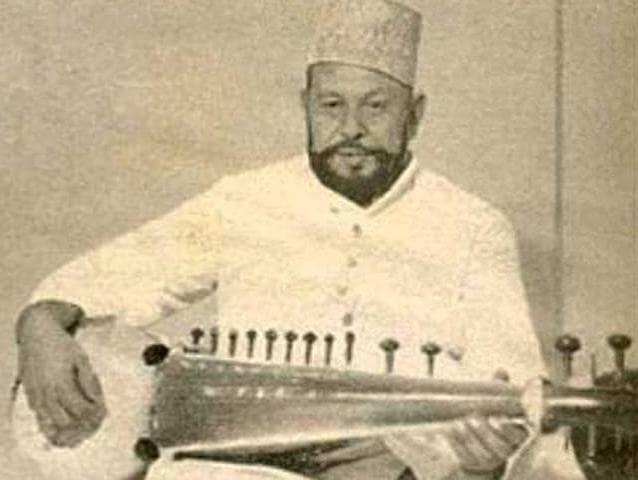
Hafiz Ali Khan was one of India’s greatest classical musicians and among the finest exponents of the sarod, a stringed instrument central to Hindustani classical music. He belonged to the renowned Gwalior musical tradition and dedicated his life to preserving and promoting Indian classical music. His extraordinary artistry earned him national recognition, including the prestigious Padma Bhushan in 1960. Today, he is remembered not only as a legendary performer but also as the father and guru of the internationally acclaimed sarod virtuoso Amjad Ali Khan.
2. Quick Facts
| Category | Details |
|---|---|
| Full Name | Hafiz Ali Khan |
| Native Name | حافظ علی خان (Urdu) |
| Date of Birth | 1888 |
| Place of Birth | Gwalior, Madhya Pradesh (then Gwalior State), India |
| Date of Death | 28 December 1972 |
| Nationality | Indian |
| Occupation / Profession | Classical Musician, Sarod Maestro |
| Field of Achievement | Hindustani Classical Music |
| Instrument | Sarod |
| Years Active | Early 1900s – 1972 |
| Known For | Preservation and promotion of traditional sarod music |
3. Award Information
Award Name
Padma Bhushan
Award Category
Arts (Music)
Award Year
1960
Presented By
Government of India
Date of Ceremony
1960 (exact ceremony date is not widely documented)
Citation / Official Reason
Awarded for exceptional contributions to Indian classical music and for preserving the traditional sarod heritage.
Previous Recipients (Optional)
Not applicable (Padma awards are annual civilian honors rather than sequential awards).
Next Recipients
Not applicable.
4. Why Did He Receive the Award?
Hafiz Ali Khan received the Padma Bhushan because of his lifelong dedication to Indian classical music. His contributions include:
- Preserving the traditional style of sarod playing.
- Training future generations of musicians.
- Promoting Hindustani classical music across India.
- Maintaining the purity of the Gwalior musical tradition.
- Inspiring musicians worldwide through his performances.
5. Early Life
Hafiz Ali Khan was born in 1888 into a family deeply connected with Indian classical music. His father, Nanne Khan, was an accomplished musician who introduced him to music at an early age.
Growing up in Gwalior, Hafiz Ali Khan was surrounded by a rich musical environment. He displayed exceptional talent from childhood and received rigorous training from renowned masters. His upbringing emphasized discipline, devotion, and respect for musical traditions.
6. Education
Hafiz Ali Khan did not receive formal university education.
Instead, he was trained through the Guru-Shishya Parampara (teacher-disciple tradition), where he learned:
- Sarod performance
- Classical ragas
- Music theory
- Rhythm (Taal)
- Musical improvisation
His primary teachers included his father and several distinguished musicians of his era.
7. Career Journey
Hafiz Ali Khan began performing professionally at a young age.
Important Career Milestones
- Trained under famous classical musicians.
- Became court musician in the princely state of Gwalior.
- Performed before Indian royalty.
- Earned recognition throughout India.
- Continued performing after India’s independence.
- Trained his sons, especially Amjad Ali Khan.
- Dedicated his life to preserving classical music traditions.
His performances were admired for their emotional depth, technical brilliance, and strict adherence to tradition.
8. Major Achievements
- Master of the sarod.
- Preserved traditional Hindustani music.
- One of India’s leading classical musicians.
- Awarded the Padma Bhushan.
- Inspired generations of musicians.
- Helped popularize the sarod.
- Trained internationally famous sarod player Amjad Ali Khan.
- Recognized as one of the greatest musicians of the 20th century.
9. Contribution to the Nation
Hafiz Ali Khan made significant contributions to India’s cultural heritage.
His contributions include:
- Preserving India’s classical music traditions.
- Promoting Indian culture nationally and internationally.
- Training future generations of musicians.
- Strengthening India’s musical identity.
- Keeping traditional ragas alive through performances.
- Inspiring respect for Indian heritage.
The Hafiz Ali Khan Memorial commemorates his legacy and supports the appreciation of classical music.
10. Other Awards and Honours
Apart from the Padma Bhushan, Hafiz Ali Khan received several honors during his lifetime, including:
- National recognition for classical music.
- Respect from leading musicians and scholars.
- Recognition by various cultural organizations.
- Memorials established in his honor after his death.
11. Legacy and Influence
Hafiz Ali Khan’s influence continues today through:
- His son Amjad Ali Khan.
- His disciples.
- The Gwalior musical tradition.
- Classical music festivals.
- Music institutions.
- Recordings preserved for future generations.
His dedication helped preserve the authentic style of sarod performance.
12. Interesting Facts
- He belonged to a famous family of musicians.
- He performed for Indian kings and princes.
- He believed in preserving traditional ragas.
- He avoided unnecessary experimentation with classical music.
- His son Amjad Ali Khan became one of the world’s greatest sarod players.
- A memorial in Gwalior is named after him.
- His musical lineage continues through later generations of the Khan family.
13. Quotes
There are very few verified quotations directly attributed to Hafiz Ali Khan. A statement commonly associated with his musical philosophy is:
“Music is a sacred tradition that must be preserved with sincerity and devotion.”
Note: This is widely attributed in discussions of his philosophy but is not documented as a verified historical quotation.
14. Timeline
| Year | Event |
|---|---|
| 1888 | Born in Gwalior |
| Early 1900s | Began professional music career |
| 1920s–1940s | Established as one of India’s leading sarod maestros |
| 1950s | Continued national performances and trained disciples |
| 1960 | Received Padma Bhushan |
| 1960s | Mentored Amjad Ali Khan |
| 1972 | Passed away on 28 December |
15. References
- Sangeet Natak Akademi – Hafiz Ali Khan
- Padma Awards – Ministry of Home Affairs
- Encyclopaedia Britannica – Hafiz Ali Khan
- Ministry of Culture, Government of India
16. Related Personalities
- Amjad Ali Khan – Son and disciple
- Amaan Ali Bangash – Grandson
- Ayaan Ali Bangash – Grandson
- Allauddin Khan – Contemporary classical music legend
- Ali Akbar Khan – Renowned sarod maestro
17. Frequently Asked Questions (FAQ)
1. Who was Hafiz Ali Khan?
Hafiz Ali Khan was one of India’s greatest sarod players and a distinguished exponent of Hindustani classical music.
2. When was Hafiz Ali Khan born?
He was born in 1888 in Gwalior.
3. Which instrument did he play?
He was a master of the sarod.
4. Which award did Hafiz Ali Khan receive?
He received the Padma Bhushan in 1960.
5. Why did he receive the Padma Bhushan?
He was honored for his exceptional contribution to Indian classical music and his role in preserving the traditional sarod style.
6. Who is Hafiz Ali Khan’s famous son?
His son is Amjad Ali Khan, one of the world’s most celebrated sarod maestros.
7. What was Hafiz Ali Khan’s contribution to India?
He preserved India’s rich classical music heritage, trained future musicians, and promoted Hindustani music nationally and internationally.
8. When did Hafiz Ali Khan die?
He passed away on 28 December 1972.
9. What is Hafiz Ali Khan remembered for?
He is remembered as a legendary sarod maestro, an influential teacher, and a guardian of the Hindustani classical music tradition.
10. Is there a memorial dedicated to Hafiz Ali Khan?
Yes. The Hafiz Ali Khan Memorial in Gwalior honors his life and contributions to Indian classical music.
About the Author