1. Introduction
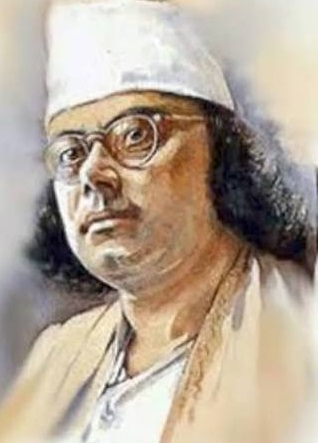
Kazi Nazrul Islam (24 May 1899 – 29 August 1976) was a Bengali poet, writer, musician, journalist, revolutionary, and philosopher. Popularly known as the “Bidrohi Kobi” (The Rebel Poet), he is celebrated for his powerful writings against oppression, colonialism, communalism, and social injustice. His works inspired the freedom movements of both India and Bangladesh. In 1972, after Bangladesh gained independence, he was invited to the country and later declared its National Poet.
2. Quick Facts
| Information | Details |
|---|---|
| Full Name | Kazi Nazrul Islam |
| Native Name | কাজী নজরুল ইসলাম |
| Also Known As | Bidrohi Kobi (The Rebel Poet) |
| Date of Birth | 24 May 1899 |
| Place of Birth | Churulia |
| Date of Death | 29 August 1976 |
| Nationality | British Indian (at birth), later Bangladeshi citizen |
| Occupation / Profession | Poet, Writer, Composer, Musician, Journalist, Soldier |
| Field of Achievement | Literature, Music, Journalism, Social Reform |
| Years Active | 1919–1942 |
| Known For | Rebel poetry, Nazrul Geeti, anti-colonial writings |
3. Award Information
Independence Day Award (Bangladesh)
| Award Information | Details |
|---|---|
| Award Name | Independence Day Award |
| Award Category | Literature (Posthumous) |
| Award Year | 1977 |
| Presented By | Government of Bangladesh |
| Date of Ceremony | 1977 |
| Official Citation | For his extraordinary contribution to Bengali literature, music, nationalism, and culture |
| Previous Recipient (Optional) | Not applicable (award categories vary annually) |
| Next Recipient | Varies by year and category |
4. Why Did He Receive the Award?
Kazi Nazrul Islam received Bangladesh’s highest civilian honor because of:
- His outstanding contribution to Bengali literature.
- His revolutionary poems against British colonial rule.
- His promotion of equality, justice, and human rights.
- His writings advocating Hindu-Muslim unity.
- His influence on Bangladesh’s Liberation Movement.
- His creation of nearly 4,000 songs known as Nazrul Geeti.
5. Early Life
Kazi Nazrul Islam was born into a modest Muslim family in Churulia village of present-day West Bengal, India. His father, Kazi Fakir Ahmed, served as the imam and caretaker of a local mosque.
During childhood, Nazrul:
- Worked in a mosque.
- Learned Persian and Arabic.
- Joined village theatrical groups (Leto).
- Began writing poems and songs at an early age.
- Worked in a bakery and tea shop because of financial hardship.
These experiences shaped his empathy for ordinary people and influenced his literary voice.
6. Education
Nazrul attended:
- Churulia Village School
- Mathrun High English School
- Searsole Raj High School
- Raniganj High School
His education was interrupted due to poverty.
He also studied:
- Arabic
- Persian
- Bengali literature
- Islamic philosophy
- Hindu mythology
He later educated himself through extensive reading.
7. Career Journey
Soldier (1917)
- Joined the British Indian Army.
- Served in the 49th Bengal Regiment.
- Began writing poems during military service.
Writer
His first notable works appeared after World War I.
Journalist
Worked for several literary magazines and newspapers.
Revolutionary Poet
His famous poem “Bidrohi” (The Rebel) made him one of the leading literary figures of Bengal.
Imprisonment
British authorities imprisoned him for his anti-colonial writings.
While in jail, he wrote many poems demanding freedom and justice.
Music Composer
Composed approximately 4,000 songs.
His songs remain popular across Bangladesh and India.
8. Major Achievements
- National Poet of Bangladesh
- Wrote the famous poem Bidrohi
- Created Nazrul Geeti
- Wrote novels, poems, essays, plays, and short stories
- Composed Islamic devotional songs and Shyama Sangeet
- Inspired freedom fighters
- Promoted secularism and religious harmony
- Revolutionized Bengali music
9. Contribution to the Nation
His contributions include:
Literature
Produced revolutionary poetry promoting equality and justice.
Freedom Movement
Inspired Indians during British rule.
Religious Harmony
Encouraged unity between Hindus and Muslims.
Music
Created thousands of songs that remain culturally significant.
Bangladesh
His poems became symbols of Bangladesh’s struggle for independence.
10. Other Awards and Honours
- Jagattarini Gold Medal (University of Calcutta, 1945)
- National Poet of Bangladesh (official recognition)
- Honorary D.Litt. from the University of Dhaka
- Ekushey Padak (recognized through national commemorations)
- Independence Day Award (1977, posthumous)
11. Legacy and Influence
Nazrul remains one of the greatest Bengali literary figures.
His legacy includes:
- Thousands of songs still performed today.
- Schools, universities, roads, and institutions named after him.
- Inspiration for writers and musicians worldwide.
- Influence on modern Bengali literature.
- Symbol of courage, equality, and freedom.
12. Interesting Facts
- Nicknamed The Rebel Poet.
- Wrote nearly 4,000 songs.
- Authored more than 20 poetry collections.
- Learned Persian literature at a young age.
- Served in the British Indian Army.
- Was imprisoned by the British government.
- His poem Bidrohi became one of the most famous poems in Bengali literature.
- Bangladesh celebrates his birth anniversary every year.
13. Famous Quotes
“I am the rebel eternal.”
“We are all equal.”
“I sing the song of equality.”
“Break open the iron gates of prison.”
(These are English translations of his original Bengali writings.)
14. Timeline
| Year | Event |
|---|---|
| 1899 | Born in Churulia |
| 1917 | Joined British Indian Army |
| 1919 | Began literary career |
| 1922 | Published Bidrohi |
| 1922 | Arrested by British government |
| 1923 | Went on hunger strike in prison |
| 1942 | Fell seriously ill, ending his literary career |
| 1972 | Moved to Bangladesh |
| 1976 | Declared National Poet of Bangladesh |
| 1976 | Passed away in Dhaka |
| 1977 | Received Independence Day Award (Posthumous) |
15. References
For reliable information, consult:
- Encyclopaedia Britannica – Kazi Nazrul Islam
- Banglapedia – Kazi Nazrul Islam
- Government of Bangladesh – Ministry of Cultural Affairs
- Nazrul Institute
- Encyclopedia.com – Kazi Nazrul Islam
16. Related Personalities
- Rabindranath Tagore
- Jibanananda Das
- Michael Madhusudan Dutt
- Begum Rokeya
- Syed Mujtaba Ali
17. Frequently Asked Questions (FAQ)
1. Who was Kazi Nazrul Islam?
He was a Bengali poet, writer, musician, journalist, and the National Poet of Bangladesh, renowned for his revolutionary literature.
2. Why is he called the Rebel Poet?
Because his poems strongly opposed oppression, injustice, colonial rule, and social discrimination.
3. What is his most famous poem?
His most celebrated poem is “Bidrohi” (The Rebel).
4. How many songs did he compose?
He composed approximately 4,000 songs, collectively known as Nazrul Geeti.
5. Which country honors him as the National Poet?
Bangladesh officially recognizes Kazi Nazrul Islam as its National Poet.
6. What was his contribution to society?
He promoted freedom, equality, religious harmony, women’s rights, and resistance against injustice through literature and music.
7. Which is the highest civilian award he received?
He was posthumously awarded Bangladesh’s Independence Day Award in 1977 for his outstanding contributions to literature and national culture.
8. Where is he buried?
He is buried on the campus of University of Dhaka, beside the central mosque, in accordance with his wishes.
About the Author