1. Introduction
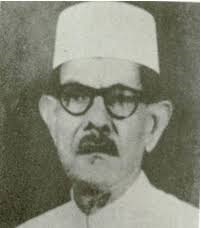
Ghulam Yazdani was a pioneering Indian archaeologist, historian, epigraphist, and scholar who made remarkable contributions to the preservation and documentation of India’s cultural heritage.
He was one of the founders of the Archaeological Department of the Nizam’s Dominions (Hyderabad State) and played a major role in the conservation and study of important historical sites such as Ajanta Caves, Ellora Caves, Bidar monuments, Ramappa Temple, and other Deccan heritage sites.
For his outstanding service to archaeology and Indian history, he was awarded the Padma Bhushan in 1959 by the Government of India.
2. Quick Facts
| Particular | Details |
|---|---|
| Full Name | Ghulam Yazdani |
| Honorifics | OBE, D.Litt. |
| Native Name | غلام یزدانی |
| Date of Birth | 22 March 1885 |
| Place of Birth | Delhi, British India |
| Date of Death | 13 November 1962 |
| Place of Death | Delhi, India |
| Nationality | Indian |
| Occupation / Profession | Archaeologist, Historian, Epigraphist, Scholar |
| Field of Achievement | Archaeology, Indian History, Epigraphy, Heritage Conservation |
| Years Active | Early 1900s–1962 |
| Known For | Archaeological surveys, conservation of Deccan monuments, Ajanta and Bidar studies |
3. Award Information
Award Name
Padma Bhushan
Award Category
Literature, Education and Archaeology / Civil Honours
Award Year
1959
Presented By
Government of India
Date of Ceremony
The Padma Awards were announced on 26 January 1959 and presented by the President of India. Ghulam Yazdani was among the recipients of the Padma Bhushan that year.
Citation / Official Reason
He was honoured for his distinguished contribution to archaeology, historical research, epigraphy, and preservation of India’s ancient monuments.
Previous Recipients (Optional)
The Padma Bhushan is awarded to multiple personalities every year, so there is no single previous recipient.
Next Recipients
The award continued to be presented annually to several distinguished Indians.
4. Why Did He Receive the Award?
Ghulam Yazdani received the Padma Bhushan because of his lifelong contribution to Indian archaeology:
- Documented and preserved important historical monuments.
- Established systematic archaeological research in Hyderabad State.
- Conducted surveys of Hindu, Buddhist, Jain, and Islamic heritage sites.
- Studied inscriptions and historical records.
- Published important works on Indian architecture and history.
5. Early Life
Ghulam Yazdani was born on 22 March 1885 in Delhi into a family known for learning and scholarship.
From a young age, he showed exceptional interest in languages, history, and classical studies. His academic abilities helped him develop expertise in Arabic, Persian, and Indian historical sources.
6. Education
Ghulam Yazdani studied at:
- St. Stephen’s College, Delhi
- Muhammadan Anglo-Oriental College (Aligarh) (later Aligarh Muslim University)
He excelled in Arabic, Persian, Oriental studies, and English. During his academic career, he earned several medals for outstanding performance.
7. Career Journey
Early Academic Career
- Started his career as a professor of Persian and Arabic.
- Taught at institutions including St. Stephen’s College, Delhi, Rajshahi College, and Government College, Lahore.
Epigraphy and Government Service
- Served as Epigraphist to the Government of India for Persian and Arabic inscriptions.
- Edited the Arabic and Persian Supplement of Epigraphia Indica from 1913 to 1940.
Archaeological Department of Hyderabad
In 1914, he was appointed to organize the Archaeological Department of the Nizam’s Dominions.
He became the first Director of the department and served for nearly three decades.
During his tenure, he worked on:
- Ajanta Caves
- Ellora Caves
- Bidar Fort
- Daulatabad Fort
- Alampur temples
- Ramappa Temple
8. Major Achievements
- Founded and developed the Archaeological Department of Hyderabad State.
- Conducted extensive archaeological surveys in the Deccan region.
- Preserved and documented Ajanta and Ellora heritage.
- Published important archaeological works.
- Awarded Padma Bhushan (1959).
- Received the British honour Officer of the Order of the British Empire (OBE) in 1936.
Important Publications
Some of his notable works include:
- The Antiquities of Bidar
- Bidar: Its History and Monuments
- The Temples at Palampet
- Guide to Ajanta Frescoes
- Mandu: The City of Joy
- History of the Deccan
9. Contribution to the Nation
Preservation of Heritage
Yazdani played a major role in protecting India’s historical monuments and ensuring their documentation for future generations.
Archaeological Research
He introduced systematic archaeological methods in Hyderabad and contributed greatly to the study of Deccan history.
Historical Documentation
Through inscriptions, surveys, photographs, and publications, he created valuable records of India’s cultural heritage.
Education and Scholarship
His research influenced generations of historians, archaeologists, and students.
10. Other Awards and Honours
- Padma Bhushan (1959) – Government of India.
- Officer of the Order of the British Empire (OBE), 1936.
- Fellow of learned societies including the Royal Asiatic Society.
- Honorary Doctorates from universities.
11. Legacy and Influence
Ghulam Yazdani is remembered as one of India’s greatest archaeological scholars.
His legacy includes:
- Preservation of priceless monuments.
- Advancement of Indian epigraphy.
- Documentation of Deccan history.
- Development of archaeological institutions.
Many heritage sites that are studied today benefited from his early conservation efforts.
12. Interesting Facts
- He was among the first major Indian archaeologists to systematically study Deccan monuments.
- He played an important role in documenting Ajanta paintings.
- He worked across Hindu, Buddhist, Jain, and Islamic heritage sites.
- His archaeological reports remain valuable historical references.
- His daughter Zubaida Yazdani became one of the early Asian women to study at Oxford University.
13. Quotes
No widely authenticated famous quotations by Ghulam Yazdani are available in major public records.
His life’s work reflected a commitment to preserving India’s historical and cultural heritage.
14. Timeline
| Year | Event |
|---|---|
| 1885 | Born on 22 March in Delhi |
| 1905 | Achieved academic distinction in Arabic, Oriental studies, and English |
| 1907 | Began teaching career at St. Stephen’s College |
| 1914 | Established Archaeological Department of Hyderabad State |
| 1915 | Became Government of India Epigraphist for Persian and Arabic inscriptions |
| 1936 | Received OBE honour |
| 1943 | Retired from Hyderabad Archaeological Department |
| 1959 | Awarded Padma Bhushan |
| 1962 | Passed away on 13 November |
15. References
- Padma Awards Portal, Government of India
- Indira Gandhi National Centre for the Arts (IGNCA)
- Archaeological Survey of India
16. Related Personalities
- John Marshall
- Rakhaldas Bandyopadhyay
- Daya Ram Sahni
- Mortimer Wheeler
17. Frequently Asked Questions (FAQ)
1. Who was Ghulam Yazdani?
Ghulam Yazdani was an Indian archaeologist, historian, and epigraphist known for preserving India’s ancient monuments.
2. When was Ghulam Yazdani born?
He was born on 22 March 1885 in Delhi.
3. Why did Ghulam Yazdani receive the Padma Bhushan?
He received the Padma Bhushan in 1959 for his contributions to archaeology, history, and heritage conservation.
4. Which monuments did Ghulam Yazdani study?
He worked on important sites including Ajanta Caves, Ellora Caves, Bidar Fort, Daulatabad Fort, and Ramappa Temple.
5. What was his profession?
He was an archaeologist, historian, epigraphist, and scholar.
6. Which department did he establish?
He established and led the Archaeological Department of the Nizam’s Dominions (Hyderabad State).
7. When did Ghulam Yazdani die?
He died on 13 November 1962 in Delhi.
8. Why is Ghulam Yazdani remembered?
He is remembered for protecting India’s archaeological heritage and creating important records of ancient monuments and inscriptions.
About the Author