1. Introduction
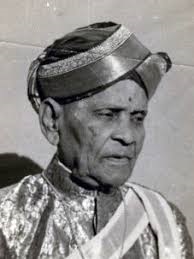
Mysore Vasudevachar was one of the greatest composers and musicians of Carnatic classical music. He was a direct disciple of the great composer-saint Tyagaraja’s musical lineage and played a major role in preserving and expanding the tradition of classical Indian music.
A court musician of the Mysore Kingdom, he composed more than 200 Carnatic compositions in Telugu and Sanskrit. His famous kritis, such as Brochevarevarura, Mamavatu Sri Saraswati, and Devadideva, continue to be performed by musicians worldwide. He received the Padma Bhushan in 1954 for his outstanding contribution to Indian classical music.
2. Quick Facts
| Particular | Details |
|---|---|
| Full Name | Mysore Vasudevachar (Mysore Vasudevacharya) |
| Native Name | ಮೈಸೂರು ವಾಸುದೇವಾಚಾರ್ |
| Date of Birth | 28 May 1865 |
| Place of Birth | Mysore, Kingdom of Mysore, India |
| Date of Death | 17 May 1961 |
| Place of Death | Mysore, Karnataka |
| Nationality | Indian |
| Occupation / Profession | Carnatic Vocalist, Composer, Musician, Teacher |
| Field of Achievement | Indian Classical Music (Carnatic Music) |
| Years Active | Late 19th century – 1961 |
| Known For | Carnatic kritis, Mysore court music tradition, disciple lineage of Tyagaraja |
3. Award Information
Award Name
Padma Bhushan
Award Category
Art
Award Year
1954
Presented By
Government of India
Date of Ceremony
The Padma Awards were instituted in 1954 and presented by the President of India. The exact investiture date for Mysore Vasudevachar is not widely documented.
Citation / Official Reason
He was honoured for his exceptional contribution to Indian classical music, particularly Carnatic music composition and performance.
Previous Recipients (Optional)
The Padma Bhushan was awarded to multiple personalities in 1954, including artists, scholars, scientists, and public figures.
Next Recipients
The award continued to be given annually to several distinguished personalities.
4. Why Did He Receive the Award?
Mysore Vasudevachar received the Padma Bhushan because of his remarkable contributions to Carnatic music:
- Created hundreds of classical compositions.
- Preserved the musical traditions of the Tyagaraja school.
- Served as a respected court musician of Mysore.
- Trained generations of musicians.
- Promoted classical music through teaching and performances.
5. Early Life
Mysore Vasudevachar was born on 28 May 1865 in Mysore into a family deeply connected with Sanskrit learning and traditional music.
From childhood, he showed exceptional musical talent. He learned music under Veena Padmanabhiah, a renowned musician in the Mysore court. His abilities later earned him royal patronage from the Mysore rulers.
6. Education
Vasudevachar received education in:
- Sanskrit literature
- Traditional Indian philosophy
- Music theory
- Carnatic vocal music
He studied at the Maharaja Sanskrit College, Mysore, while receiving musical training from leading musicians of the Mysore court.
7. Career Journey
Early Musical Training
- Learned veena and Carnatic music under Veena Padmanabhiah.
- Later became a disciple of Patnam Subramania Iyer, one of the greatest musicians of the era.
Mysore Court Musician
- Became an Asthana Vidwan (court musician) of the Mysore Kingdom.
- Received support from several Mysore rulers.
- Helped make Mysore a major centre of classical music.
Teacher and Composer
- Taught many students.
- Later worked with Kalakshetra Foundation, contributing to music education and dance productions.
8. Major Achievements
- Composed over 200 Carnatic kritis.
- Created compositions mainly in Telugu and Sanskrit.
- Became one of the most respected post-Trinity composers of Carnatic music.
- Served as president of the Madras Music Academy conference in 1935.
- Received the Padma Bhushan in 1954.
Famous Compositions
- Brochevarevarura – Raga Khamas
- Mamavatu Sri Saraswati – Raga Hindolam
- Devadideva – Raga Sunadavinodini
- Bhajare Re Manasa – Raga Abheri
9. Contribution to the Nation
Mysore Vasudevachar contributed to India through:
Preservation of Carnatic Tradition
He helped preserve classical compositions and the musical style of the Tyagaraja tradition.
Music Education
He trained musicians and passed on traditional knowledge to future generations.
Cultural Heritage
His compositions became an important part of India’s classical music heritage.
Promotion of Mysore Music Tradition
He strengthened Mysore’s reputation as a centre of classical arts.
10. Other Awards and Honours
- Padma Bhushan (1954) – Government of India.
- Presided over the Madras Music Academy conference (1935).
- Honoured with several royal titles and recognitions during his lifetime.
11. Legacy and Influence
Mysore Vasudevachar remains one of the most influential composers in Carnatic music after the Trinity of:
- Tyagaraja
- Muthuswami Dikshitar
- Syama Sastri
His compositions continue to be included in concerts by leading Carnatic musicians. His musical style is admired for lyrical beauty, devotion, and classical depth.
12. Interesting Facts
- He lived for nearly 96 years.
- He belonged to the direct musical lineage of Tyagaraja.
- He was supported by four generations of Mysore rulers.
- His autobiography is titled “Nenapugalu” (Memories).
- He also wrote “Na Kanda Kalavidaru”, describing musicians he had known.
- His grandson S. Rajaram continued his musical legacy.
13. Quotes
No widely authenticated famous quotations by Mysore Vasudevachar are available.
His musical philosophy is reflected through his devotional compositions and dedication to preserving classical music traditions.
14. Timeline
| Year | Event |
|---|---|
| 1865 | Born on 28 May in Mysore |
| Late 1800s | Studied Carnatic music under leading gurus |
| Early 1900s | Became court musician of Mysore |
| 1935 | Presided over Madras Music Academy conference |
| 1954 | Received Padma Bhushan |
| 1961 | Passed away on 17 May |
15. References
- Padma Awards Portal, Government of India
- Mysore Vasudevachar – Encyclopaedia Britannica-style biography resources
- Madras Music Academy
- Kalakshetra Foundation
16. Related Personalities
- Tyagaraja
- Patnam Subramania Iyer
- Muthiah Bhagavatar
- Veena Dhanammal
- Semmangudi Srinivasa Iyer
17. Frequently Asked Questions (FAQ)
1. Who was Mysore Vasudevachar?
Mysore Vasudevachar was a legendary Carnatic musician, vocalist, and composer known for his classical compositions.
2. When was Mysore Vasudevachar born?
He was born on 28 May 1865 in Mysore.
3. Which award did Mysore Vasudevachar receive?
He received the Padma Bhushan in 1954 for his contribution to Indian classical music.
4. How many compositions did Mysore Vasudevachar create?
He composed more than 200 Carnatic compositions.
5. What are Mysore Vasudevachar’s famous compositions?
Some famous works include Brochevarevarura, Mamavatu Sri Saraswati, and Devadideva.
6. Who was Mysore Vasudevachar’s guru?
He learned from Veena Padmanabhiah and later from Patnam Subramania Iyer.
7. Why is Mysore Vasudevachar important?
He preserved and enriched Carnatic music and became one of the greatest composers of the modern era.
8. When did Mysore Vasudevachar die?
He died on 17 May 1961 in Mysore.
You’re using our basic model. Log in or sign up for more intelligence.
About the Author