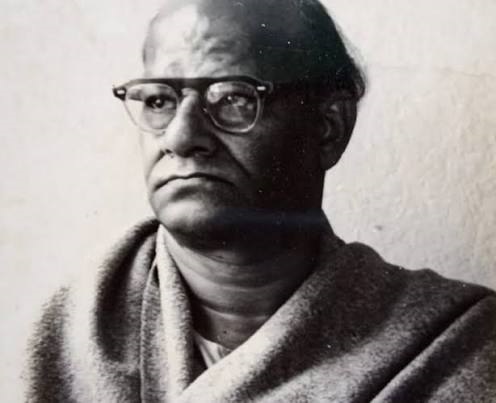
1. Introduction
D. P. Roy Choudhury (15 June 1899 – 15 October 1975), full name Debi Prasad Roy Choudhury, was a renowned Indian sculptor, painter, and art educator. He was one of the pioneers of modern Indian sculpture and played an important role in shaping art education in India.
He is especially remembered for his monumental sculptures, portrait works, and his leadership in developing art institutions. His famous works include the “Triumph of Labour” sculpture at Chennai and several public monuments across India.
For his outstanding contribution to art and sculpture, he was honoured with the Padma Bhushan in 1958.
2. Quick Facts
| Item | Details |
|---|---|
| Full Name | Debi Prasad Roy Choudhury |
| Native Name | দেবী প্রসাদ রায় চৌধুরী |
| Date of Birth | 15 June 1899 |
| Place of Birth | Tezpur, Assam, British India |
| Date of Death | 15 October 1975 |
| Nationality | Indian |
| Occupation / Profession | Sculptor, Painter, Art Educator |
| Field of Achievement | Fine Arts, Sculpture, Painting, Art Education |
| Years Active | 1920s–1975 |
| Known For | Modern Indian sculpture and art education |
3. Award Information
| Item | Details |
|---|---|
| Award Name | Padma Bhushan |
| Award Category | Arts |
| Award Year | 1958 |
| Presented By | President of India |
| Date of Ceremony | 1958 |
| Citation / Official Reason | Distinguished contribution to sculpture, painting, and art education |
| Previous Recipients | Various distinguished artists and cultural figures |
| Next Recipients | The Padma Bhushan continued to be awarded annually |
4. Why Did D. P. Roy Choudhury Receive the Award?
D. P. Roy Choudhury received the Padma Bhushan for his exceptional contribution to Indian art.
He was honoured for:
- Creating important sculptures and public monuments.
- Developing modern Indian sculpture.
- Promoting art education.
- Training young artists.
- Strengthening India’s cultural heritage through visual arts.
His work helped establish sculpture as an important form of modern Indian artistic expression.
5. Early Life
Debi Prasad Roy Choudhury was born on 15 June 1899 in Tezpur, Assam.
He developed an interest in art at an early age. His talent in drawing and painting encouraged him to pursue formal training in fine arts.
He grew up during a period when Indian artists were exploring new forms of expression while preserving traditional artistic values.
6. Education
Roy Choudhury studied art at:
Government College of Art & Craft, Kolkata
He received training under famous artists and developed expertise in:
- Painting.
- Sculpture.
- Portrait making.
- Monumental art.
His education helped him combine Indian artistic traditions with modern techniques.
7. Career Journey
Early Artistic Career
- Began his career as a painter.
- Later became deeply interested in sculpture.
- Developed a unique style combining realism and Indian themes.
Art Educator
Roy Choudhury became an important figure in Indian art education.
He served as:
- Principal of Government College of Fine Arts, Chennai.
During his leadership, the institution became an important centre for art training.
Sculptor and Public Artist
He created many famous sculptures and monuments, including:
Triumph of Labour
- Located on the Marina Beach promenade in Chennai.
- Represents the dignity and strength of workers.
Other Works
- Portrait sculptures of national leaders.
- Public monuments.
- Figurative sculptures.
8. Major Achievements
Major achievements of D. P. Roy Choudhury include:
- Pioneer of modern Indian sculpture.
- Created nationally recognised monuments.
- Served as an influential art educator.
- Trained generations of Indian artists.
- Promoted fine arts education.
- Received the Padma Bhushan in 1958.
Famous Works
- Triumph of Labour (1959)
- Sculptures of important Indian personalities.
- Numerous paintings and portraits.
9. Contribution to the Nation
Promotion of Indian Art
Roy Choudhury contributed by:
- Developing modern sculpture in India.
- Creating public artworks that reflected Indian themes.
Art Education
- Improved standards of art teaching.
- Encouraged young artists.
- Strengthened institutional art education.
Cultural Heritage
His sculptures became symbols of India’s artistic identity and public memory.
10. Other Awards and Honours
- Padma Bhushan (1958)
- Recognised by national and cultural institutions.
- Served as a respected figure in India’s art community.
- Honoured for lifelong contribution to sculpture and education.
11. Legacy and Influence
D. P. Roy Choudhury’s legacy continues through:
- His public sculptures displayed across India.
- Art institutions influenced by his teaching.
- Artists trained under his guidance.
- His role in establishing modern Indian sculpture.
He is remembered as one of the founders of modern Indian monumental sculpture.
12. Interesting Facts
- He began as a painter but became famous mainly as a sculptor.
- His sculpture “Triumph of Labour” is one of Chennai’s most recognised landmarks.
- He was among the earliest Indian artists to gain national recognition for sculpture.
- He combined realism with strong emotional expression in his works.
- He played an important role in professionalising art education in India.
13. Quotes
No widely authenticated direct quotations by D. P. Roy Choudhury are available.
A statement reflecting his artistic philosophy:
“Art gives permanent form to the ideas, struggles, and emotions of humanity.”
(This reflects his artistic approach but is not a verified personal quotation.)
14. Timeline
| Year | Event |
|---|---|
| 1899 | Born on 15 June in Tezpur, Assam |
| 1910s–1920s | Studied art and began artistic career |
| 1930s–1950s | Became a leading sculptor and art educator |
| 1958 | Received Padma Bhushan |
| 1959 | Created the famous sculpture “Triumph of Labour” |
| 1975 | Passed away on 15 October |
15. References
- Government of India Padma Awards archives.
- Records of Indian art institutions.
- Publications on modern Indian sculpture.
- Biographical writings on D. P. Roy Choudhury.
- Art history studies of 20th-century Indian artists.
16. Related Personalities
- Abanindranath Tagore
- Nandalal Bose
- Ramkinkar Baij
- Jamini Roy
- Amrita Sher-Gil
17. Frequently Asked Questions (FAQ)
Q1. Who was D. P. Roy Choudhury?
D. P. Roy Choudhury was an Indian sculptor, painter, and art educator known for his contribution to modern Indian sculpture.
Q2. When was D. P. Roy Choudhury born?
He was born on 15 June 1899 in Tezpur, Assam.
Q3. Which award did D. P. Roy Choudhury receive?
He received the Padma Bhushan in 1958.
Q4. Why did D. P. Roy Choudhury receive the Padma Bhushan?
He was honoured for his contributions to sculpture, painting, and art education.
Q5. What is D. P. Roy Choudhury famous for?
He is famous for his sculpture “Triumph of Labour” and his role in Indian art education.
Q6. Which institution did he lead?
He served as Principal of the Government College of Fine Arts, Chennai.
Q7. What was his main field of work?
His main fields were sculpture, painting, and fine arts education.
Q8. When did D. P. Roy Choudhury die?
He died on 15 October 1975.
About the Author