

Introduction
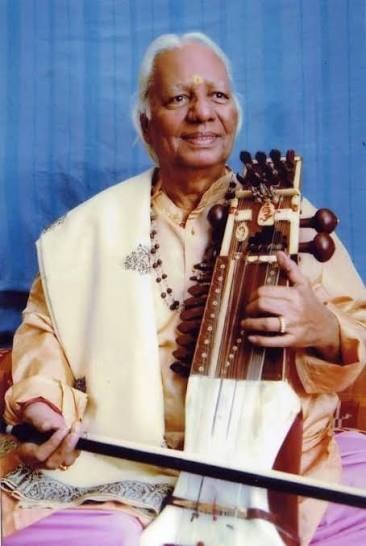
Ram Narayan is one of India’s most respected classical musicians and a legendary sarangi player. He played a major role in bringing the sarangi, a traditional Indian bowed instrument, to international recognition as a solo concert instrument. Through his exceptional musical talent, dedication, and innovation, he contributed greatly to the preservation and promotion of Indian classical music.
Early Life
Ram Narayan was born into a musical family in Rajasthan. His father, Nathuji Biawat, was a musician and taught him the basics of music from a young age. Ram Narayan developed a deep interest in the sarangi and began learning the instrument during childhood.
At a time when the sarangi was mainly used to accompany vocal performances, he worked hard to establish it as a respected solo instrument.
Birth Date and Death
- Birth: 25 December 1927
- Birthplace: Udaipur, Rajasthan, India
- Death: Ram Narayan is alive as of 2026.
Education and Career
Ram Narayan received his early musical training from traditional Indian musicians. He learned the sarangi through the guru-shishya tradition, where students learn directly from their teachers.
He trained under several renowned musicians and later moved to Lahore, where he worked as a radio musician. After India’s independence, he moved to Mumbai and began performing in Indian classical music circles.
Over time, he gained worldwide recognition for his powerful performances and became one of the greatest sarangi players in history.
Career and Achievements
Ram Narayan’s major achievements include:
- Becoming one of the first musicians to establish the sarangi as a solo concert instrument.
- Performing at prestigious venues across India and around the world.
- Introducing Indian classical music to international audiences.
- Recording numerous albums and collaborating with famous musicians.
- Preserving and promoting the traditional style of Hindustani classical music.
- Inspiring future generations of sarangi players.
His unique style combined technical skill, emotional depth, and a deep understanding of Indian ragas.
Why Did Ram Narayan Receive the Padma Vibhushan Award?
Ram Narayan was awarded the Padma Vibhushan in 2005 for his exceptional contribution to the field of art, particularly Indian classical music.
He received this honour because of:
- His outstanding contribution to Hindustani classical music.
- His efforts to elevate the sarangi from an accompanying instrument to a respected solo instrument.
- His lifelong dedication to preserving Indian musical traditions.
- His influence on musicians in India and across the world.
- His role in spreading Indian culture internationally.
Field of Achievements
Ram Narayan made significant contributions in the following fields:
1. Indian Classical Music
He enriched Hindustani classical music through his mastery of the sarangi.
2. Sarangi Performance
He transformed the image of the sarangi and established it as a major solo instrument.
3. Music Education
He trained and inspired many young musicians.
4. Cultural Promotion
Through international performances, he introduced Indian musical traditions to global audiences.
Awards and Honours
Ram Narayan has received several prestigious awards, including:
- Padma Shri (1976) – awarded by the Government of India.
- Sangeet Natak Akademi Award (1975) – for outstanding contribution to Indian classical music.
- Padma Bhushan (1991) – for his contribution to art and music.
- Padma Vibhushan (2005) – India’s second-highest civilian award.
- Numerous international recognitions for promoting Indian classical music.
Interesting Facts About Ram Narayan
- He is considered one of the greatest sarangi players in the world.
- He played an important role in making the sarangi popular as a solo instrument.
- He began learning music at a very young age.
- He performed in many countries and introduced Indian classical music to global audiences.
- His younger brother, Chatur Lal, was also a renowned musician.
- He is known for his deep emotional expression and mastery of ragas.
Legacy and Inspiration
Ram Narayan’s legacy lies in his dedication to Indian classical music and his efforts to preserve the sarangi tradition. He proved that traditional instruments could achieve global recognition through skill, innovation, and commitment.
His journey inspires young musicians to respect their cultural heritage while exploring new possibilities in music.
Contribution to the Nation
Ram Narayan contributed to India by:
- Preserving and promoting Hindustani classical music.
- Bringing international recognition to the sarangi.
- Representing Indian culture on global platforms.
- Training and inspiring future generations of musicians.
- Strengthening India’s cultural identity through music.
Conclusion
Ram Narayan is a legendary figure in Indian classical music whose extraordinary talent transformed the status of the sarangi. His dedication, creativity, and contribution to music earned him the prestigious Padma Vibhushan award. His lifelong work continues to inspire musicians and keeps India’s rich musical traditions alive for future generations.
About the Author




