

Introduction
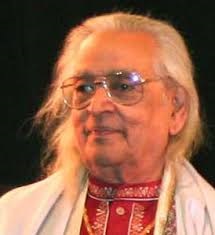
Kishan Maharaj was one of India’s greatest tabla virtuosos and a towering figure in Hindustani classical music. Renowned for his exceptional rhythm, speed, precision, and improvisational skills, he belonged to the prestigious Banaras Gharana of tabla playing. His performances captivated audiences across the world, and his dedication to preserving India’s rich musical heritage earned him widespread admiration. In recognition of his outstanding contribution to Indian classical music, the Government of India honored him with the Padma Vibhushan.
Early Life
Pandit Kishan Maharaj was born into a family with a rich musical tradition in Varanasi (Banaras), Uttar Pradesh. His father, Hari Maharaj, was a respected tabla player. After his father’s early death, Kishan Maharaj continued his musical training under his uncle, Kanthe Maharaj, one of the greatest masters of the Banaras Gharana.
From a very young age, he displayed extraordinary talent and devoted himself to mastering the tabla through years of disciplined practice.
Birth Date and Death
- Full Name: Pandit Kishan Maharaj
- Date of Birth: 3 September 1923
- Place of Birth: Kabir Chaura, Varanasi, Uttar Pradesh, India
- Date of Death: 4 May 2008
- Place of Death: Varanasi, Uttar Pradesh, India
- Age at Death: 84 years
Education and Career
Education
Kishan Maharaj received his early education in Varanasi. Alongside his schooling, he underwent rigorous musical training in the traditional guru-shishya system under his uncle, Kanthe Maharaj. His education focused primarily on mastering the art of tabla performance.
Career
Pandit Kishan Maharaj began performing publicly at a young age and soon established himself as one of India’s finest tabla players.
During his illustrious career, he:
- Accompanied leading Hindustani classical vocalists and instrumentalists.
- Performed at prestigious music festivals in India and abroad.
- Presented solo tabla concerts that showcased the richness of the Banaras Gharana.
- Trained numerous students who carried forward his musical tradition.
- Promoted Indian classical music on international stages.
His performances were admired for their technical brilliance, creativity, and rhythmic complexity.
Why Did He Receive the Padma Vibhushan Award?
Pandit Kishan Maharaj was awarded the Padma Vibhushan in 2002 for his exceptional contribution to Indian classical music, particularly tabla.
He received this prestigious honour because he:
- Elevated the global status of the tabla as a classical percussion instrument.
- Preserved and promoted the Banaras Gharana tradition.
- Inspired generations of musicians through his performances and teaching.
- Represented Indian culture at prestigious international music festivals.
- Dedicated his life to advancing Hindustani classical music.
His remarkable artistry made him one of the greatest tabla maestros in Indian history.
Career and Achievements
Pandit Kishan Maharaj enjoyed a remarkable musical career spanning more than six decades.
Some of his major achievements include:
- Became one of the foremost tabla maestros of the Banaras Gharana.
- Performed with legendary musicians across India and internationally.
- Gained worldwide recognition for solo tabla performances.
- Mentored numerous students in the traditional style of tabla playing.
- Helped popularize Indian classical percussion around the world.
- Inspired future generations of percussionists.
His performances remain a benchmark for excellence in tabla music.
Field of Achievement
Pandit Kishan Maharaj’s primary fields of achievement include:
- Hindustani Classical Music
- Tabla Performance
- Banaras Gharana
- Classical Percussion
- Music Education
- Cultural Preservation
Awards and Honours
Throughout his distinguished career, Pandit Kishan Maharaj received several prestigious honours.
Some of the major awards include:
- Padma Shri (1973)
- Padma Vibhushan (2002)
- Sangeet Natak Akademi Award
- Sangeet Natak Akademi Fellowship
- Uttar Pradesh Sangeet Natak Akademi Award
- Numerous Lifetime Achievement Awards from cultural organizations
Interesting Facts
- He began learning tabla at a very young age under his uncle, Kanthe Maharaj.
- He was famous for his extraordinary command over complex rhythmic patterns (layakari).
- He performed with legendary musicians such as Ravi Shankar, Ali Akbar Khan, Bismillah Khan, and Bhimsen Joshi.
- He was equally respected for both solo performances and accompaniment.
- His influence continues through his disciples and recorded performances.
Legacy and Inspiration
Pandit Kishan Maharaj’s legacy continues through his students, recordings, and the Banaras Gharana tradition. His dedication, discipline, and unmatched artistry inspired countless musicians to pursue excellence in Indian classical music.
He demonstrated that rhythm is not merely accompaniment but an expressive art form capable of captivating audiences on its own. His life remains an inspiration for aspiring percussionists around the world.
Contribution to the Nation
Pandit Kishan Maharaj made invaluable contributions to India’s cultural heritage.
His contributions include:
- Preserving and promoting the Banaras Gharana of tabla.
- Popularizing Indian classical percussion globally.
- Mentoring young tabla players and musicians.
- Representing India at international music festivals.
- Strengthening India’s cultural identity through music.
- Inspiring generations to appreciate and preserve classical traditions.
His lifelong dedication enriched India’s artistic legacy and enhanced the global reputation of Indian classical music.
Conclusion
Pandit Kishan Maharaj was one of the greatest tabla maestros in the history of Indian classical music. His extraordinary mastery of rhythm, commitment to preserving the Banaras Gharana, and dedication to teaching made him a true cultural icon. Through unforgettable performances, innovative artistry, and lifelong service to music, he elevated the tabla to new heights of global recognition. The Padma Vibhushan honored his immense contribution to India’s cultural heritage, and his legacy continues to inspire musicians and music enthusiasts across the world.
About the Author




