
Introduction
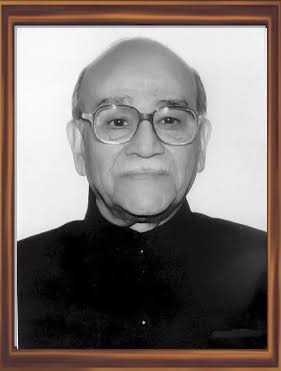
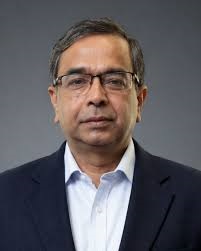
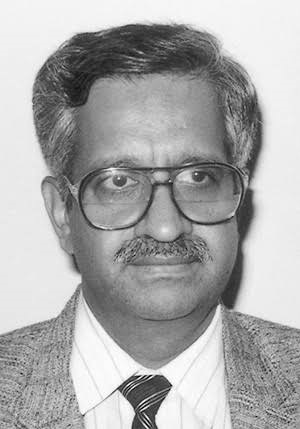
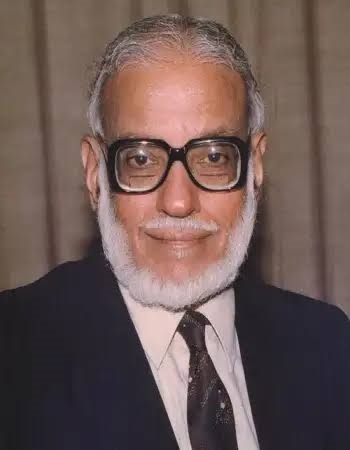
Mambillikalathil Govind Kumar Menon (M. G. K. Menon) was one of India’s most respected scientists, science administrators, and policymakers. He made significant contributions to cosmic ray physics, high-energy physics, space research, and scientific development in India. He played an important role in building India’s scientific institutions and promoting research and innovation.
Why Did M. G. K. Menon Receive the Padma Vibhushan Award?
M. G. K. Menon received the Padma Vibhushan in 1985 for his outstanding contributions to science and technology.
He was honored for:
- His pioneering research in cosmic ray physics and particle physics.
- His leadership in developing India’s scientific research infrastructure.
- His contributions to organizations involved in space, technology, and national development.
- His efforts in promoting scientific education and research in India.
His work helped strengthen India’s position in advanced scientific research.
Early Life
M. G. K. Menon was born on 28 August 1928 in Mangalore, Karnataka, India. From an early age, he showed great interest in mathematics and science. His academic excellence and curiosity led him to pursue a career in physics.
Birth Date and Death
- Birth Date: 28 August 1928
- Birth Place: Mangalore, Karnataka, India
- Death Date: 22 November 2016
- Age at Death: 88 years
Education and Career
M. G. K. Menon received his early education in India and later went abroad for advanced studies.
- He studied physics at University of Bristol.
- He completed his Ph.D. in particle physics under the guidance of Nobel Prize-winning physicist Cecil Frank Powell.
After returning to India, he joined the Tata Institute of Fundamental Research (TIFR), where he carried out important research in cosmic rays and particle physics. He later held several important positions in Indian science organizations and government advisory bodies.
Career and Achievements
M. G. K. Menon had a remarkable career as both a scientist and administrator.
Major achievements include:
- Conducted important research on cosmic rays and high-energy particles.
- Played a major role in the growth of fundamental science research in India.
- Served as Director of the Tata Institute of Fundamental Research.
- Served as Secretary of the Department of Science and Technology.
- Served as Chairman of the Indian Space Research Organisation.
- Contributed to science policy planning and technological development in India.
Field of Achievements
M. G. K. Menon’s major areas of achievement include:
1. Cosmic Ray Physics
He conducted pioneering studies on cosmic rays, helping scientists understand high-energy particles from outer space.
2. Particle Physics
His research contributed to India’s progress in the study of fundamental particles and their interactions.
3. Space Science
He supported the growth of India’s space research programs and scientific institutions.
4. Science Administration
He played a key role in developing policies that encouraged scientific research and innovation.
Awards and Honours
M. G. K. Menon received several prestigious awards and recognitions, including:
- Padma Shri (1968)
- Padma Bhushan (1981)
- Padma Vibhushan (1985)
- Abel Prize? (Not awarded to him)
- Fellowship of the Royal Society
- Membership in several national and international scientific organizations
Interesting Facts
- M. G. K. Menon was one of India’s leading experts in cosmic ray research.
- He became Director of TIFR at a relatively young age.
- He worked closely with India’s leading scientists and helped shape national science policies.
- He contributed not only as a researcher but also as a science organizer and advisor.
- He was involved in promoting scientific education among young Indians.
Legacy and Inspiration
M. G. K. Menon’s legacy lies in his dedication to scientific research and institution building. He showed that scientists can contribute to society not only through discoveries but also by creating opportunities for future generations.
His life inspires students to pursue science with curiosity, dedication, and a desire to contribute to national progress.
Contribution to the Nation
M. G. K. Menon made several important contributions to India:
- Strengthened India’s research capabilities in physics and technology.
- Helped develop important scientific institutions.
- Supported India’s space and technology programs.
- Guided national science policies.
- Encouraged young scientists and researchers.
- Promoted the use of science for social and economic development.
Conclusion
M. G. K. Menon was a remarkable scientist and leader who played a vital role in shaping modern Indian science. His contributions to physics, space research, and science administration earned him national and international recognition. His dedication to knowledge and innovation continues to inspire future generations of scientists in India.
About the Author