

Introduction
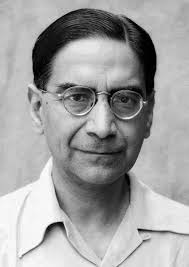
Prasanta Chandra Mahalanobis (1893–1972) was a renowned Indian scientist, statistician, and educationist who played a major role in developing modern statistics in India. He is often called the “Father of Indian Statistics” because of his pioneering work in statistical research and planning.
He founded the Indian Statistical Institute and introduced scientific methods of data analysis that helped India in economic planning, agriculture, and industrial development. His contributions to statistics and nation-building earned him the Padma Vibhushan in 1968.
Why Did Prasanta Chandra Mahalanobis Receive the Padma Vibhushan Award?
Prasanta Chandra Mahalanobis received the Padma Vibhushan in 1968 for his outstanding contributions to science, statistics, and national planning.
The award recognized his:
- Development of modern statistical methods in India.
- Creation of the Mahalanobis Distance, a widely used statistical measurement method.
- Establishment of the Indian Statistical Institute.
- Contribution to India’s economic planning and development policies.
- Work in applying statistics to agriculture, industry, and social research.
His scientific approach helped India use data for making important decisions after independence.
Early Life
Prasanta Chandra Mahalanobis was born on 29 June 1893 in Calcutta (now Kolkata), British India. He belonged to an educated and progressive Bengali family.
From an early age, he showed great interest in mathematics, science, and research. His family encouraged learning and intellectual development, which helped shape his future career as a scientist.
Education and Career
Mahalanobis completed his early education in Kolkata and studied at Presidency College, Kolkata. He was an excellent student with a strong interest in physics and mathematics.
Later, he went to England and studied at University of Cambridge, where he developed his interest in statistics.
Career Journey:
- After returning to India, he joined Presidency College as a physics professor.
- He became interested in statistical methods and started applying them to scientific problems.
- In 1931, he founded the Indian Statistical Institute.
- He played an important role in India’s economic planning after independence.
- He served as an advisor to the Government of India on statistical and planning matters.
Career and Achievements
Prasanta Chandra Mahalanobis made several important contributions to science and national development.
1. Founder of Indian Statistical Institute
One of his greatest achievements was establishing the Indian Statistical Institute in Kolkata in 1931.
The institute became a leading centre for research and education in:
- Statistics
- Mathematics
- Computer science
- Data analysis
- Social sciences
2. Development of Mahalanobis Distance
Mahalanobis introduced the Mahalanobis Distance, a statistical method used to measure the distance between data points while considering relationships between variables.
It is used worldwide in fields such as:
- Machine learning
- Pattern recognition
- Data analysis
- Medical research
3. Contribution to Economic Planning
Mahalanobis played a key role in India’s economic development.
He helped design the Second Five-Year Plan (1956–1961), which focused on:
- Industrial growth
- Development of heavy industries
- Scientific planning for economic progress
4. Large-Scale Surveys
He introduced advanced sampling techniques for collecting and analyzing data. His methods improved government surveys related to:
- Population
- Agriculture
- Employment
- Economic conditions
Field of Achievements
Prasanta Chandra Mahalanobis contributed to several fields:
Statistics
He developed new statistical methods and established statistics as an important scientific discipline in India.
Economics and Planning
He used statistical models to support national development strategies.
Scientific Research
He promoted research-based decision-making using mathematical methods.
Education
He trained many statisticians and helped create institutions for scientific learning.
Awards and Honours
Prasanta Chandra Mahalanobis received several honours for his contributions:
- Padma Vibhushan (1968) – Awarded by the Government of India for exceptional service in science and technology.
- Fellow of the Royal Society (1945) – One of the highest recognitions in science.
- Weldon Memorial Prize (1944) – Awarded for outstanding contributions to statistics.
- Honorary degrees from several universities in India and abroad.
Interesting Facts About Prasanta Chandra Mahalanobis
- He is known as the “Father of Indian Statistics.”
- His birthday, 29 June, is celebrated as National Statistics Day in India.
- He was a close associate of Rabindranath Tagore and worked at Visva-Bharati University.
- He introduced statistical quality control methods in India.
- His work influenced modern data science and statistical research.
- He believed that accurate data was essential for effective governance and development.
Legacy and Inspiration
Prasanta Chandra Mahalanobis left a lasting legacy in Indian science and technology. His efforts transformed statistics from a theoretical subject into a practical tool for solving real-world problems.
His dedication to research, innovation, and education continues to inspire scientists, statisticians, and students. His life shows the importance of using knowledge and technology for national progress.
Contribution to the Nation
Mahalanobis contributed to India’s growth by:
- Establishing the foundation of modern statistics in India.
- Helping the government use scientific data for decision-making.
- Supporting economic planning and industrial development.
- Creating opportunities for research and education.
- Training future generations of statisticians and scientists.
His work helped India move toward a more scientific and organized approach to development.
Conclusion
Prasanta Chandra Mahalanobis was a visionary scientist who transformed the field of statistics in India. Through his research, institution-building, and contributions to national planning, he played an important role in shaping modern India.
The Padma Vibhushan award recognized his exceptional contributions to science and public service. His legacy continues through statistical research, data-driven decision-making, and the institutions he helped establish. He remains an inspiration for those who use science and knowledge to serve society.
About the Author




