Introduction
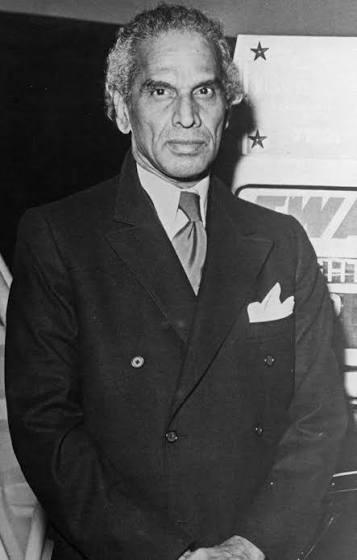
Vengalil Krishnan Krishna Menon (3 May 1896 – 6 October 1974), popularly known as V. K. Krishna Menon, was one of India’s most influential diplomats, politicians, lawyers, and writers. He played a crucial role in shaping India’s foreign policy during the early years of independence and was a close associate of Prime Minister Jawaharlal Nehru. Known for his exceptional intellect, powerful oratory, and commitment to India’s sovereignty, Krishna Menon represented the country on the global stage with distinction.
Why Did He Receive the Padma Vibhushan Award?
V. K. Krishna Menon was awarded the Padma Vibhushan in 1954, India’s second-highest civilian honour, in recognition of his distinguished service in public affairs and diplomacy. His efforts in representing India at the United Nations, strengthening India’s international relations, and advocating for peace, decolonization, and non-alignment earned him national recognition.
Early Life
V. K. Krishna Menon was born on 3 May 1896 in Kozhikode (Calicut), Kerala. He belonged to a well-educated family that valued learning and public service. From a young age, he showed remarkable academic ability and developed a strong interest in politics, literature, and social reform.
His early experiences inspired him to work for India’s independence and contribute to global discussions on justice and peace.
Education and Career
Krishna Menon completed his early education in Kerala before moving to Madras (now Chennai) for higher studies. He later travelled to the United Kingdom, where he studied at the London School of Economics (LSE) and University College London (UCL). During his time in Britain, he qualified as a barrister and became actively involved in the Indian independence movement.
He founded and led the India League, an organization that campaigned in Britain for India’s independence. After India gained independence in 1947, he served as India’s High Commissioner to the United Kingdom from 1947 to 1952.
Krishna Menon later became India’s permanent representative to the United Nations, where he earned international recognition for his persuasive speeches. He served as Defence Minister of India from 1957 to 1962, overseeing important developments in the country’s defence sector.
Career and Achievements
V. K. Krishna Menon made significant contributions to India’s diplomacy, defence, and international relations.
His major achievements include:
- Led the India League in Britain to support India’s independence.
- Served as India’s first High Commissioner to the United Kingdom after independence.
- Represented India at the United Nations, where he strongly defended the country’s interests.
- Delivered one of the longest speeches in United Nations history while presenting India’s position on Jammu and Kashmir.
- Contributed to the development of India’s non-aligned foreign policy.
- Served as Defence Minister of India and promoted the modernization of India’s defence capabilities.
Field of Achievements
V. K. Krishna Menon made remarkable contributions in several fields, including:
- Diplomacy
- International Relations
- Politics
- Public Administration
- Defence Policy
- Law and Public Affairs
Awards and Honours
Krishna Menon received several recognitions during his career, including:
- Padma Vibhushan (1954) for distinguished service in public affairs.
- Widely respected internationally as one of India’s leading diplomats.
- Received honorary degrees and recognition from academic and public institutions.
- Remembered as one of the principal architects of India’s early foreign policy.
Interesting Facts
- Krishna Menon delivered a record-breaking speech lasting over eight hours at the United Nations on the Kashmir issue in 1957.
- He was one of Prime Minister Jawaharlal Nehru’s closest advisers on foreign policy.
- Before returning to India, he spent many years in Britain advocating for India’s independence.
- He was a lawyer, writer, editor, and gifted public speaker.
- His diplomatic skills earned him international recognition, although his outspoken style also made him a controversial public figure.
Legacy and Inspiration
V. K. Krishna Menon’s legacy lies in his contribution to India’s diplomatic identity during the formative years after independence. His strong advocacy for peace, anti-colonial movements, and national sovereignty helped establish India as an influential voice in international affairs.
His dedication to public service, intellectual excellence, and independent thinking continues to inspire students of political science, diplomacy, international relations, and public administration.
Contribution to the Nation
V. K. Krishna Menon made lasting contributions to India by:
- Representing India effectively on the global stage.
- Strengthening India’s diplomatic relations after independence.
- Supporting the country’s policy of non-alignment during the Cold War.
- Defending India’s interests at the United Nations.
- Modernizing aspects of India’s defence administration during his tenure as Defence Minister.
- Promoting India’s image as an independent and peace-loving nation.
His work helped shape India’s role in international politics during the early decades of independence.
Conclusion
V. K. Krishna Menon was a distinguished diplomat, statesman, and nationalist whose contributions greatly influenced India’s foreign policy and international standing. His leadership at the United Nations, service as High Commissioner to the United Kingdom, and role as Defence Minister reflected his deep commitment to the nation. Awarded the Padma Vibhushan for his outstanding public service, Krishna Menon’s legacy continues to inspire diplomats, policymakers, and students of international relations across the world.
About the Author