Introduction
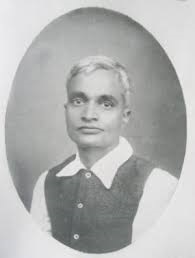
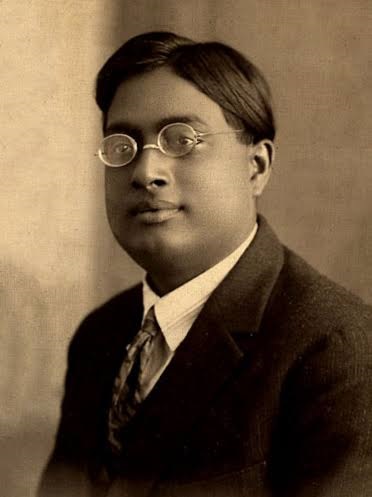
Satyendra Nath Bose (1894–1974) was one of India’s greatest physicists and mathematicians. He made groundbreaking contributions to theoretical physics, especially in quantum mechanics. His collaboration with Albert Einstein led to the development of Bose–Einstein Statistics, and a class of particles called bosons was named in his honor. Bose’s work laid the foundation for many modern scientific discoveries.
Why Did He Receive the Padma Vibhushan Award?
Satyendra Nath Bose was awarded the Padma Vibhushan, India’s second-highest civilian award, in 1954. He received this honor for his outstanding contributions to science, particularly in theoretical physics, and for bringing international recognition to Indian scientific research through his pioneering work in quantum statistics.
Early Life
Satyendra Nath Bose was born on January 1, 1894, in Calcutta (now Kolkata), West Bengal. He was the eldest of seven children. His father, Surendranath Bose, worked as an accountant in the East Indian Railways and encouraged his interest in mathematics and science from an early age. Bose showed exceptional talent in academics throughout his childhood.
Education and Career
Bose completed his schooling at the Hindu School in Calcutta. He then joined Presidency College, Calcutta, where he studied under renowned teachers such as Jagadish Chandra Bose and Prafulla Chandra Ray. He graduated with top ranks in mathematics and later earned a Master’s degree in mixed mathematics.
He began his teaching career at the University of Calcutta and later became a professor at the University of Dhaka (now in Bangladesh). In 1924, he published a revolutionary paper on quantum statistics, which Albert Einstein translated into German and helped publish. Bose later returned to the University of Calcutta as a professor and continued his research and teaching for many years.
Career and Achievements
- Developed Bose–Einstein Statistics, a major breakthrough in quantum physics.
- Worked with Albert Einstein, leading to the prediction of the Bose–Einstein Condensate, a new state of matter discovered experimentally many years later.
- Made important contributions to mathematics, physics, chemistry, and X-ray crystallography.
- Inspired generations of Indian scientists through his teaching and research.
- Served as the National Professor of India and played an important role in promoting scientific education.
Field of Achievements
Satyendra Nath Bose made remarkable contributions in:
- Quantum Mechanics
- Theoretical Physics
- Statistical Mechanics
- Mathematics
- X-ray Crystallography
- Scientific Education and Research
Awards and Honours
- Padma Vibhushan (1954) – India’s second-highest civilian award.
- Fellow of the Royal Society (FRS) (1958).
- Appointed as the National Professor of India (1959).
- Numerous universities awarded him honorary doctorates.
- The elementary particles known as bosons were named in his honor.
Interesting Facts
- The term “boson” is derived from his surname.
- Albert Einstein personally translated Bose’s research paper into German.
- Bose never earned a Ph.D., yet he became one of the world’s most respected physicists.
- He had interests beyond science, including music, literature, and philosophy.
- The Bose–Einstein Condensate predicted by Bose and Einstein was experimentally confirmed in 1995, decades after their original work.
Legacy and Inspiration
Satyendra Nath Bose’s discoveries transformed modern physics and continue to influence research in quantum computing, particle physics, and condensed matter physics. His life demonstrates the importance of curiosity, creativity, and dedication to scientific inquiry. He remains an inspiration to students, researchers, and scientists across the world.
Contribution to the Nation
- Brought global recognition to Indian science through his pioneering research.
- Strengthened scientific education by mentoring students and teaching at leading universities.
- Encouraged the development of scientific research in independent India.
- Inspired future generations to pursue careers in science and innovation.
- Helped establish India’s reputation as a center for excellence in theoretical physics.
Conclusion
Satyendra Nath Bose was a visionary scientist whose work revolutionized quantum physics and earned worldwide recognition. His discovery of Bose–Einstein Statistics and his collaboration with Albert Einstein remain milestones in the history of science. Through his research, teaching, and dedication to knowledge, Bose made lasting contributions to India and the world. His achievements continue to inspire scientists and students to explore, innovate, and advance human understanding.
About the Author