Introduction
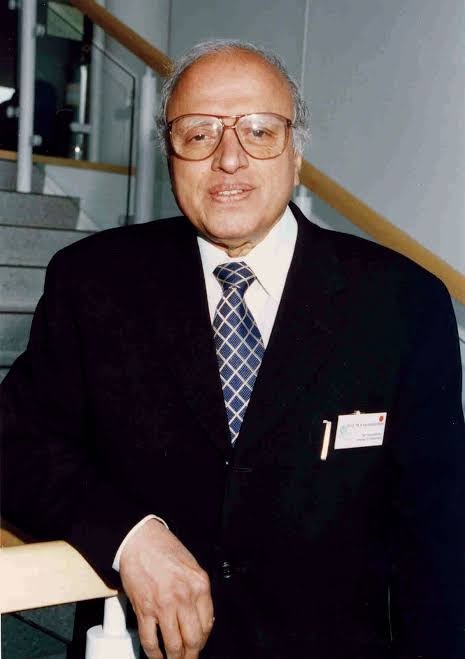
Mankombu Sambasivan Swaminathan (7 August 1925 – 28 September 2023), popularly known as M. S. Swaminathan, was one of India’s greatest agricultural scientists and is widely regarded as the “Father of the Green Revolution in India.” His pioneering work in plant genetics, crop improvement, and sustainable agriculture transformed India’s food production and helped the nation achieve food security.
By introducing and adapting high-yielding varieties of wheat and rice, Swaminathan played a crucial role in preventing widespread food shortages during the 1960s and 1970s. His contributions not only revolutionized Indian agriculture but also influenced global efforts to combat hunger and poverty.
Early Life and Education
M. S. Swaminathan was born on August 7, 1925, in Kumbakonam, Tamil Nadu, India. His father was a physician who believed strongly in public service, and this influenced Swaminathan’s desire to contribute to society.
Initially interested in medicine, Swaminathan changed his career path after witnessing the devastating Bengal Famine of 1943. The tragedy convinced him that improving food production was essential for human welfare.
He earned a degree in Agricultural Science from the Agricultural College and Research Institute and later pursued postgraduate studies in genetics and plant breeding.
He obtained advanced training at:
- Indian Agricultural Research Institute (IARI)
- University of Cambridge
- University of Wisconsin–Madison
These experiences provided him with expertise in genetics, cytogenetics, and plant breeding.
Scientific Career & Research
Swaminathan devoted his career to improving crop productivity and food security. He worked at several leading agricultural institutions and became one of the world’s foremost experts in plant genetics.
His major research areas included:
- Agricultural Science
- Plant Genetics
- Cytogenetics
- Plant Breeding
- Food Security
- Sustainable Agriculture
- Biodiversity Conservation
He focused on developing crop varieties capable of producing higher yields while adapting to local environmental conditions.
Major Discoveries and Inventions
Leadership of the Green Revolution
Swaminathan’s most significant achievement was leading India’s Green Revolution. Working closely with Norman Borlaug, he introduced high-yielding wheat varieties into India.
These varieties dramatically increased wheat production and helped transform India from a food-deficient nation into a food-secure country.
Development of High-Yielding Crop Varieties
Swaminathan played a key role in adapting and improving wheat and rice varieties suitable for Indian conditions. These crops produced significantly higher yields than traditional varieties.
Application of Genetics to Agriculture
His research demonstrated how modern genetics and plant breeding could be used to improve crop productivity, disease resistance, and environmental adaptability.
Sustainable Agriculture Initiatives
In later years, he promoted the concept of an “Evergreen Revolution,” which emphasized increasing agricultural productivity while protecting natural resources and biodiversity.
Biodiversity Conservation
He advocated the conservation of genetic resources and emphasized the importance of preserving traditional crop varieties for future agricultural development.
Awards and Honours
M. S. Swaminathan received numerous prestigious national and international awards.
Ramon Magsaysay Award
He was honored with the Ramon Magsaysay Award for his contributions to agricultural development.
Albert Einstein World Science Award
He received the prestigious Albert Einstein World Science Award for his scientific achievements.
World Food Prize
Swaminathan became the first recipient of the World Food Prize in 1987 for his contributions to global food security.
Padma Awards
The Government of India honored him with:
- Padma Shri
- Padma Bhushan
- Padma Vibhushan
International Recognition
He was elected Fellow of numerous scientific academies and received honorary doctorates from universities worldwide.
Later Life and Death
In his later years, Swaminathan focused on sustainable agriculture, rural development, food security, and environmental conservation.
He founded the M. S. Swaminathan Research Foundation (MSSRF) in Chennai, which works to improve rural livelihoods through science and technology.
He continued advising governments, international organizations, and agricultural institutions for decades.
M. S. Swaminathan passed away on September 28, 2023, at the age of 98. His death was mourned across India and the world as the loss of one of the greatest agricultural scientists of modern times.
Legacy and Impact
Father of the Green Revolution in India
His efforts helped India achieve self-sufficiency in food grain production and avoid recurring food crises.
Global Food Security
His work influenced agricultural development programs in many developing countries.
Evergreen Revolution
He promoted sustainable agricultural growth that balanced productivity with environmental protection.
Empowerment of Farmers
His innovations improved the livelihoods of millions of farmers and contributed to rural development.
Scientific Leadership
Through research institutions, policy initiatives, and international collaborations, he strengthened agricultural science globally.
Inspiration for Future Generations
Swaminathan remains a role model for scientists working to solve global challenges related to food, agriculture, and sustainability.
Conclusion
M. S. Swaminathan was a visionary agricultural scientist whose leadership during the Green Revolution transformed India’s agricultural landscape and ensured food security for millions. Through his pioneering work in plant genetics, crop improvement, and sustainable farming, he demonstrated how science can address some of humanity’s most pressing challenges. His contributions continue to influence agricultural research and policy worldwide, making him one of the most important scientists in modern history. His legacy lives on through the farmers he helped, the institutions he built, and the global movement toward sustainable agriculture.
About the Author