

1. Introduction
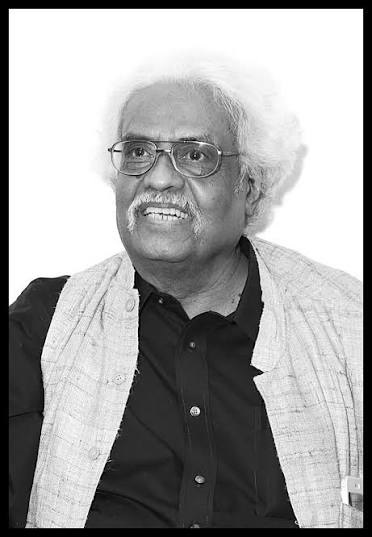
A. Ramachandran was one of modern India’s most celebrated and versatile visual artists, renowned for bridging traditional indigenous aesthetics with contemporary artistic sensibilities. Over a career spanning decades, his signature style shifted dramatically from dark, expressionistic depictions of urban angst and socio-political tensions to vibrant, lush, and lyrical narratives deeply rooted in nature, mythology, and tribal life. Beyond his monumental paintings, he left an indelible mark as a sculptor, art historian, author, and beloved educator.
2. Quick Facts
- Full Name: Achutan Ramachandran Nair (commonly known as A. Ramachandran)
- Native Name: അച്യുതൻ രാമചന്ദ്രൻ
- Date of Birth: 1935
- Place of Birth: Attingal, Kingdom of Travancore, British India (present-day Kerala, India)
- Nationality: Indian
- Occupation/Profession: Painter, Sculptor, Author, and Art Educator
- Field of Achievement: Fine Arts (Painting and Mural Tradition Research)
- Years Active: 1961 – 2024
3. Award Information (Focus: Padma Bhushan)
- Award Name: Padma Bhushan
- Award Category: Civilian Award (India’s third-highest civilian honor)
- Award Year: 2005
- Presented By: The President of India
- Date of Ceremony: March/April 2005 (Annual Rashtrapati Bhavan Investiture Ceremony)
- Citation/Official Reason: Conferred in recognition of his unique, distinguished, and pioneering contributions to the field of fine arts and Indian painting.
- Previous Recipients: Eminent artists, scientists, public servants, and cultural icons of India.
- Next Recipients: Succeeding batches of national civilian honorees in subsequent years.
4. Why Did He Receive the Award?
A. Ramachandran was awarded the Padma Bhushan for his extraordinary dedication to redefining Indian modern art. By successfully synthesizing the classical monumentality of ancient Kerala temple murals and indigenous Rajasthani folklore with modern global idioms, he created a unique visual vocabulary. Furthermore, his decades-long commitment to nurturing generations of young artists as a professor at Jamia Millia Islamia and his extensive scholarship on traditional Indian art forms solidified his status as a national cultural treasure.
5. Early Life
Born in Attingal, Southern Kerala, Ramachandran grew up amidst the rich cultural matrix of the Malabar coast. Although art was his abiding childhood passion, he initially pursued literary studies. Growing up in pre-independence and early post-independence India deeply exposed him to socio-economic transitions, which heavily influenced the reflective, intense nature of his early creative expressions.
6. Education
- Master of Arts (MA): Graduated with an MA in Malayalam Literature from Kerala University in 1957.
- Art Education: Moved to Santiniketan, joining Kala Bhavan, where he completed his formal art education in 1961. There, he studied under legendary masters like Ramkinkar Baij and Benode Behari Mukherjee, who shaped his monumental approach to space and murals.
- Doctorate (PhD): Spent three years (1961–1964) intensive research on his doctoral thesis focused on traditional Kerala mural paintings, laying the bedrock for his lifelong connection to classical Indian aesthetics.
7. Career Journey
- Transition to Delhi (1964–1965): Moved to New Delhi, initially working with Kumar Gallery before transitioning into academia.
- Jamia Millia Islamia: Joined as a lecturer in art education in 1965. Alongside colleagues, he built the institution’s Fine Arts department into a premier destination offering Bachelor’s and Master’s programs, serving as a professor until his voluntary retirement in 1992. He was later named Professor Emeritus.
- Creative Evolution:
- Early Phase: Focused on dark, expressionistic, large-scale works capturing urban alienation, societal angst, and historical trauma (e.g., Gandhi and the 20th Century Cult of Violence).
- Later Phase (Post-1980s): Shifted toward lush, vibrant depictions of nature, tribal communities in Rajasthan, and elaborate lotus ponds filled with flora and fauna.
8. Major Achievements
- Yayati (1986): A landmark masterwork—conceived as the inner sanctum of a Kerala temple—consisting of 13 bronze sculptures framed by massive epic murals retelling a tale from the Mahabharata.
- Rajiv Gandhi Memorial (2003): Designed the striking granite bas-relief sculpture at the Rajiv Gandhi Memorial site in Sriperumbudur, Tamil Nadu.
- Scholarship: Authored the definitive research volume Painted Abode of Gods: Mural Traditions of Kerala, culminating 40 years of academic study.
- International Children’s Books: Wrote and illustrated acclaimed children’s books, winning the prestigious Noma Concours Award (twice, in 1978 and 1980) from UNESCO’s Asia/Pacific Cultural Centre.
9. Contribution to the Nation
- Reviving Classical Heritage: Rescued dying indigenous and traditional art practices—such as Kerala temple murals and tribal art motifs—bringing them into contemporary mainstream discourse.
- Institutional Building: Transformed Jamia Millia Islamia’s Faculty of Fine Arts into a premier national art institution.
- Cultural Stewardship: Served in high-profile cultural capacities, including Chairperson of the Kerala Lalithakala Akademi and trustee-member of the Indira Gandhi National Centre for the Arts (IGNCA). He also curated landmark retrospective exhibitions spotlighting pioneers like Raja Ravi Varma and Nandalal Bose.
10. Other Awards and Honours
- National Award for Painting: Ministry of Culture, Government of India (1969, 1973)
- Raja Ravi Varma Puraskaram: Government of Kerala (1994, 2003)
- Gagan-Abani Puraskar: Visva-Bharati University (2000)
- Fellowship of the Lalit Kala Akademi: (2002)
- Kalidas Samman: Government of Madhya Pradesh (2018)
- A. Ramachandran Museum: Inaugurated at the Sree Narayana Guru Cultural Complex in Kollam, Kerala, celebrating his timeless artistic footprint.
11. Legacy and Influence
A. Ramachandran is remembered as a “singular modernist” who proved that modern art does not need to discard traditional roots to remain contemporary. His iconic depictions of the lotus pond, vibrant tribal portraits, and richly textured mythologies continue to inspire generations of painters. His works command premier spaces globally, residing in major museums, galleries, and prestigious private collections worldwide.
12. Interesting Facts
- Self-Portraiture in Nature: In many of his mature landscape paintings, Ramachandran subtly inserted himself into the canvas—disguised humorously as a tiny bird, a fish, a rain god, or a meditating ascetic in the corner of a grand natural theater.
- Literary Roots: Despite being a titan of the visual arts, he retained his deep love for literature, holding a formal Master’s degree in Malayalam literature.
- Global Recognition for Kids’ Literature: Alongside fine art high-culture circles, he gained international acclaim in Japan and Europe for his illustrated children’s literature, winning UNESCO-backed Noma Concours prizes.
13. Quotes
“An artist is not content to merely represent the world of natural phenomena as perceived by the human eye. He transposes visible reality into tropes expressing a personal philosophy.” — A. Ramachandran
14. Timeline
- 1935: Born in Attingal, Kerala
- 1957: Completes MA in Malayalam Literature
- 1961: Graduates from Kala Bhavan, Santiniketan under Ramkinkar Baij and Benode Behari Mukherjee
- 1965: Joins Jamia Millia Islamia as an art lecturer
- 1978 & 1980: Wins the Noma Concours Award for children’s books
- 1986: Creates Yayati, a monumental installation of murals and bronze sculptures
- 1992: Takes voluntary retirement from Jamia Millia Islamia to focus fully on art
- 2005: Conferred the Padma Bhushan by the Government of India
- 2024: Passed away in New Delhi, leaving behind a monumental legacy
15. References
- Wikipedia contributors. “A. Ramachandran.” Wikipedia, The Free Encyclopedia.
- National Gallery of Modern Art (NGMA) & Vadehra Art Gallery Archives.
- Jehangir Nicholson Art Foundation (JNAF) Artist Biographies.
- R. Sivakumar, A. Ramachandran: Life and Art in Lines, Vadehra Art Gallery.
16. Related Personalities
- Ramkinkar Baij (Teacher and mentor at Santiniketan)
- Benode Behari Mukherjee (Influential muralist and teacher)
- Raja Ravi Varma (Historical master whose work Ramachandran critically re-evaluated and promoted)
- Tan Yuan Chameli (Artist and wife of A. Ramachandran)
17. Frequently Asked Questions (FAQ)
- Q: What is A. Ramachandran best known for?
- A: He is best known for his large-scale, vibrant paintings featuring elements of nature, lotus ponds, and Indian mythologies, as well as his early expressionistic works addressing urban socio-political realities.
- Q: Did A. Ramachandran only work as a painter?
- A: No, he was equally accomplished as a sculptor (such as the Rajiv Gandhi Memorial bas-relief), an art historian, an author, and an influential educator.
- Q: What civilian honors did he receive?
- A: He was awarded India’s third-highest civilian honor, the Padma Bhushan, in 2005.
About the Author




