

1. Introduction
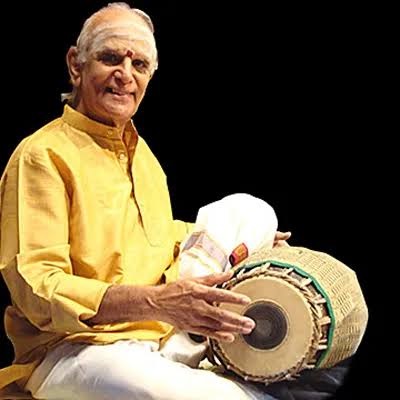
Umayalpuram K. Sivaraman is widely celebrated as one of the greatest living exponents of the mridangam, the premier percussion instrument of South Indian Carnatic classical music. With a remarkable career spanning over seven decades, he has redefined the boundaries of Carnatic rhythm (laya) through mathematical precision, dynamic tonal nuance, and structural innovation. As a legendary torchbearer of the traditional school of percussion, he remains an iconic pillar of Indian classical music.
2. Quick facts
- Full Name: Umayalpuram Kasiviswanatha Sivaraman
- Native Name: உமையாள்புரம் காசிவிஸ்வநாத சிவராமன் (Tamil)
- Date of birth: December 17, 1935
- Place Of birth: Umayalpuram, Thanjavur district, Madras Presidency, British India
- Nationality: Indian
- Occupation/ Profession: Carnatic Musician, Mridangam Maestro, Academic Researcher
- Field of Achievement: Carnatic Percussion and Instrumental Performance
- Years Active: 1940s–Present
3. Award Information
- Award Name: Padma Shri / Padma Bhushan / Padma Vibhushan
- Award Category: National Civilian Honours (Including India’s Second-Highest Civilian Award)
- Award Year: Padma Shri (1988), Padma Bhushan (2003), Padma Vibhushan (2010)
- Presented By: The President of India
- Date of Ceremony: Conferred during successive national Republic Day investiture ceremonies.
- Citation/Official Reason: Recognized for his masterly contributions to Indian classical percussion, exceptional artistic excellence, and global promotion of Carnatic music art forms.
- Previous Recipients (optional): Semmangudi Srinivasa Iyer, M. S. Subbulakshmi, Palghat Mani Iyer.
- Next Recipients: Conferred among India’s most distinguished national civilian and cultural awardees.
4. Why they Receive the award?
Sivaraman received India’s highest civilian decorations because of his revolutionary approach to the mridangam, combining deep adherence to traditional classicism with unmatched acoustic clarity and mathematical rigor. His performances elevated percussion from a mere supportive accompaniment to an equal, dialogue-driven partner on the concert stage, bringing unprecedented global prestige to the instrument.
5. Early Life
Born in the historic village of Umayalpuram in the Thanjavur district—the cradle of Carnatic music—Sivaraman was immersed in a culturally rich environment. His father, Dr. P. Kasiviswanatha Iyer, was an avid patron and practitioner of music. Showing early inclination toward rhythm, Sivaraman was initiated into playing the kanjira at age three and formally inducted into intense gurukulavasam (residential training) for the mridangam by age five.
6. Education
- Academic Background: Alongside his rigorous musical training, Sivaraman pursued formal academics, successfully earning both a Bachelor of Arts (B.A.) and a Bachelor of Law (B.L.) degree from the University of Madras.
- Musical Apprenticeship: He underwent an intensive 15-year traditional tutelage under four legendary masters: Arupathi Natesa Iyer, Tanjore Vaidyanatha Iyer, the iconic Palghat Mani Iyer, and Kumbakonam Rangu Iyengar.
7. Carrier Journey
- Concert Debut: Performed his first formal stage debut at the tender age of ten, quickly catching the attention of senior vidwans.
- Collaborations with Legends: Through the 1950s and 60s, he accompanied virtually every major titan of the golden era of Carnatic music, including Chembai Vaidyanatha Bhagavathar, Maharajapuram Viswanatha Iyer, G. N. Balasubramaniam, and Madurai Mani Iyer.
- Global Outreach: Embarked on his first coast-to-coast tour of the USA in 1963, and subsequently represented India at major international cultural festivals (including the Festival of India in the UK and USA) and high-profile jugalbandhis with Hindustani maestros like Pt. Ravi Shankar and Ustad Zakir Hussain.
8. Major Achievements
- Conferred the prestigious Padma Vibhushan (2010), Padma Bhushan (2003), and Padma Shri (1988) by the Government of India.
- Honored with the supreme title of Sangeetha Kalanidhi by The Music Academy, Chennai (2001).
- Awarded the Sangeet Natak Akademi Fellowship (Akademi Ratna) in 2011.
- Pioneered material innovations, including helping design the modern fiberglass and glass mridangams in collaboration with industrial setups like Saint-Gobain to withstand climatic variations.
9. Contribution to the nation
Sivaraman elevated the cultural stature of India’s indigenous percussion arts internationally. Beyond performing, he conducted deep scientific and acoustic research into the physics of the mridangam—analyzing overtones, skin elasticity, and the composition of the black patch (chapu). As an esteemed guru, he has mentored generations of local and international students, safeguarding the future of classical rhythm.
10. Other Awards and Honours
- Sangeet Natak Akademi Award (1992)
- Kalaimamani Award by the Government of Tamil Nadu (1977)
- State Artiste of the Government of Tamil Nadu (1981–1986)
- Sangeetha Kala Sikhamani by The Indian Fine Arts Society (1984)
- Honorary Doctorates (D.Litt.) from the University of Kerala (2010) and Gandhigram Rural Institute / Tamil Nadu Dr. J. Jayalalithaa Music and Fine Arts University.
11. Legacy and influence
Umayalpuram K. Sivaraman is celebrated as a living institution in Carnatic music. He transformed the acoustic possibilities of the mridangam, ensuring that every stroke balances melodic resonance (naadam) with crisp mathematical clarity (laya). His path-breaking research and pedagogical contributions have redefined how percussion is taught and experienced worldwide.
12. Interesting Facts
- Dual Disciplines: Despite being destined for a life in music, he completed a formal degree in Law (B.L.) from the University of Madras.
- Innovator of Alternative Materials: To combat tuning instability caused by humidity and weather changes, he collaborated to build innovative fiberglass and glass mridangams without sacrificing traditional acoustic depth.
- A Lifetime on Stage: Remarkably, even well into his late 80s, his fingers retained their lightning-fast agility and thunderous clarity during live solo performances (thani avartanam).
13. Quotes
“The mridangam is not merely an instrument to keep time; it is a melodic voice that breathes alongside the vocalist, echoing the soul of the raga.” — Umayalpuram K. Sivaraman
14. Timeline
- 1935: Born on December 17 in Umayalpuram, Thanjavur district.
- 1940: Began intensive formal training (gurukulavasam) in playing the mridangam.
- 1945: Performed his first formal public concert debut at age ten.
- 1963: Undertook his first major coast-to-coast concert tour of the United States.
- 1988: Conferred the Padma Shri by the Government of India.
- 2001: Awarded the supreme Sangeetha Kalanidhi title by The Music Academy, Chennai.
- 2003: Honored with the Padma Bhushan.
- 2010: Conferred India’s second-highest civilian honor, the Padma Vibhushan.
- 2011: Awarded the prestigious Sangeet Natak Akademi Fellowship.
15. References
- Wikipedia: Umayalpuram K. Sivaraman Profile
- Official Artist Archive: Umayalpuram Sivaraman Biography & Milestones
- Carnatic Corner: Vidwan Umayalpuram K. Sivaraman Profile
16. Related Personalities
- Palghat Mani Iyer (Primary Guru and Legendary Percussionist)
- Semmangudi Srinivasa Iyer (Legendary Vocalist and Frequent Collaborator)
- M. Balamuralikrishna (Renowned Carnatic Composer and Vocalist)
- Dr. T. Ramasami (Co-author on scientific studies of the mridangam)
17. Frequency Asked Questions (FAQ)
- Q: Who is Umayalpuram K. Sivaraman?
- A: He is a legendary Indian Carnatic classical musician widely recognized as one of the greatest living masters of the mridangam.
- Q: What are his highest national honors?
- A: He has received India’s top civilian awards, including the Padma Shri (1988), Padma Bhushan (2003), and Padma Vibhushan (2010).
- Q: What musical innovations is he known for?
- A: He is acclaimed for introducing modern material adaptations like fiberglass and glass mridangams to handle climatic changes, alongside conducting pioneering research into the acoustic properties of the instrument.
About the Author




