

1. Introduction
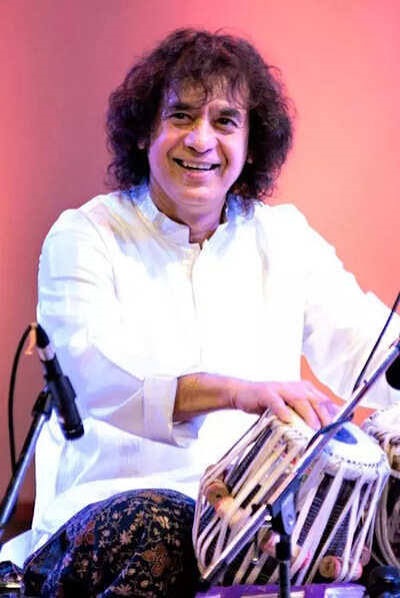
Ustad Zakir Hussain was an absolute titan of world music, widely celebrated as the greatest tabla player of his generation. As a child prodigy, cultural ambassador, and boundary-pushing innovator, he took the traditional Indian instrument—the tabla—from classical chambers to global arenas. Through legendary collaborations with western rock icons, jazz greats, and fusion pioneers, Zakir Hussain didn’t just play rhythm; he built bridges between cultures, earning multiple Grammy Awards and transforming how the world perceives Indian percussion.
2. Quick Facts
- Full Name: Zakir Allarakha Qureshi
- Native Name: ذاکر حسین (Urdu), जाकिर हुसैन (Hindi)
- Date of birth: March 9, 1951
- Place Of birth: Bombay (now Mumbai), Maharashtra, India
- Nationality: Indian
- Occupation/ Profession: Tabla Player, Musician, Composer, Film Actor
- Field of Achievement: Indian Classical Music, World Music, and Percussion
- Years Active: 1958–2024 (Span of over six decades)
3. Award Information (Highlighting Padma Vibhushan & Grammys)
| Award Name | Award Category | Award Year | Presented By | Date of Ceremony | Official Reason / Citation |
| Padma Vibhushan | Art / Classical Music | 2023 | Government of India (President of India) | March/April 2023 | In acknowledgment of his outstanding contribution to art and Indian classical music globally. |
| Grammy Awards (Triple Win) | Global Music / Instrumental | 2024 | The Recording Academy (USA) | February 4, 2024 | For groundbreaking work in This Moment (Best Global Music Album), As We Speak (Best Contemporary Instrumental Album), and “Pashto” (Best Global Music Performance). |
- Previous Recipients (Padma Vibhushan – Arts): Legendary classical artists like Prabha Atre, Balamurali Krishna, and Kishen Maharaj.
- Next Recipients: Notable subsequent civilian honorees in subsequent cycles.
4. Why Did He Receive These Awards?
Zakir Hussain received India’s highest civilian honors and international accolades (such as multiple Grammys and the US National Heritage Fellowship) because he redefined the boundaries of percussion. He elevated the tabla from a supporting rhythmic accompaniment to a commanding lead instrument on the world stage. His relentless drive to blend Hindustani classical frameworks with jazz, rock, and global folk traditions made Indian rhythm accessible and spellbinding to millions worldwide.
5. Early Life
Born into musical royalty, Zakir Hussain was the eldest son of the legendary tabla maestro Ustad Alla Rakha. Legend has it that right after his birth, his father whispered rhythmic syllables (bols) directly into his newborn ear to baptize him in rhythm. Growing up in Mumbai, his life was consumed by rigorous discipline; his mornings began at 5:00 AM with intensive tabla training sessions that lasted for hours under his father’s strict supervision. Showing prodigious talent, he was performing live concerts by age seven and touring extensively by the time he was twelve.
6. Education
Despite a heavy immersion in music, his mother, Bavi Begum, ensured he maintained a balanced upbringing. He completed his foundational schooling at St. Michael’s High School in Mahim and went on to graduate from St. Xavier’s College, Mumbai. Later in life, his academic pursuits merged with his art, earning him honorary doctorates from prestigious institutions like the Berklee College of Music and the University of Mumbai, alongside serving as a professor at Princeton and Stanford universities.
7. Career Journey
Zakir Hussain’s career is a masterclass in cross-cultural artistic evolution:
- The US Migration & Fusion Roots: In the late 1960s, he moved to San Francisco, where he bridged traditional Indian music with the American psychedelic rock and jazz scene, jamming with rock legends like Mickey Hart of the Grateful Dead.
- Shakti: In 1975, he formed the pioneering acoustic world-music fusion band Shakti alongside guitarist John McLaughlin, L. Shankar, and T.H. Vinayakram, revolutionizing global fusion.
- Global Collaborations: Over decades, he formed epochal collaborative groups like Planet Drum, Tabla Beat Science, and Masters of Percussion, taking Indian rhythms into uncharted sonic territories.
8. Major Achievements
- Historic Grammy Sweep (2024): Made history at the 66th Grammy Awards by winning three Grammys in a single night.
- Global Recognition: Totaled 4 Grammy wins and 9 career nominations.
- Civilian Honors: Conferred India’s top honors sequentially—Padma Shri (1988), Padma Bhushan (2002), and Padma Vibhushan (2023).
- Academic Pioneer: Became the first Indian musician to hold a full professorship position in the music department at Princeton University (2005–06).
9. Contribution to the Nation
Ustad Zakir Hussain served as cultural royalty and a soft-power ambassador for India. He popularized the complex, mathematically rich oral traditions of Indian classical rhythm globally, instilling international pride in Indian heritage. Furthermore, through initiatives like Masters of Percussion, he continuously mentored younger generations of Indian artists, ensuring that ancestral gharana styles of tabla playing remained vibrant and respected worldwide.
10. Other Awards and Honours
- Sangeet Natak Akademi Award (1990)
- National Heritage Fellowship (USA, 1999) – The highest honor for traditional arts in the United States.
- Kalidas Samman (2005–06)
- Officier of the Order of Arts and Letters (France, 2006)
- Maharashtra Bhushan Award (2015)
- Kyoto Prize (2016)
11. Legacy and Influence
Zakir Hussain transformed the tabla from a regional folk-classical instrument into a global citizen. Guitar legend John McLaughlin famously described him as “the King, in whose hands, rhythm became magic.” His legacy lies in proving that traditional art forms do not need to stay stagnant to survive; through open-minded dialogue, respect, and fearless innovation, Indian classical music could converse fluidly with any genre on Earth.
12. Interesting Facts
- Almost a Rock Drummer: When he first moved to the US, he was so enamored by Jimi Hendrix and The Doors that he contemplated becoming a rock drummer. It was George Harrison of The Beatles who persuaded him to stick to the tabla, telling him he had a unique weapon to bridge East and West.
- Child Prodigy on Tour: He was so busy performing concerts in his youth that he was already maintaining a punishing global touring schedule of over 150 concerts a year by his early twenties.
- Hollywood & Cinema: Beyond music albums, he composed scores for notable films like In Custody, Mr. and Mrs. Iyer, and Vanaprastham, and even made select on-screen acting appearances.
13. Quotes
“Without harmony, we are nothing.”
“The tabla is not just an instrument; it is a voice that speaks the language of the human soul.”
“Rhythm is something we live with. Our heartbeat is rhythm; the changing of seasons is rhythm. Everything in the universe is rhythmic.”
14. Timeline
- 1951: Born in Bombay on March 9.
- 1958: Gives his first public performance at age seven.
- 1975: Co-founds the groundbreaking fusion band Shakti.
- 1988: Awarded the Padma Shri; honored with the title “Ustad” by Ravi Shankar.
- 1992: Wins the inaugural Grammy Award in the World Music category for Planet Drum.
- 2002: Conferred the Padma Bhushan.
- 2023: Awarded India’s second-highest civilian honor, the Padma Vibhushan.
- 2024: Makes history by winning three Grammys in a single night; passes away in December, leaving behind an immortal legacy.
15. References
- Encyclopædia Britannica – Zakir Hussain Biography
- The New York Times – Obituary & Archives
- Official Grammy Awards Artist Database
- Cultural India & Wikipedia Open Records
16. Related Personalities
- Ustad Alla Rakha (Father and legendary mentor)
- John McLaughlin (Collaborator in Shakti)
- Mickey Hart (Collaborator in Planet Drum / Grateful Dead)
- Ravi Shankar (Sitar maestro and cultural pioneer)
- Taufiq Qureshi & Fazal Qureshi (Brothers and fellow percussionists)
17. Frequently Asked Questions (FAQ)
Q1: What instruments did Ustad Zakir Hussain play?
A: He primarily played the tabla, but was also proficient in playing the pakhawaj and various global percussion instruments.
Q2: How many Grammy Awards did Zakir Hussain win?
A: He won a total of 4 Grammy Awards across his illustrious career, including a historic triple-win night at the 66th Grammy Awards in 2024.
Q3: Who was Zakir Hussain’s father?
A: His father was the legendary tabla maestro Ustad Alla Rakha Qureshi, who pioneered the popularization of tabla solos in Indian classical concerts.
Q4: What was Zakir Hussain’s contribution to fusion music?
A: He co-founded iconic cross-cultural bands like Shakti and Planet Drum, seamlessly merging traditional Hindustani rhythmic structures with Western jazz, rock, and global world music.
About the Author




