

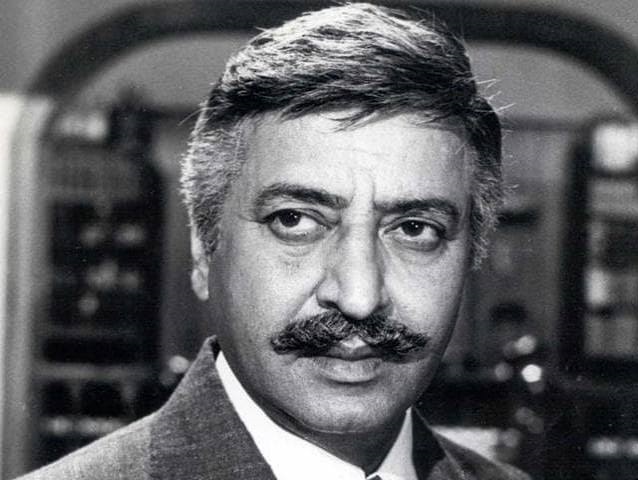
1. Introduction
Pran Krishan Sikand, mononymously known simply as Pran, is widely regarded as one of the most iconic, versatile, and influential actors in the history of Indian cinema. While he began his career playing the quintessential, dreaded villain who made audiences shudder, he gracefully transitioned into playing beloved, warm-hearted character roles that left an equally indelible mark. Spanning over six decades, his legendary career redefined the craft of screen acting in Bollywood.
2. Quick Facts
- Full Name: Pran Krishan Sikand
- Native Name: ਪ੍ਰାਣ (Punjabi) / प्राण (Hindi)
- Date of Birth: February 12, 1920
- Place of Birth: Ballimaran, Old Delhi, British India
- Nationality: Indian
- Occupation / Profession: Film Actor and Producer
- Field of Achievement: Hindi and Punjabi Cinema (Acting)
- Years Active: 1940–1997
3. Award Information (Focus: Dadasaheb Phalke Award)
- Award Name: Dadasaheb Phalke Award
- Award Category: India’s Highest Award in Cinema
- Award Year: 2012 (Conferred in 2013)
- Presented By: Government of India (Ministry of Information and Broadcasting)
- Date of Ceremony: May 10, 2013 (Presented personally at his Mumbai residence due to health reasons)
- Citation / Official Reason: For outstanding, pioneering contributions to the growth, development, and cultural impact of Indian Cinema.
- Previous Recipient (2011): Soumitra Chatterjee
- Next Recipient (2013): Gulzar
4. Why Did He Receive the Award?
Pran received the Dadasaheb Phalke Award for his monumental, multi-decade contribution to Indian cinema. Having acted in over 350 films, he brought unprecedented depth, style, and nuance to cinematic villains and character artists alike. He transformed the perception of supporting actors in Bollywood, proving that a secondary character could command as much screen presence, respect, and fan following as the lead hero.
5. Early Life
Born into a wealthy Punjabi family in Old Delhi, Pran’s father, Kewal Krishan Sikand, was a civil engineer working as a government contractor, which meant the family frequently relocated across northern India. As a result, Pran studied at various schools, completing his matriculation from Hamid School in Rampur. He was a bright student with a particular flair for mathematics, initially aspiring to become a professional photographer.
6. Education
Pran completed his high school education across multiple institutions due to his father’s transferable job. After finishing school, he apprenticed as a photographer under a professional studio in Delhi, intending to pursue photography as a full-time career before a chance theatrical opportunity changed the course of his life.
7. Career Journey
Pran’s entry into cinema happened purely by chance when he met a film producer at a Lahore hotel while visiting for a photo assignment. He landed his first acting role in the Punjabi film Yamla Jat (1940) as an antagonist. Following the partition of India in 1947, Pran moved to Bombay (Mumbai) with his wife and young son, starting virtually from scratch. Struggling initially, legendary writer Saadat Hasan Manto and actor Shyam helped him secure a breakthrough role in Dev Anand’s Ziddi (1948). From there, he carved an unassailable niche as Bollywood’s definitive “bad man” throughout the 1950s and 1960s, before gracefully pivoting to iconic positive character roles in blockbusters like Upkar (1967), Zanjeer (1973), and Amar Akbar Anthony (1977).
8. Major Achievements
- Cinematic Iconography: Immortalized as the archetypal Bollywood villain (Halla Gulla, Madhumati, Jis Desh Mein Ganga Behti Hai) before redefining character acting (Upkar, Zanjeer).
- High-Value Stardom: For a long stretch in the 1950s and 1960s, he commanded salaries matching or exceeding those of the lead romantic heroes of his time.
- Triple Filmfare Wins: Won the Filmfare Award for Best Supporting Actor three times (Upkar, Aansoo Ban Gaye Phool, Be-Imaan) and received the Filmfare Lifetime Achievement Award in 1997.
- Highest National Honor: Honored with the Padma Bhushan in 2001 and the Dadasaheb Phalke Award in 2012.
9. Contribution to the Nation
Beyond his screen presence, Pran contributed profoundly to the cultural fabric of India. His portrayal of complex characters reflected social shifts in post-independence India. Notably, his role as “Mangal Chacha” in Upkar helped popularize the patriotic slogan “Jai Jawan Jai Kisan”, instilling national pride and honoring farmers and soldiers during challenging national times.
10. Other Awards and Honours
- Padma Bhushan: Conferred by the Government of India in 2001.
- Filmfare Best Supporting Actor Award: 1968 (Upkar), 1970 (Aansoo Ban Gaye Phool), and 1973 (Be-Imaan).
- Filmfare Lifetime Achievement Award: 1997.
- Villain of the Millennium Award: Presented by Stardust in 2000.
- Bengal Film Journalists’ Association (BFJA) Awards: Won multiple times for best acting performances.
11. Legacy and Influence
Pran transformed how villains were perceived in Indian pop culture; before him, antagonists were often one-dimensional caricatures. He introduced distinct mannerisms, stylish attire, cigarette-smoking quirks, and nuanced dialogue delivery that humanized villainy. Generations of subsequent actors looked up to him as an absolute benchmark of professional discipline, punctuality, and craft versatility. He passed away on July 12, 2013, at the age of 93.
12. Interesting Facts
- The Name Drop Effect: Such was the terror and impact of his on-screen villainy that parents in India stopped naming their newborn sons “Pran” during the peak of his career—a unique cultural phenomenon.
- Avid Sports Fan: He was deeply passionate about sports, particularly football, and frequently organized charity football matches in Mumbai featuring top Bollywood stars.
- Cigarette Prop: Though famous for smoking stylishly in villainous roles, Pran was a non-smoker in real life and often used herbal cigarettes or specialized props for scenes.
13. Quotes
“An actor should not be known by his face, but by his versatility. If you can make the audience hate you on screen and respect you on the street, your job is done.” — Pran
14. Timeline
- 1920: Born on February 12 in Delhi.
- 1940: Makes his acting debut in the Punjabi film Yamla Jat.
- 1947: Moves to Bombay following the partition of India.
- 1948: Breaks through in Hindi cinema with Ziddi.
- 1967: Plays the iconic character “Mangal Chacha” in Upkar, shifting away from pure villainy.
- 1973: Delivers a legendary performance as Sher Khan in Zanjeer.
- 1997: Awarded the Filmfare Lifetime Achievement Award.
- 2001: Conferred with the Padma Bhushan by the Government of India.
- 2012: Selected for the prestigious Dadasaheb Phalke Award.
- 2013: Passes away on July 12 in Mumbai at age 93.
15. References
- Press Information Bureau (PIB), Government of India – Dadasaheb Phalke Award Announcement for 2012.
- Ministry of Home Affairs, Government of India – Padma Awardees Database.
- Wikipedia – Pran (Actor) Profile & Filmography.
- Retrospective Archives from The Hindu, Times of India, and Filmfare.
16. Related Personalities
- Ashok Kumar: Legendary actor and close contemporary who shared screen space with Pran in numerous classic films.
- Dilip Kumar: Iconic superstar of Hindi cinema who co-starred with Pran in major hits like Madhumati and Devdas.
- Amitabh Bachchan: Bollywood megastar whose career breakthrough in Zanjeer featured an unforgettable chemistry and friendship with Pran.
17. Frequently Asked Questions (FAQ)
Q1: What is actor Pran most famous for? A: Pran is legendary for being one of Hindi cinema’s greatest villains before transitioning into iconic, heartwarming character roles over a career spanning more than 350 films.
Q2: Which major national awards did Pran receive?A: He received the Padma Bhushan in 2001 and Indian cinema’s highest honor, the Dadasaheb Phalke Award, in 2012.
Q3: Did Pran only play negative roles? A: No. While initially typecast as a villain, his role as “Mangal Chacha” in Upkar (1967) changed his image, leading to decades of memorable positive and character roles.
About the Author




