

1. Introduction
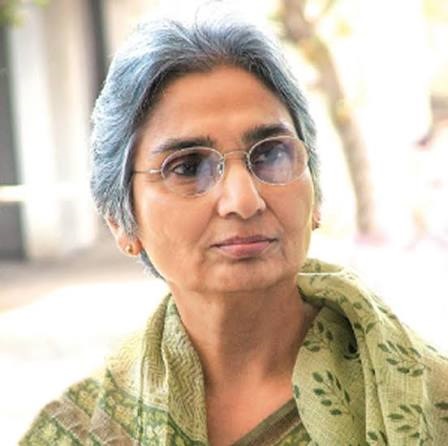
Dr. Amrita Patel is a towering icon of India’s cooperative dairy movement and rural development. Trained closely under the legendary Verghese Kurien, she played a central role in driving “Operation Flood”—the world’s largest agricultural dairy development program. As the long-time chairperson of the National Dairy Development Board (NDDB), her visionary leadership transformed India into the world’s largest milk producer, while empowering millions of rural women through cooperative structures.
2. Quick Facts
- Full Name: Amrita Patel
- Native Name: অমৃতা প্যাটেল (or ଅମୃତା ପଟେଲ / અમૃતા પટેલ)
- Date of Birth: November 13, 1943
- Place of Birth: New Delhi, British India
- Nationality: Indian
- Occupation / Profession: Dairy Technologist, Administrator, and Conservationist
- Field of Achievement: Dairy Development, Animal Husbandry, and Ecological Security
- Years Active: 1965–2014 (and active in ecological work thereafter)
3. Award Information (Focus: Padma Bhushan)
- Award Name: Padma Bhushan
- Award Category: India’s Third-Highest Civilian Award
- Award Year: 2001
- Presented By: K. R. Narayanan (President of India)
- Date of Ceremony: March/April 2001
- Citation / Official Reason: For distinguished service of a high order to the nation in the field of dairy development, cooperative management, and rural upliftment.
- Previous Recipients (2000): Prominent public figures, scientists, and artists.
- Next Recipients (2002): Acharya Ramamurthi, Gangubai Hangal, and others.
4. Why Did He/She Receive the Award?
Dr. Amrita Patel was conferred with the Padma Bhushan in recognition of her decades of monumental contribution to India’s dairy sector. By scaling up cooperative networks, championing women’s leadership in rural milk production, and executing Operation Flood, she fundamentally altered the economic landscape of rural India, ensuring financial independence for millions of dairy farmers.
5. Early Life
Born in New Delhi into a prominent Gujarati family, Amrita Patel is the youngest of five daughters of the eminent civil servant and politician Hirubhai M. Patel. Though raised in the capital, her family moved back to Anand, Gujarat, in 1959. Growing up in close proximity to India’s institutional heartlands, she developed an early, deep-seated passion for public service, agriculture, and animal sciences.
6. Education
- Schooling: Completed her early education in New Delhi.
- Higher Studies: Pursued her higher education in Mumbai, earning a Bachelor’s degree in Veterinary Science and Animal Husbandry (B.V.Sc. & A.H.), equipping her with rigorous technical expertise in livestock health and management.
7. Career Journey
Amrita Patel began her professional journey in 1965 by joining the Kaira District Co-operative Milk Producers’ Union (Amul), where she worked closely under the father of India’s White Revolution, Dr. Verghese Kurien. Demonstrating sharp administrative and technical acumen, she transitioned to the National Dairy Development Board (NDDB), serving as its Managing Director and later as its Chairperson from 1998 to 2014. Under her guidance, NDDB expanded cooperative infrastructure nationwide. Beyond dairy, she has served on the boards of the Reserve Bank of India (RBI) and NABARD, and has heavily championed ecological security and rural healthcare.
8. Major Achievements
- Spearheading Operation Flood: Successfully executed the world’s biggest agricultural dairy development program, turning India into a milk surplus nation.
- Women’s Empowerment: Institutionalized active participation and leadership roles for over 15 million women within village dairy cooperatives.
- Institutional Leadership: Headed the NDDB as Chairperson for 16 years (1998–2014).
- Ecological and Healthcare Work: Guided the Foundation for Ecological Security (FES) and chaired Charutar Arogya Mandal, managing advanced rural healthcare and education infrastructure.
9. Contribution to the Nation
Dr. Patel cemented India’s status as the world’s largest milk producer. Her focus on cooperative frameworks ensured that wealth generated from milk went directly to rural producers rather than middlemen. Furthermore, her later work in ecological security and renewable energy has ensured that India’s rural growth aligns with long-term environmental sustainability.
10. Other Awards and Honours
- Padma Bhushan: Awarded by the Government of India (2001).
- World Dairy Expo’s International Person of the Year: (1997).
- Jawaharlal Nehru Birth Centenary Award for Nation Building: (1999–2000).
- Dr. Norman Borlaug Award: For contributions to agriculture and dairy science.
- Financial Express Lifetime Achievement Award: For corporate and cooperative excellence.
11. Legacy and Influenceh
Dr. Amrita Patel’s legacy is synonymous with the empowerment of the Indian milk farmer. She proved that large-scale economic development can be achieved equitably through cooperative models. Her fierce dedication to professional integrity, rural welfare, and ecological balance continues to inspire generations of agricultural scientists, entrepreneurs, and social leaders.
12. Interesting Facts
- Trained by a Legend: She was part of the core inner circle mentored directly by Dr. Verghese Kurien at Amul, carrying forward his ideological commitment to farmers.
- Financial Pioneer: She is one of the few women leaders of her era to have served on the central boards of top financial heavyweights like the Reserve Bank of India (RBI).
- Beyond Milk: In her later years, she channeled her deep energy into ecological restoration, tree-planting, and managing rural medical colleges through charitable trusts.
13. Quotes
“The cooperative movement is not merely about business; it is about building human dignity, self-reliance, and giving the rural producer a rightful voice in the economy.”
— Dr. Amrita Patel
14. Timeline
- 1943: Born on November 13 in New Delhi.
- 1965: Joins Amul in Anand, beginning her lifelong career in the dairy sector.
- 1997: Honored as International Person of the Year at the World Dairy Expo.
- 1998: Assumes charge as Chairperson of the National Dairy Development Board (NDDB).
- 2001: Conferred with India’s third-highest civilian honor, the Padma Bhushan.
- 2014: Steps down from her active tenure at NDDB, continuing her focus on ecological security and rural health initiatives.
15. References
- National Dairy Development Board (NDDB) Official Archives – Chairperson Profiles.
- Wikipedia – Amrita Patel Profile & History.
- Ministry of Home Affairs, Government of India – Padma Awardees Database.
- Financial Express & Rediff Archival Interviews on Indian Cooperative Movements.
16. Related Personalities
- Verghese Kurien: The “Father of the White Revolution” in India and Dr. Patel’s foundational mentor.
- Tribhuvandas Patel: Freedom fighter and pioneer of the Kaira Cooperative (Amul) movement.
- M. S. Swaminathan: Legendary agricultural scientist and architect of India’s Green Revolution.
17. Frequently Asked Questions (FAQ)
Q1: Who is Dr. Amrita Patel?
A: She is a renowned Indian dairy technologist and administrator who served as the Chairperson of the National Dairy Development Board (NDDB) and played a crucial role in expanding India’s cooperative dairy movement.
Q2: What is her contribution to Operation Flood?
A: Working alongside Dr. Verghese Kurien, she helped implement Operation Flood, scaling up milk production and linking rural milk producers directly to urban markets while empowering millions of women.
Q3: What major civilian award has she received?
A: She was awarded the Padma Bhushan by the Government of India in 2001.
Q4: What causes does she champion outside of dairy?
A: She has been deeply involved in ecological security, rural environmental protection, and managing rural healthcare and educational trusts like Charutar Arogya Mandal.
About the Author




