

1. Introduction
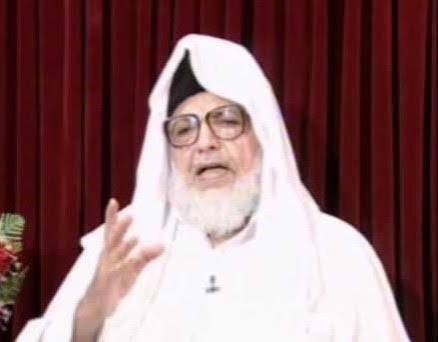
Maulana Abdul Karim Parekh was a revered Indian Islamic scholar, prominent social worker, and an ardent crusader for communal harmony. Widely recognized for making the teachings of the Quran accessible to the common masses through simplified translations and audio discourses, he spent his life fostering brotherhood across different faiths, leaving behind an inspiring legacy of peace and humanitarian service.
2. Quick Facts
- Full Name: Maulana Abdul Karim Parekh
- Native Name: مولانا عبد کریم پاریکھ
- Date of Birth: April 15, 1928
- Place of Birth: Kanseoni, Maharashtra, India
- Nationality: Indian
- Occupation / Profession: Islamic Scholar, Translator, and Social Worker
- Field of Achievement: Religious Translation, Social Reform, and Interfaith Harmony
- Years Active: 1950s–2007
3. Award Information (Focus: Padma Bhushan)
- Award Name: Padma Bhushan
- Award Category: India’s Third-Highest Civilian Award
- Award Year: 2001
- Presented By: K. R. Narayanan (President of India)
- Date of Ceremony: March/April 2001
- Citation / Official Reason: For pioneering social work, exceptional community leadership, and promoting national integration and communal harmony.
- Previous Recipients (2000): Prominent public figures, scientists, and artists.
- Next Recipients (2002): Acharya Ramamurthi, Gangubai Hangal, and others.
4. Why Did He Receive the Award?
Maulana Parekh was honored with the Padma Bhushan for his lifetime devotion to social welfare, grassroots community service, and tireless efforts to bridge religious divides in India. His lucid interpretations of religious texts and his active role in promoting mutual respect among diverse communities made him a pillar of national integration.
5. Early Life
Born in Kanseoni village in Maharashtra, Maulana Parekh grew up with a deep sense of empathy for the underprivileged. From an early age, he exhibited a profound inclination toward spiritual learning, community service, and understanding the core moral philosophies underlying various religious traditions in India.
6. Education
He pursued traditional Islamic scholarship and Arabic linguistics, immersing himself deeply in the study of the Quran, Hadith, and comparative religion. His quest for knowledge extended beyond textbooks, focusing heavily on practical community engagement and human psychology.
7. Career Journey
Maulana Parekh dedicated his life to public service, religious education, and social reform. He worked extensively at the grassroots level, traveling widely to deliver lectures and discourses explaining the message of peace, tolerance, and brotherhood found in holy scriptures. He was also a founding member, treasurer, and influential figure in the All India Muslim Personal Law Board (AIMPLB), guiding the community through legal and social matters with wisdom and moderation.
8. Major Achievements
- Literary Contribution: Authored and translated crucial texts, including simplified works and word-by-word structural understandings of the Quran in Urdu and other formats for everyday readers.
- Communal Harmony Crusader: Cultivated deep ties across religious lines, famously earning admiration from spiritual leaders of diverse backgrounds, such as the revered saint Rashtrasant Tukdoji Maharaj.
- Institutional Leadership: Played a foundational role in the establishment and governance of the All India Muslim Personal Law Board.
- Civilian Honors: Conferred the Padma Bhushan in 2001 by the Government of India.
9. Contribution to the Nation
Maulana Parekh’s greatest contribution to India was his persistent advocacy for peace and mutual understanding during times of social tension. By translating sacred texts into simplified language, he eliminated misconceptions and encouraged spiritual introspection. His grassroots activism helped bind communities together, reinforcing India’s ethos of unity in diversity.
10. Other Awards and Honours
- Padma Bhushan: Conferred by the Government of India (2001).
- Pride of India Award: Presented by the American Federation of Muslims of Indian Origin (AFMI).
- Order of the Taj: Awarded in Iran for his scholarly and literary contributions.
- Various regional and national recognitions for social welfare and peace-building.
11. Legacy and Influence
Maulana Parekh’s legacy lives on through his audio cassettes, translated texts, and the countless individuals he inspired to lead lives of compassion and righteousness. He proved that true scholarship manifests through humility, service to humanity, and a constant dedication to bridging gaps between people. He passed away on September 11, 2007, leaving behind an enduring impact on India’s socio-religious landscape.
12. Interesting Facts
- The People’s Scholar: Despite his high national stature and the Padma Bhushan honor, he maintained an extraordinarily austere, simple, and humble lifestyle.
- Interfaith Bonds: He enjoyed deep mutual respect with prominent non-Muslim spiritual figures, such as Rashtrasant Tukdoji Maharaj, embodying the true spirit of Indian secularism and pluralism.
- Audio Reach: Long before digital media became widespread, his recorded Quranic explanations and discourses on cassettes reached millions of households across India and abroad.
13. Quotes
“True faith teaches us humanity, compassion, and respect for our fellow human beings, regardless of the path they follow to reach the Divine.”
— Maulana Abdul Karim Parekh
14. Timeline
- 1928: Born on April 15 in Kanseoni, Maharashtra.
- Mid-20th Century: Begins active social work, religious teaching, and writing.
- 2001: Conferred with India’s third-highest civilian honor, the Padma Bhushan.
- Later Years: Continues nationwide lectures on communal harmony, moral values, and Quranic interpretation.
- 2007: Passes away on September 11 in Mumbai/Nagpur, Maharashtra, at the age of 79.
15. References
- Ministry of Home Affairs, Government of India – Padma Awards Directory.
- Wikipedia – Abdul Karim Parekh Profile & History.
- Research and Archival Notes on Communal Harmony in India – ResearchGate Documentation.
- Biographical Sketches from Official Memorial Archives and Publications (abdulkarimparekh.com).
16. Related Personalities
- Rashtrasant Tukdoji Maharaj: Renowned spiritual saint and social reformer of Maharashtra who shared a deep bond of mutual respect with Maulana Parekh.
- Maulana Abul Kalam Azad: Iconic freedom fighter, scholar, and India’s first Minister of Education.
- Asghar Ali Engineer: Prominent Indian Islamic scholar, activist, and advocate for communal harmony.
17. Frequently Asked Questions (FAQ)
Q1: Who was Maulana Abdul Karim Parekh?A: He was a celebrated Indian Islamic scholar, social worker, and a prominent proponent of communal harmony and national integration.
Q2: What are his major literary contributions?A: He is best known for his simplified translations and explanations of the Quran, which made religious study accessible to everyday readers via books and audio formats.
Q3: Which major civilian award did he receive?A: He was awarded the prestigious Padma Bhushan by the Government of India in 2001.
Q4: When did he pass away?A: He passed away on September 11, 2007, at the age o
About the Author




