

1. Introduction
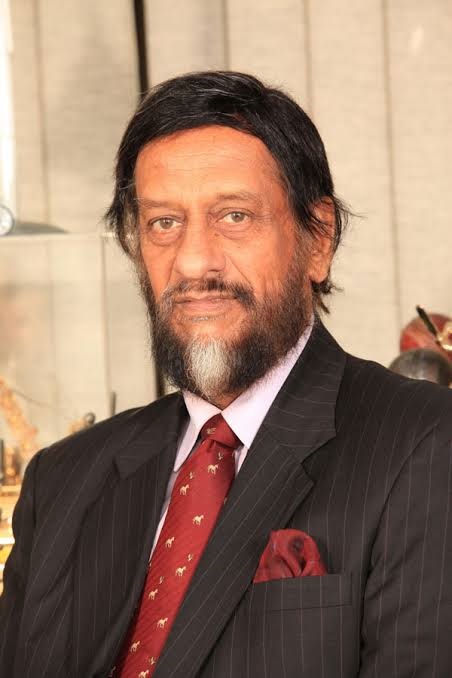
Dr. Rajendra Kumar Pachauri was a towering figure in global environmental science and climate diplomacy. As the long-serving chairman of the Intergovernmental Panel on Climate Change (IPCC), he was instrumental in steering the world’s scientific consensus on global warming, culminating in the IPCC being awarded the Nobel Peace Prize in 2007. A prolific writer, engineer, and institutional builder, Pachauri spent decades putting sustainability at the forefront of global policy.
2. Quick Facts
- Full Name: Rajendra Kumar Pachauri
- Native Name: राजेंद्र कुमार पचौरि
- Date of Birth: August 20, 1940
- Place of Birth: Nainital, United Provinces, British India (now Uttarakhand, India)
- Nationality: Indian
- Occupation / Profession: Environmental Scientist, Economist, and Administrator
- Field of Achievement: Climate Change, Energy Economics, and Sustainable Development
- Years Active: 1960s–2020
3. Award Information (Focus: Padma Vibhushan)
- Award Name: Padma Vibhushan
- Award Category: India’s Second-Highest Civilian Award
- Award Year: 2008
- Presented By: Pratibha Patil (President of India)
- Date of Ceremony: May 10, 2008
- Citation / Official Reason: For exceptional and distinguished service to the nation in the fields of science, engineering, and environmental leadership.
- Previous Recipients (2007): V. N. Khare, Nirmala Deshpande, Raja Ramanna (posthumously), and others.
- Next Recipients (2009): Anil Kakodkar, G. Madhavan Nair, Sashi Tharoor, and others.
4. Why Did He Receive the Award?
Dr. Pachauri was awarded the Padma Vibhushan in recognition of his monumental global leadership in climate science and his role as the head of the IPCC. Under his guidance, the panel’s landmark 2007 assessment reports established undeniable scientific consensus on human-induced climate change, fundamentally transforming how governments worldwide formulated environmental and energy policies.
5. Early Life
Born in Nainital, Uttar Pradesh (now Uttarakhand), Pachauri grew up with a deep appreciation for nature and the outdoors. He completed his early schooling at the St. Joseph’s College, Nainital, before pursuing higher education in engineering, developing an early interest in the intersection of industrial development and resource management.
6. Education
- Bachelor of Engineering (B.E.): Studied electrical engineering at the Thomason College of Civil Engineering (now IIT Roorkee), graduating in 1962.
- Higher Studies in the USA: Moved to North Carolina State University, Raleigh, where he earned his Master of Science (M.S.) in Industrial Engineering (1966) and a Ph.D. in Industrial Engineering and Economics (1972).
7. Career Journey
Pachauri began his professional life as a diesel locomotive operator and engineering apprentice with the Indian Railways. After completing his doctorate in the United States, he returned to academic and research roles, serving as an assistant professor and department head at North Carolina State University. Back in India, he joined the Administrative Staff College of India (ASCI) in Hyderabad. In 1981, he joined The Energy and Resources Institute (TERI) as its Director, transforming it from a small research outfit into a globally respected research powerhouse on energy and sustainable development, leading it until 2015. He also served as the Chairman of the IPCC from 2002 to 2015.
8. Major Achievements
- Nobel Peace Prize Acceptance (2007): Accepted the Nobel Peace Prize on behalf of the IPCC jointly with former US Vice President Al Gore.
- IPCC Leadership: Served three terms as Chairman of the Intergovernmental Panel on Climate Change (2002–2015).
- TERI Transformation: Built TERI into a premier global think tank focused on green energy and sustainable solutions.
- Global Advisory Roles: Advised numerous international bodies, corporations, and national governments on environmental strategy, energy transition, and climate negotiations.
9. Contribution to the Nation
Dr. Pachauri put India firmly at the center of the global climate discourse. Through TERI, he championed renewable energy adoption, rural lighting solutions, and energy-efficient architecture in India. He consistently advocated for developing nations, arguing that climate policies must balance ecological preservation with the eradication of poverty and energy access for millions.
10. Other Awards and Honours
- Padma Bhushan: Conferred by the Government of India in 2001.
- Officier de la Légion d’Honneur: Awarded by the Government of France (2006).
- Order of the Rising Sun (Gold and Silver Star): Awarded by the Emperor of Japan (2012).
- President’s Award, International Association for Energy Economics: For outstanding contributions to energy economics.
- Honorary Doctorates: Received from numerous leading universities worldwide.
11. Legacy and Influence
Dr. Pachauri’s legacy is defined by his tireless mobilization of thousands of scientists worldwide to sound the alarm on global warming. While his later years were shadowed by controversies and workplace allegations that led to his departure from TERI, his foundational scientific leadership and institutional building blocks remain deeply embedded in international climate governance. He passed away in February 2020 at the age of 79.
12. Interesting Facts
- Railway Roots: Before becoming a world-renowned climate scientist and Nobel laureate, he started his professional career working hands-on as a diesel locomotive engineer with Indian Railways.
- Literary Passion: Aside from peer-reviewed scientific papers, Pachauri was a passionate fiction writer and poet, having authored books including a romantic novel titled Return to Ithaca.
- Vegetarian Advocate: He was a vocal proponent of vegetarianism, frequently highlighting the massive carbon footprint of livestock farming and meat production at international conferences.
13. Quotes
“What we do in the next two to three years will determine our future. This is the defining moment.” — Dr. R. K. Pachauri
14. Timeline
- 1940: Born on August 20 in Nainital, India.
- 1962: Graduates with an engineering degree from IIT Roorkee.
- 1972: Earns his Ph.D. in Industrial Engineering and Economics from North Carolina State University.
- 1981: Takes over as Director (later Director-General) of TERI.
- 2001: Awarded the Padma Bhushan.
- 2002: Elected Chairman of the Intergovernmental Panel on Climate Change (IPCC).
- 2007: Accepts the Nobel Peace Prize on behalf of the IPCC in Oslo.
- 2008: Conferred with India’s second-highest civilian honor, the Padma Vibhushan.
- 2015: Steps down from his roles at the IPCC and TERI.
- 2020: Passes away on February 13 in New Delhi at age 79.
15. References
- Intergovernmental Panel on Climate Change (IPCC) – Official Archives & Nobel Laureate Profiles.
- The Energy and Resources Institute (TERI) – Founder & Institutional History.
- Ministry of Home Affairs, Government of India – Padma Awardees Database.
- Obituaries and Retrospectives from The New York Times, The Hindu, and BBC News.
16. Related Personalities
- Al Gore: Former US Vice President who co-shared the 2007 Nobel Peace Prize with the IPCC under Pachauri’s leadership.
- M. S. Swaminathan: Legendary Indian agricultural scientist and pioneer of the Green Revolution.
- Sunita Narain: Prominent Indian environmentalist and director-general of the Centre for Science and Environment (CSE).
17. Frequently Asked Questions (FAQ)
Q1: What is Dr. R. K. Pachauri best known for? A: He is best known for serving as the Chairman of the Intergovernmental Panel on Climate Change (IPCC) when it was awarded the Nobel Peace Prize in 2007, and for heading TERI for decades.
Q2: Which civilian awards did Dr. Pachauri receive from India? A: He received the Padma Bhushan in 2001 and the Padma Vibhushan in 2008 from the Government of India.
Q3: What was Dr. Pachauri’s educational background? A: He was an electrical engineer who graduated from IIT Roorkee, later earning an M.S. and a Ph.D. in Industrial Engineering and Economics from North Carolina State University, USA.
Q4: When did Dr. Pachauri pass away? A: He passed away on February 13, 2020, at the age of 79 in New Delhi.
About the Author




