

1. Introduction
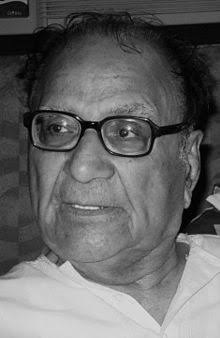
Shiv K. Kumar was a celebrated Indian English-language poet, playwright, novelist, and academic whose literary works earned international acclaim. Known for his sharp wit, profound empathy, and distinct ironic undercurrents, Kumar explored human relationships, existential dilemmas, and socio-cultural realities with rare clarity. He stands tall among the foundational generation of post-independence Indian English poets who bridged traditional sensibilities with modern sensibilities.
2. Quick Facts
- Full Name: Shiv Krishna Kumar (Shiv K. Kumar)
- Native Name: शिव कुमार
- Date of Birth: August 16, 1921
- Place of Birth: Lahore, British India (present-day Pakistan)
- Nationality: Indian
- Occupation / Profession: Poet, Novelist, Playwright, Short Story Writer, Academic
- Field of Achievement: English Literature, Creative Writing, and Higher Education
- Years Active: 1940s – 2017
3. Award Information (Spotlight: Sahitya Akademi Award)
- Award Name: Sahitya Akademi Award
- Award Category: English Literature (Poetry)
- Award Year: 1987
- Presented By: Sahitya Akademi (National Academy of Letters, India)
- Date of Ceremony: 1987–1988
- Citation / Official Reason: In recognition of his exceptional collection of poetry, Trapfalls in the Sky, which showcased technical mastery, philosophical depth, and striking imagery.
- Previous Recipients: Eminent Indian English poets and writers of preceding years.
- Next Recipients: Successive literary honorees in subsequent years.
4. Why He Received the Award
Shiv K. Kumar received the Sahitya Akademi Award for Trapfalls in the Sky (1986) because of his brilliant command over poetic idiom and his sharp psychological insights. His poetry fearlessly navigated human frailties, urban alienation, and intricate domestic landscapes without losing lyrical grace, elevating Indian English verse onto a global platform.
5. Early Life
Born in Lahore in 1921, Kumar grew up in a scholarly environment—his grandfather was a school teacher and his father a headmaster. His early youth in Lahore was disrupted by the tumultuous events of the Partition of India, which forced him to move to Delhi. These early experiences of displacement, combined with a deep exposure to classical literature, left an indelible mark on his worldview and creative writing.
6. Education
- Schooling: Dayanand Anglo-Vedic (DAV) High School, Lahore (Matriculated in 1937).
- Undergraduate Degree: Bachelor of Arts (B.A.) from Government College, Lahore.
- Postgraduate Degree: Master of Arts (M.A.) in English Literature from Forman Christian College, Lahore (1943).
- Doctorate (Ph.D.): Earned his Ph.D. in English Literature from Fitzwilliam College, University of Cambridge (1956), where his dissertation focused on “Bergson and the Stream of Consciousness Novel” under the supervision of Professor David Daiches and guidance of F.R. Leavis.
7. Career Journey
- Early Academic Stints: Began teaching at DAV College, Lahore, and later worked at Hansraj College, Delhi, and All India Radio (AIR).
- Professorship and Institution Building: Served as Professor and Head of the Department of English at Osmania University, Hyderabad, and subsequently as the founder Head of the Department of English and first Dean of the School of Humanities at the University of Hyderabad, retiring as its Vice-Chancellor (in-charge).
- Global Academic Presence: Taught and lectured as a visiting professor at several prestigious Western universities, including Yale University (as a Fulbright Fellow), Drake University, the University of Oklahoma, and Northern Iowa.
8. Major Achievements
- Sahitya Akademi Award (1987): Honored for his poetry collection Trapfalls in the Sky.
- Padma Bhushan (2001): Conferred India’s third-highest civilian honor for his stellar contributions to literature.
- Fellow of the Royal Society of Literature (FRSL): Elected in London in 1978 during his tenure as a Commonwealth Visiting Professor at the University of Kent.
- Prolific Output: Published over a dozen poetry collections, novels, plays, short story collections, and critical studies.
9. Contribution to the Nation
- Globalizing Indian English Verse: Alongside contemporaries like Nissim Ezekiel and R. Parthasarathy, Kumar gave modern Indian English poetry its distinct voice, infusing it with local textures and universal irony.
- Mentorship of Scholars: Shaped generations of students and researchers across premier Indian and international universities, championing high academic standards in English literary studies.
- Translation Work: Brought subcontinental masterpieces to wider audiences, including his notable poetic translations of Urdu poet Faiz Ahmed Faiz.
10. Other Awards and Honours
- Padma Bhushan (2001) by the Government of India.
- Fellow of the Royal Society of Literature (1978), London.
- Smith-Mundt Fellowship (1962) and Charles Holmer Prize.
- Nominated as a member of the jury for the Neustadt International Prize for Literature (USA, 1981).
11. Legacy and Influence
Shiv K. Kumar is remembered for his brilliant integration of academic rigor with creative passion. Interestingly, he began writing serious poetry relatively late in life (around the age of forty-nine), proving that creative genius matures with profound lived experience. His poems—such as the widely anthologized “Indian Women”—remain standard texts in academic syllabi globally, praised for their striking visual imagery and psychological depth.
12. Interesting Facts
- Late Bloomer in Poetry: Though well-versed in criticism early on, Kumar penned his first serious poem only when he was nearly 50 years old, after which poetry became his most continual source of joy.
- The “K” Stands for Krishna: His full name is Shiv Krishna Kumar, with the middle initial representing “Krishna”.
- Global Broadcaster: His poems and short stories were frequently broadcast on the BBC and published in top-tier international literary journals across the UK, USA, Canada, and Australia.
13. Quotes
“Although I scribbled some verse during my undergraduate days, it was only at the age of forty-nine or so that I wrote my first serious poem. Since then poetry has been one of my most continual sources of joy.” – Shiv K. Kumar
“Ultimately each poet has to work out his own credo of life and imagination—’we perish each alone.'”
14. Timeline
- 1921: Born on August 16 in Lahore, British India.
- 1943: Completes his M.A. in English from Forman Christian College, Lahore.
- 1956: Receives his Ph.D. from the University of Cambridge.
- 1978: Elected as a Fellow of the Royal Society of Literature, London.
- 1987: Awarded the Sahitya Akademi Award for Trapfalls in the Sky.
- 2001: Conferred the Padma Bhushan by the Government of India.
- 2017: Passes away on March 1 in Hyderabad, India, at the age of 95.
15. References
- Wikipedia and archival entries on Shiv K. Kumar.
- Encyclopedia.com global literary profiles.
- Sahitya Akademi award registries and Government of India Padma Awards databases.
- Critical studies including A Passage to Shiv K. Kumar by Prabhat K. Singh.
16. Related Personalities
- Nissim Ezekiel: Pioneer of modern Indian English poetry.
- David Daiches: Cambridge research supervisor and literary historian.
- Faiz Ahmed Faiz: Renowned Urdu poet whose works Kumar translated.
17. Frequently Asked Questions (FAQ)
Q1: What is Shiv K. Kumar best known for?
A: He is best known as a distinguished Indian English poet, academic, and author whose poetry collections like Trapfalls in the Sky and Subterfuges captured modern urban and existential realities with deep irony.
Q2: When did he win the Sahitya Akademi Award?
A: He won the Sahitya Akademi Award for English in 1987 for his poetry collection Trapfalls in the Sky.
Q3: What are his highest national honors?
A: He received the Padma Bhushan in 2001 from the Government of India and was elected a Fellow of the Royal Society of Literature, London, in 1978.
About the Author




