

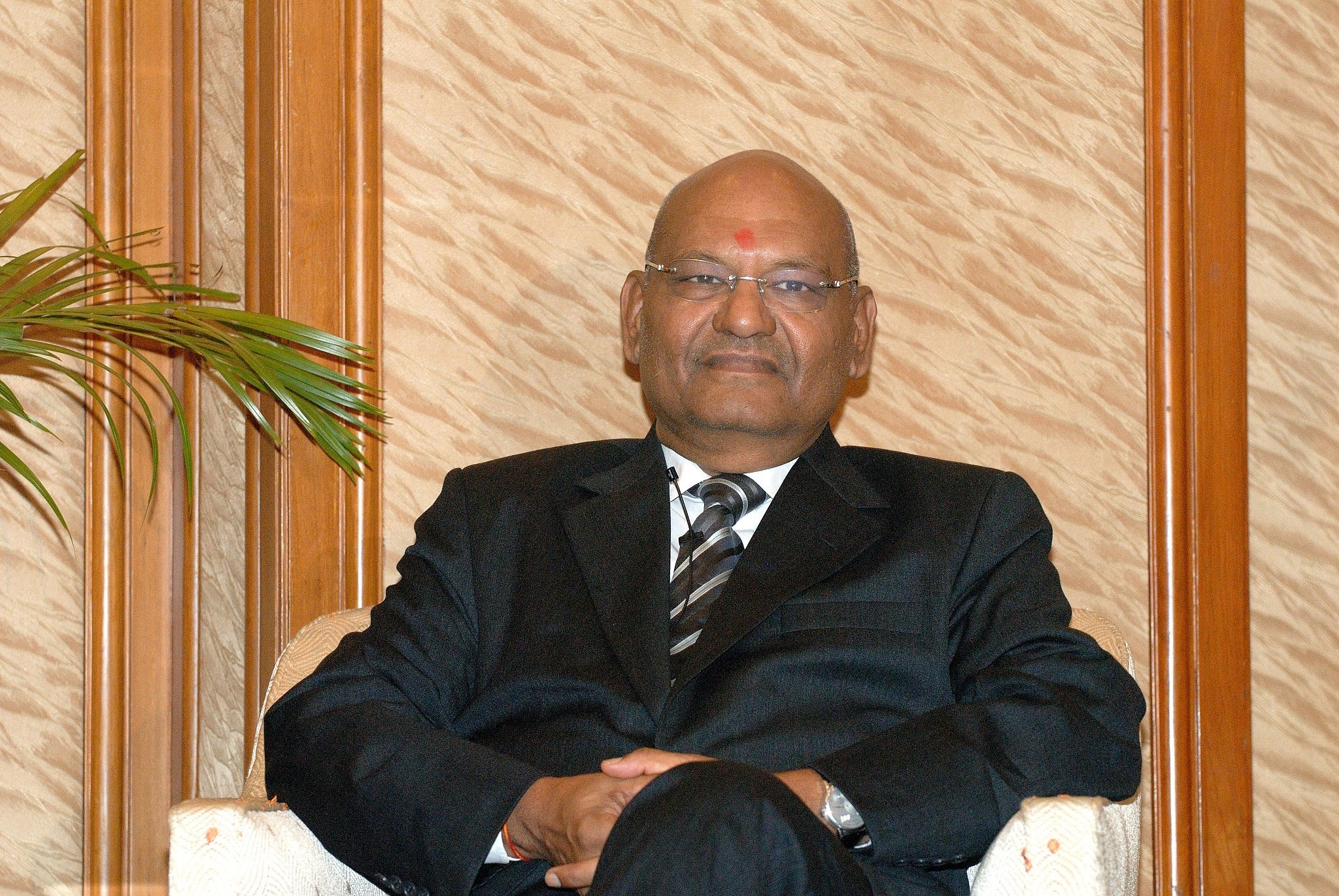
MUMBAI, INDIA September 11: Anil Agarwal, founder and Chairman of Vedanta Resources Plc during an press conference on deal with Cairn India on September 11, 2010 in Mumbai, India. Through a $9.6 billion cash transaction through which Vedanta plans to acquire a majority stake in Cairn India, which owns the Mangala and 16 other oil fields in Rajasthan. (Photo by Ashesh Shah/Mint via Getty Images)
1. Introduction
Anil Agarwal (1947–2002) was a legendary Indian environmentalist, visionary journalist, and one of the founding fathers of India’s modern environmental movement. As the founder of the Centre for Science and Environment (CSE) and the editor of Down To Earth magazine, he shifted the environmental discourse in the Global South away from Western preservationist models toward people-centric, sustainable development that links poverty, livelihoods, and natural resource management.
2. Quick Facts
- Full Name: Anil Agarwal
- Native Name: अनिल अग्रवाल (Hindi)
- Date of Birth: September 24, 1947
- Place of Birth: Kanpur, Uttar Pradesh, India
- Nationality: Indian
- Occupation / Profession: Environmentalist, Science Journalist, Author, Researcher
- Field of Achievement: Environmental Policy, Sustainable Development, Grassroots Conservation
- Years Active: c. 1970s – 2002
3. Award Information (Focus: Padma Bhushan & UNEP Global 500)
- Award Name: Padma Bhushan & UNEP Global 500 Roll of Honour
- Award Category: Environmental Protection and Social Work
- Award Year: 2002 (Padma Bhushan) / 1987 (UNEP Global 500)
- Presented By: Government of India (President of India) / United Nations Environment Programme
- Date of Ceremony: Traditional investiture ceremonies
- Citation / Official Reason: In recognition of his pioneering efforts in environmental journalism, policy research, and awakening public consciousness toward sustainable resource management.
- Previous / Next Recipients: Eminent scientists, environmentalists, and social reformers of respective years.
4. Why Did He Receive the Award?
Anil Agarwal was honored globally and nationally for transforming how India and the developing world view environmental challenges. Through rigorous scientific documentation, grassroots insights, and fearless advocacy, he demonstrated that protecting the environment is inseparable from safeguarding the livelihoods of the rural poor and marginalized communities who depend directly on forests, land, and water.
5. Early Life
Born in Kanpur just weeks after India’s independence in 1947, Agarwal grew up observing the rapid industrialization and socio-economic shifts in post-colonial India. His early intellectual curiosity and empathy toward ordinary people laid the bedrock for his lifelong commitment to equitable development.
6. Education
- Completed his schooling with a strong inclination toward sciences.
- Graduated with a Bachelor of Technology (B.Tech.) in Mechanical Engineering from the prestigious Indian Institute of Technology (IIT), Kanpur in 1970.
- Instead of pursuing corporate engineering, he chose to channel his analytical training into science journalism and public interest advocacy.
7. Career Journey
- Science Journalism Beginnings: Started his career as a science correspondent for the Hindustan Times in the 1970s, covering landmark grassroots movements like the Chipko Movement.
- Founding CSE (1980): Established the Centre for Science and Environment (CSE) in New Delhi as an independent public interest research and advocacy organization.
- Seminal Reports on State of India’s Environment: Authored and edited the pioneering State of India’s Environment series (starting in 1982), which became the gold standard for environmental data in the country.
- Launching Down To Earth (1992): Founded the fortnightly science and environment magazine Down To Earth, giving voice to environmental issues across India and the Global South.
8. Major Achievements
- Pioneering People’s Forestry: Championed community-based forest management and traditional water-harvesting systems, proving that traditional rural wisdom often surpasses top-down bureaucratic interventions.
- Global Climate Equity Advocacy: A vocal champion for the Global South in international climate negotiations, famously co-authoring the pathbreaking 1991 paper “Global Warming in an Unequal World,” which challenged unfair Western carbon accounting.
- Padma Bhushan (2002): Conferred India’s third-highest civilian honor shortly before his untimely passing.
9. Contribution to the Nation
Anil Agarwal placed environmental governance on the national agenda. He forced industries and governments to acknowledge pollution, institutionalized air quality monitoring in Indian cities (laying the groundwork for Delhi’s CNG transition), and popularized the concept of sustainable, decentralized management of water and forests.
10. Other Awards and Honours
- Padma Bhushan (2002) from the Government of India.
- UNEP Global 500 Roll of Honour (1987) by the United Nations Environment Programme.
- Fellow of the Indian National Science Academy (INSA) and recipient of numerous international journalism and environmental accolades.
11. Legacy and Influence
Agarwal’s legacy lives on through the Centre for Science and Environment (CSE) and Down To Earth, which remain powerhouse institutions of environmental watchdog journalism and rigorous public policy research in India. His daughter, Sunita Narain, continued his mission as the director general of CSE, carrying forward his relentless commitment to ecological equity.
12. Interesting Facts
- Engineer Turned Activist: Though formally trained as a mechanical engineer at IIT Kanpur, he chose the pen and field research over heavy industry, proving that engineering precision could be applied to social and environmental problem-solving.
- A Fighter Till the End: Even while battling terminal cancer in his final years, Agarwal continued to write, research, and inspire young environmentalists, viewing his work as an urgent calling for planetary survival.
13. Quotes
“We cannot protect the environment unless we involve the poor, because they are the ones who depend directly on nature for their daily survival.” — Anil Agarwal
14. Timeline
- 1947: Born in Kanpur, Uttar Pradesh
- 1970: Graduated in Mechanical Engineering from IIT Kanpur
- 1980: Founded the Centre for Science and Environment (CSE) in New Delhi
- 1982: Published India’s first landmark State of India’s Environment report
- 1992: Launched the fortnightly magazine Down To Earth
- 2002: Conferred with the Padma Bhushan; passed away on January 2, 2002, leaving behind an immortal legacy
15. References
- Centre for Science and Environment (CSE) Official Archives & Biographies
- Ministry of Home Affairs, Government of India — Padma Awards Directory
- Down To Earth Magazine Memorial Archives
16. Related Personalities
- Sunita Narain (Prominent environmentalist and close collaborator who succeeded him at CSE)
- Chandi Prasad Bhatt (Leader of the Chipko Movement championed in Agarwal’s early reports)
- Medha Patkar (Renowned social activist of the Narmada Bachao Andolan era)
17. Frequently Asked Questions (FAQ)
- Q: Who was Anil Agarwal?
- A: Anil Agarwal was a pioneering Indian environmentalist, science journalist, and the founder of the Centre for Science and Environment (CSE).
- Q: What is he best known for?
- A: He is best known for pioneering grassroots environmental research in India, launching Down To Earth magazine, and advocating for environmental equity for the Global South.
- Q: Did he receive any national honors?
- A: Yes, he was honored with the Padma Bhushan by the Government of India in 2002, alongside international recognitions like the UNEP Global 500 award.
About the Author




