

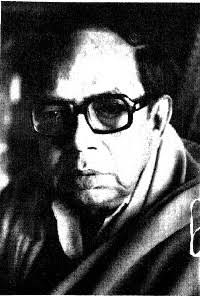
1. Introduction
Prof. Debiprasad Chattopadhyaya (1918–1993) was an eminent Indian Marxist philosopher, scholar, and thinker whose monumental works fundamentally reshaped how the world understands ancient Indian thought. Best known for his pioneering masterpiece Lokayata: A Study in Ancient Indian Materialism, he challenged the conventional Orientalist and idealist narrative that Indian philosophy was exclusively spiritual, mystical, or otherworldly. By applying historical materialism to ancient texts, traditions, and scientific practices, Chattopadhyaya resurrected the rich, suppressed history of rationalism, atheism, and scientific inquiry in pre-modern India.
2. Quick Facts
- Full Name: Debiprasad Chattopadhyaya
- Native Name: দেবীপ্রসাদ চট্টোপাধ্যায়
- Date of Birth: November 19, 1918
- Place of Birth: Calcutta, British India (now Kolkata, West Bengal, India)
- Nationality: Indian
- Occupation / Profession: Philosopher, Author, Educator, Researcher
- Field of Achievement: History of Indian Philosophy, Materialism, and History of Science
- Years Active: 1940s–1993
3. Award Information (Focus: Padma Bhushan)
- Award Name: Padma Bhushan
- Award Category: Civil Honours (Third-Highest Civilian Award in India)
- Award Year: 1998 (Conferred posthumously)
- Presented By: Government of India (President of India)
- Date of Ceremony: 1998
- Citation / Official Reason: Recognized for distinguished services of a high order in literature, education, and pathbreaking philosophical research into India’s intellectual heritage.
- Previous Recipients (Examples): Luminaries across science, literature, arts, and public affairs.
- Next Recipients: Succeeding batches of national civilian awardees.
4. Why They Received the Award
Prof. Chattopadhyaya received the Padma Bhushan posthumously in recognition of his lifetime dedication to uncovering and validating the materialist roots of Indian philosophy. His extensive scholarship dismantled the Eurocentric and revivalist myth that India lacked an indigenous scientific temper, providing a rigorous Marxist framework to study ancient medicine, logic, mathematics, and skepticism.
5. Early Life
Born in Calcutta in 1918, Debiprasad grew up during an intensely politically active era marked by the Indian independence movement and radical intellectual awakenings. He showed an early and brilliant aptitude for academics, developing an expansive curiosity that spanned literature, social sciences, and classical philosophy.
6. Education
- Schooling: Mitra Institution, Bhowanipur, Kolkata.
- Bachelor of Arts (BA Honours in Philosophy): Presidency College, Kolkata (University of Calcutta), standing first in the first class in 1939.
- Master of Arts (MA in Philosophy): University of Calcutta, standing first in the first class in 1942.
- Post-Graduate Research: Undertook advanced philosophical research under the guidance of the legendary scholar Prof. Surendranath Dasgupta.
7. Career Journey
- Teaching Career: Taught philosophy at City College, Kolkata, for nearly three decades, inspiring generations of undergraduate students.
- Visiting Professorships: Served as a UGC Visiting Professor at multiple major universities, including Andhra Pradesh, Calcutta, and Poona.
- International Collaborations: Collaborated closely with globally renowned scholars and historians of science like Joseph Needham, Walter Ruben, and George Thomson.
- Global Academies: Elected as a Fellow of both the German and USSR Academies of Sciences.
8. Major Achievements
- Lokayata: A Study in Ancient Indian Materialism (1959): His magnum opus, which reconstructed the suppressed and condemned materialist (Carvaka/Lokayata) traditions of ancient India by piecing together fragmented hostile references in classical texts.
- What is Living and What is Dead in Indian Philosophy (1976): A critical re-evaluation of classical Indian philosophical systems, separating dogmatic idealism from rational elements.
- History of Science and Technology in Ancient India (Multi-volume, 1986–1996): A landmark multi-volume study documenting indigenous achievements in ancient medicine, astronomy, and technical disciplines.
9. Contribution to the Nation
Prof. Chattopadhyaya liberated Indian philosophical history from sectarian and colonial biases. By proving that ancient India possessed vibrant traditions of materialism, medicine, and rational scientific debate, he empowered post-independence India to reclaim a secular, scientific heritage rooted in its own historical realities.
10. Other Awards and Honours
- Padma Bhushan: Government of India, 1998 (Posthumous)
- Fellowship of the German Academy of Sciences
- Fellowship of the USSR Academy of Sciences
- Various National and International Felicitation Volumes published in honor of his contributions to Marxist scholarship and history of science.
11. Legacy and Influence
Prof. Chattopadhyaya remains a towering reference point for South Asian Marxist scholarship. His books continue to serve as standard reference material in universities worldwide for anyone studying alternative intellectual histories, ancient epistemology, and the sociology of science in India.
12. Interesting Facts
- From Children’s Literature to High Philosophy: Before achieving global acclaim for his dense philosophical treatises, Chattopadhyaya was a prolific writer of popular science books, children’s literature, and stories in Bengali during the 1940s and 50s.
- Relentless Work Ethic: Known among peers as an indefatigable researcher who taught himself advanced historical branches of ancient surgery, medicine, and astronomy later in life to write his multi-volume history of science.
13. Quotes
“India has a rich heritage not only of dreamers and mystics, but also of hard-headed materialists, skeptics, and scientists who looked at nature through empirical observation rather than divine revelation.” — Prof. Debiprasad Chattopadhyaya
14. Timeline
- 1918: Born on November 19 in Calcutta.
- 1939–1942: Stands first in both BA and MA Philosophy examinations at the University of Calcutta.
- 1959: Publishes his defining work, Lokayata: A Study in Ancient Indian Materialism.
- 1976: Publishes What is Living and What is Dead in Indian Philosophy.
- 1986: Releases Volume 1 of his monumental History of Science and Technology in Ancient India.
- 1993: Passes away on May 8 in Calcutta at the age of 74.
- 1998: Posthumously conferred the Padma Bhushan by the Government of India.
15. References
- Wikipedia contributors. “Debiprasad Chattopadhyaya.” Wikipedia, The Free Encyclopedia.
- Namboodiripad, E. M. S. “Remembering Debiprasad.” Communist Party of India (Marxist) archives.
- Chattopadhyaya, Debiprasad (1959). Lokayata: A Study in Ancient Indian Materialism. People’s Publishing House.
- Current Science. “Debiprasad Chattopadhyaya: The Modern Indian Sage.” Obituary (Vol 65, No. 11, 1993).
16. Related Personalities
- D. D. Kosambi: Legendary Marxist mathematician, historian, and polymath who pioneered materialist historiography in India.
- Prof. Surendranath Dasgupta: Renowned historian of Indian philosophy and Chattopadhyaya’s academic mentor.
- Joseph Needham: British sinologist and historian of science with whom Chattopadhyaya shared deep academic exchanges regarding Asian science.
17. Frequently Asked Questions (FAQ)
- Q: What is Debiprasad Chattopadhyaya best known for?
- A: He is best known for his pathbreaking book Lokayata (1959), which revived and studied ancient Indian materialist and atheist philosophies.
- Q: What was his core philosophical approach?
- A: He was an unyielding Marxist philosopher who utilized historical materialism to analyze the evolution of Indian philosophy and science.
- Q: What major civilian award did he receive?
- A: He was posthumously awarded the Padma Bhushan in 1998 by the Government of India.
About the Author




