

1. Introduction
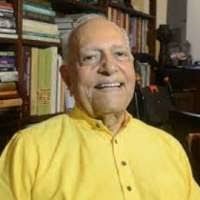
Prof. Gursaran Prasad Talwar is a pioneering Indian medical researcher, endocrinologist, and immunologist whose monumental work has shaped modern vaccinology and reproductive health. Best known as the founding director of the National Institute of Immunology (NII) in New Delhi, Prof. Talwar is globally celebrated for discovering Mycobacterium indicus pranii (MIP), which paved the way for the world’s first effective leprosy vaccine, and for his breakthrough research in immunocontraception (vaccines for birth control). His life’s work bridges basic molecular biology with practical, life-saving public health solutions.
2. Quick Facts
- Full Name: Gursaran Prasad Talwar
- Native Name: गुरसरन प्रसाद तलवार
- Date of Birth: October 2, 1926
- Place of Birth: Hissar, British India (now Haryana, India)
- Nationality: Indian
- Occupation / Profession: Medical Researcher, Biochemist, Immunologist
- Field of Achievement: Reproductive Health, Immunology, Vaccine Development (Leprosy, Tuberculosis, and Cancer)
- Years Active: 1940s–Present
3. Award Information (Focus: Padma Bhushan)
- Award Name: Padma Bhushan
- Award Category: Civil Honours (Third-Highest Civilian Award in India)
- Award Year: 1992
- Presented By: Government of India (President of India)
- Date of Ceremony: 1992
- Citation / Official Reason: Recognized for his distinguished services of a high order in the field of medicine, science, and pioneering developments in immunology and vaccines.
- Previous Recipients (Examples): Prominent scientists, statesmen, and artists who have advanced national growth and global science.
- Next Recipients: Succeeding batches of eminent civilian awardees in subsequent years.
4. Why They Received the Award
Prof. Talwar received the Padma Bhushan and other prestigious honors because his scientific contributions transformed public health landscapes in India and worldwide. His team isolated and characterized Mycobacterium indicus pranii (MIP), transforming leprosy treatment outcomes globally. Furthermore, his pioneering work on immunocontraception gave women a novel biological alternative for family planning, fundamentally changing the scope of reproductive immunology.
5. Early Life
Born in Hissar (then British India) in 1926, Gursaran grew up during a turbulent era of pre-independence and partition. Despite the socio-political upheavals of the time, he channeled his energy into academics, developing an early and intense fascination with the natural sciences and chemistry.
6. Education
- Master of Science (MSc): Punjab University, Lahore (completed prior to/around the partition period).
- Doctor of Science (DSc): University of Paris (Sorbonne University), France (working under renowned mentors, including Nobel laureate Jacques Monod at the Pasteur Institute).
- Post-Doctoral: Alexander von Humboldt Fellow at Tübingen, Stuttgart, and Munich, Germany.
7. Career Journey
- AIIMS New Delhi (1956–1983): Served as a long-standing Professor and Head of the Biochemistry Department at the All India Institute of Medical Sciences, establishing it as a powerhouse for biochemical research.
- National Institute of Immunology (NII): Served as the founding Director, building an autonomous institution dedicated to advanced immunological research under the Indian government.
- Talwar Research Foundation (TRF): Established a dedicated non-governmental organization to continue translational research in vaccines, diagnostics, and reproductive health.
- Global Academic Roles: Held prestigious positions including Visiting Professor at the Collège de France, Wellcome Trust Professor at Johns Hopkins University, and Distinguished Professor at the University of Pune.
8. Major Achievements
- World’s First Leprosy Vaccine: Discovered and developed the vaccine utilizing Mycobacterium indicus pranii (MIP), which drastically shortened recovery times and reduced nerve damage for leprosy patients.
- Birth Control Vaccine (Immunocontraception): Developed an anti-HCG vaccine that triggers antibodies against the human chorionic gonadotropin hormone, preventing pregnancy—a revolutionary step in non-steroidal family planning.
- Translational Cancer Research: Spearheaded research utilizing MIP as an adjunct immunotherapy for various drug-resistant cancers and tuberculosis.
9. Contribution to the Nation
Prof. Talwar helped transition India from a country entirely dependent on imported medical technology to an indigenous hub of biotechnology and immunology. By founding the NII and mentoring generations of Indian scientists, he built institutional frameworks that continue to drive modern Indian medical biotechnology.
10. Other Awards and Honours
- Legion of Honour (Officier de la Légion d’honneur): Conferred by the French Government (1991).
- Padma Bhushan: Government of India (1992).
- Sunder Lal Hora Medal: Indian National Science Academy (1978).
- Indira Gandhi Priyadarshini Award: (1994).
- Lifetime Achievement Award: Indian Immunology Society (1998).
- Mastroianni-Segal Award: World Academy of Art and Science (1999).
11. Legacy and Influence
Prof. Talwar’s legacy lies in his refusal to separate fundamental science from human welfare. He demonstrated that Indian laboratories could produce world-class biomedical solutions tailored to developing nations’ specific disease burdens. His scientific lineage lives on through hundreds of PhD students and researchers he trained, many of whom lead modern laboratories globally.
12. Interesting Facts
- The Champagne Anecdote: During his early days at the Pasteur Institute in France, he was initially assigned to study yeasts for making champagne. Finding it unappealing, he pivoted toward core biochemistry and microbiology.
- Centenarian Generation of Scientists: Prof. Talwar remains one of India’s oldest living scientific icons, having witnessed the entire evolution of modern Indian science post-independence.
13. Quotes
“Science is not just about publishing papers; it is about finding solutions that alleviate human suffering and uplift society.” — Prof. G.P. Talwar
14. Timeline
- 1926: Born on October 2 in Hissar, Haryana.
- 1953: Earns his Doctor of Science (DSc) from the Sorbonne University in Paris.
- 1956: Joins AIIMS New Delhi as a professor, laying the groundwork for modern medical biochemistry in India.
- 1982: Founds the National Institute of Immunology (NII).
- 1991: Awarded the Legion of Honour by France.
- 1992: Conferred the Padma Bhushan by the Government of India.
- 1994: Publishes landmark findings on immunocontraception.
- Present: Continues active research guidance through the Talwar Research Foundation.
15. References
- Wikipedia contributors. “Gursaran Talwar.” Wikipedia, The Free Encyclopedia.
- Indian National Science Academy (INSA) – Biographical database of Indian Fellows.
- Raghunath, Ranjini. “The Industrious Immunologist.” Connect Magazine, 2024.
- Indian Academy of Sciences (IAS) – Fellow Profile: Prof. Gursaran Parshad Talwar.
16. Related Personalities
- Jacques Monod: Nobel laureate and doctoral advisor to Prof. Talwar at the Pasteur Institute.
- Dr. Yellapragada SubbaRow: Legendary Indian biochemist pioneer.
- Shanti Swaroop Bhatnagar: Founder of India’s CSIR laboratories.
17. Frequently Asked Questions (FAQ)
- Q: What is Prof. Gursaran Talwar most famous for?
- A: He is best known for discovering Mycobacterium indicus pranii (MIP) for the leprosy vaccine and for pioneering work in immunocontraception.
- Q: Is Prof. Talwar the founder of the National Institute of Immunology?
- A: Yes, he served as its founding director and shaped its trajectory as a premier research center.
- Q: What international awards has he received?
- A: He received France’s highest civilian recognition, the Legion of Honour, in 1991, alongside multiple global scientific citations.
About the Author




