

1. Introduction
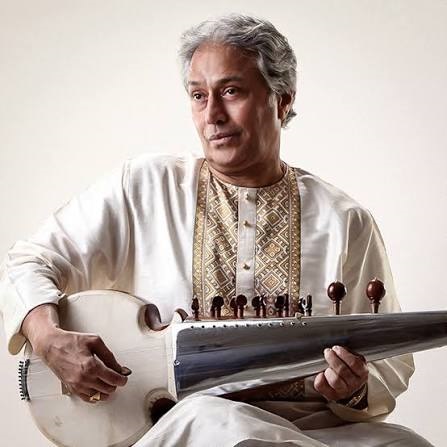
Ustad Amjad Ali Khan stands as an undisputed colossus of Indian classical music, revered worldwide as the “Emperor of the Sarod” (Sarod Samrat). Belonging to an illustrious musical lineage that traces back six generations, he is credited with reinventing and elevating the status of the sarod on the global stage. With a career spanning over six decades, Khan has mesmerized audiences globally with his peerless technique, profound emotional depth, and relentless pursuit of musical peace and cross-cultural harmony.
2. Quick Facts
- Full Name: Ustad Amjad Ali Khan Bangash (Birth name: Masoom Ali Khan)
- Native Name: أمجد علي خان (Urdu)
- Date of Birth: October 9, 1945
- Place of Birth: Gwalior, Gwalior State, British India (now Madhya Pradesh, India)
- Nationality: Indian
- Occupation / Profession: Classical Musician, Sarod Maestro, Teacher
- Field of Achievement: Hindustani Classical Instrumental Music (Sarod)
- Years Active: 1950s–Present (Performed internationally since the 1960s)
3. Award Information (Focus: Padma Vibhushan)
- Award Name: Padma Vibhushan
- Award Category: India’s Second-Highest Civilian Honour
- Award Year: 2001
- Presented By: Government of India (Conferred by the President of India)
- Date of Ceremony: March/April 2001 (Rashtrapati Bhavan, New Delhi)
- Citation / Official Reason: For exceptional and distinguished service to the field of art, classical music, and for bringing global acclaim to the Indian instrument, the sarod.
- Previous Recipients (Notable): Pandit Ravi Shankar, Lata Mangeshkar, M. S. Subbulakshmi, Bismillah Khan
- Next Recipients (Notable): Kishen Maharaj, Kishori Amonkar, Pranab Mukherjee (in subsequent years)
4. Why He Received the Award
Ustad Amjad Ali Khan received the Padma Vibhushan in 2001 in recognition of a lifetime dedicated to mastering and popularizing the sarod. The honor acknowledged his pivotal role in expanding the technical boundaries of Hindustani instrumental music, his extensive global cultural diplomacy, and his status as a national cultural treasure who passed down an unbroken traditional legacy to international stages and future generations.
5. Early Life
Born into the royal court musician family of Gwalior, Amjad Ali Khan was the youngest of seven children born to the legendary sarod maestro Ustad Hafiz Ali Khan and Rahat Jahan. His family belongs to the Bangash lineage, which claims direct descent from the Senia-Bangash school and the mythical invention of the sarod (derived from the Afghan rabab). As an infant, a wandering sadhu reportedly changed his birth name from Masoom Ali to Amjad, sensing a great destiny. Growing up, music was not merely a hobby in his household; it was a form of intense spiritual devotion and a round-the-clock lifestyle.
6. Education
- Early Training: Trained strictly under the watchful eye of his father, Hafiz Ali Khan, practicing for hours daily utilizing traditional ganda-bandh discipline.
- Formal Schooling: Following advice given to his father, he was enrolled as a day scholar at the prestigious Modern School in New Delhi from 1958 to 1963, balancing a regular modern education with rigorous classical rizaaz.
7. Career Journey
- Child Prodigy: Gave his first public recital as a soloist at the tender age of 12, instantly turning heads across the Indian classical circuit.
- International Breakthrough: Made his international debut in the United States in the early 1960s, introducing Western audiences to the mystic sound of the sarod.
- Carnegie Hall Debut: Made history in 1971 by becoming the first-ever sarod player to perform at the prestigious Carnegie Hall in New York City.
- Global Collaborations: Performed alongside world-renowned orchestras like the Hong Kong Philharmonic, and collaborated with Western classical, folk, and jazz musicians.
8. Major Achievements
- Conferred “Sarod Samrat”: Crowned “Emperor of the Sarod” by the Prayag Sangeet Samiti during his youth.
- Creation of New Ragas: Enriched the Hindustani classical catalog by composing several original ragas, including Amiri Todi, Shivanjali, Kiran Ranjani, Lalit Dhwani, and Suhag Bhairav.
- Nobel Peace Prize Concert: Performed ‘Raga For Peace’ alongside his sons at the 2014 Nobel Peace Prize Concert in Oslo, Norway.
9. Contribution to the Nation
Ustad Amjad Ali Khan served as a cultural ambassador for India, bridging international divides through sound. In 1981, he became the first Indian classical musician to perform in Pakistan after decades of cultural freeze following the partition. Through institutions, public masterclasses, and his trust initiatives, he championed the ideology of RaagGiri—promoting the healing and unifying power of classical music to cleanse society of negativity, foster communal harmony, and nation-building.
10. Other Awards and Honours
- Padma Shri (1975)
- UNESCO Award (1970)
- Sangeet Natak Akademi Award (1989)
- Padma Bhushan (1991)
- Fukuoka Asian Culture Prize (2004)
- Sangeet Natak Akademi Fellowship (2011)
- Banga-Vibhushan (2011)
- Global Citizenship: Proclaimed Amjad Ali Khan Day on April 20, 1984, in Massachusetts, USA; honorary citizen of Houston, Nashville, and Tulsa.
11. Legacy and Influence
Amjad Ali Khan transformed sarod-playing technique by utilizing his fingernails instead of fingertips to glide across the fretless fingerboard, producing a uniquely crisp, singing, and ringing tone. His legacy continues unwaveringly through his talented sons and disciples, Amaan Ali Khan and Ayaan Ali Khan (the seventh generation), who regularly perform and record alongside him, ensuring the pristine continuity of the Senia-Bangash gharana.
12. Interesting Facts
- Fingernail Technique: Unlike many traditional players who used their fingertips, his adoption of a fingernail-stopping technique gave his sarod a vocal-like resonance (Gayaki ang).
- Ancestral Home Turned Museum: His childhood home in Gwalior has been converted into a public musical heritage center.
- Grammy Connection: He contributed music to the album Meditations: The Reflections of His Holiness The Dalai Lama, which won a Grammy Award.
13. Quotes
“Music is my religion, my identity, and my breath. I feel I am a medium; God plays through the strings of the sarod.”
“A true artist does not belong to any country or religion; their only language is the language of the human heart.”
14. Timeline
- 1945: Born on October 9 in Gwalior.
- 1957: Moves to New Delhi with his family.
- 1958: Enrolls as a student at Modern School, Delhi.
- 1971: Landmark debut performance at Carnegie Hall, New York.
- 1975: Awarded the Padma Shri.
- 1991: Awarded the Padma Bhushan.
- 2001: Bestowed with India’s second-highest civilian honor, the Padma Vibhushan.
- 2014: Performs at the Nobel Peace Prize Concert with his sons.
15. References
- Encyclopædia Britannica – Amjad Ali Khan Biography
- Wikipedia – Ustad Amjad Ali Khan Profile
- Cultural India – Heritage Records on Indian Classical Musicians
- Official archives of the Sangeet Natak Akademi
16. Related Personalities
- Ustad Hafiz Ali Khan (Father and Guru)
- Amaan Ali Khan & Ayaan Ali Khan (Sons and Successors)
- Pandit Ravi Shankar (Contemporary Sitar Maestro)
- Ustad Bismillah Khan (Legendary Shehnai Exponent)
- Birju Maharaj (Frequent early-tour dance collaborator)
17. Frequently Asked Questions (FAQ)
- Q: What instrument does Ustad Amjad Ali Khan play?A: He plays the sarod, a premier fretless stringed instrument of Indian classical music.
- Q: Is Ustad Amjad Ali Khan related to Tansen?A: Yes, through his family’s musical lineage (the Senia-Bangash gharana), he traces his artistic roots back to Tansen, the legendary musician of Emperor Akbar’s court.
- Q: What are his highest civilian honors?A: He is a recipient of all three major Padma honors: Padma Shri (1975), Padma Bhushan (1991), and Padma Vibhushan (2001).
- Q: Who are his successors?A: His sons, Amaan Ali Khan and Ayaan Ali Khan, represent the seventh generation of sarod players in his family.
About the Author




