
1. Introduction
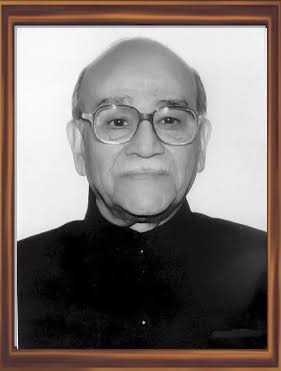
Harish-Chandra (1923–1983) began his academic journey as a theoretical physicist working alongside Homi Bhabha and Paul Dirac, but transitioned into mathematics to become a master architect of abstract harmonic analysis. Working primarily in the United States—most notably at Columbia University and the Institute for Advanced Study in Princeton—he built an expansive theoretical framework dealing with semisimple Lie groups. His work bridges advanced algebra, analysis, and geometry, standing like a grand architectural monument in contemporary mathematics.
2. Quick facts
- Full Name: Harish-Chandra (frequently used as a single composite name)
- Native Name: हरिश्चंद्र (Hindi)
- Date of birth: October 11, 1923
- Place Of birth: Kanpur, Uttar Pradesh, India
- Nationality: Indian (Spent much of his professional life based in the United States)
- Occupation/ Profession: Mathematician and Theoretical Physicist
- Field of Achievement: Representation Theory, Harmonic Analysis, and Lie Groups
- Years Active: 1940s – 1983
3. Award Information (Focus: Padma Bhushan)
- Award Name: Padma Bhushan
- Award Category: Civil Honour (Third Highest Civilian Award in India)
- Award Year: 1977
- Presented By: President of India
- Date of Ceremony: 1977 (Formal Investiture Ceremony)
- Citation/Official Reason: Recognized for exceptional service and distinguished contributions to science, literature, and education.
- Previous Recipients: Noted scientists, artists, and public figures from prior civilian award cohorts.
- Next Recipients: Subsequent annual lists of civilian honorees.
4. Why they Receive the award?
Harish-Chandra received India’s prestigious Padma Bhushan in 1977, along with international recognitions like the Frank Nelson Cole Prize and fellowship of the Royal Society, because of his monumental, groundbreaking contributions to mathematics. By single-handedly building the theory of infinite-dimensional representations of semisimple Lie groups, he solved deep analytical and structural problems that unlocked pathways across modern number theory, physics, and geometry.
5. Early Life
Born in Kanpur, Uttar Pradesh, into an educated family—his father, Chandra Kishore, was a civil engineer—Harish-Chandra grew up with a strong emphasis on academic excellence. Though he was a somewhat frail child who spent substantial time with his maternal family, his mathematical brilliance surfaced early. He passed through high school and intermediate college well ahead of standard ages, showcasing an astonishing innate grasp of analytical concepts.
6. Education
- Christ Church High School & Intermediate College, Kanpur: Completed basic schooling and intermediate sciences at a remarkably young age.
- University of Allahabad: Earned his Bachelor of Science (1941) and Master of Science in Physics (1943), famously solving the complex mathematical vibration theory of the mridangam on the spot during an exam evaluated by C. V. Raman.
- Indian Institute of Science (IISc), Bangalore: Worked as a postgraduate research fellow under the mentorship of Homi Bhabha.
- Gonville and Caius College, Cambridge: Completed his Ph.D. in 1947 under the supervision of legendary physicist Paul Dirac, writing a dissertation on the infinite irreducible representations of the Lorentz group.
7. Carrier Journey
- Postdoctoral Research (1947–1950): Traveled to the United States, working closely with Wolfgang Pauli and Herman Weyl at institutions like the Institute for Advanced Study (IAS) in Princeton.
- Faculty Member, Columbia University (1950–1963): Spent over a decade in New York carrying out some of his most intensive, foundational research on Lie groups and harmonic analysis.
- Professor, Institute for Advanced Study, Princeton (1963–1983): Appointed as a permanent member, later named the IBM-von Neumann Professor in Mathematics in 1968, where he remained until the end of his life.
8. Major Achievements
- Foundation of Semisimple Lie Group Representation Theory: Transformed a marginal topic into a core discipline of contemporary mathematics.
- The Harish-Chandra Isomorphism: Developed core algebraic techniques that mapped enveloping algebras and characters of infinite-dimensional representations.
- Plancherel Measure and Discrete Series: Explicitly determined the Plancherel measure and discovered discrete series representations for semisimple groups.
9. Contribution to the nation
Although Harish-Chandra spent the majority of his academic career abroad, he remained deeply tied to India’s intellectual landscape. He maintained active connections with institutions like the Tata Institute of Fundamental Research (TIFR) and inspired generations of Indian mathematicians. In his honor, the Government of India established the Harish-Chandra Research Institute (HRI) in Allahabad—a premier institution dedicated to theoretical physics and mathematics.
10. Other Awards and Honours
- Frank Nelson Cole Prize in Algebra (1954): Awarded by the American Mathematical Society.
- Fellow of the Royal Society (FRS) (1973): Elected for profound scientific impact.
- Srinivasa Ramanujan Medal (1974): Conferred by the Indian National Science Academy.
- Padma Bhushan (1977): Conferred by the Government of India.
- Honorary Doctorates: Received degrees from Delhi University (1973) and Yale University (1981).
- Foreign Associate, National Academy of Sciences, USA (1981).
11. Legacy and influence
Harish-Chandra’s work is widely considered a monumental intellectual edifice. Because he transitioned from physics to pure mathematics, his work possessed an uncanny structural clarity that linked geometric properties with deep analytical tools. Mathematicians routinely describe his theories as soaring frameworks that bridge human reasoning with universal truths.
12. Interesting Facts
- Lack of Formal Math Training: Uniquely, Harish-Chandra never formally earned a university degree in mathematics; his degrees were entirely in physics. He once noted that his lack of conventional training allowed him to approach problems with total originality.
- The Mridangam Genius: As a physics master’s student at Allahabad, he effortlessly solved complex equations regarding the acoustic vibrations of the mridangam drum on the spot during an oral examination with C. V. Raman, earning a rare 100% score.
- Correction to Pauli: While attending a lecture by legendary physicist Wolfgang Pauli during his Cambridge days, Harish-Chandra stood up and pointed out a clear mathematical error in Pauli’s presentation, sparking a lifelong friendship.
13. Quotes
“The structure [of mathematics] still stands like a Gothic cathedral, heavily buttressed below but, in spite of its great weight, light and soaring in the upper reaches, coming as close to heaven as a mathematician can.” — Harish-Chandra
14. Timeline
- 1923: Born in Kanpur, Uttar Pradesh, India
- 1943: Completes his M.Sc. in Physics at the University of Allahabad
- 1945–1947: Studies at Cambridge University under Paul Dirac; transitions from physics to mathematics
- 1947: Earns his Ph.D. and moves to the United States
- 1950–1963: Serves on the faculty at Columbia University
- 1954: Receives the Cole Prize from the American Mathematical Society
- 1963: Joins the Institute for Advanced Study in Princeton as a professor
- 1973: Elected a Fellow of the Royal Society
- 1977: Honored with the Padma Bhushan by the Government of India
- 1983: Passes away following a heart attack in Princeton, New Jersey
15. References
- University of St Andrews — School of Mathematics and Statistics Biographies (“Harish-Chandra”).
- Langlands, Robert P. “Harish-Chandra. 11 October 1923 — 16 October 1983.” Biographical Memoirs of Fellows of the Royal Society.
- Indian National Science Academy (INSA) — Biographical Archives.
- Institute for Advanced Study (IAS), Princeton — Historical Scholar Records.
16. Related Personalities
- Paul Dirac: Nobel laureate physicist and Harish-Chandra’s doctoral advisor at Cambridge.
- Homi Bhabha: Pioneering Indian nuclear physicist who guided Harish-Chandra early in Bangalore.
- Hermann Weyl: Renowned mathematician at the Institute for Advanced Study who deeply influenced Harish-Chandra’s analytical perspective.
- Wolfgang Pauli: Legendary physicist and close friend whom Harish-Chandra met in Cambridge.
17. Frequently Asked Questions (FAQ)
Q: Who was Harish-Chandra?
A: Harish-Chandra was a world-renowned Indian-born mathematician and physicist who revolutionized representation theory and harmonic analysis.
Q: Did Harish-Chandra study mathematics formally?
A: No, his formal university degrees (B.Sc. and M.Sc.) were entirely in theoretical physics, though he evolved into one of the 20th century’s most iconic pure mathematicians.
Q: What is the Harish-Chandra Research Institute?
A: Named in his honor, the Harish-Chandra Research Institute (HRI) in Allahabad, India, is a premier national institution dedicated to research in mathematics and theoretical physics.
Q: What were his primary fields of contribution?
A: His primary research focused on the representation theory of semisimple Lie groups, Lie algebras, and harmonic analysis on homogeneous spaces.
About the Author