

1. Introduction
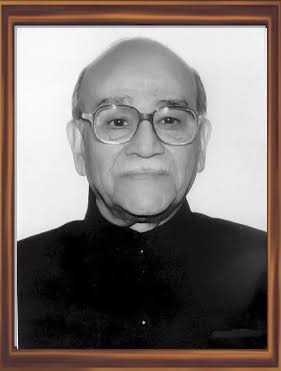
Udupi Ramachandra Rao (1932–2017), widely celebrated as the “Satellite Man of India,” was a pioneering space scientist, institution builder, and former Chairman of the Indian Space Research Organisation (ISRO). He architected India’s satellite era from the ground up, directing the design, fabrication, and successful launch of over 18 indigenous satellites—beginning with Aryabhata in 1975—and firmly positioning India as a global spacefaring nation.
2. Quick facts
- Full Name: Udupi Ramachandra Rao
- Native Name: ಉಡುಪಿ ರಾಮಚಂದ್ರ ರಾವ್
- Date of birth: March 10, 1932
- Place Of birth: Adamaru village, Udupi district, Karnataka, India
- Nationality: Indian
- Occupation/ Profession: Space Scientist, Physicist, Administrator
- Field of Achievement: Space Science, Satellite Technology, and Astrophysics
- Years Active: 1954 – 2017
3. Award Information
- Award Name: Padma Bhushan (1976) & Padma Vibhushan (2017)
- Award Category: Civil Honors / Science and Engineering
- Award Year: 1976 and 2017
- Presented By: President of India
- Date of Ceremony: Annual Republic Day Investiture Ceremonies (Padma Vibhushan presented on March 30, 2017)
- Citation/Official Reason: For exceptional and distinguished service to science, space technology, and national development.
- Previous Recipients (optional): Eminent Indian scientists, national leaders, and technologists.
- Next Recipients: Subsequent annual civilian awardees.
4. Why they Receive the award?
U.R. Rao was honored with India’s highest civilian distinctions—culminating in the Padma Vibhushan—for his phenomenal lifetime contributions to space technology, his leadership in establishing independent satellite capabilities for India (such as INSAT and IRS systems), and for placing Indian science prominently on the global map.
5. Early Life
Born on March 10, 1932, in the small village of Adamaru in coastal Karnataka, Rao grew up in a modest family under the care of his parents, Lakshminarayana Acharya and Krishnaveni Amma. He completed his primary and secondary education locally before moving across southern and northern India to pursue higher scientific learning, displaying an early, profound fascination with physics and the cosmos.
6. Education
- Bachelor of Science (BSc): Madras University, 1951.
- Master of Science (MSc): Banaras Hindu University (BHU), 1953.
- Doctorate (PhD): Gujarat University (1960), completing his doctoral research under the mentorship of legendary physicist Dr. Vikram Sarabhai at the Physical Research Laboratory (PRL), Ahmedabad.
- Post-Doctoral Research: Worked as a faculty member and researcher at the Massachusetts Institute of Technology (MIT) and the University of Texas at Dallas, executing experiments on early NASA Pioneer and Explorer spacecraft.
7. Carrier Journey
- Early Research (1960s): Conducted frontline studies on cosmic rays, solar wind, and high-energy physics at TIFR and PRL.
- Initiating India’s Satellite Program (1972): Appointed to direct India’s space technology expansion, establishing infrastructure for satellite design and testing.
- ISRO Chairman (1984–1994): Headed ISRO for a decade, successfully overseeing the development of the Polar Satellite Launch Vehicle (PSLV) and operationalizing major communication and remote-sensing networks.
- International Leadership: Served as Chairman of the UN Committee on Peaceful Uses of Outer Space (UN-COPUOS) from 1996 to 1999.
8. Major Achievements
- Aryabhata (1975): Spearheaded the creation and successful launch of India’s very first satellite, paving the way for indigenous space operations.
- Satellite Hall of Fame (2013): Became the first Indian space scientist to be inducted into the prestigious Satellite Hall of Fame in Washington, D.C.
- IAF Hall of Fame (2016): Inducted into the International Astronautical Federation (IAF) Hall of Fame in Mexico.
9. Contribution to the nation
Rao transformed space research from an experimental pursuit into an essential engine for national development. By developing the INSAT (Indian National Satellite) and IRS (Indian Remote Sensing) systems, he directly revolutionized national telecommunications, television broadcasting, meteorological forecasting, disaster management, and resource mapping across India’s vast rural and urban landscapes.
10. Other Awards and Honours
- Shanti Swarup Bhatnagar Prize (1975) – In Engineering Sciences.
- Padma Bhushan (1976) – Conferred by the Government of India.
- Theodore Von Karman Award (2005) – The highest honor bestowed by the International Academy of Astronautics.
- Padma Vibhushan (2017) – India’s second-highest civilian honor.
11. Legacy and influence
U.R. Rao is memorialized as a founding pillar of modern Indian technological self-reliance. Under his leadership, ISRO transitioned from assembling experimental hardware to mastering complex, end-to-end launch and satellite architectures. His vision continues to guide India’s planetary missions, remote-sensing networks, and global collaborations. He passed away on July 24, 2017, in Bengaluru.
12. Interesting Facts
- During his time at MIT in the 1960s, he analyzed data sent back by NASA’s Pioneer spacecraft, making crucial discoveries about the continuous nature of solar wind streams.
- He was affectionately called “The Satellite Man of India” due to his instrumental role in launching close to 20 indigenous satellites during his career.
- Despite his massive administrative workloads, he remained an active researcher, publishing over 360 scientific papers and authoring key books on sustainable space development.
13. Quotes
“Space technology is not a luxury for a developing nation; it is an absolute necessity for rapid resource mapping, education, and societal transformation.”
14. Timeline
- 1932: Born on March 10 in Adamaru, Karnataka
- 1960: Earned his PhD under Dr. Vikram Sarabhai
- 1975: Directed the successful launch of India’s first satellite, Aryabhata
- 1976: Conferred the Padma Bhushan by the Government of India
- 1984–1994: Served as Chairman of the Indian Space Research Organisation (ISRO)
- 2013: Inducted into the Satellite Hall of Fame in Washington, D.C.
- 2016: Inducted into the IAF Hall of Fame in Mexico
- 2017: Honored with the Padma Vibhushan; passed away on July 24 in Bengaluru
15. References
- Wikipedia: Udupi Ramachandra Rao
- ISRO Official Archives: Prof. Udupi Ramachandra Rao Profile
- Ministry of Home Affairs, Government of India – Padma Awards Directory
16. Related Personalities
- Vikram Sarabhai (Founding father of the Indian space program and Rao’s doctoral mentor)
- Satish Dhawan (Renowned aerospace engineer and former ISRO Chairman)
- Krishnaswamy Kasturirangan (Space scientist and successor as ISRO Chairman)
17. Frequently Asked Questions (FAQ)
Q: Who was U.R. Rao?
A: He was a legendary Indian space scientist, former ISRO Chairman, and the visionary leader behind India’s early satellite programs.
Q: Why is he called the “Satellite Man of India”?
A: He earned the moniker because he directed the design, building, and launch of India’s first satellite (Aryabhata) and over 18 subsequent indigenous spacecraft.
Q: What major civil honors did he receive?
A: He received the Padma Bhushan in 1976 and India’s second-highest civilian award, the Padma Vibhushan, in 2017.
About the Author