

1. Introduction
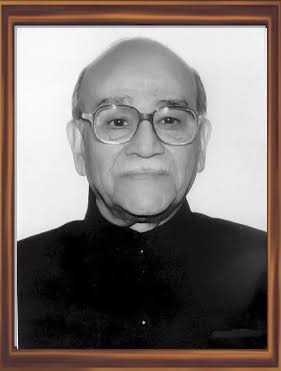
Dr. Padmanabhan Krishnagopala Iyengar (1931–2011), widely known as P. K. Iyengar, was a legendary Indian nuclear physicist who played a pivotal role in shaping India’s nuclear program. As a chief architect of India’s first peaceful nuclear test (“Operation Smiling Buddha”) in 1974 and a former Chairman of the Atomic Energy Commission (AEC), Iyengar was a stalwart of indigenous scientific self-reliance, neutron scattering research, and high-tech institutional development.
2. Quick Facts
- Full Name: Padmanabhan Krishnagopala Iyengar
- Native Name: பத்மநாபன் கிருஷ்ணகோபால ஐயங்கார் (Tamil)
- Date of Birth: June 29, 1931
- Place of Birth: Tirunelveli, Tamil Nadu, India
- Nationality: Indian
- Occupation/Profession: Nuclear Physicist, Researcher, and Scientific Administrator
- Field of Achievement: Nuclear Physics, Neutron Scattering, and Atomic Energy
- Years Active: 1952–2011
3. Award Information (Focus: Padma Bhushan)
- Award Name: Padma Bhushan
- Award Category: Science and Engineering
- Award Year: 1975
- Presented By: President of India
- Date of Ceremony: March/April 1975
- Citation/Official Reason: For distinguished service and exceptional contributions to nuclear science and the successful execution of India’s peaceful nuclear technology program.
- Previous Recipients: Eminent scientists, academicians, and public servants from prior civilian award lists.
- Next Recipients: Subsequent prominent civilian honorees in 1976.
4. Why They Received the Award
Dr. P. K. Iyengar received the Padma Bhushan in recognition of his frontline leadership in India’s nuclear physics sector, most notably for his second-in-command role under Raja Ramanna during Operation Smiling Buddha—India’s first Peaceful Nuclear Explosion (PNE) at Pokhran in May 1974. His crucial technical contributions to high-pressure physics and indigenous nuclear reactor design earned him this high national decoration.
5. Early Life
Born in Tirunelveli, Tamil Nadu, Iyengar grew up during a transformative era in Indian history. Displaying an intense early aptitude for exact sciences, mathematics, and analytical problem-solving, he pursued higher studies in physics, setting the stage for his entry into the elite group of post-independence scientists handpicked to build modern scientific institutions for a newly sovereign India.
6. Education
- Undergraduate & Postgraduate: Earned his Master’s degree in Physics from the University of Travancore (Trivandrum) in 1952.
- Doctorate (Ph.D.): Obtained his Ph.D. in Physics from the University of Bombay in 1963.
- International Training: Trained at the Chalk River Laboratories of the Canadian Atomic Energy Establishment (1956–1958) under Nobel laureate Dr. Bertram N. Brockhouse, conducting landmark research on neutron scattering and lattice dynamics.
7. Carrier Journey
- TIFR & AEET: Began his professional career as a junior research scientist at the Tata Institute of Fundamental Research (TIFR) in 1952, moving to the newly formed Atomic Energy Establishment (later BARC) in Trombay in 1954.
- Head of Physics Group: Directed the Physics Group at the Bhabha Atomic Research Centre (BARC), overseeing critical experimental nuclear physics frameworks.
- Director of BARC: Served as the Director of the Bhabha Atomic Research Centre from 1984 to 1990.
- Chairman, AEC: Served as the Chairman of the Atomic Energy Commission of India and Secretary of the Department of Atomic Energy (DAE) from 1990 to 1993.
8. Major Achievements
- Pokhran-I (1974): Played a foundational technical role in manufacturing and testing India’s first nuclear device under Operation Smiling Buddha.
- PURNIMA Reactors: Led the design and commissioning of the PURNIMA series of experimental fast reactors, starting with PURNIMA-I in 1972.
- Dhruva Reactor: Successfully resolved complex engineering challenges to commission India’s high-flux flagship research reactor, Dhruva, during his tenure as BARC Director.
- Neutron Scattering Pioneer: Built India’s earliest multi-axis neutron spectrometers around the Apsara reactor, pioneering world-class solid-state physics research in the country.
9. Contribution to the Nation
Dr. Iyengar helped cement India’s status as a self-reliant nuclear power, capable of independent research, weapon development design, and nuclear power generation despite severe international technology embargoes. By institutionalizing tech-transfer cells at BARC, launching laser and accelerator research centers (such as the CAT in Indore), and mentoring generations of young scientists, he mapped out the blueprint for modern atomic research in India.
10. Other Awards and Honours
- Shanti Swarup Bhatnagar Prize (1971): Awarded in the Physical Sciences category for pioneering contributions to nuclear physics.
- Padma Bhushan (1975): Conferred by the Government of India.
- Fellow of the Indian Academy of Sciences (FASc) and National Academy of Sciences, India (FNASc).
- Homi Bhabha Gold Medal and various life-achievement recognitions from national physics associations.
11. Legacy and Influence
Dr. Iyengar is remembered as a fearless, fiercely independent scientist who refused to compromise on national technological sovereignty—notably raising open concerns regarding restrictive international pacts like the India-US nuclear deal later in his life. His legacy lives on through the robust operational reactors at BARC and the vibrant community of nuclear engineers and solid-state physicists who trained under his stewardship.
12. Interesting Facts
- During his later years after retirement from the central government, he served as the scientific adviser to the Government of Kerala, where he helped establish the Rajiv Gandhi Centre for Biotechnology (RGCB) in Thiruvananthapuram.
- He worked closely alongside Nobel laureate Bertram Brockhouse in Canada, contributing directly to research that later won Brockhouse the 1994 Nobel Prize in Physics.
- Known for his sharp administrative candor, he was famously quick in decision-making and straightforward in expressing his technical views.
13. Quotes
“Science cannot thrive on imports alone; true technological independence requires indigenous innovation, trial, and the courage to build things with our own hands.”
14. Timeline
- 1931: Born on June 29 in Tirunelveli, Tamil Nadu.
- 1952: Joins the Tata Institute of Fundamental Research (TIFR) as a research assistant.
- 1956–1958: Conducts advanced neutron scattering research at Chalk River Laboratories, Canada.
- 1972: Successfully commissions the PURNIMA reactor at BARC.
- 1974: Plays a leading role in India’s first peaceful nuclear test (Smiling Buddha) at Pokhran.
- 1975: Awarded the Padma Bhushan by the President of India.
- 1984–1990: Serves as Director of the Bhabha Atomic Research Centre (BARC).
- 1990–1993: Serves as Chairman of the Atomic Energy Commission (AEC).
- 2011: Passes away on December 21 in Mumbai at the age of 80.
15. References
- Biographical Memoirs of the Indian National Science Academy (INSA).
- Wikipedia contributors. “P. K. Iyengar.” Wikipedia, The Free Encyclopedia.
- Archives of the Department of Atomic Energy (DAE) and Bhabha Atomic Research Centre (BARC).
16. Related Personalities
- Dr. Homi J. Bhabha (Founding father of India’s nuclear program)
- Dr. Raja Ramanna (Nuclear physicist and leader of the 1974 Pokhran test team)
- Dr. Bertram N. Brockhouse (Canadian Nobel laureate and Iyengar’s research mentor)
17. Frequently Asked Questions (FAQ)
- Q: What is P. K. Iyengar best known for?
- A: He is best known for his central role in India’s nuclear program, particularly as a core architect of the 1974 Pokhran-I peaceful nuclear explosion and as a former Chairman of the Atomic Energy Commission.
- Q: What academic breakthrough did he achieve early in his career?
- A: He trained under Nobel laureate B. N. Brockhouse in Canada and pioneered advanced neutron scattering and solid-state physics research in India.
- Q: Did he contribute to institution building outside of Mumbai?
- A: Yes, after retiring from the DAE, he served as a scientific adviser to Kerala and helped establish the Rajiv Gandhi Centre for Biotechnology (RGCB).
About the Author