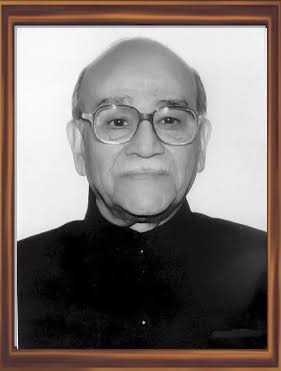


Pandit Sukhlal Sanghvi, famously known as Pandit Sukhlalji, was a towering Jain scholar, philosopher, linguist, and freedom-linked intellectual. Despite losing his eyesight at a young age, he mastered classical Indian philosophies, logic, and multiple ancient languages. He is widely celebrated as one of the most incisive modern interpreters of Jain philosophy and Indian epistemology.
2. Quick facts
- Full Name: Sukhlal Sanghvi (Pandit Sukhlalji)
- Native Name: পন্ডিত সুকলাল সংঘভী / पण्डित सुखलाल Sanghvi
- Date of birth: 8 December 1880
- Place Of birth: Limbdi (Limli), Saurashtra region, Gujarat, India
- Nationality: Indian
- Occupation/ Profession: Philosopher, Scholar, Writer, Editor, and Educator
- Field of Achievement: Jain Philosophy, Indian Logic (Nyaya), and Classical Literature
- Years Active: c. 1904–1978
3. Award Information
- Award Name: Padma Bhushan
- Award Category: Civilian Award (Literature and Education)
- Award Year: 1974
- Presented By: Government of India
- Date of Ceremony: 1974 (Annual national investiture ceremony at Rashtrapati Bhavan)
- Citation/Official Reason: In recognition of his monumental contributions to literature, philosophical scholarship, and education.
- Previous Recipient: Notable civilian honorees of the 1973/1974 national awards cycle
- Next Recipient: Subsequent honorees of the 1975 civilian awards cycle
4. Why they Receive the award?
Sanghvi received the Padma Bhushan for his lifelong dedication to unearthing, editing, and interpreting ancient philosophical texts, and for his unmatched scholarship in bridging traditional Indian systems of thought with modern critical analysis.
5. Early Life
Born into a modest merchant family in Limbdi, Gujarat, young Sukhlal faced a life-altering tragedy at the age of sixteen when a severe bout of smallpox completely robbed him of his eyesight. Instead of yielding to despair, he turned his handicap into an asset by developing an extraordinary memory. He began listening to scriptural discourses and treatises read out by others, sparking an unquenchable thirst for knowledge that defined his journey.
6. Education
- Absorbed early religious texts and scriptures through the assistance of readers and monastic discourses in Gujarat.
- Joined the Shri Yashovijaya Jain Sanskrit Pathshala in Varanasi (Benaras) in 1904, mastering Sanskrit grammar, poetry, and logic.
- Traveled to Mithila in 1911 to study advanced Navya-Nyaya (New Logic) under master scholars like Balakrishna Mishra.
- Earned the prestigious Nyayacharya degree, establishing supreme mastery over Indian logic systems.
7. Carrier Journey
- Editing and Translation (1910s–1920s): Worked across Varanasi, Agra, and Bombay, critically editing foundational Jain texts and canonical commentaries.
- Gujarat Vidyapith (1922): Invited by Mahatma Gandhi to serve as a professor at Gujarat Vidyapith in Ahmedabad, aligning academic pursuits with the national freedom movement.
- Banaras Hindu University (BHU) (1933–1944): Served as a Professor of Jain Philosophy, imparting rigorous traditional learning within a modern university framework.
- Bharatiya Vidya Bhavan (Post-1944): Continued his lifelong research, writing, and mentorship as an honorary lecturer and guiding spirit in Bombay and Ahmedabad.
8. Major Achievements
- Authored and co-authored over 30 authoritative books and numerous scholarly papers on Jainism, Buddhism, and comparative philosophy.
- Critically edited major historical philosophical works, including Haribhadra Suri’s Yogadarsana and Hemachandra’s treatises.
- Conferred the title Vidya Varidhi by Nav Nalanda Mahavihara in 1975.
- Honored with the Sahitya Akademi Award (Gujarat) for his profound literary contributions.
9. Contribution to the nation
Pandit Sukhlalji synthesized spiritual tradition with nationalist ideals. He actively participated in the Indian freedom struggle, spending time at Mahatma Gandhi’s Kocharab and Sabarmati Ashrams. By rescuing neglected historical manuscripts from obscurity and presenting them through a rational, secular, and comparative lens, he enriched India’s intellectual heritage and secular academic framework.
10. Other Awards and Honours
- Vijaydharma Suri Jain Literary Gold Medal (1947).
- Mahatma Gandhi Prize (1956): Awarded by the Rashtra Bhasha Prachar Samiti, Wardha.
- Honorary D.Litt. Degrees: Conferred by Gujarat University, Sardar Patel University, and Saurashtra University.
- Padma Bhushan (1974): Conferred by the Government of India.
11. Legacy and influence
Often described as a “Pragya-chakshu” (one whose inner wisdom serves as eyes), Pandit Sukhlalji left behind a generation of monastic and lay scholars whom he trained. His critical editing standards set a benchmark for Indological studies. The Jnanodaya Trust, founded using felicitation funds presented to him by the public, continues to support philosophical literature and research.
12. Interesting Facts
- Inner Vision: Despite total blindness from age 16, his auditory memory was so sharp that he could quote verses, page numbers, and complex commentaries from memory across multiple classical languages.
- Close Association with Gandhi: He shared a deep intellectual and personal bond with Mahatma Gandhi, often engaging in profound dialogues on ethics, non-violence (ahimsa), and Karma Yoga.
- The 75,000 Rupee Purse: When felicitated in Bombay during his 75th year with a purse of Rs 75,000, he did not keep a single rupee for personal use, immediately turning it over to establish a trust for educational and literary welfare.
13. Quotes
“True religion does not separate human beings through dogma; it unites them through universal compassion, self-restraint, and the pursuit of ultimate truth.” — Pandit Sukhlal Sanghvi
14. Timeline
- 1880: Born on December 8 in Limbdi, Gujarat.
- 1896: Lost his eyesight to smallpox; began his focused quest for auditory learning.
- 1904: Moved to Varanasi to study Sanskrit and Indian logic at Shri Yashovijaya Jain Pathshala.
- 1922: Joined Gujarat Vidyapith as a professor at the behest of Mahatma Gandhi.
- 1933–1944: Served as Professor of Jain Philosophy at Banaras Hindu University (BHU).
- 1974: Awarded the Padma Bhushan by the Government of India.
- 1978: Passed away on March 2 at the age of 97.
15. References
- Wikipedia contributors. “Sukhlal Sanghvi.” Wikipedia, The Free Encyclopedia.
- Encyclopedia of Jainism. “Pt. Sukhlal Sanghvi – Biography and Works.”
- Dalal, Roshen. The Religions of India: A Concise Guide to Nine Major Faiths. (Contextual mentions of modern Jain scholarship).
16. Related Personalities
- Mahatma Gandhi
- आचार्य महाप्रज्ञ (Acharya Mahapragya)
- Muni Punyavijaya
- Bechardas Doshi
- Pandit Dalsukh Malvania
17. Frequency Asked Questions (FAQ)
Q: Who was Sukhlal Sanghvi?
A: Pandit Sukhlal Sanghvi was a blind yet legendary Jain philosopher, scholar, and freedom movement associate who revolutionized the study and critical editing of ancient Indian texts.
Q: How did Pandit Sukhlalji study despite losing his vision?
A: After losing his eyesight to smallpox at age 16, he cultivated an extraordinary memory, relying on readers and auditory study to master Sanskrit, Prakrit, and complex systems of Indian logic.
Q: What major national awards did he receive?
A: He was honored with India’s third-highest civilian award, the Padma Bhushan, in 1974.
Q: What was his association with Mahatma Gandhi?
A: He worked closely with Gandhi during the freedom movement, serving as a professor at Gujarat Vidyapith and residing at the Sabarmati and Kocharab ashrams.
About the Author