
1. Introduction
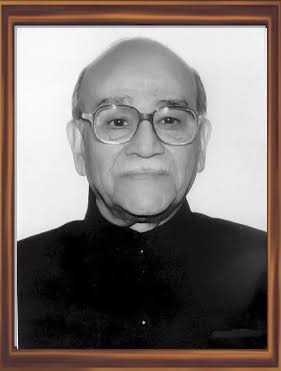
Dr. Syed Husain Zaheer (7 November 1901 – 22 December 1975) was a visionary Indian scientist and nationalist who served as the Director General of the Council of Scientific and Industrial Research (CSIR) from 1961 to 1966. A close associate of Prime Minister Jawaharlal Nehru, Dr. Zaheer bridged the worlds of freedom struggle activism and state-driven scientific institution building. He is widely remembered for democratizing scientific research environments, eliminating rigid bureaucratic hierarchies among researchers, and championing self-reliance in chemical technologies.
2. Quick Facts
- Full Name: Syed Husain Zaheer
- Native Name: سید حسین ظہیر
- Date of Birth: 7 November 1901
- Place Of Birth: Lucknow, United Provinces of Agra and Oudh, British India (now Uttar Pradesh, India)
- Nationality: Indian
- Occupation/Profession: Chemist, Freedom Fighter, Research Administrator, and Technocrat
- Field of Achievement: Chemical Sciences, Industrial Research and Development, and Science Policy
- Years Active: 1920s – 1970s
3. Award Information (Primary National Honor: Padma Bhushan)
- Award Name: Padma Bhushan
- Award Category: Civil Honour (Science and Engineering)
- Award Year: 1972
- Presented By: Government of India
- Date of Ceremony: Spring 1972 (Rashtrapati Bhavan)
- Citation/Official Reason: For distinguished service and pioneering contributions to the advancement of science, technology, and industrial research in India.
- Previous Recipients (Contextual): Notable leaders and scientists recognized in prior years of the Republic.
- Next Recipients: Subsequent panels of national civilian awardees.
4. Why He Received the Award
Dr. Zaheer was honored with the Padma Bhushan and other high honors for his monumental lifetime contributions to nation-building through science. Under his leadership, CSIR expanded its network and focus toward applied industrial solutions. He played a frontline role in synthesizing critical chemical intermediates locally, breaking foreign monopolies, and creating progressive administrative frameworks (such as flexible performance appraisals for scientists) that empowered generations of Indian researchers.
5. Early Life
Born into a notable family in Lucknow during the British Raj, Dr. Zaheer grew up amidst a politically active and culturally rich milieu. Rather than settling for a comfortable career under colonial rule, he deeply immersed himself in the Indian freedom movement as a young man, blending his passionate nationalism with an unwavering affinity for modern science and chemistry.
6. Education
- Undergraduate & Master’s Studies: Attended Lucknow University, where he built a solid foundation in chemical sciences.
- Higher Education Abroad: Moved to Europe to pursue advanced doctoral and post-graduate studies, attending prestigious institutions including Oxford University and Heidelberg University.
- Exposed to global breakthroughs in organic chemistry and chemical technology, which deeply influenced his future vision for India’s scientific infrastructure.
7. Career Journey
- Freedom Struggle & Academia: Actively participated in the Indian independence movement alongside nationalist leaders while continuing his scientific pursuits.
- Leadership at IICT: Served as the Director of the Indian Institute of Chemical Technology (IICT, then regional CSIR labs in Hyderabad), where he established the Department of Biochemistry.
- Director General of CSIR (1961–1966): Headed India’s apex R&D body, steering national policy toward heavy industry synchronization and import substitution.
- Post-Retirement & Higher Education: Post-CSIR, he chaired the Board of Governors of the Indian Institute of Technology (IIT), Kanpur, guiding premier technical education.
8. Major Achievements
- First Synthesis of Methaqualone (1951): Alongside collaborator Dr. Indra Kishore Kacker, he successfully synthesized methaqualone for the first time in India.
- Reforming Research Culture: Abolished traditional, stifling colonial hierarchies among scientists and championed a flexible merit-based assessment scheme (Flexible Compensating/Complementing Scheme) to encourage creativity.
- Institutional Builder: Scaled up indigenous capacities for drugs, dyes, and organic chemicals, minimizing post-independence foreign dependence.
9. Contribution to the Nation
Dr. Zaheer’s contributions were foundational to India’s technological sovereignty. By shifting laboratory objectives toward practical, problem-solving industrial research, he ensured that public-funded science directly addressed food, health, and manufacturing shortages. His structural reforms inside CSIR labs provided an egalitarian atmosphere where young Indian minds could innovate freely without bureaucratic hurdles.
10. Other Awards and Honours
- Shanti Swarup Bhatnagar Prize (1965): Awarded in the Chemical Sciences category by CSIR for his exceptional scientific output.
- Padma Bhushan (1972): Conferred by the President of India.
- Legacy Naming: The Indian National Science Academy (INSA) instituted the prestigious Syed Husain Zaheer Medal awarded biennially to recognize excellence in engineering and technology.
11. Legacy and Influence
Dr. Zaheer’s legacy lives on through the Zaheer Science Foundation (ZSF), a prominent think tank established in 1970 to evaluate science-society interfaces and promote science policy analysis. His institutional philosophies continue to guide science administrators on how to keep public research accountable to national development goals.
12. Interesting Facts
- He was a rare combination of a hardline political freedom fighter and an internationally trained physical-organic chemist.
- He was part of the inner intellectual circle surrounding India’s first Prime Minister, Jawaharlal Nehru, helping draft early frameworks for India’s Scientific Policy Resolution.
- Despite holding top-tier bureaucratic offices like the DG of CSIR, he remained deeply approachable, preferring informal, collaborative lab cultures over rigid office protocols.
13. Quotes
“If I had not possessed a sense of humour and had taken those jests seriously… I should have been a physical wreck. But, God be thanked, I have survived to see some of my dreams fulfilled with an inborn optimism and faith in my country’s future.” — Reflecting on his journey as a visionary scientist in early India.
14. Timeline
- 1901: Born on November 7 in Lucknow, British India
- 1951: Synthesized Methaqualone for the first time alongside I.K. Kacker
- 1961: Appointed as the Director General of CSIR
- 1965: Awarded the Shanti Swarup Bhatnagar Prize
- 1966: Completed his tenure as DG, CSIR
- 1972: Honored with the Padma Bhushan by the Government of India
- 1975: Passed away on December 22 at the age of 74
15. References
- Wikipedia Contributors — Syed Husain Zaheer.
- Zaheer Science Foundation Archives & Historical Documentation.
- Ministry of Home Affairs, Government of India — Padma Awards Directory.
16. Related Personalities
- Jawaharlal Nehru (First Prime Minister of India and champion of modern science infrastructure)
- Sir Shanti Swarup Bhatnagar (Pioneering chemist and founding director of CSIR)
- Dr. Indra Kishore Kacker (Co-researcher and chemical collaborator)
17. Frequently Asked Questions (FAQ)
- Q: What was Dr. Syed Husain Zaheer’s primary professional background?A: He was an accomplished organic chemist, freedom fighter, and science administrator who served as the Director General of CSIR.
- Q: What is Dr. Zaheer most famous for in chemistry?A: He is famously noted for being the first to synthesize methaqualone in India in 1951 alongside Dr. I.K. Kacker.
- Q: What major structural reform did he introduce in Indian laboratories?A: He is credited with abolishing rigid administrative hierarchies among scientists and launching flexible assessment schemes to incentivize creative research.
About the Author