
1. Introduction
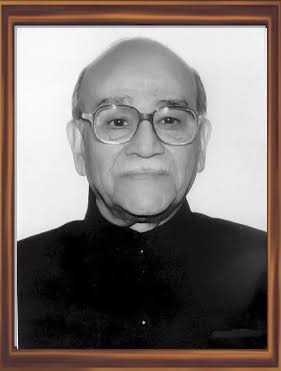
Ramrao Madhavrao Deshmukh (widely known as Annasaheb Deshmukh) was a pioneering Indian politician, diplomat, and academic administrator from Amravati, Maharashtra. As one of the very few qualified Barristers from the Berar region during the British Raj, he left an indelible mark on pre- and post-independent India through his service as a provincial minister, princely state administrator, diplomat, and Member of Parliament in the Rajya Sabha.
2. Quick Facts
- Full Name: Ramrao Madhavrao Deshmukh (Annasaheb Deshmukh)
- Native Name: रामराव माधवराव देशमुख
- Date of Birth: 25 November 1892
- Place of Birth: Pimplod, Berar Province, British India
- Nationality: Indian
- Occupation/Profession: Politician, Barrister, Diplomat, Academic Administrator
- Field of Achievement: Public Administration, Law, and Diplomacy
- Years Active: 1920–1964
3. Award Information
- Award Name: Padma Bhushan
- Award Category: Civil Honour (Third-Highest Civilian Award in India)
- Award Year: 1971
- Presented By: Government of India (President of India)
- Date of Ceremony: Republic Day Honours List, 1971
- Citation/Official Reason: Recognized for distinguished service in public affairs, law, and state administration.
- Previous Recipients: Eminent leaders, jurists, and public servants of India.
- Next Recipients: Notable figures of subsequent annual civilian honours lists.
4. Why He Received the Award
Ramrao Deshmukh was awarded the Padma Bhushan in recognition of his decades-long, multifaceted public service to the nation. From shaping legislative policies in the Central Provinces and Berar to serving internationally as India’s High Commissioner to South Africa and functioning as a parliamentarian in independent India’s Rajya Sabha, his career encapsulated profound administrative capability and statecraft.
5. Early Life
Born on November 25, 1892, in Pimplod within the Berar region of British India, Ramrao grew up during a period of rising nationalist consciousness. He belonged to a respected land-owning family, with his father being Madhavrao Shankerrao Deshmukh. His early exposure to rural realities combined with elite English education shaped his progressive outlook and passion for public law and equity.
6. Education
- Schooling: Completed preliminary education locally in the Berar region.
- Higher Education (India): Attended King Edward’s College in Amravati.
- Higher Education (Abroad): Traveled to the United Kingdom to study at the University of Cambridge (Jesus / King’s or related colleges associated with Cantab studies) and qualified as a Barrister-at-Law, earning his M.A. and LL.B. (Cantab).
7. Career Journey
- Legislative Council (1920–1941): Elected multiple times as a member of the Central Provinces and Berar Legislative Council, where he served spells as a government minister handling key portfolios (1927–1928, 1929–1930, and 1937–1938).
- Central Legislative Assembly (1926–1927): Represented his constituency at the federal level in British India.
- Princely State Administration: Served as a Minister in Gwalior State (1941–1944) and later as the Prime Minister of Rewa State (1947–1948) during the turbulent partition and integration era.
- Diplomatic Service (1945–1947): Appointed as the High Commissioner for British India in the Union of South Africa, navigating tense geopolitical and racial dynamics concerning the Indian diaspora.
- Rajya Sabha (1952–1964): Transitioned into independent India’s parliament, serving two consecutive terms as a Member of Parliament in the Rajya Sabha.
8. Major Achievements
- Ranked among the very few locally rooted Barristers to transition successfully between British-administered provincial governance, princely states, and sovereign Indian parliamentarianism.
- Stepped into high-stakes international diplomacy as India’s representative in South Africa right before the formal onset of apartheid and Indian independence.
- Administered complex territorial integration policies as the Prime Minister of Rewa State just prior to its accession into the Union of India.
9. Contribution to the Nation
Ramrao Deshmukh’s contributions spanned institution-building across multiple dimensions of Indian governance. As a legislator, he championed agrarian and regional rights. As an administrator in Gwalior and Rewa, he managed administrative transitions smoothly. As a diplomat in South Africa, he stood up for the rights of overseas Indians, and as a founding parliamentarian in the Rajya Sabha, he helped draft and debate statutory frameworks for the newly born republic.
10. Other Awards and Honours
- Padma Bhushan (1971): Conferred by the President of India for exceptional service to the nation.
- Recognized across Central India and Maharashtra for his foundational legal acumen and leadership in educational trusts.
11. Legacy and Influence
Deshmukh is remembered as a statesman who bridged the gap between colonial-era administrative structures and democratic governance in India. His family and descendants continued his legacy of community development—notably his son Shashikumar (Shankarrao) Deshmukh, who helped found the Vidarbha Youth Welfare Society. His life remains a study in high-level legal advisory, political negotiation, and cross-border diplomacy.
12. Interesting Facts
- He held ministerial and executive roles under both British colonial authorities and independent Indian democratic frameworks, reflecting rare cross-era acceptability.
- He served as the top diplomat (High Commissioner) in South Africa during a critical window when Mahatma Gandhi’s legacy in the region was deeply relevant to Indian foreign policy.
- Despite spending years in high offices across various states, his roots remained strongly anchored to Amravati and the Berar cultural sphere.
13. Quotes
“True statecraft requires balancing the immediate grievances of the public with the long-term structural integrity of the institutions we build.” — Ramrao Deshmukh (Reflecting his administrative philosophy)
14. Timeline
| Year | Milestone |
| 1892 | Born on November 25 in Pimplod, Berar Province. |
| 1910s | Studied at King Edward’s College, Amravati, and later at Cambridge University to qualify as a Barrister. |
| 1920–1925 | Began active legislative career as a member of the Central Provinces and Berar Legislative Council. |
| 1927–1938 | Served multiple terms as a provincial Government Minister. |
| 1941–1944 | Served as a Minister in Gwalior State. |
| 1945–1947 | Appointed High Commissioner for India in the Union of South Africa. |
| 1947–1948 | Served as Prime Minister of Rewa State during India’s independence transition. |
| 1952–1964 | Served two continuous terms as a Member of Parliament in the Rajya Sabha. |
| 1971 | Honored with the Padma Bhushan by the Government of India. |
| 1981 | Passed away on April 20 in Amravati, Maharashtra, at the age of 88. |
15. References
- National Informatics Centre (Digital Sansad) – Rajya Sabha Member Profile Archives.
- World Biographical Encyclopedia (Prabook) – Ramrao Deshmukh Profile.
- Ministry of Home Affairs, Government of India – Padma Awards Directory.
- Wikipedia contributors. “Ramrao Deshmukh.” Wikipedia, The Free Encyclopedia.
16. Related Personalities
- Mahatma Gandhi – Contemporaneous leader whose movements heavily influenced South African Indian diplomacy and Indian independence.
- Dr. B. R. Ambedkar – Legal contemporary and prominent Maharashtrian jurist/statesman of the era.
- Shashikalabai Kadam – Spouse.
- Shankarrao Deshmukh – Son and institutional founder within Maharashtra.
17. Frequently Asked Questions (FAQ)
Q: Who was Ramrao Deshmukh?
A: Ramrao Madhavrao Deshmukh was a prominent Indian politician, barrister, diplomat, and Member of the Rajya Sabha from Amravati, Maharashtra.
Q: What major international role did he hold?
A: He served as the High Commissioner for British India in the Union of South Africa between 1945 and 1947.
Q: Did he serve as a Prime Minister of a princely state?
A: Yes, he served as the Prime Minister of Rewa State from 1947 to 1948.
Q: When was he honored with the Padma Bhushan?
A: He received the Padma Bhushan from the Government of India in 1971.
About the Author