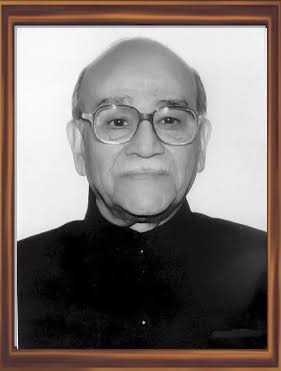

Dr. Mahesh Prasad Mehray (1900–1974) was a legendary Indian ophthalmologist, visionary humanitarian, and the pioneering founder of the globally acclaimed Sitapur Eye Hospital. At a time when advanced medical infrastructure was non-existent in rural India, Dr. Mehray embarked on a lifelong mission to combat preventable blindness. Starting from a humble thatched shed in a small town, his relentless dedication transformed a local initiative into one of the world’s most extensive eye-care networks. His life stands as a testament to the power of grassroots medical missionary work, self-reliance, and profound compassion for the underserved.
2. Quick Facts
- Full Name: Dr. Mahesh Prasad Mehray
- Native Name: महेश प्रसाद मेहray (Hindi)
- Date of Birth: 1900
- Place of Birth: Prayagraj (formerly Allahabad), Uttar Pradesh, India
- Nationality: Indian
- Occupation / Profession: Ophthalmologist / Medical Surgeon
- Field of Achievement: Ophthalmology & Rural Healthcare Development
- Years Active: 1926–1974
3. Award Information (Primary: Padma Bhushan)
- Award Name: Padma Bhushan
- Award Category: Civil Honours / Medicine
- Award Year: 1970
- Presented By: Government of India (President of India)
- Date of Ceremony: January 26, 1970 (Republic Day Honours)
- Citation / Official Reason: For exceptional and distinguished contributions to medical science and public healthcare.
4. Why He Received the Award
Dr. Mehray was honored with India’s prestigious civilian and medical accolades because he single-handedly revolutionized rural eye care. By establishing the Sitapur Eye Hospital network, he brought sight to millions of impoverished and rural citizens who would have otherwise suffered lifelong blindness due to lack of timely interventions. His pioneering implementation of tiered healthcare—where paying patients subsidized free care for the poor—created a sustainable blueprint for humanitarian medicine.
5. Early Life
Born in 1900 in Allahabad (now Prayagraj), Uttar Pradesh, Dr. Mehray grew up during a period when modern healthcare facilities were heavily concentrated in major urban hubs, leaving rural populations completely vulnerable. Gifted with a strong sense of empathy and determination, he chose a path of service over personal comfort, setting the stage for his future life’s calling. He later married Gopi Rani, who supported him through the arduous journey of building his medical mission.
6. Education
- Schooling & Basic Studies: Completed his foundational education in Uttar Pradesh.
- Medical Graduation: Earned his medical degree (MBBS equivalent) from the prestigious King George’s Medical College (KGMC) in Lucknow.
- Specialization: Pursued advanced training in ophthalmology at the Egmore Ophthalmic Training Centre in Madras (Chennai).
- Global Studies: Traveled to Vienna, Austria, in 1935 to complete advanced specialized studies in advanced eye surgery and ophthalmic techniques.
7. Career Journey
- Humble Beginnings (1926): Began his career as a government medical officer at a small District Board Dispensary in Khairabad, Sitapur district.
- The Turning Point: Deeply moved by the massive volume of untreated eye ailments and preventable blindness, he began offering specialized eye treatments out of temporary thatched sheds.
- Expansion: As patients flocked from across India, he shifted operations to Sitapur in 1943, systematically expanding the infrastructure into a massive multi-facility hospital network.
8. Major Achievements
- Founder of Sitapur Eye Hospital: Scaled a tiny dispensary clinic into a massive multi-thousand-bedded institution with dozens of regional branches across Uttar Pradesh and Uttarakhand.
- Pioneer of Community Ophthalmology: Created an effective framework for mass cataract surgeries and rural outreach camps long before modern mobile eye hospitals became standard practice.
- Institutional Development: Established specialized training structures that evolved into regional hubs for ophthalmic research and education.
9. Contribution to the Nation
Dr. Mehray’s work fundamentally altered India’s public health landscape by addressing the leading causes of avoidable blindness. He institutionalized large-scale medical camps, making sight restoration accessible to the poorest of the poor. His model demonstrated how dedicated public health stewardship could bridge the severe healthcare divide between urban centers and rural villages.
10. Other Awards and Honours
- Padma Shri (1955): Awarded by the Government of India for pioneering medical services.
- Dr. B. C. Roy Award: The highest medical award in India, presented by the Medical Council of India.
- Rustom Merwaniji Alpaiwalla Award: Honoring contributions to social welfare and humanitarian service.
- British Era Titles: Conferred colonial-era honorific titles including Rai Sahib and Rai Bahadur in acknowledgment of his exemplary public service.
11. Legacy and Influence
Dr. Mehray’s legacy lives on through the Sitapur Eye Hospital network, which continues to treat hundreds of thousands of patients annually. In his honor, the institution established the Dr. M. P. Mehray Institute of Community Ophthalmology, ensuring that generations of future eye specialists are trained in community-centric service. He is remembered universally as a “saint among physicians.”
12. Interesting Facts
- Thatched Roof Beginnings: The world-famous Sitapur Eye Hospital originally started inside crude, temporary straw and mud huts to shelter incoming patients.
- Unflinching Focus: Despite receiving high-ranking government titles and national civilian honors, Dr. Mehray lived a remarkably austere life, dedicating every waking hour entirely to his patients.
- Global Footprint from a Small Town: He uniquely managed to put a small, obscure rural town like Sitapur firmly on the global medical map.
13. Quotes
“Life is worth living so long as there is service to be performed for those who are in need and bodily ailments to be cured.” — Dr. Mahesh Prasad Mehray
14. Timeline
- 1900: Born in Allahabad, British India.
- 1926: Began medical service in Khairabad and founded the initial eye care clinic in thatched sheds.
- 1935: Completed advanced specialized studies in ophthalmology in Vienna.
- 1943: Relocated and expanded the hospital operations to its primary permanent location in Sitapur.
- 1955: Awarded the Padma Shri by the Government of India.
- 1970: Conferred the Padma Bhushan.
- 1974: Passed away, leaving behind an immortal medical legacy.
15. References
- Wikipedia contributors. “Mahesh Prasad Mehray.” Wikipedia, The Free Encyclopedia.
- Sitapur Eye Hospital Official Archives. “Brief History of our Eye Hospital & Founder Dr. Mahesh Prasad Mehray.”
- Indian Journal of Ophthalmology. “Dr. Mahesh Prasad Mehray: The Maverick and his Muse.”
16. Related Personalities
- Dr. Bidhan Chandra Roy – Legendary physician and statesman.
- Sir Henry Holland – Renowned missionary eye surgeon in colonial India.
- Dr. M. C. Modi – Iconic mass-camp eye surgeon of India.
17. Frequently Asked Questions (FAQ)
- Q: Who was Dr. Mahesh Prasad Mehray?
- A: He was a renowned Indian ophthalmologist who founded the Sitapur Eye Hospital, dedicating his life to eliminating rural blindness.
- Q: When was the Sitapur Eye Hospital founded?
- A: It was founded in 1926 initially as a modest clinic in Khairabad, Uttar Pradesh.
- Q: What major civilian awards did Dr. Mehray receive?
- A: He received the Padma Shri in 1955 and the Padma Bhushan in 1970, alongside the prestigious Dr. B. C. Roy Award.
About the Author