
1. Introduction
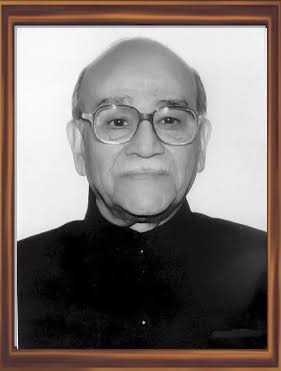
Dr. Purushottam Kashinath Kelkar, fondly remembered as P. K. Kelkar, was a pioneering Indian scientist, educator, and institutional builder. He is celebrated universally as the founding director of the Indian Institute of Technology (IIT) Kanpur, an institution he shaped into a global hub of scientific and engineering excellence. A true visionary who believed that science provides the brain, engineering the muscle, and humanities the heart of development, Dr. Kelkar laid the robust foundation for modern technical education in independent India.
2. Quick Facts
- Full Name: Purushottam Kashinath Kelkar
- Native Name: पुरुषोत्तम काशीनाथ केळकर
- Date of Birth: June 1, 1909
- Place of Birth: Dharwar, Bombay Presidency, British India (now Karnataka)
- Nationality: Indian
- Occupation / Profession: Electrical Engineer, Educator, Academic Administrator
- Field of Achievement: Technical Education and Institution Building
- Years Active: c. 1937 – 1974
3. Award Information
- Award Name: Padma Bhushan
- Award Category: Civilian Award (Third Highest Civilian Award in India)
- Award Year: 1970
- Presented By: Government of India
- Date of Ceremony: 1970 (In accordance with annual Rashtrapati Bhavan investiture announcements)
- Citation / Official Reason: For his pioneering, exceptional contributions and distinguished service to the field of technical education and nation-building.
- Previous Recipients (Optional): Eminent scientists, educators, and public servants recognized in preceding years.
- Next Recipients: Succeeding batches of national icons and leaders honored in subsequent years.
4. Why He Received the Award
Dr. P. K. Kelkar received the Padma Bhushan in recognition of his monumental role in transforming India’s technical education landscape. He was honored for his visionary leadership as the founding director of IIT Kanpur, his foundational planning contributions to IIT Bombay, and his persistent efforts to integrate deep scientific research, rigorous engineering curricula, and humanistic studies into higher education.
5. Early Life
Born in Dharwar into a Marathi-speaking family—his father, Kashinath Hari Kelkar, was a professor of philosophy—young Purushottam grew up in an environment that deeply valued academic inquiry and discipline. Because of his father’s frequent professional transfers, he spent his formative elementary and secondary school years moving across Mumbai and Pune, cultivating a sharp, analytical mind suited for the exact sciences.
6. Education
- Undergraduate Degree: Graduated with honors in Physics from the Royal Institute of Science, Mumbai in 1931.
- Electrical Engineering Diploma: Completed his diploma in Electrical Engineering from the Indian Institute of Science (IISc), Bangalore in 1934.
- Doctorate (Ph.D.): Earned his Ph.D. in Electrical Engineering from the University of Liverpool, UK in 1937 under the supervision of Dr. J.C. Prescott, supported by a scholarship from the Ichalkaranji Trust.
7. Career Journey
- Early Academic Roles: Began his career as a lecturer in Electrical Engineering at IISc, Bangalore (1937–1943), working alongside luminaries like C.V. Raman.
- VJTI Tenure: Served as Professor and Head of the Electrical Engineering Department at the Victoria Jubilee Technical Institute (VJTI) in Mumbai from 1956.
- The IIT Blueprint: Appointed as a planning officer and later Deputy Director during the establishment of IIT Bombay (collaborating with UNESCO and the USSR).
- Founding Director of IIT Kanpur (1959–1969): Appointed as the first director of IIT Kanpur, where he architected its revolutionary curriculum.
- Return to IIT Bombay: Served as the Director of IIT Bombay from 1970 to 1974, steering its expansion before retiring.
8. Major Achievements
- Founding IIT Kanpur: Built IITK from scratch, steering it away from traditional colonial academic models and introducing a modern interdisciplinary framework.
- The Kanpur Indo-American Program (KIAP): Successfully negotiated and established a unique consortium of nine top-tier US universities (including MIT, UC Berkeley, and Caltech) to assist IIT Kanpur in faculty development and advanced lab structuring.
- Curricular Innovation: Pioneered the integration of humanities, social sciences, and basic sciences as mandatory core components of engineering education in India.
- Padma Bhushan (1970): Conferred national recognition for his exceptional service to Indian education.
9. Contribution to the Nation
Dr. Kelkar institutionalized world-class engineering education in India, ensuring that the nation’s premier technological institutes produced not just mechanical technical workers, but innovative problem-solvers and critical thinkers. By bridging international academic partnerships with rigorous indigenous standards, he supplied the technical brainpower that drove India’s post-independence industrial, space, and information technology sectors.
10. Other Awards and Honours
- P. K. Kelkar Library: In 2002, IIT Kanpur renamed its central library in his honor as a testament to his legacy.
- P. K. Kelkar Chair & Fellowships: Multiple endowed faculty chairs and student fellowships are maintained in his name across the IIT system.
- National Commemorations: Widely memorialized across IIT alumni networks globally as the patriarch of modern Indian technological education.
11. Legacy and Influence
Dr. Kelkar’s legacy lives on in every classroom, laboratory, and research cell across India’s IIT network. He broke away from rigid, archaic British educational conventions, proving that engineering institutions must foster independent inquiry, freedom of thought, and societal relevance. His pedagogical philosophy continues to guide top-tier institutions worldwide through the achievements of his alumni.
12. Interesting Facts
- Just before completing his doctoral thesis at Liverpool, a massive laboratory fire destroyed a significant portion of his research data; undeterred, he rebuilt his models and repeated the experimental work from scratch.
- He famously remarked that while “engineering is the muscle for development, science is the brain, and humanities provide the heart”—a philosophy that forced engineering students to study literature, philosophy, and social structures.
- He played a key diplomatic role in convincing then-US Ambassador John Kenneth Galbraith to back IIT Kanpur with American institutional support.
13. Quotes
“If engineering is the muscle for national development, science is the brain. But it is only with the humanities that engineering education can have a heart, making its applications truly relevant to social needs.” — Dr. P. K. Kelkar
14. Timeline
- 1909: Born on June 1 in Dharwar, Karnataka.
- 1937: Completes his Ph.D. in Electrical Engineering from the University of Liverpool.
- 1956: Joins the foundational planning team for IIT Bombay.
- 1959: Appointed as the first Director of IIT Kanpur.
- 1970: Conferred the Padma Bhushan by the Government of India; assumes office as Director of IIT Bombay.
- 1974: Retires from active administrative leadership.
- 1990: Passes away on October 23 in Mumbai, leaving behind an immortal institutional legacy.
15. References
- Wikipedia Biographical Entries on P. K. Kelkar.
- IIT Kanpur DORA (Dean of Resources and Alumni) Archives & Fellowships.
- Ministry of Home Affairs, Government of India (Padma Awards Directory – 1970 records).
- Historical documentation on the Kanpur Indo-American Program (KIAP).
16. Related Personalities
- John Kenneth Galbraith (US Ambassador who aided IIT Kanpur)
- C. V. Raman (Colleague at IISc Bangalore)
- J.C. Prescott (Ph.D. advisor at Liverpool)
- Homi Bhabha
17. Frequently Asked Questions (FAQ)
Q1: Who was Dr. P. K. Kelkar?
A: Dr. P. K. Kelkar was a legendary Indian electrical engineer, educator, and administrator best known as the founding director of IIT Kanpur and the third director of IIT Bombay.
Q2: What are Dr. P. K. Kelkar’s major contributions to education?
A: He revolutionized Indian technical education by shaping IIT Kanpur with a curriculum rooted in science, engineering, and the humanities, and by initiating international academic collaborations like the Kanpur Indo-American Program (KIAP).
Q3: When did Dr. P. K. Kelkar receive the Padma Bhushan?
A: He was honored with the Padma Bhushan by the Government of India in the year 1970 for his pioneering contributions to higher education.
About the Author