
1. Introduction
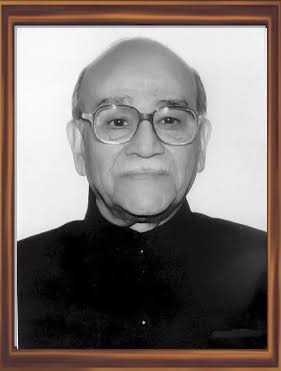
Naval Hormusji Tata was a prominent Indian industrialist, philanthropist, sports administrator and labour-relations leader. He was an important member of the Tata family and played a significant role in the development of Indian industry, labour management and sports administration.
Born on 30 August 1904, Naval Tata experienced financial hardship during his childhood and later became part of the Tata family through adoption by Lady Navajbai Tata. His difficult early years strongly influenced his personality and his concern for workers and people from disadvantaged backgrounds.
Naval Tata joined the Tata organisation in 1930 and gradually rose through important positions in the group. Beyond business, he became deeply involved in industrial relations, the International Labour Organization, hockey administration, social welfare and philanthropy.
He was awarded the Padma Bhushan in 1969 in recognition of his contribution to social work and public life. He also received the Sir Jehangir Ghandy Medal for Industrial Peace for his contribution to industrial relations.
Naval Tata died on 5 May 1989, leaving behind a legacy that extended far beyond business. He is also remembered as the father of Ratan Tata and as one of the important figures who helped shape the Tata group’s values of social responsibility, labour welfare and public service.
2. Quick Facts
| Particular | Information |
|---|---|
| Full Name | Naval Hormusji Tata |
| Native Name | Naval Hormusji Tata |
| Date of Birth | 30 August 1904 |
| Place of Birth | Surat, Bombay Presidency, British India |
| Nationality | Indian |
| Occupation / Profession | Industrialist, philanthropist, sports administrator and labour-relations leader |
| Fields of Achievement | Industry, labour relations, sports administration, social welfare and philanthropy |
| Years Active | 1930–1989 |
| Date of Death | 5 May 1989 |
| Major National Honour | Padma Bhushan |
| Padma Bhushan Year | 1969 |
Naval Tata was born into a middle-class family. His father, Hormusji Tata, worked as a spinning master and died when Naval was only a young child. His family subsequently faced financial difficulties. Naval later entered the J. N. Petit Parsi Orphanage and was adopted by Lady Navajbai Tata when he was 13. AAgritech TNAU+1
3. Award Information
Padma Bhushan
Award Name
Padma Bhushan
Award Category
Social Work
Naval Tata was listed among the Padma Bhushan recipients of 1969 under the field of Social Work.
Award Year
1969
Presented By
The President of India
Date of Ceremony
The award was associated with Republic Day, 1969. Reference material from the Tata archives states that Naval Tata received the Padma Bhushan from the President of India on Republic Day in 1969. TTata Central Archives
Citation / Official Reason
The honour recognised Naval Tata’s wider contribution to Indian society, particularly his work in social welfare, industrial relations, labour welfare and public service.
His contribution to labour relations was especially significant. He worked for decades to promote cooperation between employers and workers and participated in national and international organisations dealing with labour issues.
Previous Recipients
The Padma Bhushan was established in 1954 and has been awarded to individuals for distinguished service in different fields. Naval Tata was among the recipients in the 1969 awards.
Next Recipients
The Padma Bhushan has continued to be awarded annually to distinguished individuals in fields including social work, public affairs, trade and industry, medicine, arts, literature and education, science and engineering and other areas.
4. Why Did Naval Tata Receive the Award?
Naval Tata received the Padma Bhushan in 1969 because of his significant contribution to society and public life.
His work went beyond managing businesses. He devoted considerable attention to:
- Labour welfare and industrial relations
- Improving cooperation between employers and employees
- Social and charitable activities
- Sports administration
- Indian hockey
- Personnel management
- International labour affairs
- Philanthropic institutions
- Public welfare
Naval Tata was particularly respected for his ability to communicate with people from different backgrounds. He believed that employers, employees and governments could work together to find fair and practical solutions to industrial problems.
5. Early Life
Naval Hormusji Tata was born on 30 August 1904 in Surat.
His father, Hormusji Tata, was a spinning master associated with the textile industry. Naval lost his father when he was only about four years old. After this tragedy, the family experienced financial difficulties.
His childhood was therefore very different from the wealthy lifestyle commonly associated with the Tata family. He spent part of his childhood at the J. N. Petit Parsi Orphanage.
A major turning point came when Lady Navajbai Tata, the wife of Sir Ratan Tata, adopted Naval when he was 13 years old. This brought him into the Tata household and gave him new educational and professional opportunities. TTata Central Archives+1
Naval never forgot the hardships of his childhood. His experience of poverty influenced his later interest in workers, social welfare and philanthropy.
6. Education
Naval Tata graduated from Bombay University, where he studied economics.
After completing his university education, he travelled to England and undertook a short course in accountancy.
His education helped prepare him for a career in business and administration. However, much of his later expertise was developed through practical experience in the Tata organisation, labour organisations and international institutions.
7. Career Journey
Naval Tata began his career with the Tata organisation in 1930.
He initially joined as a despatch clerk-cum-assistant secretary, reportedly earning a monthly salary of Rs. 150. His career progressed steadily over the following decades.
Major stages of his career
1930 – Joining the Tata organisation
Naval Tata entered the Tata organisation and began working in a relatively junior position.
1933 – Aviation Department
He became secretary to the Tata aviation department.
Late 1930s – Textile Business
He moved into the textile operations of the Tata group and took on increasing managerial responsibility.
1939 – Textile Companies
He became managing director of Tata’s textile companies.
1941 – Tata Sons
He became a director of Tata Sons, the principal holding company of the Tata group.
1946 – International Labour Organisation
Naval Tata represented the Indian textile industry at an International Labour Organization meeting in Geneva. This marked an important stage in his involvement with labour relations.
1951 onwards – ILO
He became a member of the governing body of the International Labour Organization and remained associated with it for decades.
1959–1985 – Employers’ Federation of India
He served as president of the Employers’ Federation of India for many years.
1961 – Tata Electric Companies
He became chairman of Tata Electric Companies, now associated with Tata Power.
1962 – Tata Sons
He became deputy chairman of Tata Sons.
1965 onwards – Sir Ratan Tata Trust
He became chairman of the Sir Ratan Tata Trust and remained involved with its activities until his death.
Naval Tata’s career therefore combined business leadership with labour relations, social service, sports and philanthropy.
8. Major Achievements
Naval Tata achieved distinction in several different areas.
1. Leadership in the Tata Group
He held senior positions in Tata companies and became a director of Tata Sons.
2. Labour Relations
One of his most important contributions was in the field of industrial relations. He worked to improve understanding between employers and workers.
3. International Labour Organisation
Naval Tata was associated with the ILO for more than three decades and represented Indian interests in international labour discussions.
4. Employers’ Federation of India
He served as president of the Employers’ Federation of India from 1959 to 1985.
5. Indian Hockey
Naval Tata was president of the Indian Hockey Federation from 1946 to 1961. During his tenure, Indian hockey enjoyed an exceptionally successful period, including three consecutive Olympic gold medals.
6. Sports Administration
He became the first president of the All India Council for Sports and also served as vice chairman of the International Hockey Federation.
7. Indian Cancer Society
He was chairman of the Indian Cancer Society from its establishment in 1951 until his death in 1989.
8. Personnel Management
Naval Tata played an important role in establishing the National Institute of Labour Management, which later became associated with the National Institute of Personnel Management.
9. Padma Bhushan
He received one of India’s major civilian honours, the Padma Bhushan, in 1969.
9. Contribution to the Nation
Naval Tata’s contribution to India can be understood through several areas.
Labour Welfare
Naval Tata believed that industrial development should involve responsible relationships between employers and employees. He worked to reduce industrial disputes and encourage negotiation and cooperation.
Industry
Through his senior positions within Tata companies, he contributed to the development and management of Indian industry during an important period of economic transformation.
Sports
His leadership in Indian hockey helped strengthen the organisation and administration of the sport. He also promoted sports through his involvement in national sports organisations.
Social Welfare
He was involved with charitable organisations and welfare institutions and served as chairman of the Sir Ratan Tata Trust.
Healthcare
His association with the Indian Cancer Society demonstrated his interest in healthcare and public welfare.
International Representation
Through his long association with the ILO and international employers’ organisations, he helped represent Indian perspectives in global labour discussions.
10. Other Awards and Honours
Apart from the Padma Bhushan, Naval Tata received several recognitions during his lifetime.
Sir Jehangir Ghandy Medal for Industrial Peace
Naval Tata received the Sir Jehangir Ghandy Medal for Industrial Peace in recognition of his contribution to industrial relations and peace. The honour was awarded in 1968. Nnipmmumbai.in
Honorary Life Membership of NIPM
He was also recognised by the personnel-management profession and received Honorary Life Membership of the National Institute of Personnel Management in 1989.
11. Legacy and Influence
Naval Tata’s legacy is unusual because his influence extended across several fields.
He was not only a businessman. He was also a labour-relations expert, sports administrator, philanthropist and social worker.
His greatest legacy may be his belief that business should have a wider social purpose. His approach to labour relations emphasised dialogue, fairness and cooperation.
His influence is also remembered through institutions and initiatives that carry his name. One prominent example is the Naval Tata Hockey Academy, established in Jamshedpur by Tata Trusts and Tata Steel to promote hockey and develop young players. The academy was established in 2017 and was named in recognition of Naval Tata’s contribution to Indian hockey.
His legacy also continues through the Tata family’s emphasis on philanthropy, social responsibility, sports and community development.
12. Interesting Facts About Naval Tata
- Naval Tata was born into a middle-class family rather than being raised in the wealthy environment commonly associated with the Tata family.
- His father died when Naval was a young child.
- He spent part of his childhood at the J. N. Petit Parsi Orphanage.
- Lady Navajbai Tata adopted him when he was 13.
- He graduated from Bombay University in economics.
- He studied accountancy in England.
- He joined the Tata organisation in 1930.
- He began his Tata career in a relatively junior position.
- He eventually became a director of Tata Sons.
- He was deeply involved in labour relations.
- He was associated with the International Labour Organization for decades.
- He served as president of the Indian Hockey Federation for 15 years.
- He was the first president of the All India Council for Sports.
- He was chairman of the Indian Cancer Society for many years.
- He was the father of Ratan Tata, Jimmy Tata and Noel Tata.
- He received the Padma Bhushan in 1969.
- He died on 5 May 1989.
13. Quotes
One of Naval Tata’s most memorable statements reflects how his difficult childhood shaped his personality:
“I am grateful to God for giving me an opportunity to experience the pangs of poverty, which more than anything else moulded my character.”
This statement provides an important insight into his philosophy. Rather than allowing childhood hardship to become a limitation, Naval Tata viewed it as an experience that shaped his character and strengthened his understanding of disadvantaged people.
His approach to labour relations can also be summarised through the principle that employers, workers and governments should seek equitable solutions through responsible negotiation and cooperation.
14. Timeline of Naval Tata’s Life
| Year | Event |
|---|---|
| 1904 | Naval Hormusji Tata was born on 30 August in Surat. |
| 1908 | His father died when Naval was a young child. |
| Childhood | His family experienced financial difficulties. |
| Teenage years | Naval stayed at the J. N. Petit Parsi Orphanage. |
| 1917 approx. | Lady Navajbai Tata adopted Naval at the age of 13. |
| 1920s | He completed his education and graduated from Bombay University. |
| 1920s/1930s | He travelled to England for an accountancy course. |
| 1930 | Joined the Tata organisation. |
| 1933 | Became secretary of the Tata aviation department. |
| 1939 | Became managing director of Tata textile companies. |
| 1941 | Became a director of Tata Sons. |
| 1946 | Began representing Indian textile interests at the ILO. |
| 1946–1961 | Served as president of the Indian Hockey Federation. |
| 1951 | Became associated with the ILO governing body and helped develop labour-management institutions. |
| 1951 onwards | Became chairman of the Indian Cancer Society. |
| 1959–1985 | Served as president of the Employers’ Federation of India. |
| 1961 | Became chairman of Tata Electric Companies. |
| 1962 | Became deputy chairman of Tata Sons. |
| 1965 | Became chairman of the Sir Ratan Tata Trust. |
| 1968 | Received the Sir Jehangir Ghandy Medal for Industrial Peace. |
| 1969 | Received the Padma Bhushan. |
| 1989 | Received honorary life membership of the National Institute of Personnel Management. |
| 5 May 1989 | Naval Tata passed away. |
| 2017 | The Naval Tata Hockey Academy was established in his honour. |
15. References
For a blog article, the following institutions and reference materials are useful for verification:
- Tata Group historical profile of Naval Tata
- Tata Central Archives
- Tata Trusts
- National Institute of Personnel Management
- Padma Awards records
- Historical records relating to the International Labour Organization
- Historical records of Indian hockey and sports administration
16. Related Personalities
Naval Tata’s life and career are connected with several important personalities in Indian business and public life.
Jamsetji Tata
The founder of the Tata Group and one of the pioneers of Indian industrialisation. Naval Tata belonged to the wider Tata family and continued the group’s tradition of combining business with social responsibility.
Sir Ratan Tata
Sir Ratan Tata was an important member of the Tata family. Naval Tata was adopted into his household by Lady Navajbai Tata.
Lady Navajbai Tata
Lady Navajbai Tata played a decisive role in Naval Tata’s life by adopting him when he was 13. Her decision transformed his future.
J. R. D. Tata
J. R. D. Tata was one of the most influential leaders of the Tata Group during the twentieth century. He and Naval Tata were contemporaries and both played important roles in the Tata organisation.
Ratan Tata
Ratan Tata, Naval Tata’s son, later became one of India’s best-known industrial leaders and chairman of Tata Sons.
Noel Tata
Noel Tata is another son of Naval Tata and has held important leadership positions within the Tata group.
17. Frequently Asked Questions (FAQ)
Who was Naval Tata?
Naval Tata was an Indian industrialist, philanthropist, sports administrator and labour-relations leader associated with the Tata Group.
When was Naval Tata born?
Naval Tata was born on 30 August 1904.
Where was Naval Tata born?
He was born in Surat, in the Bombay Presidency of British India.
When did Naval Tata join the Tata Group?
He joined the Tata organisation in 1930.
What was Naval Tata’s major national award?
His major national honour was the Padma Bhushan, which he received in 1969.
Why did Naval Tata receive the Padma Bhushan?
He was recognised for his contributions to social work and public life, including his work in labour welfare, industrial relations and related areas.
Which sports was Naval Tata associated with?
He was particularly associated with hockey and served as president of the Indian Hockey Federation from 1946 to 1961.
What was Naval Tata’s contribution to labour relations?
He worked for better relations between employers and employees and represented Indian interests in international labour organisations. He was associated with the International Labour Organization for several decades.
Was Naval Tata related to Ratan Tata?
Yes. Ratan Tata was Naval Tata’s son.
Who adopted Naval Tata?
Naval Tata was adopted by Lady Navajbai Tata, the wife of Sir Ratan Tata, when he was 13 years old.
What other award did Naval Tata receive?
He received the Sir Jehangir Ghandy Medal for Industrial Peace in 1968.
When did Naval Tata die?
Naval Tata died on 5 May 1989.
Why is Naval Tata remembered today?
He is remembered for his contributions to Indian industry, labour relations, sports administration, social welfare and philanthropy. His name also continues through institutions such as the Naval Tata Hockey Academy.
What is the Naval Tata Hockey Academy?
The Naval Tata Hockey Academy is a hockey development institution established in Jamshedpur in 2017 by Tata Trusts and Tata Steel. It was named in honour of Naval Tata’s contribution to Indian hockey and sports administration.
What was Naval Tata’s educational background?
He graduated from Bombay University in economics and later completed a short accountancy course in England.
What made Naval Tata different from many industrialists of his time?
Naval Tata combined business leadership with strong involvement in labour welfare, sports, social service and philanthropy. His childhood experience of poverty also influenced his concern for workers and disadvantaged communities.
Conclusion
Naval Tata was a remarkable figure in India’s industrial and social history. His journey from a difficult childhood to a senior position within the Tata Group demonstrates determination, education and character.
His achievements were not limited to business. He made lasting contributions to labour relations, Indian hockey, sports administration, social welfare, healthcare and philanthropy. His receipt of the Padma Bhushan in 1969 recognised a life dedicated not only to industry but also to wider social service.
Naval Tata’s legacy continues through the institutions, values and philanthropic traditions associated with his name. His life is an example of how business leadership can be combined with social responsibility and service to society.
:::
About the Author