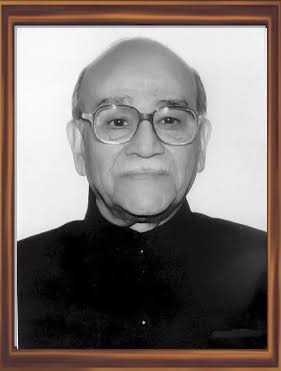


Dr. P. K. Sen, whose full name was Prafulla Kumar Sen, was one of India’s pioneering vascular and cardiothoracic surgeons. Born on 7 December 1915 in Calcutta (now Kolkata), he played a major role in the development of cardiovascular surgery in India.
He is best remembered for leading India’s first human heart-transplant operation in 1968, which was also one of the earliest human heart-transplant attempts in the world. His work in aortic surgery, open-heart surgery, surgical education and transplantation helped establish the foundations of modern cardiothoracic surgery in India.
2. Quick Facts
| Particular | Information |
|---|---|
| Full Name | Prafulla Kumar Sen |
| Commonly Known As | P. K. Sen |
| Native Name | Prafulla Kumar Sen |
| Date of Birth | 7 December 1915 |
| Place of Birth | Calcutta, British India (present-day Kolkata, West Bengal) |
| Nationality | Indian |
| Profession | Vascular and cardiothoracic surgeon |
| Field of Achievement | Medicine, cardiovascular and thoracic surgery, transplantation |
| Years Active | Approximately 1938–1982 |
| Major Institution | Seth G. S. Medical College and KEM Hospital, Bombay/Mumbai |
| Famous For | Leading India’s first human heart transplant in 1968 |
| Major Civilian Honour | Padma Bhushan, 1969 |
| Date of Death | 22 July 1982 |
| Place of Death | Calcutta, India |
Biographical sources identify his birth and death dates and his association with G.S. Medical College and KEM Hospital.
3. Award Information
Padma Bhushan
| Award Detail | Information |
|---|---|
| Award Name | Padma Bhushan |
| Award Category | Medicine |
| Award Year | 1969 |
| Presented By | Government of India / President of India |
| Date of Ceremony | The exact ceremony date is not clearly established in the readily available authoritative sources consulted |
| Citation/Official Reason | Listed under Medicine in the 1969 Padma Bhushan records |
| Previous Recipients | Padma Bhushan recipients from earlier years included distinguished figures from medicine and other fields |
| Next Recipients | The award continued annually; there was no single “next recipient” because multiple Padma Bhushans were conferred each year |
Prafulla Kumar Sen appears in the 1969 Padma Bhushan recipient lists under Medicine, with Maharashtra recorded as the state associated with the award.
Important: I would recommend not inventing a specific award-ceremony date or an “official citation” beyond what the historical records actually document. The available recipient lists establish the year and field, but do not provide a detailed citation or ceremony date for Sen.
4. Why Did P. K. Sen Receive the Award?
P. K. Sen was recognised for his contributions to medicine and cardiovascular surgery.
His achievements included pioneering work in:
- Aortic surgery in India.
- Closed mitral valvotomy.
- Surgery for congenital heart conditions.
- Development of open-heart surgery.
- Experimental heart transplantation.
- Cardiothoracic surgical training.
- Establishment and development of specialist surgical departments.
- India’s first human heart-transplant attempt in 1968.
His pioneering cardiovascular work helped move Indian surgery into an era of advanced open-heart and transplant procedures.
5. Early Life
Prafulla Kumar Sen was born on 7 December 1915 in Calcutta, then part of British India. His father was a civil servant, and Sen had one sister.
His early education took place at a public school in Jamtada, Bihar. He later studied at Victoria College of Sciences in Nagpur before moving to Bombay to pursue medical education.
From an early stage, Sen developed an interest in surgery and medical science. His career eventually became closely associated with KEM Hospital and Seth G. S. Medical College in Bombay.
6. Education
Sen studied medicine at G.S. Medical College, Bombay, between 1933 and 1938.
He completed his MBBS in 1938 and subsequently obtained a Master of Surgery (MS) degree from the University of Bombay in 1940, reportedly achieving distinction.
His postgraduate training and subsequent experience at KEM Hospital provided the foundation for his later work in cardiovascular and thoracic surgery.
7. Career Journey
P. K. Sen’s career can be divided into several important stages.
Early surgical training
Between 1938 and 1943, Sen undertook internships and surgical training at KEM Hospital in Bombay. He subsequently returned to G.S. Medical College as an assistant honorary surgeon.
Development of cardiovascular surgery
During the 1950s, Sen became one of India’s early pioneers in cardiovascular and aortic surgery.
In 1952, he performed what is described in historical accounts as India’s first closed mitral valvotomy. He subsequently worked on operations involving the aorta and congenital cardiac abnormalities. Academic leadership
In 1952, Sen became an honorary surgeon at KEM Hospital and later became Director and Professor of Surgery at G.S. Medical College, a position he held until his retirement in 1973.
Heart-transplant research
Sen and his colleagues conducted extensive experimental research on animal heart transplantation during the 1960s. These experiments were intended to develop the knowledge and surgical techniques needed for human transplantation. BBanglaJol
Human heart transplantation
In February 1968, Sen led the team that performed India’s first human heart transplant.
The operation took place at KEM Hospital in Bombay and was one of the earliest human heart-transplant attempts worldwide. The recipient unfortunately died a few hours after the operation.
Sen’s team performed a second human heart transplant later in September 1968; that recipient also died shortly after the procedure.
Later years
From 1977, Sen worked as a consultant cardiovascular and thoracic surgeon at Calcutta Hospital and Research Centre. He continued working there until his death in 1982.
8. Major Achievements
Some of P. K. Sen’s most important achievements were:
- Led India’s first human heart-transplant operation in 1968.
- Led one of the earliest human heart-transplant attempts in the world.
- Became one of India’s early pioneers of aortic surgery.
- Performed India’s first closed mitral valvotomy in 1952, according to historical accounts.
- Worked on surgery for congenital heart defects.
- Conducted extensive experimental research into heart transplantation.
- Helped develop postgraduate training in surgical disciplines.
- Helped establish specialist surgical departments at G.S. Medical College and KEM Hospital.
- Contributed to research into myocardial revascularisation and transmyocardial acupuncture.
- Trained and influenced a generation of Indian surgeons.
9. Contribution to the Nation
P. K. Sen’s contribution went beyond individual operations. He helped build the institutional foundation of cardiovascular surgery in India.
His work demonstrated that complex cardiovascular procedures could be researched and developed within Indian medical institutions. His experimental transplantation programme, surgical training and establishment of specialist departments contributed to the growth of advanced surgical medicine.
The present-day P. K. Sen Department of Cardiovascular and Thoracic Surgery at KEM Hospital carries his name, reflecting his continuing institutional legacy.
His students and professional associates included surgeons who subsequently became important figures in Indian medicine, including M. S. Valiathan, S. I. Padmavati and Sharad Panday.
10. Other Awards and Honours
The most clearly documented major national honour received by P. K. Sen was:
- Padma Bhushan – 1969, Medicine. M
MyGKBook+1
There is also a significant posthumous institutional honour associated with his name:
- Dr. P. K. Sen Memorial Oration — established in his honour. The Association of Surgeons of India continues to list the P.K. Sen Memorial Oration among its orations.
11. Legacy and Influence
P. K. Sen’s greatest legacy is his role as one of the pioneers of modern cardiac surgery in India.
Although his first two human heart-transplant operations were unsuccessful, they represented a remarkable attempt at a time when heart transplantation was still an experimental and highly risky procedure worldwide.
His influence can be seen in:
- Cardiothoracic surgery training in India.
- Cardiovascular research.
- Surgical transplantation research.
- KEM Hospital’s cardiovascular surgery tradition.
- The surgeons he trained and influenced.
- The P. K. Sen Memorial Oration.
- The continued use of his name by the KEM Hospital cardiac-surgery department.
His career illustrates how medical progress often develops through pioneering attempts, research and institutional training—even when individual procedures do not immediately succeed.
12. Interesting Facts
Here are some lesser-known facts that can make your blog more engaging:
- P. K. Sen was not only a surgeon; he was also interested in painting and poetry.
- His paintings were exhibited in India and the United States.
- He conducted extensive animal transplantation experiments before attempting human heart transplantation.
- He was influenced by both Indian medical traditions and international surgical pioneers.
- His professional network included prominent cardiac surgeons and researchers from Europe, North America and the Soviet Union.
- He was associated with the development of several specialist surgical departments at G.S. Medical College and KEM Hospital.
- He continued medical work after his retirement from his academic post.
- He died in 1982 at the age of 66.
13. Quotes
This section requires special care because many quotations attributed to historical doctors online are not properly sourced.
I could not find a sufficiently authoritative source containing a verified collection of direct quotations by P. K. Sen. Therefore, I recommend not publishing an invented quote under his name.
For your blog, you could instead use a contextual statement such as:
“P. K. Sen’s career represented India’s early entry into the era of open-heart and transplant surgery.”
However, this should be presented as your own summary, not as a quotation from Sen.
14. Timeline
| Year | Event |
|---|---|
| 1915 | Born on 7 December in Calcutta |
| 1933–1938 | Studied medicine at G.S. Medical College, Bombay |
| 1938 | Completed MBBS |
| 1938–1943 | Surgical internship and training at KEM Hospital |
| 1940 | Obtained MS from University of Bombay with distinction |
| 1952 | Associated with KEM Hospital as honorary surgeon; pioneered closed mitral valvotomy |
| 1953 | Performed surgery for coarctation of the aorta |
| 1956 | Worked on direct-vision closure of atrial septal defect |
| 1960s | Expanded experimental work in open-heart and transplantation surgery |
| 1965 | Published research on experimental canine heart transplantation |
| 1968 | Led India’s first human heart transplant |
| 1968 | Led a second human heart transplant in India |
| 1969 | Received the Padma Bhushan in Medicine |
| 1973 | Retired from his academic position |
| 1977 | Became consultant cardiovascular and thoracic surgeon at Calcutta Hospital and Research Centre |
| 1982 | Died on 22 July |
| 1993 | P. K. Sen Memorial Oration was established in his honour |
The historical record supports the major milestones above, including his education, surgical work, 1968 transplant operations and 1969 Padma Bhushan.
15. References
For a credible blog, I recommend citing a mixture of historical medical literature and institutional sources rather than relying only on general biography websites.
Recommended sources
- Nazmul Hosain — “Dr P K Sen – the Bengali Surgeon of the Century,” Cardiovascular Journal. This provides historical information about Sen’s surgical career and students. B
BanglaJol
- Chander Mohan Mittal — “Prafulla Kumar Sen: His Contributions in Cardiothoracic Surgery,” Texas Heart Institute Journal. This is an important historical source for understanding Sen’s contribution to cardiothoracic surgery.
- Association of Surgeons of India — P.K. Sen Memorial Oration. The organisation’s material confirms the continuing recognition of the P.K. Sen Memorial Oration. KEM Hospital — P. K. Sen Department of Cardiovascular and Thoracic Surgery. Current institutional material confirms the department continues to carry his name
- Historical Padma Bhushan recipient records. These list Prafulla Kumar Sen as a 1969 Padma Bhushan recipient in Medicine.
16. Related Personalities
For a “Related Personalities” section, you can mention:
- Christiaan Barnard — performed the world’s first human heart transplant in 1967.
- Norman Shumway — pioneering American cardiac-transplant surgeon.
- Adrian Kantrowitz — American surgeon who performed an early human heart transplant.
- M. S. Valiathan — prominent Indian cardiac surgeon and biomedical scientist who was influenced by the Indian cardiovascular-surgery tradition associated with Sen.
- S. I. Padmavati — pioneering Indian cardiologist and one of Sen’s professional associates/students.
- Sharad Panday — Indian surgeon who was among Sen’s students.
- P. Venugopal — led the team that performed India’s first successful heart transplant at AIIMS in 1994.
Sen’s connection to several of these figures is documented in historical accounts of his career and students.
17. Frequently Asked Questions (FAQ)
Who was P. K. Sen?
P. K. Sen, or Prafulla Kumar Sen, was an Indian vascular and cardiothoracic surgeon and one of the pioneers of cardiovascular surgery in India.
When was P. K. Sen born?
He was born on 7 December 1915 in Calcutta, British India.
What was P. K. Sen famous for?
He is best known for leading India’s first human heart transplant in 1968, one of the earliest such operations in the world.
When did P. K. Sen perform India’s first heart transplant?
The operation was performed in February 1968 at KEM Hospital in Bombay. Historical accounts place the operation in the early hours of 17 February 1968, following the start of the procedure around midnight.
Was P. K. Sen’s first heart transplant successful?
No. The recipient died a few hours after the operation. Sen’s team subsequently performed another transplant later in 1968, but that recipient also died shortly after surgery.
Which award did P. K. Sen receive?
He received the Padma Bhushan in 1969 in the field of Medicine.
Where did P. K. Sen study?
He studied medicine at G.S. Medical College, Bombay, and obtained his MS from the University of Bombay.
What was P. K. Sen’s contribution to Indian medicine?
He helped develop cardiovascular and thoracic surgery, pioneered several cardiac and aortic procedures, conducted transplantation research, developed surgical training and helped establish specialist departments.
Did P. K. Sen have interests outside medicine?
Yes. He was also interested in painting and poetry, and his paintings were exhibited in India and the United States.
When did P. K. Sen die?
He died on 22 July 1982 in Calcutta
Is anything named after P. K. Sen today?
Yes. The P. K. Sen Department of Cardiovascular and Thoracic Surgery at KEM Hospital bears his name, and the P. K. Sen Memorial Oration honours his contribution to surgery
About the Author