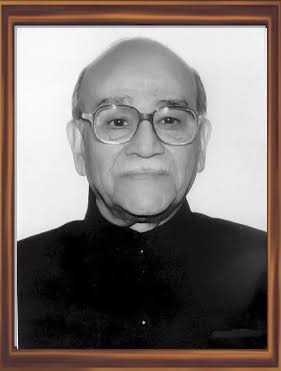

Kasturbhai Lalbhai (19 December 1894 – 20 January 1980) was a pioneering Indian industrialist, entrepreneur, philanthropist, institution builder and public figure from Ahmedabad. He played an important role in the growth of India’s textile industry and made major contributions to education, scientific research,
1. Introduction
Kasturbhai Lalbhai was among the leading industrialists who helped shape modern Ahmedabad and India’s industrial development during the 20th century.
Although he became a major figure in the textile industry, his interests went far beyond business. He believed that industrial development should be accompanied by education, scientific research, public institutions and social responsibility.
His contributions included the development of textile mills, support for higher education, participation in India’s economic planning, involvement in the Swadeshi movement, and support for institutions such as IIMA, ATIRA and the Ahmedabad Education Society.
2. Quick Facts
| Particular | Details |
|---|---|
| Full Name | Kasturbhai Lalbhai |
| Native Name | કસ્તુરભાઈ લાલભાઈ (Kasturbhai Lalbhai) |
| Date of Birth | 19 December 1894 |
| Place of Birth | Jhaveriwad, Ahmedabad, Gujarat, British India |
| Nationality | Indian |
| Religion/Community | Jain |
| Profession | Industrialist, entrepreneur, philanthropist |
| Field of Achievement | Trade and Industry, education, institution building |
| Years Active | Approximately 1912–1977 |
| Major Business | Textile industry; Arvind Mills |
| Major Award | Padma Bhushan |
| Award Year | 1969 |
| Award Field | Trade and Industry |
| Political Role | Member of the Central Legislative Assembly |
| Major Institution | Ahmedabad Education Society |
| Important Collaborator | Vikram Sarabhai |
| Date of Death | 20 January 1980 |
| Place of Death | Ahmedabad, Gujarat |
The Indian Institute of Management Ahmedabad’s archives identify him as a pioneering industrialist, public-policy participant and one of the key figures behind the establishment of IIMA.
3. Award Information
Padma Bhushan
Award Name
Padma Bhushan
Award Category
Trade and Industry
Award Year
1969
The official Government of India Padma Awards database lists Shri Kasturbhai Lalbhai — Padma Bhushan (1969) — Trade and Industry — Gujarat.
Presented By
The Padma Bhushan is a civilian honour of the Government of India and is formally presented by the President of India.
Date of Ceremony
An exact individual presentation date for Kasturbhai Lalbhai’s Padma Bhushan is not established in the reliable sources consulted.
For a blog, it is safest to state:
Award year: 1969
rather than publishing an unverified ceremony date.
Citation / Official Reason
The official Padma database records his field as Trade and Industry.
The award recognised the significance of his contribution to Indian industry, particularly the textile sector and wider industrial development.
His career also extended into institution building, economic policy and education, making him an important figure in India’s industrial history.
Previous Recipients
There was no single previous recipient because the Padma Bhushan is awarded to multiple people in different fields.
In the Trade and Industry category, Gujar Mal Modi received the Padma Bhushan in 1968.
Next Recipients
In 1970, the Padma Awards again recognised people in Trade and Industry, including Govind Ram Hada and Phul Chand with Padma Shri honours.
4. Why Did Kasturbhai Lalbhai Receive the Padma Bhushan?
Kasturbhai Lalbhai received the Padma Bhushan in 1969 for Trade and Industry.
His recognition was associated with his extensive contribution to Indian industry, especially:
- Development of the textile industry
- Expansion of Indian-owned industrial enterprises
- Development of Arvind Mills
- Leadership in business organisations
- Contribution to economic policy
- Participation in the Swadeshi movement
- Support for industrial research
- Promotion of higher education
- Establishment of educational and cultural institutions
- Philanthropic activities
He represented a generation of Indian industrialists who were involved not only in business but also in shaping India’s economic and institutional development.
5. Early Life
Kasturbhai Lalbhai was born on 19 December 1894 in Jhaveriwad, Ahmedabad, into a prominent Jain business family. His father was Lalbhai Dalpatbhai, an established businessman.
The Lalbhai family belonged to the traditional mercantile community of Ahmedabad and had a long connection with business and civic affairs.
Kasturbhai’s early life changed dramatically in 1912, when his father died unexpectedly. Kasturbhai was studying at Gujarat College at the time, but he had to discontinue his education and join the family business.
This interruption of his formal education later influenced his strong lifelong interest in education and institution building.
6. Education
Kasturbhai received his early education in Ahmedabad.
He studied at Municipal School No. 8 near Teen Darwaza and later attended Ranchhodlal Chhotalal Government High School.
He passed his matriculation examination in 1911.
He subsequently joined Gujarat College, but his father’s death in 1912 forced him to leave college and enter the family business.
Although he did not complete a university degree, education remained one of the central themes of his later life.
He subsequently helped establish and support numerous educational institutions, including the Ahmedabad Education Society and institutions associated with engineering, commerce, science and management.
7. Career Journey
Beginning at Raipur Mills
After leaving college, Kasturbhai joined the family-owned Raipur Manufacturing Company.
He began with relatively modest responsibilities and learned the practical aspects of textile manufacturing and business management.
His experience at Raipur Mills gave him an understanding of cotton, manufacturing, labour and industrial management.
Growth as a Textile Industrialist
Kasturbhai gradually expanded his industrial interests and became one of Ahmedabad’s leading textile entrepreneurs.
He eventually established and developed several mills, including Arvind Mills in 1931.
The growth of the Lalbhai industrial group helped strengthen Ahmedabad’s position as an important textile centre.
Arvind Mills
The establishment of Arvind Mills was one of the major milestones of his industrial career.
The company later became an important part of the Lalbhai business group and developed a long association with India’s textile and apparel industry.
Role in Public Life
Kasturbhai’s public career expanded beyond business.
He was elected to the Central Legislative Assembly in 1923, representing the interests of Indian industry.
He also participated in the Swadeshi movement during the 1930s, supporting the wider nationalist emphasis on Indian enterprise and self-reliance.
FICCI Leadership
Kasturbhai became President of the Federation of Indian Chambers of Commerce and Industry (FICCI) in 1934.
FICCI provided an important platform for Indian business leaders to discuss industrial policy, trade and economic development during the final decades of British rule.
Reserve Bank of India
He served as a Director of the Reserve Bank of India from 1937 to 1949.
This reflected the wider public-policy role he played beyond the textile sector.
The Bombay Plan
Kasturbhai Lalbhai was one of the eight prominent Indian industrialists who signed the Bombay Plan of 1944.
The plan proposed a long-term framework for India’s economic development and called for major investment in areas including industry, agriculture, education, health and infrastructure.
The other signatories included J. R. D. Tata, G. D. Birla, Purshottamdas Thakurdas, Ardeshir Dalal, Lala Shri Ram, A. D. Shroff and John Mathai.
8. Major Achievements
1. Development of the Textile Industry
Kasturbhai played a major role in expanding India’s indigenous textile industry.
His business activities helped establish Ahmedabad as one of India’s leading textile centres.
2. Founding of Arvind Mills
He founded Arvind Mills in 1931, which became one of the best-known companies associated with the Lalbhai industrial group.
3. Ahmedabad Education Society
Kasturbhai was a key figure in establishing the Ahmedabad Education Society (AES) in 1936.
The society played a major role in developing Ahmedabad’s educational infrastructure.
4. Role in IIM Ahmedabad
Kasturbhai was one of the key figures involved in bringing the Indian Institute of Management Ahmedabad to the city.
Along with Vikram Sarabhai, he helped mobilise support from Ahmedabad’s industrial community.
IIMA was formally established on 11 December 1961 as a partnership involving the Government of India, Government of Gujarat and Ahmedabad’s industry represented through the IIMA Society.
Interestingly, although Kasturbhai played an important role in establishing the institute, he declined the chairmanship of IIMA’s governing structure.
5. ATIRA
Kasturbhai worked with Vikram Sarabhai in establishing the Ahmedabad Textile Industry’s Research Association (ATIRA) in 1947.
The organisation was created to promote scientific research and technological improvement in textiles.
6. Gujarat Chamber of Commerce and Industry
Kasturbhai was one of the founders of the Gujarat Chamber of Commerce and Industry (GCCI) in 1949, along with Amritlal Hargovinddas.
7. Lalbhai Dalpatbhai College of Engineering
He supported the creation of an engineering college named after his father, Lalbhai Dalpatbhai College of Engineering, strengthening technical education in Gujarat.
8. Lalbhai Dalpatbhai Institute of Indology
He established the Lalbhai Dalpatbhai Institute of Indology in 1962.
The institute became an important centre for the preservation and study of manuscripts, rare books and material relating to Indian culture and philosophy.
9. Contribution to the Nation
Kasturbhai Lalbhai’s contribution to India can be divided into several major areas.
Industrial Development
He helped strengthen Indian-owned textile manufacturing during a period when India’s industrial sector was still developing.
Economic Policy
Through FICCI, the Reserve Bank of India and the Bombay Plan, he contributed to discussions about India’s economic future.
Swadeshi and Nationalism
His participation in the Swadeshi movement connected his industrial activities with the broader idea of Indian economic self-reliance.
Education
His support for education resulted in institutions and organisations that continue to influence Ahmedabad and Gujarat.
Scientific Research
His association with ATIRA and support for scientific institutions reflected his belief that industry should be connected with research and technology.
Institution Building
Perhaps his most enduring contribution was institution building. He supported institutions that continued to operate long after his death.
10. Other Awards and Honours
Padma Bhushan – 1969
Kasturbhai Lalbhai received the Padma Bhushan in 1969 in the category of Trade and Industry.
This is the principal national civilian honour for which he is remembered.
Institutional Honours
His name has subsequently been associated with educational institutions and facilities.
At IIMA, these include:
- Kasturbhai Lalbhai Management Development Centre
- Kasturbhai Lalbhai Chair Professorship in Entrepreneurship
IIMA continues to recognise his contribution to the institute’s founding and early development.
11. Legacy and Influence
Kasturbhai Lalbhai’s legacy is much larger than his business achievements.
His distinctive contribution was his belief that wealth and industry should help build institutions for society.
The institutions associated with his efforts span:
- Business
- Textile research
- Higher education
- Management education
- Engineering
- Science
- Indology
- Culture
- Jain heritage
His involvement in IIMA is particularly significant. IIMA’s own archives describe him as one of the institute’s founding members and highlight his role in its early development.
His vision also extended to architecture. He supported the involvement of prominent architects in Ahmedabad’s institution-building projects, including Louis Kahn and others.
Today, his influence can still be seen throughout Ahmedabad’s educational, industrial and cultural landscape.
12. Interesting Facts About Kasturbhai Lalbhai
1. He had to leave college because of his father’s death
His father died in 1912 while Kasturbhai was studying at Gujarat College. He then entered the family business.
2. He became a major industrialist without completing university education
Despite leaving formal education early, he later became one of the country’s most influential industrial and educational institution builders.
3. He founded Arvind Mills
Arvind Mills was established in 1931 under his leadership.
4. He was involved in India’s economic planning before independence
He was one of the signatories of the Bombay Plan of 1944.
5. He served on the RBI board
He was a Director of the Reserve Bank of India from 1937 to 1949.
6. He helped bring IIM to Ahmedabad
Together with Vikram Sarabhai and other local industrialists, he helped create the conditions for establishing IIMA in Ahmedabad.
7. He declined to become chairman of IIMA
Despite his major contribution to the institute’s establishment, he declined the chairmanship because he wanted the institute to have broader representation beyond Ahmedabad.
8. He was a major supporter of education
The Ahmedabad Education Society, founded in 1936 with his involvement, became associated with numerous educational institutions.
9. He supported Jain heritage
As chairman of the Anandji Kalyanji Trust, he was involved in the preservation and restoration of important Jain pilgrimage sites and temples.
10. His family continued his institutional legacy
His descendants continued to be involved in industry, education and philanthropy in Ahmedabad. The Lalbhai family also established the Kasturbhai Lalbhai Museum in Ahmedabad.
13. Quotes
There are relatively few widely authenticated, easily accessible direct quotations from Kasturbhai Lalbhai.
Therefore, avoid publishing invented motivational quotes under his name.
A contemporary description by architect B. V. Doshi, quoted by The Times of India in its retrospective on Kasturbhai, described him as:
“a man of vastness, a classicist…”
The description continued by emphasising Kasturbhai’s appreciation for things that were grand and of lasting value.
For your blog, it is better to use this quotation with its original attribution rather than presenting it as Kasturbhai’s own words.
You could also use this non-quotation summary:
Kasturbhai Lalbhai’s life demonstrates how entrepreneurship can be combined with institution building, education and public service.
Do not place quotation marks around that sentence because it is a modern summary, not a historical quotation.
14. Timeline of Kasturbhai Lalbhai
| Year | Event |
|---|---|
| 1894 | Born on 19 December in Ahmedabad |
| 1911 | Passed matriculation |
| 1912 | Father’s death forced him to leave Gujarat College and enter the family business |
| 1910s | Began developing experience in the textile industry |
| 1923 | Elected to the Central Legislative Assembly |
| 1931 | Founded Arvind Mills |
| 1934 | Became President of FICCI |
| 1936 | Helped establish Ahmedabad Education Society |
| 1937 | Became Director of the Reserve Bank of India |
| 1937–1949 | Served on the RBI Board |
| 1944 | Signed the Bombay Plan |
| 1947 | Played a key role in establishing ATIRA |
| 1949 | Helped found Gujarat Chamber of Commerce and Industry |
| 1950s | Played an important role in developing support for IIM Ahmedabad |
| 1961 | IIM Ahmedabad was formally established |
| 1962 | Established Lalbhai Dalpatbhai Institute of Indology |
| 1969 | Received Padma Bhushan for Trade and Industry |
| 1970s | Continued philanthropic and institutional activities |
| 1980 | Died on 20 January in Ahmedabad |
The dates relating to his birth, early career, FICCI, RBI and IIMA are supported particularly well by IIMA’s archival biography.
15. References
For your blog, I recommend prioritising institutional and government sources rather than relying heavily on general biography websites.
1. Government of India – Padma Awards
The official Padma Awards database confirms Kasturbhai Lalbhai — Padma Bhushan — 1969 — Trade and Industry — Gujarat.
Official Padma Awards database
2. Indian Institute of Management Ahmedabad Archives
IIMA’s official archives provide detailed information about Kasturbhai’s early life, business career, public-policy work, Ahmedabad Education Society, ATIRA and role in establishing IIMA.
IIMA Archives – Kasturbhai Lalbhai
3. IIMA Archives – Founders and Builders
This source provides additional information about Kasturbhai’s role in bringing IIMA to Ahmedabad and developing its early campus.
IIMA Archives – Kasturbhai Lalbhai and IIMA
4. Nehru Archive
The Nehru Archive documents Kasturbhai Lalbhai’s participation in the Bombay Plan of 1944.
Nehru Archive – Bombay Plan reference
5. Gujarat Chamber of Commerce and Industry
GCCI’s own material identifies Kasturbhai Lalbhai and Amritlal Hargovinddas as founders of the organisation in 1949.
Gujarat Chamber of Commerce and Industry
16. Related Personalities
Vikram Sarabhai
Vikram Sarabhai was one of Kasturbhai’s most important collaborators. Together they were associated with ATIRA and played major roles in the development of IIMA.
J. R. D. Tata
J. R. D. Tata was one of the other leading industrialists who signed the Bombay Plan with Kasturbhai.
Ghanshyam Das Birla
Birla was another major Indian industrialist and co-signatory of the Bombay Plan.
Jivraj Mehta
Jivraj Mehta, the first Chief Minister of Gujarat, played an important role in the establishment of IIMA along with Sarabhai and Kasturbhai.
Louis Kahn
Louis Kahn designed the famous IIMA campus, whose development was supported by Kasturbhai and other founders.
Mahatma Gandhi
Kasturbhai was associated with the Swadeshi movement and India’s wider nationalist struggle.
Amritlal Hargovinddas
Amritlal Hargovinddas worked with Kasturbhai in industrial and civic initiatives and was a co-founder of GCCI.
17. Frequently Asked Questions (FAQ)
Who was Kasturbhai Lalbhai?
Kasturbhai Lalbhai was a prominent Indian industrialist, textile entrepreneur, philanthropist and institution builder from Ahmedabad.
When was Kasturbhai Lalbhai born?
He was born on 19 December 1894 in Jhaveriwad, Ahmedabad, in present-day Gujarat.
When did Kasturbhai Lalbhai die?
He died on 20 January 1980 in Ahmedabad.
Which award did Kasturbhai Lalbhai receive?
He received the Padma Bhushan in 1969.
What was the Padma Bhushan category?
The official Government of India database lists his category as Trade and Industry.
Why did Kasturbhai Lalbhai receive the Padma Bhushan?
He was recognised for his major contribution to Indian trade and industry, particularly through his work in textiles and industrial development.
What was Kasturbhai Lalbhai’s main business?
His principal business interests were in the textile industry, including the development of Arvind Mills.
When was Arvind Mills founded?
Arvind Mills was founded in 1931 under Kasturbhai Lalbhai’s leadership.
Did Kasturbhai Lalbhai participate in India’s freedom movement?
Yes. He participated in the Swadeshi movement and was involved in public life during the freedom struggle.
What was the Bombay Plan?
The Bombay Plan was a set of economic-development proposals published by leading Indian industrialists in 1944. Kasturbhai Lalbhai was one of its eight signatories.
What was Kasturbhai Lalbhai’s contribution to IIM Ahmedabad?
He helped mobilise support from Ahmedabad’s industrial community and played an important role in bringing IIMA to Ahmedabad. He later served on its Board of Governors and Buildings Committee.
Who worked with Kasturbhai Lalbhai to establish IIMA?
Vikram Sarabhai was a particularly important collaborator, along with Jivraj Mehta, the Government of India, the Government of Gujarat and Ahmedabad’s industrial community.
Did Kasturbhai Lalbhai become chairman of IIMA?
No. Although he played a major role in establishing the institute, he declined the chairmanship.
What is ATIRA?
ATIRA stands for Ahmedabad Textile Industry’s Research Association. It was established in 1947 to promote research and technological development in the textile industry, with Kasturbhai and Vikram Sarabhai playing important roles.
When was Ahmedabad Education Society established?
The Ahmedabad Education Society was founded in 1936, with Kasturbhai Lalbhai among its key founders.
What was Kasturbhai Lalbhai’s contribution to education?
He supported the creation and development of numerous educational institutions, including organisations connected with commerce, science, engineering, management and Indian studies.
What was the Gujarat Chamber of Commerce and Industry?
GCCI was established in 1949, with Kasturbhai Lalbhai and Amritlal Hargovinddas among its founders.
Was Kasturbhai Lalbhai a member of the Reserve Bank of India’s Board?
Yes. He served as a Director of the Reserve Bank of India from 1937 to 1949.
Why is Kasturbhai Lalbhai remembered today?
He is remembered not simply as a businessman but as an institution builder who helped develop Ahmedabad’s industrial, educational, scientific and cultural infrastructure.
Conclusion
Kasturbhai Lalbhai was much more than a successful textile industrialist. He belonged to a generation of Indian entrepreneurs who believed that business should contribute to the development of society.
From building the textile business and founding Arvind Mills to supporting education, scientific research and economic planning, his career covered many areas of India’s development.
His role in establishing the Ahmedabad Education Society, supporting ATIRA, helping bring IIM Ahmedabad to the city, and participating in the Bombay Plan demonstrates the breadth of his vision.
The Government of India recognised his contribution by awarding him the Padma Bhushan in 1969 for Trade and Industry.
His enduring legacy is particularly visible in Ahmedabad, where institutions connected to his vision continue to influence business, management, education, science, architecture and culture.
Kasturbhai Lalbhai can therefore be remembered as one of India’s pioneering industrialists and philanthropists whose greatest achievement was not only building businesses, but also helping build institutions for future generations.
About the Author