
1. Introduction
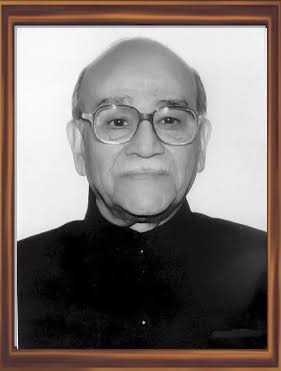
Shripad Damodar Satwalekar was one of the notable Indian intellectuals who combined art, Vedic scholarship, social reform and nationalist activity.
He began his professional life as an artist and received formal training at the Sir J. J. School of Art in Bombay. He became known for portrait painting and received the prestigious Mayo Medal twice, once for painting and once for sculpture.
However, his later life became increasingly centred on the Vedas, Sanskrit and Indian philosophical literature. He translated and interpreted Vedic texts, established the Swadhyay Mandal, published journals and books, and worked to make Vedic literature accessible to a wider readership.
His activities also had a nationalist dimension. He was associated with the Arya Samaj, participated in public and political activities, and supported India’s freedom movement. During the Quit India period, he helped provide shelter to activists and was involved in anti-British activities.
2. Quick Facts
| Particular | Details |
|---|---|
| Full Name | Shripad Damodar Satwalekar |
| Native Name | श्रीपाद दामोदर सातवळेकर |
| Popular Name | Pandit Satwalekar / Vedamurti Satwalekar |
| Date of Birth | 11 September 1867 according to Marathi Vishwakosh; other sources give 19 September 1867 |
| Place of Birth | Kolgaon, Sawantwadi State, present-day Maharashtra |
| Nationality | Indian |
| Profession | Vedic scholar, painter, Sanskrit scholar, writer, social worker and yoga advocate |
| Field of Achievement | Literature and Education; Vedic scholarship |
| Languages/Fields | Sanskrit, Marathi, Hindi, Vedic studies, painting |
| Years Active | Late 19th century–1968 |
| Major Institution | Swadhyay Mandal |
| Major Award | Padma Bhushan |
| Award Year | 1968 |
| Padma Category | Literature and Education |
| Date of Death | 31 July 1968 |
| Place of Death | Pardi, Gujarat |
The Marathi Vishwakosh identifies his birthplace as Kolgaon in the former Sawantwadi State and records his death at Pardi after a life spanning more than a century.
3. Award Information
Padma Bhushan — 1968
| Award Detail | Information |
|---|---|
| Award Name | Padma Bhushan |
| Award Category | Literature and Education |
| Award Year | 1968 |
| Recipient | Shri Shripad Damodar Satwalekar |
| State | Maharashtra |
| Presented By | Government of India / President of India |
| Ceremony | 1968 |
| Individual Ceremony Date | Not established from the accessible official Padma database |
| Official Field | Literature and Education |
The official Government of India Padma Awards database lists Shri Shripad Damodar Satwalekar among the 1968 Padma Bhushan recipients, with Literature and Education as the field and Maharashtra as the state.
A biographical account states that the award was presented by President Zakir Husain in 1968.
Citation / Official Reason
The accessible official Padma database provides the field/category—Literature and Education—but does not provide a detailed individual citation for Satwalekar.
Therefore, a safe statement for your blog is:
Shripad Damodar Satwalekar was awarded the Padma Bhushan in 1968 for his contribution to Literature and Education, particularly through his extensive work in Vedic scholarship, Sanskrit literature and education.
The second part is a biographical explanation, not a verbatim Government citation.
Previous Recipients
There was no single previous Padma Bhushan recipient because the award was given to people in many fields.
For Literature and Education, the 1967 Padma Bhushan list included D. C. Pavate and Khwaja Ghulam Saiyidain, among others.
Next Recipients
The Padma Bhushan continued to be awarded to numerous scholars, writers and educationists in subsequent years. There is therefore no single “next recipient” for the award.
4. Why Did Shripad Damodar Satwalekar Receive the Award?
Satwalekar received the Padma Bhushan in Literature and Education in 1968.
His recognition can be understood in the context of his enormous contribution to Vedic and Sanskrit scholarship.
His work included:
- Studying and interpreting the Vedas
- Translating Vedic texts
- Writing books on Vedic philosophy
- Establishing the Swadhyay Mandal
- Publishing Vedic literature
- Promoting Sanskrit education
- Writing commentaries on the Bhagavad Gita
- Producing educational material for learning Sanskrit
- Establishing institutions for study and public education
The Marathi Vishwakosh records that he published approximately 400 books in Marathi, Hindi and English, covering Vedic literature, philosophy, social thought and related subjects.
5. Early Life
Shripad Damodar Satwalekar was born in Kolgaon, in the former Sawantwadi princely state. His family had a strong scholarly background.
His father, Damodar Bhatta, belonged to a family associated with the Rigvedic tradition. Satwalekar therefore encountered Sanskrit and Vedic learning from childhood.
He received traditional Sanskrit instruction at home and studied texts including Patanjali’s Mahabhashya. His early exposure to Sanskrit and Vedic learning became the foundation of his later intellectual career.
At the same time, he developed a strong interest in drawing and painting.
6. Education
Satwalekar’s education combined traditional Sanskrit learning with formal training in art.
Traditional education
He studied Sanskrit and Vedic literature in his family environment. His early studies included Sanskrit grammar and traditional texts.
Art education
In 1890, he entered the Sir J. J. School of Art in Bombay for advanced training in painting and sculpture.
At J. J. School of Art, he studied alongside several important artists and won a number of prizes.
Most notably, he received the Mayo Medal twice:
- Once for painting
- Once for sculpture
This combination of artistic training and traditional scholarship made his career unusual.
7. Career Journey
Beginning as an artist
Satwalekar initially built his career as a painter and portrait artist.
After completing his art education, he worked in the Aundh State and later established a studio in Hyderabad. He became known for portraits of rulers, aristocrats and prominent personalities.
Hyderabad period
During his Hyderabad years, he combined his artistic work with growing interest in Vedic studies.
His association with the Arya Samaj also became important during this period.
From 1901 to 1918, he was actively associated with Arya Samaj activities.
Nationalist activities
Satwalekar’s Vedic scholarship increasingly became connected with his nationalist ideas.
He published writings including:
- Vaidika Rashtragita (Vedic National Song)
- Vaidika Prarthananchi Tejasvita
His political writings attracted the attention of the British authorities, and he was imprisoned. Copies of a Hindi translation of Vaidika Rashtragita were reportedly seized and destroyed by the colonial authorities.
Aundh period
He subsequently spent around three decades in Aundh, where he worked with the ruler Bhawanrao Pant Pratinidhi.
During this period he increasingly devoted himself to Vedic studies and public education.
Foundation of Swadhyay Mandal
In 1918, he established the Swadhyay Mandal at Aundh.
Its principal objectives were:
- Vedic research
- Vedic education
- Translation
- Publication
- Preservation of Vedic literature
A printing press was eventually established to publish the Mandal’s works.
Journals and publications
He founded and edited publications including:
- Vaidika Dharma
- Purushartha
These periodicals were used to discuss Vedic literature, philosophy and social questions.
Later years in Gujarat
After leaving Aundh in the aftermath of the political and social disturbances following Mahatma Gandhi’s assassination, Satwalekar moved to Pardi in Gujarat.
The Swadhyay Mandal resumed its activities there on 1 July 1948, with facilities including a Vedic temple, study rooms, guest accommodation and a printing press.
8. Major Achievements
1. Founder of Swadhyay Mandal
His most important institutional achievement was establishing the Swadhyay Mandal, which became a centre for Vedic research and publication.
2. Major Vedic scholar
He devoted decades to studying, interpreting and translating the Vedas.
3. Extensive literary output
The Marathi Vishwakosh credits him with approximately 400 published books in Marathi, Hindi and English.
4. Sanskrit education
He wrote the Sanskrit Swayamshikshak series, designed to help people learn Sanskrit independently.
5. Vedic translations
His works included translations and explanations of texts from the Rigveda, Atharvaveda and other Vedic literature.
6. Bhagavad Gita scholarship
His Purushartha Bodhini series was an extensive commentary on the Bhagavad Gita.
7. Accomplished painter
Before becoming primarily known for Vedic scholarship, he established himself as a successful portrait painter.
8. Mayo Medal winner
He received the prestigious Mayo Medal at J. J. School of Art twice—for painting and sculpture.
9. Promotion of yoga
He promoted yoga and Surya Namaskar and wrote on health, exercise and related subjects.
10. Padma Bhushan
The Government of India honoured him with the Padma Bhushan in 1968.
9. Contribution to the Nation
Preservation and popularisation of Vedic literature
Satwalekar dedicated much of his life to making Vedic texts available to ordinary readers through translations, commentaries and publications.
Sanskrit education
His books and teaching activities helped make Sanskrit learning more accessible.
National awakening
He used Vedic and cultural themes as part of his effort to encourage national consciousness during the colonial period.
Freedom movement
His nationalist publications brought him into conflict with the British authorities, resulting in imprisonment. During the Quit India Movement of 1942, he also provided shelter to activists.
Public education
Through the Swadhyay Mandal and associated institutions, he created spaces for study, lectures and publication.
Health and yoga
He promoted physical health, yoga and Surya Namaskar as part of his broader philosophy of individual and social development.
10. Other Awards and Honours
Satwalekar received numerous honours during his lifetime.
| Honour | Details |
|---|---|
| Mayo Medal | Received twice at J. J. School of Art—painting and sculpture |
| Annual Grant | Received support associated with President Rajendra Prasad in 1959 |
| Doctor of Literature | Honour from the University of Pune |
| Doctor of Laws | Honour from the University of Mumbai |
| Mahatma Gandhi Gold Medal | Associated with Rashtrabhasha Prachar Samiti, Wardha |
| Vidyamartand | Gurukula Kangri |
| Gitalankar | Gita Dharma Mandal, Amritsar |
| Sahityavachaspati | Prayag Hindi Sahitya Sammelan |
| Mahamhopadhyaya | Conferred by a Shankaracharya |
| Padma Bhushan | 1968, Literature and Education |
The Marathi Vishwakosh confirms his Mayo Medals and several scholarly honours, while the Padma Awards database confirms the 1968 Padma Bhushan.
11. Legacy and Influence
Satwalekar’s legacy is unusual because it crosses several different fields.
Vedic scholarship
He was one of the prominent modern Indian scholars who worked to interpret and disseminate Vedic literature.
Literature and education
His large body of published work explains why the Government of India placed his Padma Bhushan under Literature and Education.
Art
His early career as a painter remains an important but sometimes overlooked part of his biography.
Sanskrit
His Sanskrit Swayamshikshak works continue to be associated with self-study of Sanskrit.
Institutions
The Swadhyay Mandal remains central to his institutional legacy.
Family legacy
His son Madhav Satwalekar (1915–2006) became a noted Indian painter in his own right.
12. Interesting Facts
- Satwalekar lived for more than 100 years.
- He was both a professional painter and a Vedic scholar.
- He received the Mayo Medal twice at J. J. School of Art.
- His father came from a family associated with the Rigvedic tradition.
- He founded the Swadhyay Mandal in 1918.
- He published approximately 400 books in Marathi, Hindi and English, according to the Marathi Vishwakosh.
- He wrote a 24-volume Sanskrit Swayamshikshak series.
- His works included translations and studies of the Rigveda and Atharvaveda.
- He was involved with the Arya Samaj for many years.
- His nationalist publications brought him into conflict with the British authorities.
- He promoted Surya Namaskar and yoga.
- His son Madhav Satwalekar became a well-known painter.
- He received the Padma Bhushan in 1968, shortly before his death.
- He died in Pardi, Gujarat, on 31 July 1968.
13. Quotes
There are many statements attributed to Satwalekar in secondary sources, but reliably authenticated, word-for-word quotations are limited online.
For a fact-checked blog, I recommend not inventing or attributing motivational quotes to him.
One documented theme in his work was the importance of Vedic learning and education. His institutional activities show that he wanted Vedic literature to be studied, translated and made accessible to a wider public.
Suggested blog wording
Satwalekar’s life’s work centred on studying, interpreting and making India’s Vedic heritage accessible through education and publication.
This is a biographical summary, not a direct quotation.
14. Timeline
| Year | Event |
|---|---|
| 1867 | Born at Kolgaon in the former Sawantwadi State |
| Childhood | Studied Sanskrit and traditional Vedic literature |
| 1890 | Entered Sir J. J. School of Art, Bombay |
| 1890s | Won prizes and later received two Mayo Medals |
| 1900 | Took up work associated with Aundh State |
| 1901–1918 | Associated with Arya Samaj activities |
| Early 1900s | Established himself as a portrait painter in Hyderabad |
| 1907 | Published Vaidika Rashtragita |
| 1908 | Published Vaidika Prarthananchi Tejasvita |
| Early 20th century | Imprisoned in connection with nationalist activities |
| 1918 | Founded Swadhyay Mandal at Aundh |
| 1919 | Started the Hindi monthly Vaidika Dharma |
| 1924 | Started the Marathi monthly Purushartha |
| 1930 | Became associated with Satara district public activities |
| 1942 | Supported activities connected with the Quit India Movement |
| 1948 | Moved from Aundh to Pardi, Gujarat |
| 1 July 1948 | Swadhyay Mandal began its work at Pardi |
| 1959 | Received an annual grant associated with President Rajendra Prasad |
| 1960s | Continued extensive Vedic publication and scholarship |
| 1968 | Received Padma Bhushan |
| 31 July 1968 | Died at Pardi, Gujarat |
The chronology is based primarily on the Marathi Vishwakosh and supplementary biographical material.
15. References
For a reliable blog article, these are particularly useful sources:
- Marathi Vishwakosh — Shripad Damodar Satwalekar
A detailed biographical entry covering his birth, education, art career, Vedic scholarship, nationalist activities, publications and Swadhyay Mandal. - Government of India — Padma Awards Database
Official confirmation that Shri Shripad Damodar Satwalekar received the Padma Bhushan in 1968 in Literature and Education. - Open Library — Shripad Damodar Satwalekar
Useful for identifying his published works and publication dates. - Sanskrit Documents — Satwalekar biography
Supplementary information about his Vedic studies, Swadhyay Mandal, political activities and honours. - Marathi Vishwakosh — Madhav Satwalekar
Useful for information about Satwalekar’s son and the family’s artistic legacy.
16. Related Personalities
Bhawanrao Pant Pratinidhi
The ruler of Aundh and an important patron of Satwalekar’s work. Their association played a major role in Satwalekar’s artistic and Vedic career.
Mahatma Gandhi
Satwalekar was influenced by Gandhi’s ideas during the later phase of his nationalist activities and was also associated with discussions concerning social and political reform.
Swami Dayananda Saraswati
Satwalekar was associated with the Arya Samaj tradition and translated works connected with Dayananda’s Vedic interpretation.
Madhav Satwalekar
His son was a distinguished painter and continued the family’s artistic tradition.
Vinoba Bhave
Vinoba Bhave was among the prominent figures who admired Satwalekar’s work.
Kaka Kalelkar
The prominent Gandhian thinker and social reformer was another personality associated with Satwalekar’s wider intellectual circle.
17. Frequently Asked Questions (FAQ)
Who was Shripad Damodar Satwalekar?
Shripad Damodar Satwalekar was an Indian Vedic scholar, Sanskrit scholar, painter, writer, social worker and nationalist.
When was Shripad Damodar Satwalekar born?
He was born in 1867. The Marathi Vishwakosh gives 11 September 1867, while several other sources give 19 September 1867.
Where was he born?
He was born in Kolgaon in the former Sawantwadi State, in the region that is now part of Maharashtra.
When did Shripad Damodar Satwalekar receive the Padma Bhushan?
He received the Padma Bhushan in 1968.
In which category did he receive the Padma Bhushan?
The official Government of India database lists the category as Literature and Education.
Why was Satwalekar awarded the Padma Bhushan?
His award recognised his contribution to Literature and Education, particularly his extensive work in Vedic scholarship, Sanskrit learning, translation, writing and publication.
What was the Swadhyay Mandal?
The Swadhyay Mandal was an institution founded by Satwalekar in 1918 for Vedic study, research, translation and publication.
Was Satwalekar a painter?
Yes. He received formal training at J. J. School of Art and became a successful portrait painter. He also received two Mayo Medals.
Did Satwalekar participate in India’s freedom movement?
Yes. He was involved in nationalist activities, published writings that attracted British government attention, and later supported activities connected with the Quit India Movement.
How many books did Satwalekar write?
The Marathi Vishwakosh states that approximately 400 books by him were published in Marathi, Hindi and English.
What were his major subjects?
His writings covered Vedas, Sanskrit, Bhagavad Gita, Ayurveda, yoga, social thought, Indian culture and philosophy.
Did he promote Surya Namaskar?
Yes. Satwalekar was associated with the promotion of Surya Namaskar and yoga and wrote about related physical and health practices.
Who was Madhav Satwalekar?
Madhav Satwalekar, his son, was a noted Indian painter who became an important figure in Maharashtra’s art world.
When did Shripad Damodar Satwalekar die?
He died on 31 July 1968 at Pardi, Gujarat.
About the Author