
1. Introduction
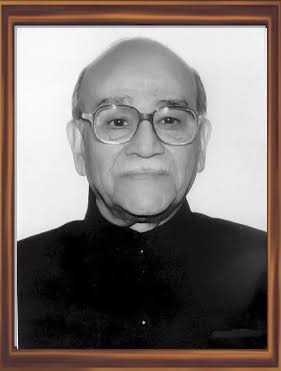
Rai Bahadur Gujarmal Modi (9 August 1902 – 22 January 1976) was one of India’s pioneering industrialists and philanthropists. He is best remembered as the founder of the Modi industrial enterprise and as the man who transformed the small settlement of Begumabad into the industrial township of Modinagar, Uttar Pradesh.
Starting his independent business journey with a sugar mill in 1933, Gujarmal Modi gradually diversified into industries including sugar, vanaspati, soaps, textiles, oil, steel, chemicals and other consumer products. His industrial vision went beyond business: he invested in schools, colleges, healthcare, housing and other community facilities.
The Government of India honoured him with the Padma Bhushan in 1968 for his contribution to Trade & Industry.
2. Quick Facts
| Particular | Information |
|---|---|
| Full Name | Gujarmal Modi / Rai Bahadur Gujarmal Modi |
| Birth Name | Ram Prasad Modi |
| Date of Birth | 9 August 1902 |
| Place of Birth | Mahendragarh, then Patiala State, British India |
| Nationality | Indian |
| Profession | Industrialist, entrepreneur and philanthropist |
| Field of Achievement | Trade & Industry, industrial development and philanthropy |
| Major Achievement | Development of Modinagar and establishment of the Modi industrial enterprise |
| Major Award | Padma Bhushan |
| Award Year | 1968 |
| Award Category | Trade & Industry |
| Date of Death | 22 January 1976 |
| Place of Death | Modinagar, Uttar Pradesh |
Sources identify Gujarmal Modi as having been born on 9 August 1902 in Mahendragarh and dying on 22 January 1976.
His birth name
He was born Ram Prasad Modi. According to the biographical account preserved in the Gujarmal Modi e-book, he later became known as Gujarmal, a name associated with his stepmother Gujri Devi.
3. Award Information
Padma Bhushan
The most important national honour received by Gujarmal Modi was the Padma Bhushan, one of India’s major civilian honours.
| Award Detail | Information |
|---|---|
| Award Name | Padma Bhushan |
| Award Category | Trade & Industry |
| Award Year | 1968 |
| Presented By | President of India, Dr. Zakir Husain |
| Date of Ceremony | 16 April 1968 |
| Awardee | Rai Bahadur Gujarmal Modi |
| State listed in award records | Uttar Pradesh |
The ceremony date and presenter are documented in the Gujarmal Modi biographical archive, which records that President Dr. Zakir Husain presented the Padma Bhushan to Gujarmal Modi on 16 April 1968.
Award listings place Gujarmal Modi among the 1968 Padma Bhushan recipients in Trade & Industry.
Citation / official reason
The award records classify his contribution under Trade & Industry. Contemporary and institutional accounts connect his recognition with his contribution to industrial development, the creation of an integrated industrial township at Modinagar, employment generation and public welfare.
A Modi Group historical document specifically describes his transformation of Begumabad into an industrial township with factories, schools, colleges, medical facilities, residential quarters and places of worship.
Important for your blog: I would avoid putting a quotation in quotation marks and calling it the “official citation” unless you have the original government citation document. A safer wording is:
Gujarmal Modi was honoured with the Padma Bhushan in 1968 in recognition of his contribution to Trade & Industry and his wider role in industrial and community development.
Previous and next recipients
The Padma Bhushan is awarded to multiple people each year, rather than being a single annual award passed from one recipient to another. Therefore, it is technically misleading to describe one person as Gujarmal Modi’s “previous recipient” or “next recipient.”
For a blog, you can instead mention other 1968 Padma Bhushan recipients, including Bismillah Khan, Field Marshal Sam Manekshaw, M.G.K. Menon, C.R. Rao and K. Shivaram Karanth.
4. Why Did Gujarmal Modi Receive the Award?
Gujarmal Modi received the Padma Bhushan in 1968 in the field of Trade & Industry.
His recognition was connected to several aspects of his career:
- Building a large Indian industrial enterprise.
- Establishing a sugar mill that became the foundation of his industrial group.
- Helping transform Begumabad into Modinagar.
- Diversifying into numerous manufacturing industries.
- Creating employment opportunities.
- Developing worker housing and community infrastructure.
- Supporting education and healthcare.
- Establishing charitable and social institutions.
His achievement was particularly significant because his industrial development model combined business, employment and township development.
5. Early Life
Gujarmal Modi was born on 9 August 1902 in Mahendragarh into a Marwari business family. His father was Multani Mal Modi.
His mother died only a few days after his birth, and he was subsequently raised with the help of his stepmother, Gujri Devi. His original name was Ram Prasad, but he eventually became known as Gujarmal.
He grew up in an environment where business and commerce were important family traditions. His ancestors had been involved in trade, and this background exposed him to commercial activities at an early age.
His formal education was limited. According to biographical accounts, after an interruption in his schooling, his father brought him into the family business while he continued learning through home study and practical experience.
6. Education
Gujarmal Modi did not follow the conventional route of higher formal education.
Instead, much of his education came through:
- Family business experience
- Self-study
- Reading books about commerce and business
- Practical experience in trade
- Learning from business successes and failures
This practical education became an important part of his entrepreneurial development.
Later in life, Gujarmal Modi placed considerable emphasis on education for society. He helped establish schools and colleges and supported educational institutions.
7. Career Journey
Beginning of his independent career
In the early 1930s, Gujarmal Modi was looking for an opportunity to establish an independent business.
He eventually selected Begumabad, a relatively small settlement near Delhi, as the location for his industrial venture. In 1933, he established a sugar mill there using machinery brought from England. This became the foundation of his industrial enterprise.
The development of the sugar mill gradually attracted workers, infrastructure and other businesses.
Birth of Modinagar
The industrial development of Begumabad eventually transformed the settlement into a major industrial township. The town was later renamed Modinagar.
The local municipal history records 1933 as the founding year of Modinagar and identifies Gujarmal Modi as its founder.
Diversification
Gujarmal did not remain dependent on sugar. His enterprises expanded into areas such as:
- Vanaspati
- Soap
- Oil
- Textiles
- Food products
- Steel
- Chemicals
- Nylon and yarn
- Paints and varnishes
- Rubber
- Flour
- Distillery
Historical accounts list a long sequence of industrial ventures beginning with the sugar mill in 1933.
8. Major Achievements
1. Establishment of the Modi industrial enterprise
The sugar mill established in 1933 became the foundation of a much larger industrial group.
2. Development of Modinagar
Perhaps his most distinctive achievement was turning Begumabad into an industrial township that became known as Modinagar.
3. Industrial diversification
His enterprises expanded beyond sugar into manufacturing sectors including textiles, steel, oil, soaps, chemicals and other products.
4. Employment generation
The development of factories and supporting infrastructure created employment opportunities for thousands of people.
5. Education
He supported and established educational institutions in Modinagar, Patiala and other locations.
6. Healthcare and social welfare
His philanthropic activities included support for hospitals, charitable institutions and community welfare.
7. National recognition
His contribution to Indian industry was formally recognised through the Padma Bhushan in 1968.
9. Contribution to the Nation
Gujarmal Modi’s contribution went beyond building a business empire.
Industrialisation
At a time when India was developing its industrial base, Modi invested in manufacturing and created an ecosystem around his factories.
Township development
His approach was unusual because he developed not only factories but also the surrounding community. Modinagar included industrial facilities as well as housing, educational institutions, medical facilities and other amenities.
Employment
Industrial expansion provided employment and encouraged the growth of supporting businesses and services.
Education
He supported educational institutions and helped create opportunities for students.
Healthcare
Healthcare facilities and medical initiatives formed part of the wider social infrastructure associated with his industrial development.
Scientific development
The Modi Science Foundation was established by Gujarmal Modi with an objective of supporting scientific research aimed at helping address India’s developmental challenges.
10. Other Awards and Honours
The best-documented major national honour associated with Gujarmal Modi is:
Padma Bhushan — 1968
Field: Trade & Industry
He was also known by the honorific Rai Bahadur, a title conferred during the British period. The KK Modi University historical account records the conferral of the Rai Bahadur title in 1942.
He also held important positions in India’s business and economic institutions. Sources record his association with organisations and bodies including the Federation of Indian Chambers of Commerce and Industry (FICCI) and the National Productivity Council.
11. Legacy and Influence
Gujarmal Modi’s most visible legacy is Modinagar.
His story demonstrates a model of industrial development in which an entrepreneur did not simply establish a factory but helped build an entire ecosystem around it.
The legacy includes:
- Modinagar’s industrial identity
- The Modi business group
- Educational institutions
- Healthcare initiatives
- Scientific and philanthropic organisations
- Employment opportunities
- Community infrastructure
The Modi Group itself describes Gujarmal Modi as an industrialist, patriot and philanthropist who founded the group in 1933.
His philanthropic legacy also continues through organisations established in his memory. For example, the Modicare Foundation was established in 1996 as a tribute to him and focuses on education, health, empowerment and social development.
12. Interesting Facts
1. His birth name was Ram Prasad
Although history remembers him as Gujarmal Modi, he was born Ram Prasad Modi.
2. His mother died shortly after his birth
His mother died only a few days after he was born, after which he was raised with the support of his stepmother.
3. Modinagar grew from a sugar mill
The industrial history of Modinagar began with the establishment of a sugar mill in 1933.
4. He diversified aggressively
His business interests eventually extended far beyond sugar into sectors including steel, textiles, oil, soaps, chemicals and other manufacturing industries.
5. He was a major philanthropist
His philanthropic work covered education, healthcare, science and social welfare.
6. He received the Padma Bhushan in 1968
The award was given in the Trade & Industry category.
7. The Gujarmal Modi Science Award was later established
The Gujarmal Modi Innovative Science and Technology Award was instituted in 1988 in his memory. The Indian Council of Medical Research records the award’s list of previous recipients, beginning with Prof. Satish Dhawan in 1988.
13. Quotes
This section needs a little caution for a history blog. There are relatively few reliably sourced, widely authenticated quotations directly attributable to Gujarmal Modi. I recommend not using unsourced internet quotations.
Instead, you can use a legacy statement in your article:
“Gujarmal Modi’s legacy was not limited to building industries; he helped build an industrial community around them.”
This is an editorial summary rather than a historical quotation, so do not attribute it to Gujarmal Modi.
You could also use a factual pull quote:
“In 1933, Gujarmal Modi established the sugar mill that became the foundation of Modinagar’s industrial development.”
14. Timeline of Gujarmal Modi’s Life
| Year | Event |
|---|---|
| 1902 | Born on 9 August in Mahendragarh |
| Early 1900s | Raised partly by his stepmother after his mother’s early death |
| Youth | Entered the family business and developed practical business experience |
| 1932 | Began pursuing independent business opportunities |
| 1933 | Established a sugar mill at Begumabad |
| 1933 onward | Industrial development of what became Modinagar began |
| 1939 | Expanded into vanaspati manufacturing |
| 1940s | Diversified into soaps, oil, food products and other industries |
| 1942 | Conferred the title Rai Bahadur |
| 1945 | Begumabad became known as Modinagar |
| 1948 | Expanded into textiles |
| 1950s–1960s | Continued diversification into manufacturing |
| 1960s | Expanded into steel, nylon/yarn and other industries |
| 1968 | Received the Padma Bhushan in Trade & Industry |
| 1970s | Continued industrial and philanthropic activities |
| 1976 | Died on 22 January in Modinagar |
| 1988 | Gujarmal Modi Innovative Science and Technology Award was instituted in his memory |
The broad industrial timeline is supported by historical accounts of the Modi enterprise and Modinagar.
15. References
For a credible blog article, I recommend prioritising institutional and contemporary sources rather than relying entirely on Wikipedia.
Recommended sources
- KK Modi University — History of Gujarmal Modi
KK Modi University historical profile - Indian Council of Medical Research — Gujarmal Modi Innovative Science & Technology Award
ICMR award records - Press Information Bureau — Gujarmal Modi Science Award
Press Information Bureau release - Modi Enterprises — Initiatives and legacy
Modi Enterprises - Modicare Foundation — Annual Report
Modicare Foundation Annual Report - Mint — Historical profile of Gujarmal Modi and Modinagar
Mint profile - Gujarmal Modi biographical e-book archive
Gujarmal Modi biographical archive - Google Books — Gujarmal Modi: The Resolute Industrialist by Sonu Bhasin
Google Books reference
16. Related Personalities
For a “Related Personalities” section, you could mention:
- Kedar Nath Modi — Gujarmal Modi’s brother and business associate.
- Multani Mal Modi — Gujarmal Modi’s father.
- Dayawati Modi — Gujarmal Modi’s wife and an important figure in the family’s philanthropic legacy.
- K.K. Modi — Gujarmal Modi’s son who later played a major role in the Modi business empire.
- B.K. Modi — Member of the subsequent generation of the Modi business family.
- Lalit Modi — Grandson of Gujarmal Modi and later associated with the creation of the Indian Premier League.
- Satish Dhawan — First recipient of the Gujarmal Modi Innovative Science & Technology Award in 1988.
17. Frequently Asked Questions (FAQ)
Who was Gujarmal Modi?
Gujarmal Modi was an Indian industrialist and philanthropist who established the foundation of the Modi industrial enterprise and developed Modinagar from the settlement of Begumabad.
When was Gujarmal Modi born?
He was born on 9 August 1902 in Mahendragarh, then part of Patiala State in British India.
What was Gujarmal Modi’s real name?
His birth name was Ram Prasad Modi. He later became known as Gujarmal Modi.
What was Gujarmal Modi famous for?
He is particularly famous for establishing the sugar mill that became the foundation of the Modi industrial enterprise and for developing Modinagar into an industrial township.
When did Gujarmal Modi receive the Padma Bhushan?
He received the Padma Bhushan in 1968.
In which category did Gujarmal Modi receive the Padma Bhushan?
He received the award in Trade & Industry.
Who presented the Padma Bhushan to Gujarmal Modi?
President Dr. Zakir Husain presented the Padma Bhushan to him on 16 April 1968.
Why did Gujarmal Modi receive the Padma Bhushan?
His award recognised his contribution to Trade & Industry, particularly his role in industrial development and the creation of a major industrial township at Modinagar.
What did Gujarmal Modi establish in 1933?
He established a sugar mill at Begumabad in 1933, which became the foundation of his industrial enterprise and the development of Modinagar.
Why is Modinagar associated with Gujarmal Modi?
Gujarmal Modi developed the industrial infrastructure around Begumabad, and the settlement subsequently became known as Modinagar.
What industries did Gujarmal Modi enter?
His businesses expanded into sugar, vanaspati, soaps, oil, textiles, steel, chemicals, food products, paints, rubber and other manufacturing sectors.
Did Gujarmal Modi contribute to education?
Yes. He supported and established schools and colleges and contributed to educational development in places including Modinagar and Patiala.
When did Gujarmal Modi die?
He died on 22 January 1976 in Modinagar, Uttar Pradesh.
What award was established in his memory?
The Gujarmal Modi Innovative Science and Technology Award was instituted in 1988 to recognise outstanding contributions to science and technology.
About the Author