
1. Introduction
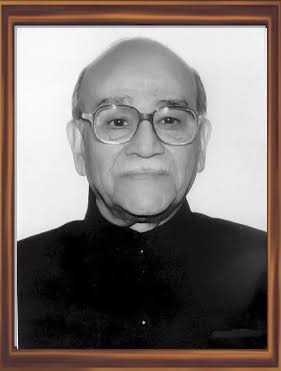
Mambillikalathil Govind Kumar Menon, popularly known as M. G. K. Menon, was one of India’s most influential physicists, science administrators, institution builders and policy makers.
Born on 28 August 1928 in Mangalore, Menon made major contributions to the study of cosmic rays and elementary particle physics. He later became one of the most important architects of India’s post-independence scientific and technological institutions.
Menon joined the Tata Institute of Fundamental Research (TIFR) in 1955 at the invitation of Homi J. Bhabha. He eventually became Director of TIFR and played a major role in expanding research in physics and other scientific disciplines.
His public career was equally remarkable. He served as Chairman of ISRO in 1972, led the Defence Research and Development Organisation (DRDO) from 1974 to 1978, served as Director-General of the Council of Scientific and Industrial Research (CSIR), was a member of the Planning Commission, Scientific Adviser to the Prime Minister, Union Minister for Science and Technology and Education, and a member of the Rajya Sabha.
For his exceptional contributions, Menon received the Padma Shri in 1961, Padma Bhushan in 1968 and Padma Vibhushan in 1985. He was also elected a Fellow of the Royal Society in 1970.
2. Quick Facts
| Particular | Information |
|---|---|
| Full Name | Mambillikalathil Govind Kumar Menon |
| Popular Name | M. G. K. Menon |
| Date of Birth | 28 August 1928 |
| Place of Birth | Mangalore, Karnataka, India |
| Date of Death | 22 November 2016 |
| Place of Death | New Delhi, India |
| Nationality | Indian |
| Profession | Physicist, Scientist, Science Administrator, Policy Maker and Statesman |
| Field of Achievement | Physics, Cosmic Rays, Particle Physics, Science & Technology Policy |
| Major Scientific Institution | Tata Institute of Fundamental Research |
| Major Government Roles | ISRO Chairman, DRDO Director-General, CSIR Director-General, Scientific Adviser to PM |
| ISRO Chairmanship | 1972 |
| Director, TIFR | 1966–1975 |
| DRDO Leadership | 1974–1978 |
| Major National Honour | Padma Vibhushan |
| Padma Vibhushan Year | 1985 |
| Royal Society Fellowship | 1970 |
| Years Active | Approximately 1950s–2016 |
ISRO records his birth on 28 August 1928 and death on 22 November 2016. The Institute of Science, Mumbai, identifies his main fields as cosmic rays, particle physics and science policy.
3. Award Information
Padma Vibhushan
The Padma Vibhushan was the highest Padma honour received by M. G. K. Menon.
The official Government of India Gazette dated 26 January 1985 records:
“Prof. Mambillikalathil Govind Menon, Member, Planning Commission, New Delhi”
among the recipients of the Padma Vibhushan.
The official Padma Awards database classifies his 1985 Padma Vibhushan under Civil Service.
| Award Detail | Information |
| Award Name | Padma Vibhushan |
| Award Category | Civilian Award |
| Award Year | 1985 |
| Field in Official Padma Database | Civil Service |
| Presented By | President of India |
| Award Announcement | 26 January 1985 |
| Position Listed in Gazette | Member, Planning Commission |
| Recognition | Distinguished contribution through national scientific administration and public service |
The Padma Vibhushan is awarded for exceptional and distinguished service. Padma Awards are announced around Republic Day and are normally presented by the President at Rashtrapati Bhavan during an investiture ceremony later in the year.
Date of Ceremony
The official 1985 Gazette establishes the award announcement date as 26 January 1985, but the sources consulted do not provide a sufficiently reliable individual ceremony date for Menon’s presentation.
For a factual blog, it is therefore safer to state:
“Padma Vibhushan announced on 26 January 1985; the individual investiture date is not established in the sources consulted.”
Previous Recipients
The immediately preceding Padma Vibhushan recipients were from 1982, when Mira Behn received the honour. The award was not listed in 1983 or 1984 before the 1985 awards.
Other 1985 Padma Vibhushan Recipient
In 1985, Menon shared the Padma Vibhushan award year with renowned chemist Prof. C. N. R. Rao, who was recognised in Science and Engineering.
Next Recipients
The next Padma Vibhushan awards were given in 1986 to Autar Singh Paintal, Birju Maharaj and Baba Amte.
4. Why Did M. G. K. Menon Receive the Award?
M. G. K. Menon received the Padma Vibhushan in recognition of his outstanding contribution to India’s scientific administration, research institutions and national science and technology policy.
His achievements extended far beyond his own research.
He helped build and strengthen institutions involved in:
- Fundamental research
- Cosmic-ray physics
- Particle physics
- Space research
- Defence research
- Electronics
- Science and technology policy
- Industrial research
- Higher scientific education
His career included leadership positions at TIFR, ISRO, DRDO and CSIR, as well as senior government responsibilities.
His scientific work itself was also significant. He was particularly distinguished for investigations into cosmic rays and the high-energy interactions of elementary particles.
5. Early Life
M. G. K. Menon was born on 28 August 1928 in Mangalore, then part of the Madras Presidency and now in Karnataka.
He came from a Malayali family. His father was Justice Sankara Menon of Kizhakkepat, while his mother was Narayanikutty Amma of Mamballikalathil.
From an early age, Menon developed an interest in science and mathematics. His education eventually took him from India to the United Kingdom, where he pursued advanced research in physics.
His scientific career developed during a crucial period in Indian history. After independence, India was attempting to establish world-class institutions for fundamental science, technology and industrial research.
Menon became one of the scientists who helped turn that ambition into reality.
6. Education
Menon received his early higher education in India.
Bachelor’s Degree
He completed his B.Sc. from Jaswant College, Jodhpur, in 1946.
Master’s Degree
He subsequently completed an M.Sc. at the Royal Institute of Science, Bombay, in 1949. The institute is now known as the Institute of Science, Mumbai.
Doctorate
Menon then went to the University of Bristol in the United Kingdom, where he worked under Nobel Prize-winning physicist Cecil F. Powell.
He earned his Ph.D. in physics in 1953, working in elementary particle physics.
His doctoral and postdoctoral research prepared him for a career in cosmic-ray and particle physics.
7. Career Journey
Joining TIFR
In 1955, Menon joined the Tata Institute of Fundamental Research (TIFR) in Mumbai at the invitation of Homi J. Bhabha.
TIFR was one of the most important scientific institutions created in independent India, and Menon became deeply involved in its development.
Cosmic-Ray Research
Menon carried out important research on cosmic rays and high-energy particle interactions.
His work included experiments using high-altitude balloon flights and underground experiments involving cosmic rays and neutrinos.
One major area of research involved experiments at the Kolar Gold Fields, where underground laboratories were used for studying cosmic-ray neutrinos.
Director of TIFR
After Homi Bhabha died in an air crash in 1966, Menon became Director of TIFR at the age of about 38.
He served as Director from 1966 to 1975.
During this period, he helped broaden the institute’s scientific activities.
Chairman of ISRO
Menon served as Chairman of ISRO during January–September 1972.
He had actually been associated with India’s space programme from its early years. He was a member of the Indian National Committee on Space Research (INCOSPAR), the organisation established in 1962 under Vikram Sarabhai to oversee India’s emerging space programme.
Government Science Administration
Menon subsequently took on major government responsibilities.
He served as Secretary to the Government of India in areas including:
- Electronics
- Science and Technology
- Defence Research
- Environment
His government service in these areas extended over approximately 12 years.
DRDO
Menon led the Defence Research and Development Organisation from 1974 to 1978.
CSIR
He became Director-General of CSIR from 1978 to 1981.
Planning Commission
From 1982 to 1989, Menon served as a member of the Planning Commission with the rank of Minister of State.
Scientific Adviser to the Prime Minister
He served as Scientific Adviser to the Prime Minister from 1986 to 1989.
Minister
Menon also served as Minister for Science and Technology and Education in the Government of India.
Rajya Sabha
He served as a Member of Parliament in the Rajya Sabha from 1990 to 1996.
8. Major Achievements
1. Contributions to Cosmic-Ray Physics
Menon became internationally known for his work in cosmic-ray physics and high-energy particle interactions.
His research helped expand understanding of elementary particles and high-energy interactions.
2. Development of TIFR
As Director of TIFR, Menon helped strengthen the institution and expand its scientific activities.
He supported research not only in particle physics but also in other emerging scientific fields.
3. Support for Indian Space Research
Menon was involved with India’s space programme from its formative years and later served as ISRO Chairman.
4. Support for Astronomy
He supported scientists working in radio astronomy and helped promote major astronomical facilities.
Nature India notes that he supported Govind Swarup in the development of the Ooty Radio Telescope and later the Giant Metrewave Radio Telescope near Pune.
5. Promotion of Optical Astronomy
He also supported the development of optical astronomy in India and helped Vainu Bappu establish major astronomical facilities, including the observatory at Kavalur.
6. Support for Biological Sciences
Menon supported the development of modern biological research in India, including the expansion of research associated with Obaid Siddiqi.
7. Science and Technology Policy
As a member of the Planning Commission and senior government adviser, Menon played an important role in shaping India’s science and technology policy.
He was closely associated with the Technology Policy Statement of 1983.
8. International Scientific Leadership
Menon served as President of the International Council of Scientific Unions from 1988 to 1993.
9. Fellowship of the Royal Society
In 1970, he was elected a Fellow of the Royal Society of London, one of the world’s oldest and most prestigious scientific academies. Nature records that the fellowship recognised his contributions to nuclear emulsion techniques, strange particles and cosmic-ray studies near the geomagnetic equator.
9. Contribution to the Nation
M. G. K. Menon’s contribution to India was not limited to one scientific field.
He contributed to nation-building through science, technology, education, research administration and public policy.
Building Scientific Institutions
Menon helped strengthen institutions such as TIFR and supported the growth of several specialised research programmes.
Space Research
His involvement with India’s space programme began during its formative stage, and he later became Chairman of ISRO.
Defence Research
As head of DRDO, he contributed to India’s national defence research system.
Industrial Research
His leadership of CSIR placed him at the centre of India’s national network of scientific and industrial laboratories.
Science Policy
As a member of the Planning Commission and Scientific Adviser to the Prime Minister, he helped connect scientific research with national development planning.
Education
Menon also held responsibility for education at the national level and supported the expansion of India’s scientific talent base.
International Scientific Cooperation
His leadership of international scientific organisations strengthened India’s role in the global scientific community.
10. Other Awards and Honours
M. G. K. Menon received numerous national and international honours.
| Year | Award / Honour |
| 1960 | Shanti Swarup Bhatnagar Award – Physical Sciences |
| 1961 | Padma Shri |
| 1968 | Padma Bhushan |
| 1970 | Fellow of the Royal Society |
| 1978 | Cecil Powell Medal |
| 1978 | Durga Prasad Khaitan Memorial Medal |
| 1979 | Kerala State Committee for Science and Technology Prize |
| 1983 | Jawaharlal Nehru Award for Science |
| 1984 | G. P. Chatterjee Award |
| 1985 | Padma Vibhushan |
| 1985 | J. C. Bose Gold Medal |
| 1985 | C. V. Raman Medal |
| 1988 | Sir Asutosh Mookerjee Gold Medal |
| 1994 | Modi Award for Science |
| 1996 | Abdus Salam Medal |
| 1999 | Shatabdi Puraskar |
| 2001 | Millennium Award for lifetime achievement |
The Pontifical Academy of Sciences and ISRO list many of these awards and honours.
Fellowship of the Royal Society
Menon’s election as a Fellow of the Royal Society in 1970 was one of his most prestigious international scientific honours.
Padma Awards
His progression through India’s Padma honours is particularly notable:
- Padma Shri – 1961
- Padma Bhushan – 1968
- Padma Vibhushan – 1985
11. Legacy and Influence
M. G. K. Menon’s greatest legacy lies in his role as an institution builder and science policy leader.
He belonged to a generation of Indian scientists who helped create the scientific infrastructure of independent India.
His influence extended across several disciplines.
Physics
His cosmic-ray and particle-physics research established him as an internationally respected physicist.
Astronomy
He supported the development of radio and optical astronomy in India.
Space Science
His early involvement with the Indian space programme connected him with the formative period of ISRO.
Biology
He encouraged the development of modern biological research institutions and programmes.
Science Policy
His work in the Planning Commission and as Scientific Adviser influenced India’s long-term approach to science and technology.
International Science
His presidency of the International Council of Scientific Unions demonstrated the international standing he achieved.
An enduring tribute to him is the naming of asteroid 7564 Gokumenon in his honour.
12. Interesting Facts
- His full name was Mambillikalathil Govind Kumar Menon.
- He was born in Mangalore on 28 August 1928.
- He completed his B.Sc. at Jaswant College, Jodhpur, in 1946.
- He completed his M.Sc. at the Royal Institute of Science, Bombay, in 1949.
- He earned his Ph.D. at the University of Bristol under Nobel laureate Cecil F. Powell.
- He joined TIFR in 1955 at the invitation of Homi J. Bhabha.
- He became Director of TIFR at a relatively young age after Homi Bhabha’s death.
- He served as Chairman of ISRO in 1972.
- He headed DRDO from 1974 to 1978.
- He served as Director-General of CSIR from 1978 to 1981.
- He served as Scientific Adviser to the Prime Minister from 1986 to 1989.
- He served in the Rajya Sabha from 1990 to 1996.
- He became a Fellow of the Royal Society in 1970.
- He was President of all three major Indian science academies at different times.
- He was a member of the Pontifical Academy of Sciences.
- He received all three major Padma honours during his career: Padma Shri, Padma Bhushan and Padma Vibhushan.
- Asteroid 7564 Gokumenon was named in his honour.
- He died in New Delhi on 22 November 2016.
13. Quotes
M. G. K. Menon was primarily known for his scientific and administrative work rather than for a collection of widely circulated quotations.
For a factual blog, it is best to avoid quotations circulating online unless they can be traced to a published speech, interview or official document.
A blog-safe thematic statement is:
M. G. K. Menon’s career demonstrated how scientific research, institution building and public policy could work together in the service of national development.
This is a summary of his career and philosophy, not a direct quotation.
His career clearly reflected this combination: he was simultaneously a researcher, institutional leader, policy maker and public servant.
14. Timeline
| Year | Major Event |
| 1928 | Born on 28 August in Mangalore. |
| 1946 | Completed B.Sc. from Jaswant College, Jodhpur. |
| 1949 | Completed M.Sc. from Royal Institute of Science, Bombay. |
| 1953 | Earned Ph.D. from the University of Bristol under Cecil F. Powell. |
| 1955 | Joined TIFR at the invitation of Homi Bhabha. |
| 1960 | Received Shanti Swarup Bhatnagar Award in Physical Sciences. |
| 1961 | Received Padma Shri. |
| 1966 | Became Director of TIFR. |
| 1968 | Received Padma Bhushan. |
| 1970 | Elected Fellow of the Royal Society. |
| 1972 | Served as Chairman of ISRO. |
| 1974–1978 | Led DRDO. |
| 1975 | Completed his tenure as Director of TIFR. |
| 1978–1981 | Served as Director-General of CSIR. |
| 1982–1989 | Member of the Planning Commission. |
| 1985 | Received Padma Vibhushan. |
| 1986–1989 | Served as Scientific Adviser to the Prime Minister. |
| 1988–1993 | President of the International Council of Scientific Unions. |
| 1990–1996 | Member of the Rajya Sabha. |
| 1994 | Received Modi Award for Science. |
| 1996 | Received Abdus Salam Medal. |
| 2016 | Died on 22 November in New Delhi. |
| 2008 | Asteroid 7564 was named Gokumenon in his honour. |
The major career dates are documented by ISRO and the Institute of Science Mumbai, while the awards are corroborated by the Government of India and the Pontifical Academy of Sciences.
15. References
For a reliable blog article, the following sources are particularly useful:
1. ISRO – Former Chairman Prof. M. G. K. Menon
The official ISRO biography provides information about his education, scientific research, government positions, ISRO chairmanship and awards.
2. Government of India – Padma Awards Gazette, 1985
The official Gazette confirms that Prof. Mambillikalathil Govind Menon received the Padma Vibhushan in 1985 and identifies him as a Member of the Planning Commission.
3. Padma Awards Interactive Dashboard
The Government of India’s Padma Awards database classifies his 1985 Padma Vibhushan under Civil Service.
4. Institute of Science, Mumbai
The Institute’s biography provides information about his B.Sc., M.Sc., Ph.D., scientific field and career as a physicist and institution builder.
5. Pontifical Academy of Sciences
The Academy’s biographical record provides details of his scientific awards, fellowships and international honours.
6. Nature India
A tribute published after his death provides useful information about his scientific research, institution-building activities and contributions to Indian astronomy and science policy.
7. Tata Institute of Fundamental Research
TIFR’s official accolades page confirms his Padma Shri, Padma Bhushan and Padma Vibhushan honours.
16. Related Personalities
Readers interested in M. G. K. Menon may also want to learn about the following scientists and science administrators:
Homi J. Bhabha
Founder of TIFR and one of the principal architects of India’s atomic-energy programme. Menon joined TIFR at Bhabha’s invitation.
Vikram Sarabhai
Founder of India’s space programme and the first Chairman of the Indian Space Research Organisation. Menon worked with Sarabhai during the formative years of India’s space programme.
Satish Dhawan
A leading aerospace scientist who succeeded Vikram Sarabhai as Chairman of ISRO and played a major role in developing India’s space programme.
Raja Ramanna
Physicist and scientific administrator who made major contributions to India’s nuclear programme and served as Director of DRDO.
C. N. R. Rao
Prominent Indian chemist and contemporary of Menon who also received the 1985 Padma Vibhushan.
Govind Swarup
Pioneer of Indian radio astronomy whom Menon supported in developing major radio-telescope facilities.
Vainu Bappu
One of India’s leading astronomers whose work in optical astronomy received support during Menon’s period of influence in Indian science.
Obaid Siddiqi
Pioneer of molecular biology in India who benefited from Menon’s support for the development of biological sciences.
17. Frequently Asked Questions (FAQ)
Who was M. G. K. Menon?
M. G. K. Menon was an Indian physicist, science administrator, institution builder and policy maker who made major contributions to cosmic-ray physics, particle physics and India’s scientific and technological development.
What was M. G. K. Menon’s full name?
His full name was Mambillikalathil Govind Kumar Menon.
When was M. G. K. Menon born?
He was born on 28 August 1928 in Mangalore, Karnataka.
Where did M. G. K. Menon study?
He studied at Jaswant College, Jodhpur; the Royal Institute of Science, Bombay; and the University of Bristol in the United Kingdom.
Who was M. G. K. Menon’s Ph.D. supervisor?
His Ph.D. research at the University of Bristol was conducted under Nobel laureate Cecil F. Powell.
What was M. G. K. Menon’s field of science?
His principal scientific fields were cosmic rays and elementary particle physics.
When did M. G. K. Menon join TIFR?
He joined the Tata Institute of Fundamental Research in 1955.
When did M. G. K. Menon become Director of TIFR?
He became Director of TIFR in 1966 and served until 1975.
Was M. G. K. Menon Chairman of ISRO?
Yes. He served as Chairman of ISRO from January to September 1972.
Did M. G. K. Menon head DRDO?
Yes. He led the Defence Research and Development Organisation from 1974 to 1978.
What awards did M. G. K. Menon receive?
His major honours included the Shanti Swarup Bhatnagar Award, Padma Shri, Padma Bhushan, Padma Vibhushan, Fellowship of the Royal Society, Cecil Powell Medal and Abdus Salam Medal, among many others.
When did M. G. K. Menon receive the Padma Vibhushan?
He received the Padma Vibhushan in 1985. The official Gazette announced the award on 26 January 1985.
In which category did he receive the Padma Vibhushan?
The official Padma Awards database classifies his 1985 Padma Vibhushan under Civil Service.
Why did M. G. K. Menon receive the Padma Vibhushan?
He was recognised for his exceptional contribution to India’s scientific administration, research institutions, science policy and national development, building on his distinguished career as a physicist and senior science administrator.
Was M. G. K. Menon a Fellow of the Royal Society?
Yes. He was elected a Fellow of the Royal Society in 1970.
Did M. G. K. Menon work as Scientific Adviser to the Prime Minister?
Yes. He served as Scientific Adviser to the Prime Minister from 1986 to 1989.
Was M. G. K. Menon a Member of Parliament?
Yes. He served as a Rajya Sabha member from 1990 to 1996.
What was M. G. K. Menon’s contribution to Indian science?
He contributed to cosmic-ray and particle physics and helped develop major Indian scientific institutions and programmes in space research, astronomy, biology, defence research and science policy.
When did M. G. K. Menon die?
He died on 22 November 2016 in New Delhi at the age of 88.
Is anything named after M. G. K. Menon?
Yes. Asteroid 7564 Gokumenon was named in his honour.
Conclusion
Prof. M. G. K. Menon was one of the remarkable scientific leaders of modern India. His career combined scientific research, institution building, government administration and national policy.
As a physicist, he made important contributions to cosmic-ray and particle physics. As Director of TIFR, he helped strengthen one of India’s premier research institutions. As Chairman of ISRO, head of DRDO and Director-General of CSIR, he contributed to several strategic areas of national science and technology.
His later work as a Planning Commission member, Scientific Adviser to the Prime Minister, Minister and international scientific leader demonstrated his ability to connect scientific knowledge with national policy.
His achievements were recognised through numerous honours, including the Padma Shri in 1961, Padma Bhushan in 1968 and Padma Vibhushan in 1985, as well as Fellowship of the Royal Society.
M. G. K. Menon’s lasting legacy is therefore not confined to his scientific papers. He helped build the institutions, policies and scientific culture that shaped India’s development as a modern scientific nation.
About the Author