
1. Introduction
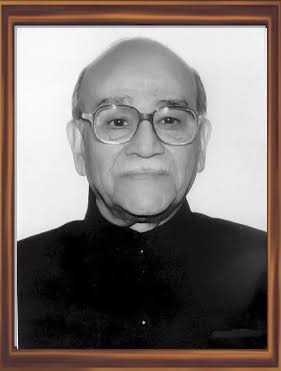
Vishnu Sakharam Khandekar, popularly known as V. S. Khandekar, was one of the most influential Marathi writers of the 20th century. He was a novelist, short-story writer, essayist, playwright and literary critic whose writing explored human nature, morality, desire, social values and the conflict between materialism and idealism.
Born on 11 January 1898 in Sangli, Maharashtra, Khandekar spent much of his early professional life as a teacher. His experiences as an educator and his close observation of society strongly influenced his literary work.
His best-known novel, Yayati, based on a character from the Mahabharata, became a landmark of modern Marathi literature. The novel received the Sahitya Akademi Award in 1960 and later earned Khandekar the Jnanpith Award for 1974. He was the first Marathi writer to receive the Jnanpith Award.
Khandekar was also honoured with the Padma Bhushan in 1968 and elected a Sahitya Akademi Fellow in 1970.
2. Quick Facts
| Particular | Information |
|---|---|
| Full Name | Vishnu Sakharam Khandekar |
| Native Name | विष्णु सखाराम खांडेकर (Vishnu Sakharam Khandekar) |
| Popular Name | V. S. Khandekar |
| Date of Birth | 11 January 1898 |
| Place of Birth | Sangli, Maharashtra, British India |
| Date of Death | 2 September 1976 |
| Place of Death | Miraj, Maharashtra |
| Nationality | Indian |
| Language | Marathi |
| Profession | Writer, novelist, short-story writer, essayist, playwright, critic and teacher |
| Field of Achievement | Marathi literature and Indian literature |
| Years Active | Approximately 1919–1976 |
| Most Famous Work | Yayati |
| Major Award | Jnanpith Award, 1974 |
| Other Major Honours | Padma Bhushan, Sahitya Akademi Award, Sahitya Akademi Fellowship |
His literary career began in the early 20th century, with his first published work appearing in 1919, and continued for more than five decades.
3. Award Information
Jnanpith Award
The most important recognition in Khandekar’s career was the Jnanpith Award for 1974, one of India’s highest literary honours.
| Award Detail | Information |
| Award Name | Jnanpith Award |
| Award Category | Indian literature – Marathi |
| Award Year | 1974 |
| Presented By | Bharatiya Jnanpith |
| Awarded Work | Yayati |
| Language | Marathi |
| Official Recognition | Outstanding work, Yayati, during 1958–1967 |
The official Jnanpith laureates list identifies V. S. Khandekar as the 1974 Marathi laureate and specifically records Yayati as the work for which he received the award.
Citation / Official Reason
The official Jnanpith record describes Khandekar as the recipient of the 1974 award for his outstanding work, Yayati, covering the award’s assessment period of 1958–1967.
Previous Recipient
The preceding Jnanpith award for 1973 had two co-recipients:
- D. R. Bendre – Kannada
- Gopinath Mohanty – Oriya/Odia
Next Recipient
The following award, for 1975, went to P. V. Akilandam (P. V. Akilan) for his Tamil novel Chittirappavai.
Date of Ceremony
The Jnanpith official laureate records clearly establish 1974 as the award year, but a reliable official source giving the exact ceremony date is not readily available. Some secondary sources cite 26 February 1976 in connection with Khandekar being honoured for Yayati, but this date should be treated cautiously unless independently confirmed by an archival Jnanpith record.
For a blog, it is safer to write “He was honoured with the Jnanpith Award for 1974” rather than presenting an uncertain ceremony date as fact.
4. Why Did Vishnu Sakharam Khandekar Receive the Award?
Khandekar received the Jnanpith Award primarily for his outstanding contribution to Marathi literature, particularly for his celebrated novel Yayati.
Yayati reinterprets an episode from the Mahabharata and examines universal questions about desire, ambition, pleasure, ageing, responsibility and the search for fulfilment. Khandekar used an ancient story to discuss problems that remain relevant to modern human life.
The official Jnanpith record specifically identifies Yayati as his outstanding work for the 1974 award.
The novel had already won the Sahitya Akademi Award in Marathi in 1960, demonstrating its importance in Indian literature well before Khandekar received the Jnanpith.
5. Early Life
Vishnu Sakharam Khandekar was born on 11 January 1898 in Sangli, in present-day Maharashtra. His childhood and early education were spent in Sangli. His father was associated with the judicial administration of the Sangli principality.
As a young student, Khandekar developed a strong interest in literature and theatre. He participated in dramatic activities and developed an early fascination with storytelling.
His early exposure to books, theatre and social life helped shape his later literary career.
Khandekar’s life was also influenced by teaching. In 1920, he joined a school in Shiroda in the Konkan region. He remained associated with education there until his retirement from the school in 1938.
His years as a teacher gave him an opportunity to observe ordinary people, their struggles and their relationships. These observations became important material for his fiction.
6. Education
Khandekar completed his early education in Sangli and subsequently studied at Fergusson College in Pune. The Marathi Vishwakosh records that his education in Sangli and Pune extended to the Intermediate Arts level.
His education introduced him to literature and intellectual currents that influenced his development as a writer.
Although he did not follow a conventional university-based academic career, his lifelong reading, teaching experience and literary work became his real education. His extensive engagement with Marathi and Indian literary traditions helped him develop a distinctive literary voice.
7. Career Journey
Khandekar’s literary career began around 1919, when his early writing was published.
His career can broadly be divided into several stages:
Early Writing
During his youth, Khandekar experimented with different forms of writing and developed an interest in drama and storytelling.
Teaching Career
In 1920, he became a teacher at a school in Shiroda. He later served as the school’s headmaster and retired from the institution in 1938.
Growth as a Marathi Writer
Alongside teaching, he continued writing novels, short stories, essays and other literary works.
Recognition
His reputation grew steadily, and he became an important figure in Marathi literary circles. In 1941, he presided over the Marathi Sahitya Sammelan in Solapur.
National Recognition
His novel Yayati won the Sahitya Akademi Award in 1960. He received the Padma Bhushan in 1968 and became a Sahitya Akademi Fellow in 1970.
Jnanpith Award
In 1974, Khandekar received the Jnanpith Award for Yayati, becoming the first Marathi recipient of the prestigious honour.
8. Major Achievements
Some of Khandekar’s most important achievements include:
1. First Marathi Jnanpith Laureate
Khandekar became the first Marathi writer to receive the Jnanpith Award, giving Marathi literature an important place in the national literary landscape.
2. Yayati
His most famous novel, Yayati, became one of the best-known works of modern Marathi literature. It won the Sahitya Akademi Award in 1960 and the Jnanpith Award in 1974.
3. Padma Bhushan
The Government of India awarded Khandekar the Padma Bhushan in 1968 under the field of Literature and Education.
4. Sahitya Akademi Fellowship
In 1970, he was elected a Fellow of the Sahitya Akademi, one of the Akademi’s highest honours for literary figures.
5. Contribution to Multiple Literary Forms
Khandekar wrote novels, short stories, essays, plays and criticism, making his contribution much broader than that of a novelist alone.
9. Contribution to the Nation
Khandekar’s contribution to India was primarily through literature and education.
He helped strengthen Marathi literature by creating works that addressed universal human problems through the Marathi language. His writing demonstrated that regional-language literature could achieve national recognition and speak to readers beyond linguistic boundaries.
His success also helped introduce Marathi literary culture to a wider Indian audience. His works were translated into several Indian languages, including English, Hindi, Malayalam, Bengali and Gujarati.
His career as a teacher was another important contribution. Through education, he influenced young people while simultaneously developing his literary career.
His novel Yayati also demonstrates how Indian mythology can be reinterpreted to explore modern psychological and social questions.
10. Other Awards and Honours
Apart from the Jnanpith Award, Khandekar received several significant honours.
Sahitya Akademi Award – 1960
Khandekar received the Sahitya Akademi Award in Marathi for Yayati in 1960.
Padma Bhushan – 1968
The Government of India awarded him the Padma Bhushan in the field of Literature and Education in 1968.
Sahitya Akademi Fellowship – 1970
He was elected a Sahitya Akademi Fellow in 1970. The Akademi lists V. S. Khandekar among the Fellows elected that year.
Jnanpith Award – 1974
He received the Jnanpith Award for 1974 for Yayati.
Honorary D.Litt.
He was also honoured with an honorary Doctor of Letters (D.Litt.) by Shivaji University, Kolhapur, according to biographical records.
Commemorative Postage Stamp
The Government of India issued a commemorative postage stamp in his honour in 1998, marking the centenary of his birth.
11. Legacy and Influence
V. S. Khandekar remains an important figure in Marathi literary history.
His greatest legacy is perhaps Yayati, which continues to attract readers because its central questions are not limited to one historical period. The novel asks whether unlimited pursuit of pleasure can ever satisfy human desire and examines the consequences of selfish ambition.
Khandekar also influenced Marathi literature through his short stories, essays and critical writing. His literary career demonstrated how a writer could combine traditional Indian themes with modern social and psychological concerns.
His works have been translated into several languages, helping introduce his writing to readers outside Maharashtra.
His place in Marathi literature was further strengthened by the fact that he became the first Marathi recipient of the Jnanpith Award.
12. Interesting Facts
Here are some interesting facts about V. S. Khandekar:
- He was the first Marathi writer to win the Jnanpith Award.
- His most famous novel was Yayati.
- Yayati won both the Sahitya Akademi Award and the Jnanpith Award.
- He worked as a teacher for many years before retiring from teaching in 1938.
- He was interested in theatre from an early age and participated in dramatic activities during his youth.
- He was a versatile writer, working in novels, short stories, essays, plays and literary criticism.
- He received the Padma Bhushan in 1968 in Literature and Education.
- He became a Sahitya Akademi Fellow in 1970.
- His writing career began in 1919, giving him a literary career spanning more than five decades.
- His novel Yayati draws on the Mahabharata while exploring human desire and responsibility.
13. Quotes
When publishing quotations attributed to Khandekar, it is important to verify them against a reliable edition of his original writings or an authoritative biographical source. Many quotations circulating online are attributed to him without reliable source information.
For a blog, you can instead use a paraphrased thematic statement such as:
Khandekar’s literature repeatedly explores the tension between human desire, moral responsibility and the search for a meaningful life.
This is a summary of themes in his writing, not a direct quotation, so it should not be presented as a quotation from Khandekar.
His novel Yayati is particularly associated with the conflict between unlimited desire and human responsibility.
14. Timeline
| Year | Event |
| 1898 | Vishnu Sakharam Khandekar was born in Sangli, Maharashtra. |
| 1913 | He passed the matriculation examination and joined Fergusson College, Pune. |
| 1919 | His early literary writing began to be published. |
| 1920 | He began working as a teacher in Shiroda. |
| 1938 | He retired from his teaching position. |
| 1941 | He presided over the Marathi Sahitya Sammelan in Solapur. |
| 1960 | Yayati received the Sahitya Akademi Award in Marathi. |
| 1968 | He received the Padma Bhushan for Literature and Education. |
| 1970 | He was elected a Fellow of the Sahitya Akademi. |
| 1974 | He received the Jnanpith Award for Yayati. |
| 1976 | Khandekar died in Miraj on 2 September. |
| 1998 | The Government of India issued a commemorative postage stamp in his honour. |
The major award dates are supported by official Sahitya Akademi, Padma Awards and Jnanpith records.
15. References
For a reliable blog article, prioritize official and authoritative sources such as:
- Bharatiya Jnanpith – official information on Jnanpith laureates and the 1974 award.
- Sahitya Akademi – official list of Akademi Award recipients.
- Sahitya Akademi – official list of Fellows, including V. S. Khandekar in 1970.
- Government of India – Padma Awards – official record of his Padma Bhushan in 1968.
- Marathi Vishwakosh – detailed Marathi-language biographical information about Khandekar.
- Orient Paperbacks – information about Yayati and Khandekar’s literary career.
Official sources are preferable to general biography websites when you are verifying award names, years and citations.
16. Related Personalities
Readers interested in V. S. Khandekar and Marathi or Indian literature may also explore:
D. R. Bendre
Kannada poet and 1973 co-recipient of the Jnanpith Award.
Gopinath Mohanty
Odia novelist and 1973 co-recipient of the Jnanpith Award.
P. V. Akilandam
Tamil writer who received the Jnanpith Award for 1975, immediately after Khandekar’s award year.
K. Shivaram Karanth
Kannada writer and 1977 Jnanpith laureate.
Kusumagraj
A major Marathi literary figure whose work belongs to the same broad tradition of modern Marathi literature.
P. L. Deshpande
A celebrated Marathi writer, playwright and humorist who also contributed significantly to modern Marathi culture.
17. Frequently Asked Questions (FAQ)
Who was Vishnu Sakharam Khandekar?
Vishnu Sakharam Khandekar, popularly known as V. S. Khandekar, was a prominent Marathi novelist, short-story writer, essayist, playwright and literary critic.
When was V. S. Khandekar born?
He was born on 11 January 1898 in Sangli, Maharashtra.
What is V. S. Khandekar famous for?
He is best known for his novel Yayati and for becoming the first Marathi writer to receive the Jnanpith Award.
Which award did V. S. Khandekar receive in 1974?
He received the Jnanpith Award for 1974 for his outstanding work Yayati in Marathi.
When did Yayati win the Sahitya Akademi Award?
Yayati won the Sahitya Akademi Award in Marathi in 1960.
Did V. S. Khandekar receive the Padma Bhushan?
Yes. He received the Padma Bhushan in 1968 in the field of Literature and Education.
When did he become a Sahitya Akademi Fellow?
Khandekar was elected a Sahitya Akademi Fellow in 1970.
What was V. S. Khandekar’s profession?
He was a writer, novelist, short-story writer, essayist, playwright, literary critic and teacher.
Where did V. S. Khandekar work as a teacher?
He worked at a school in Shiroda, Maharashtra, beginning in 1920 and remained there until 1938.
When did V. S. Khandekar die?
He died on 2 September 1976 in Miraj, Maharashtra, at the age of 78.
Why is Yayati important?
Yayati uses an episode from the Mahabharata to examine universal themes such as desire, ambition, ageing, responsibility and the pursuit of happiness. Its literary importance was recognized through both the Sahitya Akademi Award and the Jnanpith Award.
Conclusion
Vishnu Sakharam Khandekar occupies a special position in the history of modern Marathi literature. From his beginnings as a teacher and young writer to his emergence as an internationally recognized Indian literary figure, his career demonstrates the power of literature to connect regional culture with universal human experiences.
His greatest achievement, Yayati, transformed an ancient mythological story into a profound examination of human desire and moral responsibility. The Sahitya Akademi Award, Padma Bhushan, Sahitya Akademi Fellowship and Jnanpith Award recognized different aspects of his extraordinary contribution.
Most importantly, Khandekar’s achievement as the first Marathi recipient of the Jnanpith Award in 1974 gave national recognition to Marathi literature and secured his lasting place in India’s literary history.
About the Author