
1. Introduction
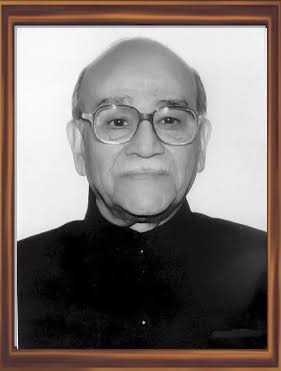
Asoke Kumar Sarkar, also widely written as Ashok Kumar Sarkar, was one of the most influential figures in Indian and Bengali journalism during the twentieth century. Born in Calcutta in 1912, he became the editor-in-chief and owner of Anandabazar Patrika and played a major role in transforming the newspaper into one of Bengal’s most influential media institutions.
He was not only a journalist and editor but also a publisher, cultural patron and advocate of press freedom. Under his leadership, Anandabazar Patrika developed into a major modern newspaper, while the literary magazine Desh became an important platform for Bengali writers and intellectuals.
The Government of India honoured him with the Padma Bhushan in 1967 in the field of Literature and Education. The official 1967 Gazette identifies him as “Editor, Ananda Bazar Patrika, Calcutta.”
His influence extended beyond journalism. He helped establish the Ananda Puraskar, promoted Bengali publishing, supported mountaineering expeditions and played a prominent role in defending press freedom, particularly during politically difficult periods.
2. Quick Facts
| Particular | Information |
|---|---|
| Full Name | Asoke Kumar Sarkar / Ashok Kumar Sarkar |
| Native Name | অশোক কুমার সরকার |
| Date of Birth | 7 October 1912 |
| Place of Birth | Calcutta, British India (present-day Kolkata, West Bengal) |
| Nationality | Indian |
| Profession | Journalist, editor, publisher and media proprietor |
| Field of Achievement | Literature and Education; Journalism and Publishing |
| Father | Prafulla Kumar Sarkar |
| Mother | Nirjharini Sarkar |
| Spouse | Aloka Sarkar |
| Major Organisation | Anandabazar Patrika / ABP Group |
| Major Editorial Position | Editor-in-Chief, Anandabazar Patrika |
| Years Active | Mainly from the 1930s to 1983 |
| Major Award | Padma Bhushan, 1967 |
| Date of Death | 17 February 1983 |
| Place of Death | Calcutta, West Bengal |
The date of birth and death are given as 7 October 1912 and 17 February 1983 in biographical sources. A detailed centenary tribute published by The Telegraph also confirms that he was born on 7 October 1912 and died in 1983.
3. Award Information
Padma Bhushan
Award Name
Padma Bhushan
Award Category
Literature and Education
Award Year
1967
Presented By
Government of India
Date of Ceremony
The official 1967 Padma notification is dated 26 January 1967, when the awards were announced. However, I have not found a sufficiently reliable primary source establishing the exact date on which Asoke Kumar Sarkar personally received the insignia at a ceremony. Therefore, for a blog, it is safer to state “Awarded in 1967” rather than giving an unverified ceremony date.
Official Record
The Government of India’s 1967 Gazette lists:
“Shri Asoke Kumar Sarkar, Editor, Ananda Bazar Patrika, Calcutta.”
The official Padma Awards database classifies him under Literature and Education and records West Bengal as his state.
Citation / Official Reason
The surviving official notification does not provide a lengthy citation explaining his achievement. It identifies him by his position as Editor of Ananda Bazar Patrika. The award’s official field was Literature and Education.
Previous and Next Recipients
The Padma Bhushan was awarded to multiple people every year and in multiple fields, so there was no single “previous” or “next” recipient of the award.
For context, the official records show several other Padma Bhushan recipients in Literature and Education in 1967, including Khwaja Ghulam Saiyidain, Dadasaheb Chintamani Pavate, Akshay Kumar Jain, Benegal Shiva Rao, Datto Vaman Potdar, Krishna Kanta Handique and Mulk Raj Anand.
4. Why Did Asoke Kumar Sarkar Receive the Award?
Asoke Kumar Sarkar was honoured with the Padma Bhushan in recognition of his contribution to literature, education and the world of publishing and journalism.
He played a central role in the development of Anandabazar Patrika after becoming its editor-in-chief in 1958. He helped transform the newspaper from an institution rooted in the nationalist period into a modern newspaper capable of dealing with the political and social realities of independent India.
His contribution also extended to Bengali literature. Under his guidance, Desh became a major literary and cultural publication, and he helped develop Ananda Publishers into an important Bengali publishing house. He also initiated the Ananda Puraskar, an award recognising outstanding Bengali literary work.
His commitment to the freedom of the press was another important part of his public career.
5. Early Life
Asoke Kumar Sarkar was born on 7 October 1912 in Calcutta into a prominent Bengali literary and journalistic family.
His father was Prafulla Kumar Sarkar, one of the key figures associated with Anandabazar Patrika. His mother, Nirjharini Sarkar, was also a writer and participated in the nationalist movement.
Asoke Kumar grew up in an environment strongly connected with journalism, literature, nationalism and Bengali culture. His family also had links with prominent literary figures, including Rabindranath Tagore.
His childhood coincided with the early history of Anandabazar Patrika. The newspaper was first published in 1922, when Asoke Kumar was only about ten years old.
6. Education
Asoke Kumar Sarkar studied at Scottish Church College in Calcutta. Alumni records identify him as a former student of the institution.
Interestingly, his early professional preparation was not initially focused entirely on journalism. A detailed biographical account states that he trained to become a chartered accountant, but eventually chose the world of journalism and publishing instead.
His decision to enter journalism connected him directly with the family newspaper and eventually shaped the future of the ABP media organisation.
7. Career Journey
Entry into Journalism
Asoke Kumar eventually joined the family newspaper business. His early experience came during a period when Anandabazar Patrika was strongly associated with the Indian nationalist movement.
In 1932, he was imprisoned by the British authorities. His imprisonment reflected the political environment of the period and the nationalist tradition associated with his family and newspaper.
Editor of Desh
In 1957, he became editor of the literary magazine Desh and also became a director of the ABP Group.
Under his leadership, Desh developed into one of the most important platforms for Bengali literature and cultural writing.
Editor-in-Chief of Anandabazar Patrika
After the death of his father, Prafulla Kumar Sarkar, in 1958, Asoke Kumar Sarkar became the second editor-in-chief of Anandabazar Patrika. He remained associated with the paper until his death in 1983.
He took charge at a crucial moment. India had become independent only a decade earlier, while West Bengal was facing political instability, refugee problems, unemployment and social tensions.
Sarkar helped turn the newspaper into a professional modern publication while retaining its strong tradition of editorial independence. According to The Telegraph, under his leadership the paper became the largest-circulated single-edition daily at the time.
Development of Bengali Publishing
Sarkar also helped develop Ananda Publishers into a major Bengali publishing house. His interest in literature and culture complemented his work in newspaper journalism.
Expansion into English Journalism
He also began the process of expanding the group’s media activities beyond Bengali-language journalism. The weekly Sunday became part of this expansion, while plans were developed to create a new English-language daily, The Telegraph. Sarkar died before he could see the later success of the newspaper.
8. Major Achievements
1. Leadership of Anandabazar Patrika
His most important achievement was transforming Anandabazar Patrika into a powerful and professionally run newspaper during the post-independence period.
2. Development of Desh
Under his guidance, Desh became a major platform for Bengali literary and cultural expression.
3. Establishment of Ananda Puraskar
Sarkar was instrumental in establishing the Ananda Puraskar, which began in 1958 and became an important Bengali literary award.
4. Promotion of Bengali Publishing
He helped build Ananda Publishers into an important Bengali publishing house.
5. Defence of Press Freedom
He became a prominent advocate of press freedom and resisted political pressure on his newspaper, particularly during the Emergency period.
6. Support for Mountaineering
Sarkar also supported mountaineering in Bengal. The Nanda Ghunti expedition of 1960 was funded by Anandabazar Patrika, and later accounts identify the expedition as an important part of the newspaper’s support for mountaineering.
7. Promotion of Printing Technology
He was among the early Indian journalists associated with the adoption of offset printing in newspapers.
8. Exhibition on Bengali Printing
In 1978, he organised an exhibition on Bengali printing to mark the bicentenary of Nathaniel Brassey Halhed’s Bengali grammar.
9. Contribution to the Nation
Asoke Kumar Sarkar’s contribution to India was primarily through journalism, freedom of the press, literature and public communication.
During India’s transition from colonial rule to democracy, newspapers had an important role in informing citizens and holding governments accountable. Sarkar continued the nationalist tradition of Anandabazar Patrika while adapting the newspaper to the needs of an independent democratic India.
His contribution can be understood through four major areas:
Journalism
He helped create a modern newspaper organisation capable of covering political and social developments in an increasingly complex India.
Freedom of the Press
He defended the independence of his newspaper against political pressure. During the Emergency, Anandabazar Patrika faced government pressure, but Sarkar resisted attempts to compromise its editorial independence.
Literature and Culture
Through Desh, Ananda Publishers and the Ananda Puraskar, he supported Bengali writers and literary culture.
Support for Society and Public Causes
During the Bangladesh Liberation War, Anandabazar Patrika extensively covered the conflict, while Sarkar personally worked to assist refugees who had fled East Pakistan.
10. Other Awards and Honours
The most clearly documented national honour received personally by Asoke Kumar Sarkar is:
Padma Bhushan — 1967
He received the Padma Bhushan in the field of Literature and Education. The Government of India’s official Gazette identifies him as the editor of Ananda Bazar Patrika.
Ananda Puraskar — His Memorial
The Ashok Kumar Sarkar Memorial is important to distinguish from an award he personally received.
After his death, an award in his memory was introduced in 1984 to commemorate the golden jubilee of Desh. The memorial award later became part of the broader Ananda Puraskar system.
Therefore, the Ashok Kumar Sarkar Memorial Award was not an award received by Asoke Kumar Sarkar himself.
11. Legacy and Influence
Asoke Kumar Sarkar’s legacy is closely connected with the development of modern Bengali journalism.
His greatest achievement was balancing the traditions he inherited with the demands of a changing India. He inherited a newspaper with strong nationalist roots but recognised that an independent India required professional journalism capable of examining governments, political parties and social developments critically.
His influence can still be seen in:
- Bengali newspaper journalism
- Literary journalism
- Bengali publishing
- Press freedom advocacy
- Literary awards
- Cultural institutions
- Support for mountaineering
- Development of modern media organisations
The Ananda Puraskar and the Ashoke Kumar Sarkar Memorial continue to preserve his name in Bengali literary and cultural life.
12. Interesting Facts
- He was born on 7 October 1912 in Calcutta.
- He was the son of Prafulla Kumar Sarkar, a major figure in the history of Anandabazar Patrika.
- He was imprisoned by the British in 1932 during the nationalist period.
- He trained to become a chartered accountant before choosing journalism.
- He became editor of Desh in 1957.
- He became editor-in-chief of Anandabazar Patrika in 1958.
- He received the Padma Bhushan in 1967.
- He helped establish the Ananda Puraskar, one of Bengal’s best-known literary awards.
- Anandabazar Patrika supported the 1960 Nanda Ghunti expedition, an important event in the history of Indian mountaineering.
- He was an early promoter of offset printing in Indian newspapers.
- He organised an exhibition on Bengali printing in 1978.
- He died on 17 February 1983, before he could see the full development of the English-language newspaper The Telegraph.
13. Quotes
When using quotations in a historical blog, it is important not to present an unattributed paraphrase as a direct quotation.
One documented statement attributed to Asoke Kumar Sarkar concerns his newspaper’s editorial principles. During the late 1970s, he defended the paper against political pressure and stated:
“We publish truths and facts that are inconvenient for people in power.”
He also argued that the newspaper should not compromise its principles because of financial or political pressure.
Another documented statement from his 1972 Golden Jubilee address was that the newspaper had grown because it had served its readers rather than the powerful.
These statements capture an important part of Sarkar’s approach to journalism: editorial independence, responsibility to readers and resistance to political pressure.
14. Timeline
| Year | Event |
| 1912 | Born in Calcutta on 7 October |
| 1922 | Anandabazar Patrika began publication when he was about ten years old |
| 1932 | Imprisoned by the British during the nationalist period |
| Early career | Joined the family newspaper and entered journalism |
| 1957 | Became editor of Desh and director of the ABP Group |
| 1958 | Became editor-in-chief of Anandabazar Patrika |
| 1958 | Ananda Puraskar was instituted |
| 1960 | Anandabazar Patrika supported the Nanda Ghunti mountaineering expedition |
| 1967 | Received the Padma Bhushan in Literature and Education |
| 1971 | Played a prominent role in the newspaper’s coverage and humanitarian response connected with the Bangladesh Liberation War |
| 1972 | Delivered the newspaper’s Golden Jubilee address |
| 1978 | Organised an exhibition on Bengali printing |
| Late 1970s | Defended the newspaper’s editorial independence during political pressure and the Emergency period |
| 1983 | Died in Calcutta on 17 February |
| 1984 | Ashok Kumar Sarkar Memorial award was introduced |
The timeline combines biographical information with documented milestones in the history of Anandabazar Patrika, Desh and the ABP Group.
15. References
For a reliable blog, prioritize the following sources:
Government of India — Padma Awards
The official Padma Awards database confirms that Shri Asoke Kumar Sarkar received the Padma Bhushan in 1967 in Literature and Education.
Official Padma Awards Database
Government Gazette — Padma Awards 1967
The original 1967 Gazette notification records Asoke Kumar Sarkar as Editor, Ananda Bazar Patrika, Calcutta.
The Telegraph — Centenary Tribute
Rudrangshu Mukherjee’s centenary tribute provides substantial information about Sarkar’s career, journalism, press freedom, literary activities, Bangladesh-related work and legacy.
The Telegraph — A Centenary Tribute to Asoke Kumar Sarkar
Scottish Church College
The college’s alumni information identifies Asoke Kumar Sarkar among its notable journalists and writers.
Ananda Puraskar history
The history of the Ananda Puraskar records the creation of the award in 1958 and the later establishment of the Ashok Kumar Sarkar Memorial award in 1984.
16. Related Personalities
Prafulla Kumar Sarkar
Asoke Kumar Sarkar’s father and an important figure in the development of Anandabazar Patrika. Prafulla Kumar Sarkar served as its editor and helped establish its nationalist identity.
Suresh Chandra Majumdar
A co-founder of the modern Anandabazar Patrika enterprise and an important figure in the newspaper’s early history.
Aveek Sarkar
Asoke Kumar Sarkar’s son, who later became a major figure in Indian journalism and played a significant role in the development of the ABP Group.
Rabindranath Tagore
Tagore was part of the wider literary and cultural environment connected with the Sarkar family. The family had strong links with Bengal’s literary world.
Satyajit Ray
Ray was among the prominent literary and cultural figures associated with the broader Desh and Ananda literary ecosystem. He was also an early recipient of the Ananda Puraskar.
17. Frequently Asked Questions (FAQ)
Who was Asoke Kumar Sarkar?
Asoke Kumar Sarkar, also known as Ashok Kumar Sarkar, was an Indian journalist, editor, publisher and media proprietor who led Anandabazar Patrika and the ABP Group.
When was Asoke Kumar Sarkar born?
He was born on 7 October 1912 in Calcutta, British India.
When did Asoke Kumar Sarkar die?
He died on 17 February 1983 in Calcutta.
Which newspaper was he associated with?
He was most closely associated with Anandabazar Patrika, where he became editor-in-chief in 1958.
Which award did Asoke Kumar Sarkar receive?
He received the Padma Bhushan in 1967 in the field of Literature and Education.
Why did he receive the Padma Bhushan?
The official record identifies him as the Editor of Ananda Bazar Patrika and places the honour in Literature and Education. His wider career was marked by major contributions to journalism, literature, publishing and cultural life.
Was Asoke Kumar Sarkar a freedom fighter?
He participated in the nationalist environment surrounding Anandabazar Patrika and was imprisoned by the British in 1932.
What was his connection with Desh?
He became editor of Desh in 1957 and helped develop it into an important Bengali literary and cultural publication.
Did he establish the Ananda Puraskar?
He was instrumental in instituting the Ananda Puraskar, which began in 1958 as a literary award associated with the ABP Group.
What was his contribution to press freedom?
He strongly defended the editorial independence of Anandabazar Patrika and resisted political pressure, including during the Emergency period.
Did he support mountaineering?
Yes. Anandabazar Patrika under his leadership supported mountaineering expeditions, including the 1960 Nanda Ghunti expedition.
Is the Ashok Kumar Sarkar Memorial Award the same as the Padma Bhushan?
No. The Padma Bhushan was awarded to Asoke Kumar Sarkar personally in 1967. The Ashok Kumar Sarkar Memorial award was established after his death, in 1984, in his memory.
Why is Asoke Kumar Sarkar remembered today?
He is remembered for transforming Anandabazar Patrika into a major modern newspaper, promoting Bengali literature and publishing, supporting cultural activities, and defending the independence of the press.
About the Author