

1. Introduction
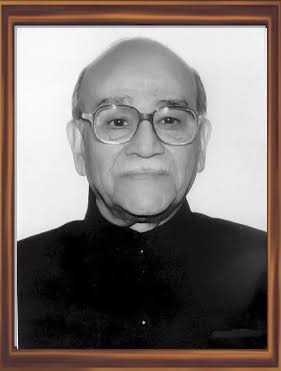
Khwaja Ghulam Saiyidain (1904–1971) was a distinguished Indian educationist, writer, intellectual and educational policy-maker. He devoted much of his professional life to the development of education in India and held important educational and administrative positions, including senior responsibilities in the Government of India’s Ministry of Education.
Saiyidain believed that education should do more than provide academic knowledge. For him, education was closely connected with character formation, social responsibility, self-reliance, national integration and the development of the individual. His ideas were influenced by both modern educational thought and Indian intellectual traditions, including the philosophy of Muhammad Iqbal.
He wrote extensively in Urdu and English. His book Aandhi Mein Chiragh won the Sahitya Akademi Award in Urdu in 1963, while the Government of India honoured him with the Padma Bhushan in 1967 in the field of Literature and Education.
2. Quick Facts
| Particular | Information |
|---|---|
| Full Name | Khwaja Ghulam Saiyidain |
| Native/Alternative Name | Khwaja Ghulam al-Saiyidain; K. G. Saiyidain |
| Date of Birth | 16 October 1904 |
| Place of Birth | Panipat, Punjab Province, British India (present-day Haryana) |
| Nationality | Indian |
| Profession | Educationist, writer, intellectual and educational administrator |
| Field of Achievement | Literature and Education |
| Languages | Urdu and English |
| Years Active | Mainly from the 1920s to 1971 |
| Major Awards | Sahitya Akademi Award (1963); Padma Bhushan (1967) |
| Date of Death | 19 December 1971 |
| Place of Death | New Delhi, India |
The date 16 October 1904 is supported by Rekhta’s biographical profile and current Wikidata records. Some secondary sources give only the year 1904, while at least one source gives a different October date; therefore, 16 October 1904 is the date used here because it is supported by multiple sources.
3. Award Information
A. Padma Bhushan
Award Name
Padma Bhushan
Award Category
Literature and Education
Award Year
1967
Presented By
Government of India
The official Padma Awards database lists Dr. Khwaja Ghulam Saiyidain among the 1967 Padma Bhushan recipients under Literature and Education and records his state as Uttar Pradesh.
Date of Ceremony
The official sources consulted confirm his 1967 Padma Bhushan award, but I could not verify a reliable individual ceremony date for Saiyidain. For a blog, it is safer to write “Awarded in 1967” rather than publishing an unverified ceremony date.
Citation/Official Reason
The official Padma Awards database categorizes Saiyidain’s award under Literature and Education. Contemporary and biographical sources associate the honour with his significant contributions to Indian education and educational policy.
Why was he awarded the Padma Bhushan?
Saiyidain was honoured for his long and influential contribution to education, educational administration, educational thought and literature. He served in important educational positions and later became a senior official in the Government of India’s Ministry of Education. His writings also contributed to discussions about education, culture, society and national development.
B. Sahitya Akademi Award
Saiyidain also received the Sahitya Akademi Award in 1963 for his Urdu work Aandhi Mein Chiragh. The award records classify the work as Sketches.
Previous Recipient
In the Urdu category, the 1962 award went to Akhtar ul Iman for Yadein.
Khwaja Ghulam Saiyidain
1963 — Aandhi Mein Chiragh — Sketches — Urdu
Next Recipient
The 1964 Urdu Sahitya Akademi Award went to Anand Narain Mulla for Meri Hadis-e-Umr-e-Gurezan.
4. Why Did Khwaja Ghulam Saiyidain Receive the Award?
Khwaja Ghulam Saiyidain received national recognition because of his exceptional contribution to Indian education and literature.
His contribution was not limited to classroom teaching. He worked as an educational administrator, policy-maker, writer and thinker. He participated in educational planning and held senior positions in several educational institutions and government bodies.
His educational philosophy emphasized:
- Education as a means of developing the whole personality
- Practical and socially useful education
- Self-reliance and responsibility
- Character development
- National integration
- Cultural understanding
- The connection between education and society
His literary contribution was also significant. His Urdu book Aandhi Mein Chiragh earned the Sahitya Akademi Award in 1963.
5. Early Life
Khwaja Ghulam Saiyidain was born in Panipat on 16 October 1904. He grew up in a scholarly and literary environment. His father, Khwaja Ghulam-us-Saqalain, was a lawyer and writer, and his family had strong intellectual and literary connections.
Saiyidain was also a descendant of the famous Urdu poet and reformer Maulana Altaf Husain Hali. This family environment exposed him from an early age to literature, learning and social thought.
His father died when Saiyidain was young, and his mother played an important role in his upbringing. The influence of his early family environment remained important throughout his life.
6. Education
Saiyidain received his early education in Panipat. He subsequently studied at Aligarh Muslim University, where he obtained several degrees, including:
- F.A.
- B.A.
- M.A.
- LL.B.
He later went to England on a scholarship and pursued advanced studies in education. He obtained a Diploma in Education and a Master of Education (M.Ed.) from the University of Leeds.
His education exposed him to both Indian and Western educational traditions. These influences later became visible in his writings and educational philosophy.
7. Career Journey
Saiyidain began his professional career in education and gradually moved into educational administration and policy-making.
Aligarh Muslim University
After completing his studies, he became associated with Aligarh Muslim University. He served as a teacher and later held leadership responsibilities at its Training College.
He was appointed Professor at the Training College in the 1930s and subsequently became its Principal.
Jammu and Kashmir
In 1938, Saiyidain was appointed Director of Education in Jammu and Kashmir.
During this period, he was associated with efforts to reorganize and improve the educational system. A 1939 Educational Reorganization Committee report identifies K. G. Saiyidain as Director of Education and chairman of the committee responsible for examining educational reorganization in the state.
Rampur and Bombay
In 1946, he served as an Educational Adviser in Rampur and later worked in Bombay (now Mumbai).
Government of India
Around 1950, Saiyidain became Joint Educational Adviser and later Secretary in the Ministry of Education, Government of India. This was one of the most important phases of his career because independent India was developing a new national education system.
8. Major Achievements
Some of Khwaja Ghulam Saiyidain’s major achievements include:
1. Contribution to Indian educational policy
He played an important role in educational administration and policy-making during the formative decades of independent India.
2. Educational leadership
He held senior positions at Aligarh Muslim University, in Jammu and Kashmir, and in the Government of India.
3. Promotion of practical education
Saiyidain supported educational approaches that connected learning with practical life, social service and self-reliance.
4. Literary contribution
He wrote extensively in Urdu and English on education, culture, society and human development.
5. Sahitya Akademi Award
His Aandhi Mein Chiragh received the Sahitya Akademi Award in Urdu in 1963.
6. Padma Bhushan
He received the Padma Bhushan in 1967 in Literature and Education.
7. Influence on educational thought
His work combined modern educational ideas with Indian philosophical concepts and ideas about national development.
9. Contribution to the Nation
Khwaja Ghulam Saiyidain’s greatest contribution was his work in the field of education.
India after independence faced the enormous challenge of building an education system suitable for a democratic and developing nation. Saiyidain contributed to this process through educational planning, administration, writing and policy discussions.
He believed education should help create responsible citizens rather than merely produce examination-oriented students.
His ideas emphasized:
- National integration
- Social responsibility
- Practical learning
- Character development
- Cultural understanding
- Self-reliance
- Human development
He was also associated with discussions surrounding national service and education. A 1960 National Service Committee report appears in the Nehru Archive’s records of Ministry of Education material from that period. However, claims that Saiyidain personally created the later National Service Scheme should be phrased cautiously unless supported by a primary source.
10. Other Awards and Honours
Khwaja Ghulam Saiyidain received several honours during his lifetime.
Sahitya Akademi Award — 1963
Awarded for his Urdu book Aandhi Mein Chiragh.
Padma Bhushan — 1967
Awarded by the Government of India in the field of Literature and Education.
Honorary D.Litt.
He was also associated with an honorary Doctor of Letters (D.Litt.) from Aligarh Muslim University, according to biographical sources.
11. Legacy and Influence
Saiyidain’s legacy lies primarily in his vision of education as a force for personal development and nation-building.
He rejected the idea that education should simply mean memorizing information or obtaining degrees. Instead, he viewed education as something connected with real life, ethical development and social responsibility.
His thinking also reflected an attempt to bring together different intellectual traditions. His educational philosophy drew from modern thinkers such as John Dewey while also engaging with the ideas of Allama Iqbal and Indian traditions of education.
His books continue to be useful for researchers studying Indian educational thought, educational policy and the relationship between education and society.
12. Interesting Facts
- He was born in Panipat in 1904.
- He belonged to a literary family. His family was connected with Urdu literary culture, and he was a descendant of Maulana Altaf Husain Hali.
- He studied at Aligarh Muslim University and later pursued advanced education in England.
- He studied at the University of Leeds, where he completed a Diploma in Education and an M.Ed.
- He worked in Jammu and Kashmir as Director of Education from 1938.
- He worked for the Government of India in senior educational positions.
- He wrote in both Urdu and English.
- Aandhi Mein Chiragh won the Sahitya Akademi Award in 1963.
- He received the Padma Bhushan in 1967 in Literature and Education.
- His daughter Syeda Saiyidain Hameed later became a prominent scholar, writer and public intellectual.
13. Quotes
Saiyidain’s educational philosophy is often summarized through the idea that education should be an “art of living.” This reflects his belief that education should prepare people for life rather than simply provide academic qualifications.
Another useful way to express his educational philosophy is:
Education should develop the individual while preparing him or her to contribute meaningfully to society.
For a blog, it is best to treat the second sentence as a paraphrase of his philosophy, rather than presenting it as a verbatim quotation.
His published works provide a better source for direct quotations, particularly Iqbal’s Educational Philosophy, Education, Culture and the Social Order, and Aandhi Mein Chiragh.
14. Timeline of Khwaja Ghulam Saiyidain’s Life
| Year | Event |
| 1904 | Born in Panipat |
| Early years | Received early education in Panipat |
| 1920s–1930s | Studied at Aligarh Muslim University and obtained higher qualifications |
| After higher studies | Went to England on scholarship for advanced studies in education |
| 1930s | Joined the educational profession at Aligarh Muslim University |
| 1938 | Appointed Director of Education, Jammu and Kashmir |
| 1939 | Associated with educational reorganization work in Jammu and Kashmir |
| 1946 | Served as Educational Adviser in Rampur and later worked in Bombay |
| 1950 | Became Joint Educational Adviser and later Secretary in the Ministry of Education, Government of India |
| 1960 | Published/was associated with important educational discussions and reports of the period |
| 1963 | Received Sahitya Akademi Award for Aandhi Mein Chiragh |
| 1967 | Received Padma Bhushan for Literature and Education |
| 1970 | Published Facets of Indian Education through NCERT |
| 19 December 1971 | Died in New Delhi |
The career dates above are drawn primarily from biographical material and historical records.
15. References
For a credible blog, the following sources are particularly useful:
- Government of India — Padma Awards database: The official database confirms Saiyidain’s 1967 Padma Bhushan in Literature and Education.
Padma Awards official database - Rekhta: Provides biographical information and access to Saiyidain’s Urdu works, including Aandhi Mein Charagh.
Khwaja Ghulam Saiyidain — Rekhta - Nehru Archive: Useful for researching Saiyidain’s connection with educational administration and Government of India records.
Khwaja Ghulam Saiyidain — Nehru Archive - Google Books: Bibliographic information for Iqbal’s Educational Philosophy.
16. Related Personalities
Readers interested in Khwaja Ghulam Saiyidain may also explore:
Maulana Altaf Husain Hali
A major Urdu poet, writer and reformer who was part of Saiyidain’s extended family and intellectual heritage.
Allama Muhammad Iqbal
Iqbal’s ideas about individuality, selfhood and education strongly influenced Saiyidain’s educational thinking.
Mahatma Gandhi
Saiyidain’s interest in practical education and Basic Education can be studied alongside Gandhi’s ideas about Nai Talim.
Jawaharlal Nehru
Saiyidain worked during the period when Nehru’s government was developing India’s post-independence educational institutions and policies.
Syeda Saiyidain Hameed
Saiyidain’s daughter, who later became a prominent scholar, writer and public intellectual.
17. Frequently Asked Questions (FAQ)
Who was Khwaja Ghulam Saiyidain?
Khwaja Ghulam Saiyidain was an Indian educationist, writer, intellectual and educational policy-maker who made major contributions to Indian education.
When was Khwaja Ghulam Saiyidain born?
He was born on 16 October 1904 in Panipat, in the Punjab Province of British India, now in Haryana.
What was Khwaja Ghulam Saiyidain famous for?
He was particularly known for his contributions to education, educational policy, educational administration and literature.
Which award did Khwaja Ghulam Saiyidain receive in 1967?
He received the Padma Bhushan in 1967 in the field of Literature and Education.
Which book won him the Sahitya Akademi Award?
His Urdu book Aandhi Mein Chiragh won the Sahitya Akademi Award in 1963.
Where did he study?
He studied at Aligarh Muslim University and later went to England, where he studied education at the University of Leeds.
What was his educational philosophy?
Saiyidain believed that education should develop the whole person. He emphasized practical learning, self-reliance, social responsibility, character development and national integration.
What positions did he hold?
Among other positions, he served as Director of Education in Jammu and Kashmir, Educational Adviser in Rampur, and later held senior positions in the Government of India’s Ministry of Education.
When did Khwaja Ghulam Saiyidain die?
He died on 19 December 1971 in New Delhi.
Why is Khwaja Ghulam Saiyidain important today?
His work remains relevant because he viewed education as a tool for human development, social responsibility and nation-building, rather than merely examination success or obtaining degrees.
About the Author